
3 months 4 weeks ago
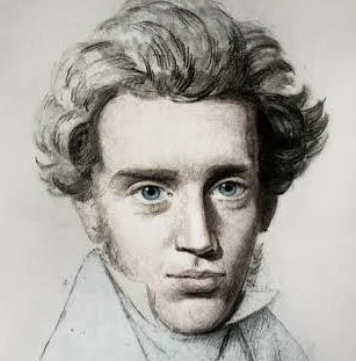
It will be easy for us once we receive the ball of yarn from Ariadne (love) and then go through all the mazes of the labyrinth (life) and kill the monster. But how many are there who plunge into life (the labyrinth) without taking that precaution?
▼
Source
Journal entry, August 1, 1835
3 months 4 weeks ago
The most beautiful discoveries since the Renaissance, indeed since the beginnings of all science, are the laws governing light, whether moving through a uniform medium, or being reflected from an opaque surface, or changing direction upon entering another transparent medium.
3 months 4 weeks ago
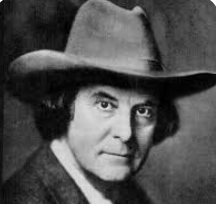
The point I wish to make is this: McKinley gave Rowan a letter to be delivered to Garcia; Rowan took the letter & did not ask, "Where is he at?" By the Eternal! there is a man whose form should be cast in deathless bronze and the statue placed in every college of the land. It is not book-learning young men need, nor instruction about this and that, but a stiffening of the vertebrae which will cause them to be loyal to a trust, to act promptly, concentrate their energies: do the thing — "Carry a message to Garcia!"

3 months 4 weeks ago
Ideas, aspirations, and objectives that, by their content, transcend the established universe of discourse and action are either repelled or reduced to terms of this universe.
▼
Source
p. 12
3 months 4 weeks ago
As long as one does not call his own position into question but regards it as absolute, while interpreting his opponents' ideas as a mere function of the social positions they occupy, the decisive step forward has not yet been taken.
3 months 4 weeks ago
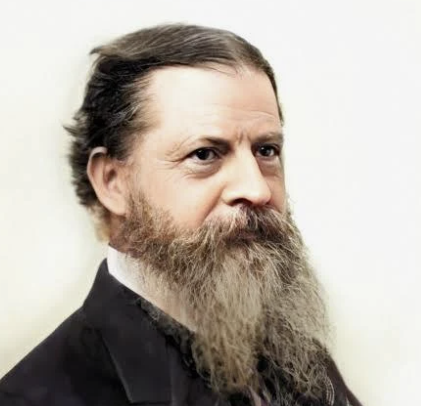
The principle of interpretation says that "a sign is something by knowing which we know something more" (Peirce). The Peircean idea of semiosis is the idea of an infinite process of interpretation.
▼
Source
Umberto Eco, in Semiotics and the Philosophy of Language (1984), [O] : Introduction
3 months 4 weeks ago
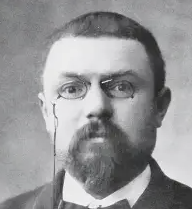
We should like to represent... the... universe, and... feel... we understood it. We... never can attain this representation: our weakness is too great. But... we desire... to conceive an infinite intelligence... which should see all, and... classify all in its time, as we classify, in our time, the little we see. ...This supreme intelligence would be only a ; infinite in one sense... limited in another, since it would have... imperfect recollection of the past... otherwise all recollections would be equally present... and for it there would be no time.
3 months 4 weeks ago
Since my earliest childhood a barb of sorrow has lodged in my heart. As long as it stays I am ironic — if it is pulled out I shall die.
▼
Source
1847
3 months 4 weeks ago
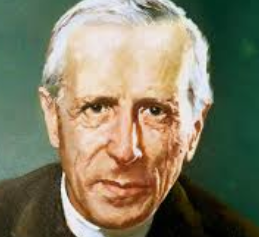
Above all I feel that you must resign yourself to taking me as I am, that is, with the congenital quality (or weakness) which ever since my childhood has caused my spiritual life to be completely dominated by a sort of profound 'feeling' for the organic realness of the World. At first it was an ill-defined feeling in my mind and heart, but as the years have gone by it has gradually become a precise, compelling sense of the Universe's general convergence upon itself; a convergence which coincides with, and culminates at its zenith in, him in quo omina constant, and whom the Society has taught me to love.
▼
Source
Letter from Cape Town to Father General, Jean-Baptiste Janssens (12 October 1951)
3 months 4 weeks ago
If your religion does not change you, then you had better change your religion.
3 months 4 weeks ago
The range of socially permissible and desirable satisfaction is greatly enlarged, but through this satisfaction, the Pleasure Principle is reduced—deprived of the claims which are irreconcilable with the established society. Pleasure, thus adjusted, generates submission.
▼
Source
p. 75
3 months 4 weeks ago
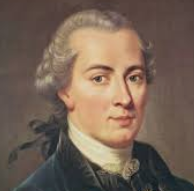
The force of the word World, as commonly used, of itself falls in with us. For no one will attribute accidents to the World as parts, but as determinations, states; hence the so-called world of the ego, unrestrained by the single substance and its accidents, is not very appositely called a World, unless, perhaps, an imaginary one.
3 months 4 weeks ago
If the ethical – that is, social morality – is the highest ... then no categories are needed other than the Greek philosophical categories.
▼
Source
Fear and Trembling, p. 55
3 months 4 weeks ago
When I say that this phase is necessary, the word phase is perhaps not the most rigorous one. It is not a question of a chronological phase, a given moment, or a page that one day simply will be turned, in order to go on to other things. The necessity of this phase is structural; it is the necessity of an interminable analysis: the hierarchy of dual oppositions always reestablishes itself. Unlike those authors whose death does not await their demise, the time for overturning is never a dead letter.
▼
Source
p. 41-42
3 months 4 weeks ago
God is inexhaustibly attainable in the totality of our action.
▼
Source
The Divinisation of Our Activities, p. 63
3 months 4 weeks ago
No man needs a vacation so much as the man who has just had one.
▼
Source
This quote is often misattributed to Hubbard. He helped popularize the quote, but never wrote it himself. The earliest instance that Quote Investigator could locate was in an article from The Boston Cooking-School Magazine titled "Out-of-Doors for the Hom
3 months 4 weeks ago
The contemporary mathematical and symbolic logic is certainly very different from its classical predecessor, but they share the radical opposition to dialectical logic. In terms of this opposition, the old and the new formal logic express the same mode of thought. it is purged from that “negative” which loomed so large at the origins of logic and of philosophic thought — the experience of the denying, deceptive, falsifying power of the established reality. And with the elimination of this experience, the conceptual effort to sustain the tension between “is” and “ought”, and to subvert the established universe of discourse in the name of its own truth is likewise eliminated from all thought which is to be objective, exact, and scientific. For the scientific subversion of the immediate experience which establishes the truth of science as against that of immediate experience does not develop the concepts which carry in themselves the protest and the refusal. The new scientific truth which they oppose to the accepted one does not contain in itself the judgment that condemns the established reality. … In contrast, dialectical thought is and remains unscientific to the extent to which it is such judgment.
▼
Source
pp. 139-140
3 months 4 weeks ago
A public can only arrive at enlightenment slowly. Through revolution, the abandonment of personal despotism may be engendered and the end of profit-seeking and domineering oppression may occur, but never a true reform of the state of mind. Instead, new prejudices, just like the old ones, will serve as the guiding reins of the great, unthinking mass. All that is required for this enlightenment is freedom; and particularly the least harmful of all that may be called freedom, namely, the freedom for man to make public use of his reason in all matters. But I hear people clamor on all sides: Don't argue! The officer says: Don't argue, drill! The tax collector: Don't argue, pay! The pastor: Don't argue, believe!
3 months 4 weeks ago
The dead govern the living.
▼
Source
Le Catéchisme positiviste (1852)
3 months 4 weeks ago
Everyone who knows something about the dangers of reflection and the dangerous walk along the road of reflection also knows that it is dubious when a person, instead of getting out of the tension through resolution and action, becomes productive about his state in tension. Then there is no effort to get out of the state, but reflection fixes the situation for reflection and thereby fixes the man. The more richly thoughts and expressions offer themselves, the more briskly the productivity advances-in the wrong direction-the more dangerous it becomes and the more it hides from the person, concerned that his work, his extremely strenuous work, his very interesting (perhaps also for a third party who has a total view) work, is a work of bogging himself down deeper and deeper. That is, he does not work himself loose but works himself fast and becomes interesting to himself by reflecting on the tension and diverts himself with an utterly piecemeal productivity about detached details, with isolated short articles.
▼
Source
The Book of Adler, by Søren Kierkegaard, Hong 1998 p. 127
3 months 4 weeks ago
It has been observed that the height of a man from the crown of the head to the sole of the foot is equal to the distance between the tips of the middle fingers of the two hands when extended in a straight line.
▼
Source
Book VII, sec. 77.
3 months 4 weeks ago
ONE of the evil results of the political subjection of one people by another is that it tends to make the subject nation unnecessarily and excessively conscious of its past. Its achievements in the old great days of freedom are remembered, counted over and exaggerated by a generation of slaves, anxious to convince the world and themselves that they are as good as their masters. Slaves cannot talk of their present greatness, because it does not exist; and prophetic visions of the future are necessarily vague and unsatisfying. There remains the past. Out of the scattered and isolated facts of history it is possible to build up Utopias and Cloud Cuckoo Lands as variously fantastic as the New Jerusalems of prophecy. It is to the past — the gorgeous imaginary past of those whose present is inglorious, sordid, and humiliating — it is to the delightful founded-on-fact romances of history that subject peoples invariably turn. Thus, the savage and hairy chieftains of Ireland became in due course “the Great Kings of Leinster,” “the mighty Emperors of Meath.” Through centuries of slavery the Serbs remembered and idealised the heroes of Kossovo. And for the oppressed Poles, the mediaeval Polish empire was much more powerful, splendid, and polite than the Roman. The English have never been an oppressed nationality; they are in consequence most healthily unaware of their history. They live wholly in the much more interesting worlds of the present — in the worlds of politics and science, of business and industry. So fully, indeed, do they live in the present, that they have compelled the Indians, like the Irish at the other end of the world, to turn to the past. In the course of the last thirty or forty years a huge pseudo-historical literature has sprung up in India, the melancholy product of a subject people’s inferiority complex. Industrious and intelligent men have wasted their time and their abilities in trying to prove that the ancient Hindus were superior to every other people in every activity of life. Thus, each time the West has announced a new scientific discovery, misguided scholars have ransacked Sanskrit literature to find a phrase that might be interpreted as a Hindu anticipation of it. A sentence of a dozen words, obscure even to the most accomplished Sanskrit scholars, is triumphantly quoted to prove that the ancient Hindus were familiar with the chemical constitution of water. Another, no less brief, is held up as the proof that they anticipated Pasteur in the discovery of the microbic origin of disease. A passage from the mythological poem of the Mahabharata proves that they had invented the Zeppelin. Remarkable people, these old Hindus. They knew everything that we know or, indeed, are likely to discover, at any rate until India is a free country; but they were unfortunately too modest to state the fact baldly and in so many words. A little more clarity on their part, a little less reticence, and India would now be centuries ahead of her Western rivals. But they preferred to be oracular and telegraphically brief. It is only after the upstart West has repeated their discoveries that the modern Indian commentator upon their works can interpret their dark sayings as anticipations. On contemporary Indian scholars the pastime of discovering and creating these anticipations never seems to pall. Such are the melancholy and futile occupations of intelligent men who have the misfortune to belong to a subject race. Free men would never dream of wasting their time and wit upon such vanities. From those who have not shall be taken away even that which they have.
▼
Source
Jesting Pilate: An Intellectual Holiday (1926). pp. 141-143.
3 months 4 weeks ago
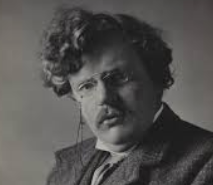
Fools! For I also had my hour; One far fierce hour and sweet:There was a shout about my ears, And palms before my feet.
▼
Source
"The Donkey", st. 4. The Wild Knight, &c. (1900)
3 months 4 weeks ago
Human reason has this peculiar fate that in one species of its knowledge it is burdened by questions which, as prescribed by the very nature of reason itself, it is not able to ignore, but which, as transcending all its powers, it is also not able to answer.
▼
Source
Preface, A vii
3 months 4 weeks ago
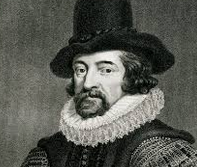
For a man to love again where he is loved, it is the charity of publicans contracted by mutual profit and good offices; but to love a man's enemies is one of the cunningest points of the law of Christ, and an imitation of the divine nature.
▼
Source
Of The Exaltation of Charity
3 months 4 weeks ago
Between God and man there is and remains an eternal, essential, qualitative difference. The paradoxical relationship (which, quite rightly, cannot be thought, but only believed) appears when God appoints a particular man to divine authority, in relation, be it carefully noted, to that which has entrusted to him.
▼
Source
P. 99
3 months 4 weeks ago
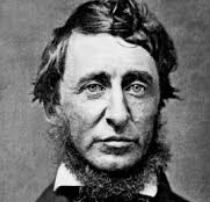
There is the growing influence of biology and the application of biological principles to the human faculties, thought among the rest. Man is said to have brains because they enable him to survive. Intelligence is construed as an organic function and reason as developed or evolved intelligence.
▼
Source
[describing the historical causes of the modern tendency to make intellect the servant of alien interests]
3 months 4 weeks ago
Be gentle with them, Timothy. They want to be free, but they don't know how. Teach them. Reassure them.
▼
Source
Reported to be Huxley's last words to Timothy Leary, which Huxley whispered from his deathbed. Quoted in
3 months 4 weeks ago
When a politician is in opposition he is an expert on the means to some end; and when he is in office he is an expert on the obstacles to it.
▼
Source
In The Illustrated London News (6 April 1918)

3 months 4 weeks ago
We can only learn to love by loving.
▼
Source
The Bell (1958), ch. 19; 2001, p. 219.
3 months 4 weeks ago
He [Jesus] combines all duties (1) in one universal rule (which includes within itself both the inner and the outer moral relations of men), namely: Perform your duty for no motive other than unconditioned esteem for duty itself, i.e., love God (the Legislator of all duties) above all else; and (2) in a particular rule, that, namely, which concerns man’s external relation to other men as universal duty: Love every one as yourself, i.e., further his welfare from good-will that is immediate and not derived from motives of self-advantage. These commands are not mere laws of virtue but precepts of holiness which we ought to pursue, and the very pursuit of them is called virtue. Accordingly he destroys the hope of all who intend to wait upon this moral goodness quite passively, with their hands in their laps, as though it were a heavenly gift which descends from on high. He who leaves unused the natural predisposition to goodness which lies in human nature (like a talent entrusted to him) in lazy confidence that a higher moral influence will no doubt supply the moral character and completeness which he lacks, is confronted with the threat that even the good which, by virtue of his natural predisposition, he may have done, will not be allowed to stand him in stead because of this neglect (XXV, 29).
▼
Source
Book IV, Part 1, Section 1, “The Christian religion as a natural religion”
3 months 4 weeks ago
Man, being the servant and interpreter of Nature, can do and understand so much and so much only as he has observed in fact or in thought of the course of nature. Beyond this he neither knows anything nor can do anything.
▼
Source
Aphorism 1
3 months 4 weeks ago
I do not know, my listener, what your crime, your guilt, your sins are, but surely we are all more or less of the guilt of loving only little. Take comfort, then, in these words just as I take comfort in them. P. 173-174
3 months 4 weeks ago
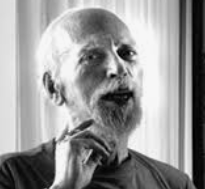
He {Wilhelm Reich} had a great capacity to arouse irrational hatred obviously, and that's because his ideas were radical in the most extreme sense of the word "radical." His ideas have something to offend everybody, and he ended up becoming the only heretic in American history whose books were literally burned by the government. Timothy Leary spent five years in prison for unorthodox scientific ideas. Ezra Pound spent 13 years in a nuthouse for unorthodox political and economic ideas. Their books were not burned. Reich was not only thrown in prison, but they chopped up all the scientific equipment in his laboratory with axes and burned all of his books in an incinerator. Now that interests me as a civil liberties issue. When I started studying Reich's works, I went through a period of enthusiasm, followed by a period of skepticism, followed by a period of just continued interest, but I think a lot of his ideas probably were sound. A lot probably were unsound. And, I'm not a Reichian in the sense of somebody who thinks he was the greatest scientist who ever lived and discovered the basic secrets of psychology, physics and everything else, all in one lifetime. But I think he has enough sound ideas that his unpopular ideas deserve further investigation.
▼
Source
"Robert Anton Wilson on Wilhelm Reich" (March 1995)
3 months 4 weeks ago
If we could sniff or swallow something that would, for five or six hours each day, abolish our solitude as individuals, atone us with our fellows in a glowing exaltation of affection and make life in all its aspects seem not only worth living, but divinely beautiful and significant, and if this heavenly, world-transfiguring drug were of such a kind that we could wake up next morning with a clear head and an undamaged constitution-then, it seems to me, all our problems (and not merely the one small problem of discovering a novel pleasure) would be wholly solved and earth would become paradise.
▼
Source
Wanted, A New Pleasure
3 months 4 weeks ago
The act of defending any of the cardinal virtues has today all the exhilaration of a vice. Moral truisms have been so much disputed that they have begun to sparkle like so many brilliant paradoxes.
▼
Source
"A Defence of Humilities"
3 months 4 weeks ago
There’s something in her archness, not a tone I’d normally think to emulate, but there’s something delicious in it. Her people might be murdering and raping but really they’re thinking about what goodness is in the world, bizarre juxtapositions of that kind.
▼
Source
Louise Glück [https://www.pw.org/content/internal_tapestries Interview] (2014)
3 months 4 weeks ago
There must be a seed of every good thing in the character of men, otherwise no one can bring it out. Lacking that, analogous motives, honor, etc., are substituted. Parents are in the habit of looking out for the inclinations, for the talents and dexterity, perhaps for the disposition of their children, and not at all for their heart or character.
▼
Source
Part III : Selection on Education from Kant's other Writings, Ch. I Pedagogical Fragments, # 13
3 months 4 weeks ago
Truth will sooner come out from error than from confusion.
▼
Source
Aphorism 20
3 months 4 weeks ago
If you label me, you negate me.
▼
Source
As attributed in Cosmopolitan, January 1974, p. 36. | Variants: | I am no part of a whole, I am not integrated, not included. To put me in this whole you imagine is to negate me. | Attributed as part of Kierkegaard's response to Hegel in the article [http
3 months 4 weeks ago
"Mind" is a tool invented by the universe to see itself; but it can never see all of itself, for much the same reason that you can’t see your own back (without mirrors).
▼
Source
Ch. 14 : The Meta Programming Circuit, p. 224
3 months 4 weeks ago
Many Catholic mystics have affirmed that, at a certain stage of that contemplative prayer in which, according to the most authoritative theologians, the life of Christian perfection ultimately consists, it is necessary to put aside all thought of the Incarnation as distracting from the higher knowledge of that which has been incarnated. From this fact have arisen misunderstandings in plenty and a number of intellectual difficulties.
3 months 4 weeks ago
The fierce poet of the Middle Ages wrote, "Abandon hope, all ye who enter here," over the gates of the lower world. The emancipated poets of to-day have written it over the gates of this world.
▼
Source
Ch 1: "The Dickens Period"
3 months 4 weeks ago
”Prussia,” remarked Mirabeau, ”is not a state with an army, but an army with a state.” And the state, which was run with the efficiency and soullessness of a factory, became all; the people were little more than cogs in the machinery. Individuals were taught not only by the kings and the drill sergeants but by the philosophers that their role in life was one of obedience, work, sacrifice and duty. Even Kant preached that duty demands the suppression of human feeling…
▼
Source
William L. Shirer, The Rise and Fall of the Third Reich: A History of Nazi Germany, chapter 4: “The Mind of Hitler and the Roots of the Third Reich”
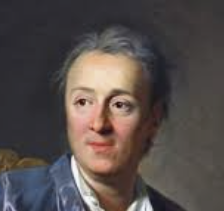
3 months 4 weeks ago
The best doctor is the one you run for and can't find.
▼
Source
As quoted in Selected Thoughts from the French: XV Century - XX Century, with English Translations (1913) by James Raymond Solly, p. 67
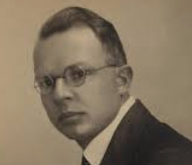
3 months 4 weeks ago
The main purpose of this book is the development of a new method for the semantical analysis of meaning, that is, a new method for analyzing and describing the meanings of linguistic expressions. This method, called the method of extension and intension, is developed by modifying and extending certain customary concepts, especially those of class and property. The method will be contrasted with various other semantical methods used in traditional philosophy or by contemporary authors.
▼
Source
p. v: Preface
3 months 4 weeks ago
I was seeing what Adam had seen on the morning of his creation — the miracle, moment by moment, of naked existence.
▼
Source
Pages 160-61
3 months 4 weeks ago
For my friend said that he opened his intellect as the sun opens the fans of a palm tree, opening for opening's sake, opening infinitely for ever. But I said that I opened my intellect as I opened my mouth, in order to shut it again on something solid. I was doing it at the moment. And as I truly pointed out, it would look uncommonly silly if I went on opening my mouth infinitely, for ever and ever.
▼
Source
Ch. V: "The Extraordinary Cabman"
3 months 4 weeks ago
Genius is present in every age, but the men carrying it within them remain benumbed unless extraordinary events occur to heat up and melt the mass so that it flows forth.

3 months 4 weeks ago
If our intention now is to reveal classical unreason on its own terms, outside of its ties with dreams and error, it must be understood not as a form of reason that is somehow diseased, lost or mad, but quite simply as reason dazzled.
▼
Source
Part Two: 2. The Transcendence of Delirium
CivilSimian.com created by AxiomaticPanic, CivilSimian, Kalokagathia