
3 months 4 weeks ago
Fools! For I also had my hour; One far fierce hour and sweet:There was a shout about my ears, And palms before my feet.
▼
Source
"The Donkey", st. 4. The Wild Knight, &c. (1900)
3 months 4 weeks ago
Human reason has this peculiar fate that in one species of its knowledge it is burdened by questions which, as prescribed by the very nature of reason itself, it is not able to ignore, but which, as transcending all its powers, it is also not able to answer.
▼
Source
Preface, A vii
3 months 4 weeks ago
For a man to love again where he is loved, it is the charity of publicans contracted by mutual profit and good offices; but to love a man's enemies is one of the cunningest points of the law of Christ, and an imitation of the divine nature.
▼
Source
Of The Exaltation of Charity
3 months 4 weeks ago
Between God and man there is and remains an eternal, essential, qualitative difference. The paradoxical relationship (which, quite rightly, cannot be thought, but only believed) appears when God appoints a particular man to divine authority, in relation, be it carefully noted, to that which has entrusted to him.
▼
Source
P. 99
3 months 4 weeks ago
There is the growing influence of biology and the application of biological principles to the human faculties, thought among the rest. Man is said to have brains because they enable him to survive. Intelligence is construed as an organic function and reason as developed or evolved intelligence.
▼
Source
[describing the historical causes of the modern tendency to make intellect the servant of alien interests]
3 months 4 weeks ago
Be gentle with them, Timothy. They want to be free, but they don't know how. Teach them. Reassure them.
▼
Source
Reported to be Huxley's last words to Timothy Leary, which Huxley whispered from his deathbed. Quoted in
3 months 4 weeks ago
When a politician is in opposition he is an expert on the means to some end; and when he is in office he is an expert on the obstacles to it.
▼
Source
In The Illustrated London News (6 April 1918)

3 months 4 weeks ago
We can only learn to love by loving.
▼
Source
The Bell (1958), ch. 19; 2001, p. 219.
3 months 4 weeks ago
He [Jesus] combines all duties (1) in one universal rule (which includes within itself both the inner and the outer moral relations of men), namely: Perform your duty for no motive other than unconditioned esteem for duty itself, i.e., love God (the Legislator of all duties) above all else; and (2) in a particular rule, that, namely, which concerns man’s external relation to other men as universal duty: Love every one as yourself, i.e., further his welfare from good-will that is immediate and not derived from motives of self-advantage. These commands are not mere laws of virtue but precepts of holiness which we ought to pursue, and the very pursuit of them is called virtue. Accordingly he destroys the hope of all who intend to wait upon this moral goodness quite passively, with their hands in their laps, as though it were a heavenly gift which descends from on high. He who leaves unused the natural predisposition to goodness which lies in human nature (like a talent entrusted to him) in lazy confidence that a higher moral influence will no doubt supply the moral character and completeness which he lacks, is confronted with the threat that even the good which, by virtue of his natural predisposition, he may have done, will not be allowed to stand him in stead because of this neglect (XXV, 29).
▼
Source
Book IV, Part 1, Section 1, “The Christian religion as a natural religion”
3 months 4 weeks ago
Man, being the servant and interpreter of Nature, can do and understand so much and so much only as he has observed in fact or in thought of the course of nature. Beyond this he neither knows anything nor can do anything.
▼
Source
Aphorism 1
3 months 4 weeks ago
I do not know, my listener, what your crime, your guilt, your sins are, but surely we are all more or less of the guilt of loving only little. Take comfort, then, in these words just as I take comfort in them. P. 173-174
3 months 4 weeks ago
He {Wilhelm Reich} had a great capacity to arouse irrational hatred obviously, and that's because his ideas were radical in the most extreme sense of the word "radical." His ideas have something to offend everybody, and he ended up becoming the only heretic in American history whose books were literally burned by the government. Timothy Leary spent five years in prison for unorthodox scientific ideas. Ezra Pound spent 13 years in a nuthouse for unorthodox political and economic ideas. Their books were not burned. Reich was not only thrown in prison, but they chopped up all the scientific equipment in his laboratory with axes and burned all of his books in an incinerator. Now that interests me as a civil liberties issue. When I started studying Reich's works, I went through a period of enthusiasm, followed by a period of skepticism, followed by a period of just continued interest, but I think a lot of his ideas probably were sound. A lot probably were unsound. And, I'm not a Reichian in the sense of somebody who thinks he was the greatest scientist who ever lived and discovered the basic secrets of psychology, physics and everything else, all in one lifetime. But I think he has enough sound ideas that his unpopular ideas deserve further investigation.
▼
Source
"Robert Anton Wilson on Wilhelm Reich" (March 1995)
3 months 4 weeks ago
If we could sniff or swallow something that would, for five or six hours each day, abolish our solitude as individuals, atone us with our fellows in a glowing exaltation of affection and make life in all its aspects seem not only worth living, but divinely beautiful and significant, and if this heavenly, world-transfiguring drug were of such a kind that we could wake up next morning with a clear head and an undamaged constitution-then, it seems to me, all our problems (and not merely the one small problem of discovering a novel pleasure) would be wholly solved and earth would become paradise.
▼
Source
Wanted, A New Pleasure
3 months 4 weeks ago
The act of defending any of the cardinal virtues has today all the exhilaration of a vice. Moral truisms have been so much disputed that they have begun to sparkle like so many brilliant paradoxes.
▼
Source
"A Defence of Humilities"
3 months 4 weeks ago
There’s something in her archness, not a tone I’d normally think to emulate, but there’s something delicious in it. Her people might be murdering and raping but really they’re thinking about what goodness is in the world, bizarre juxtapositions of that kind.
▼
Source
Louise Glück [https://www.pw.org/content/internal_tapestries Interview] (2014)
3 months 4 weeks ago
There must be a seed of every good thing in the character of men, otherwise no one can bring it out. Lacking that, analogous motives, honor, etc., are substituted. Parents are in the habit of looking out for the inclinations, for the talents and dexterity, perhaps for the disposition of their children, and not at all for their heart or character.
▼
Source
Part III : Selection on Education from Kant's other Writings, Ch. I Pedagogical Fragments, # 13
3 months 4 weeks ago
Truth will sooner come out from error than from confusion.
▼
Source
Aphorism 20
3 months 4 weeks ago
If you label me, you negate me.
▼
Source
As attributed in Cosmopolitan, January 1974, p. 36. | Variants: | I am no part of a whole, I am not integrated, not included. To put me in this whole you imagine is to negate me. | Attributed as part of Kierkegaard's response to Hegel in the article [http
3 months 4 weeks ago
"Mind" is a tool invented by the universe to see itself; but it can never see all of itself, for much the same reason that you can’t see your own back (without mirrors).
▼
Source
Ch. 14 : The Meta Programming Circuit, p. 224
3 months 4 weeks ago
Many Catholic mystics have affirmed that, at a certain stage of that contemplative prayer in which, according to the most authoritative theologians, the life of Christian perfection ultimately consists, it is necessary to put aside all thought of the Incarnation as distracting from the higher knowledge of that which has been incarnated. From this fact have arisen misunderstandings in plenty and a number of intellectual difficulties.
3 months 4 weeks ago
The fierce poet of the Middle Ages wrote, "Abandon hope, all ye who enter here," over the gates of the lower world. The emancipated poets of to-day have written it over the gates of this world.
▼
Source
Ch 1: "The Dickens Period"
3 months 4 weeks ago
”Prussia,” remarked Mirabeau, ”is not a state with an army, but an army with a state.” And the state, which was run with the efficiency and soullessness of a factory, became all; the people were little more than cogs in the machinery. Individuals were taught not only by the kings and the drill sergeants but by the philosophers that their role in life was one of obedience, work, sacrifice and duty. Even Kant preached that duty demands the suppression of human feeling…
▼
Source
William L. Shirer, The Rise and Fall of the Third Reich: A History of Nazi Germany, chapter 4: “The Mind of Hitler and the Roots of the Third Reich”
3 months 4 weeks ago
The best doctor is the one you run for and can't find.
▼
Source
As quoted in Selected Thoughts from the French: XV Century - XX Century, with English Translations (1913) by James Raymond Solly, p. 67
3 months 4 weeks ago
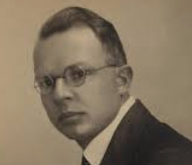
The main purpose of this book is the development of a new method for the semantical analysis of meaning, that is, a new method for analyzing and describing the meanings of linguistic expressions. This method, called the method of extension and intension, is developed by modifying and extending certain customary concepts, especially those of class and property. The method will be contrasted with various other semantical methods used in traditional philosophy or by contemporary authors.
▼
Source
p. v: Preface
3 months 4 weeks ago
I was seeing what Adam had seen on the morning of his creation — the miracle, moment by moment, of naked existence.
▼
Source
Pages 160-61
3 months 4 weeks ago
For my friend said that he opened his intellect as the sun opens the fans of a palm tree, opening for opening's sake, opening infinitely for ever. But I said that I opened my intellect as I opened my mouth, in order to shut it again on something solid. I was doing it at the moment. And as I truly pointed out, it would look uncommonly silly if I went on opening my mouth infinitely, for ever and ever.
▼
Source
Ch. V: "The Extraordinary Cabman"
3 months 4 weeks ago
Genius is present in every age, but the men carrying it within them remain benumbed unless extraordinary events occur to heat up and melt the mass so that it flows forth.

3 months 4 weeks ago
If our intention now is to reveal classical unreason on its own terms, outside of its ties with dreams and error, it must be understood not as a form of reason that is somehow diseased, lost or mad, but quite simply as reason dazzled.
▼
Source
Part Two: 2. The Transcendence of Delirium
3 months 4 weeks ago
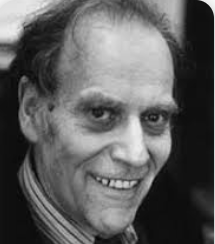
During a lecture, the Oxford linguistic philosopher J. L. Austin made the claim that although a in English implies a positive meaning, there is no language in which a double positive implies a negative. Morgenbesser responded in a dismissive tone, "Yeah, yeah."
▼
Source
The Independent, [http://www.independent.co.uk/news/obituaries/professor-sidney-morgenbesser-550224.html The Independent, Professor Sidney Morgenbesser: Philosopher celebrated for his withering New York Jewish humour], 6 August 2004. The Times, [https://w
3 months 4 weeks ago
No Dutch, no English, and therefore no planters, no coolie labour, no cash crops, no systematic exhaustion of our soil. Also no whisky, no Calvinism, no syphilis, no foreign administrators. We were left to go our own way and take responsibility for our own affairs.
3 months 4 weeks ago
I am not fighting a hopeless fight. People who have fought in real fights don't, as a rule.
▼
Source
Ch. XXIII: "The March on Ivywood" (Patrick Dalroy loq.)
3 months 4 weeks ago
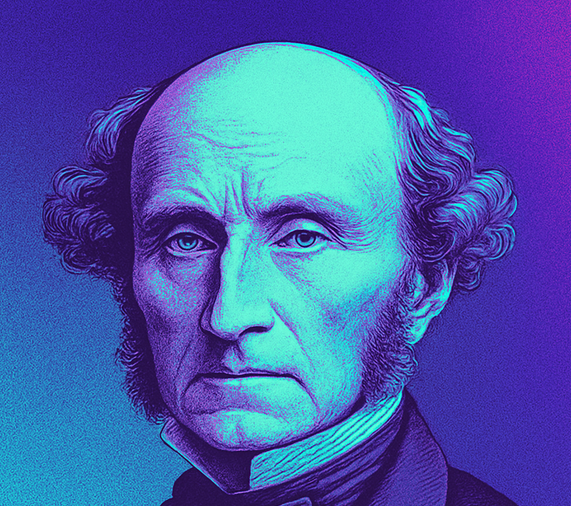
All students of man and society who possess that first requisite for so difficult a study, a due sense of its difficulties, are aware that the besetting danger is not so much of embracing falsehood for true, as of mistaking part of the truth for the whole.
▼
Source
“Coleridge”. London and Westminster Review. (March 1840)
3 months 4 weeks ago
It is said that desire is a product of the will, but the converse is in fact true: will is a product of desire.
▼
Source
"Will, Freedom”
3 months 4 weeks ago
It proved necessary, therefore, to control these illicit practices and introduce new legislation to cover them. The offenses had to be properly defined and more surely punished; out of this mass of irregularities, sometimes tolerated and sometimes punished with a severity out of all proportion to the offense, one had to determine what was an intolerable offense, and the offenders had to be apprehended and punished. With the new forms of capital accumulation, new relations of production and the new legal status of property, all the popular practices that belonged, either in a silent, everyday, tolerated form, or in a violent form, to the illegality of rights were reduced by force to an illegality of property. In that movement which transformed a society of juridico-political levies into a society of the appropriation of the means and products of labour, theft tended to become the first of the great loopholes in legality. Or, to put it another way, the economy of illegalities was restructured with the development of capitalist society. The illegality of property was separated from the illegality of rights. This distinction represents a class opposition because, on the one hand, the illegality that was to be most accessible to the lower classes was that of property – the violent transfer of ownership – and because, on the other, the bourgeoisie was to reserve to itself the illegality of rights: the possibility of getting round its own regulations and its own laws, of ensuring for itself an immense sector of economic circulation by a skillful manipulation of gaps in the law – gaps that were foreseen by its silences, or opened up by de facto tolerance. And this great redistribution of illegalities was even to be expressed through a specialization of the legal circuits: for illegalities of property – for theft – there were the ordinary courts and punishments; for the illegalities of rights – fraud, tax evasion, irregular commercial operations – special legal institutions applied with transactions, accommodations, reduced fines, etc. The bourgeoisie reserved to itself the fruitful domain of the illegality of rights. And at the same time as this split was taking place, there emerged the need for a constant policing concerned essentially with this illegality of property. It became necessary to get rid of the old economy of the power to punish, based on the principles of the confused and inadequate multiplicity of authorities, the distribution and concentration of the power correlative with actual inertia and inevitable tolerance, punishments that were spectacular in their manifestations and haphazard in their application. It became necessary to define a strategy and techniques of punishment in which an economy of continuity and permanence would replace that of expenditure and excess. In short, penal reform was born at the point of junction between the struggle against the super-power of the sovereign and that against the infra-power of acquired and tolerated illegalities.
▼
Source
Chapter Two, Generalized Punishment, pp.87

3 months 4 weeks ago
If I had amnesia, I'd be almost like other men. Perhaps I'd even be able to love you.
▼
Source
Raimon to Regina. p. 17
3 months 4 weeks ago
Employers will give time to eat, time to sleep; they are in terror of a time to think.
▼
Source
p. 31
3 months 4 weeks ago
Persons of genius, it is true, are, and are always likely to be, a small minority; but in order to have them, it is necessary to preserve the soil in which they grow. Genius can only breathe freely in an atmosphere of freedom.
▼
Source
Ch. III: Of Individuality, As One of the Elements of Well-Being
3 months 4 weeks ago
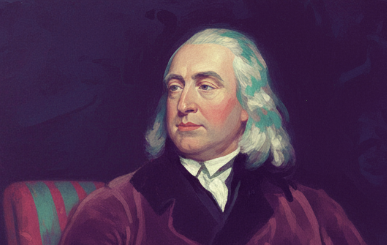
A century ago it was perfectly well known that whoever had one audience of a Master in Chancery was made to pay for three, but no man heeded the enormity until it suggested to a young lawyer that it might be well to question and examine with rigorous suspicion every part of a system in which such things were done. The day on which that gleam lighted up the clear hard mind of Jeremy Bentham is memorable in the political calendar beyond the entire administration of many statesmen.
▼
Source
Lord Acton, "[https://books.google.com/books?id=F38MAAAAYAAJ&pg=PA3 The History of Freedom in Antiquity]" (1877)
3 months 4 weeks ago
All these present struggles revolve around the question: Who are we? They are a refusal of these abstractions, of economic and ideological state violence, which ignore who we are individually, and also a refusal of a scientific or administrative inquisition which determines who one is.
▼
Source
p. 781
3 months 4 weeks ago
Cooking is revelation and creation; and a woman can find special satisfaction in a successful cake or a flaky pastry, for not every one can do it: one must have the gift.
▼
Source
Bk. 2, part 5, Ch. 1: The Married Woman, p. 506
3 months 4 weeks ago
Never invoke the gods unless you really want them to appear. It annoys them very much.
▼
Source
As quoted in "The Sleep of Trees" (1980) by Jane Yolen, in Tales of Wonder (1983) by Jane Yolen, p. 33
3 months 4 weeks ago
What, in unenlightened societies, colour, race, religion, or in the case of a conquered country, nationality, are to some men, sex is to all women; a peremptory exclusion from almost all honourable occupations, but either such as cannot be fulfilled by others, or such as those others do not think worthy of their acceptance.
▼
Source
Ch. 4
3 months 4 weeks ago
Most of the texts... preserved from this period come from writers... either... affiliated with the aristocratic party, or... distrustful of democratic or radically democratic institutions.

3 months 4 weeks ago
[Why is suicide held not to be right?] There is a doctrine uttered in secret that a man is a prisoner who has no right to open the door to his prison and run away; this is a great mystery which I do not understand. Yet I too, believe that the gods are our guardians, and that we are a possession of theirs. ...And if one of your possessions, an ox or an ass, for example took the liberty of putting himself out of the way when you had given no intimation of your wish that he should die, would you not be angry with him, and would you not punish him if you could? ...Then there may be reason in saying that a man should wait, and not take his own life until God summons him, as he is now summoning me.
3 months 4 weeks ago
We are living in a world which seems to be founded on the refusal to reflect.
▼
Source
p. 132
3 months 4 weeks ago
My father impressed upon me from the first, that the manner in which the world came into existence was a subject on which nothing was known: that the question, "Who made me?" cannot be answered, because we have no experience or authentic information from which to answer it; and that any answer only throws the difficulty a step further back, since the question immediately presents itself, "Who made God?"
▼
Source
([https://archive.org/details/autobiography01mill/page/42/mode/1up pp. 42-43])
3 months 4 weeks ago
Is this not an advantage? Is it not a sign of immense progress that the masses should have "ideas," that is to say, should be cultured? By no means. The "ideas" of the average man are not genuine ideas, nor is their possession culture. An idea is a putting truth in checkmate. Whoever wishes to have ideas must first prepare himself to desire truth and to accept the rules of the game imposed by it. It is no use speaking of ideas when there is no acceptance of a higher authority to regulate them, a series of standards to which it is possible to appeal in a discussion. These standards are the principles on which culture rests.
▼
Source
Chap. VIII: The Masses Intervene In Everything, And Why Their Intervention Is Solely By Violence
3 months 4 weeks ago
When a simple man who has no skill in dialectics believes an argument to be true which he afterwards imagines to be false, whether really false or not, and then another and another, he no longer has any faith left, and great disputers, as you know, come to think, at last that they have grown to be the wisest of mankind; for they alone perceive the utter unsoundness and instability of all arguments, or, indeed, of all things, which like the currents in the Euripus, are going up and down in never-ceasing ebb and flow.

3 months 4 weeks ago
Banks are the temples of America. This is a holy war. Our economy is our religion. (p.8)
3 months 4 weeks ago
I frequently asked myself, if I could, or if I was bound to go on living, when life must be passed in this manner. I generally answered to myself, that I did not think I could possibly bear it beyond a year.
▼
Source
([https://archive.org/details/autobiography01mill/page/140/mode/1up p. 140])
CivilSimian.com created by AxiomaticPanic, CivilSimian, Kalokagathia