
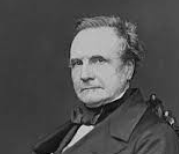
3 months 4 weeks ago
In the works of the Creator ever open to our examination, we possess a firm basis on which to raise the superstructure of an enlightened creed. The more man inquires into the laws which regulate the material universe, the more he is convinced that all its varied forms arise from the action of a few simple principles. These principles themselves converge, with accelerating force, towards some still more comprehensive law to which all matter seems to be submitted. Simple as that law may possibly be, it must be remembered that it is only one amongst an infinite number of simple laws: that each of these laws has consequences at least as extensive as the existing one, and therefore that the Creator who selected the present law must have foreseen the consequences of all other laws. The works of the Creator, ever present to our senses, give a living and perpetual testimony of his power and goodness far surpassing any evidence transmitted through human testimony. The testimony of man becomes fainter at every stage of transmission, whilst each new inquiry into the works of the Almighty gives to us more exalted views of his wisdom, his goodness, and his power.
▼
Source
"Passages from the life of a philosopher", The Belief In The Creator From His Works, p. 402
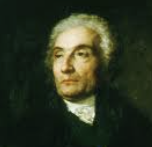
3 months 4 weeks ago
Men gather the clouds, and then they complain of the tempests that follow.
▼
Source
Chapter III, p. 30
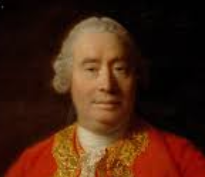
3 months 4 weeks ago
If the whole of natural theology, as some people seem to maintain, resolves itself into one simple, though somewhat ambiguous, at least undefined proposition, that the cause or causes of order in the universe probably bear some remote analogy to human intelligence: If this proposition be not capable of extension, variation, or more particular explication: If it affords no inference that affects human life, or can be the source of any action or forbearance: And if the analogy, imperfect as it is, can be carried no farther than to the human intelligence, and cannot be transferred, with any appearance of probability, to the other qualities of the mind; if this really be the case, what can the most inquisitive, contemplative, and religious man do more than give a plain, philosophical assent to the proposition, as often as it occurs, and believe that the arguments on which it is established exceed the objections which lie against it?
▼
Source
Philo to Cleanthes, Part XII
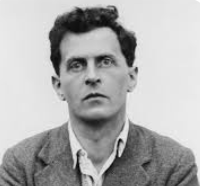
3 months 4 weeks ago
Now, as it happens, one of the very few references to any idea in the domain of sport to be found in the most orthodox type of contemporary philosophy is what Wittgenstein has to say about the concept of a game.
▼
Source
, "Locker Room Metaphysics", The New York Review of Books (August 21, 1969)

3 months 4 weeks ago
Lenin is not comparable to any revolutionary figure in history. Revolutionaries have had ideals. Lenin has none. He is a madman, an immolator, wishful of burning, and slaughter, and sacrificing.
▼
Source
As quoted in Peter Kropotkin : From Prince to Rebel (1990) by George Woodcock and Ivan Avakumovic, p. 407
3 months 4 weeks ago
Though the large runt pigeon, with its massive beak and its huge feet, differs from its blue and barred progenitor the rock, it is a pigeon still. Though the slender Italian greyhound has a strange contrast with the short-legged bull-dog, they are both dogs in their teeth and in their skull. The mouse, even, has not been transmuted into the cat, nor the hen into the turkey, nor the duck into the goose, nor the hawk into the eagle, and still less the monkey into the man.
3 months 4 weeks ago
All sciences have their mysteries and at certain points the apparently most obvious theory will be found in contradiction with experience. Politics, for example, offers several proofs of this truth. In theory, is anything more absurd than hereditary monarchy? We judge it by experience, but if government had never been heard of and we had to choose one, whoever would deliberate between hereditary and elective monarchy would be taken for a fool. Yet we know by experience that the first is, all things considered, the best that can be imagined, while the second is the worst. What arguments could not be amassed to establish that sovereignty comes from the people? However they all amount to nothing. Sovereignty is always taken, never given, and a second more profound theory subsequently discovers why this must be so. Who would not say the best political constitution is that which has been debated and drafted by statesmen perfectly acquainted with the national character, and who have foreseen every circumstance? Nevertheless nothing is more false. The best constituted people is the one that has the fewest written constitutional laws, and every written constitution is worthless.
▼
Source
"Ninth Dialogue"
3 months 4 weeks ago
Thus he had a double thought: the one by which he acted as king, the other by which he recognized his true state, and that it was accident alone that had placed him in his present condition.
3 months 4 weeks ago
The whole aspect of the universe changes with this new conception. The idea of force governing the world, of pre-established law, preconceived harmony, disappears to make room for the harmony that Fourier had caught a glimpse of: the one which results from the disorderly and incoherent movements of numberless hosts of matter, each of which goes its own way and all of which hold each other in equilibrium.
▼
Source
Kropotkin here may be referring to the French scientist Joseph Fourier, and not the French social philosopher Charles Fourier

3 months 4 weeks ago
As some say, Solon was the author of the apophthegm, "Nothing in excess."
▼
Source
Solon, 16.
3 months 4 weeks ago
De Maistre has for me the peculiar property of helping me to estimate the philosophie capacity of people, by the repute in which they hold him.
▼
Source
Auguste Comte, quoted by John Morley in Critical Miscellanies (1909), p. 329
3 months 4 weeks ago
It is necessary to have regard to the person whom we wish to persuade, of whom we must know the mind and the heart, what principles he acknowledges, what things he loves; and then observe in the thing in question what affinity it has with the acknowledged principles, or with the objects so delightful by the pleasure which they give him.
3 months 4 weeks ago
Of such are the mathematical sciences alone; that is, geometry and arithmetic, in which the Divine intellect indeed knows infinitely more propositions, since it knows all. But with regard to those few which the human intellect does understand, I believe its knowledge equals the Divine in objective certainty, for here it succeeds in understanding necessity, beyond which there can be no greater sureness.
▼
Source
In the 1661 translation by Thomas Salusbury: … such are the pure Mathematical sciences, to wit, Geometry and Arithmetick: in which Divine Wisdom knows infinite more propositions, because it knows them all; but I believe that the knowledge of those few com

3 months 4 weeks ago
What is peddled about nowadays as philosophy, especially that of N.S. [National Socialism], but has nothing to do with the inner truth and greatness of that movement [namely the encounter between global technology and modern humanity] is nothing but fishing in that troubled sea of values and totalities.
▼
Source
Introduction to Metaphysics (1953) — a publication of lectures of 1935.
3 months 4 weeks ago
The State idea means something quite different from the idea of government. It not only includes the existence of a power situated above society, but also of a territorial concentration as well as the concentration in the hands of a few of many functions in the life of societies. It implies some new relationships between members of society which did not exist before the formation of the State. A whole mechanism of legislation and of policing has to be developed in order to subject some classes to the domination of others. This distinction, which at first sight might not be obvious, emerges especially when one studies the origins of the State.
▼
Source
I
3 months 4 weeks ago
Arcesilaus had a peculiar habit while conversing of using the expression, "My opinion is," and "So and so will not agree to this."
▼
Source
Arcesilaus, 12.
3 months 4 weeks ago
As the mathematics are now understood, each branch — or, if you please, each problem, — is but the study of the relations of a collection of connected objects, without parts, without any distinctive characters, except their names or designating letters. These objects are commonly called points; but to remove all notion of space relations, it may be better to name them monads. The relations between these points are mere complications of two different kinds of elementary relations, which may be termed immediate connection and immediate non-connection. All the monads except as serve as intermediaries for the connections have distinctive designations.
▼
Source
p. 268
3 months 4 weeks ago
To treat the living body as a mechanism was repugnant, and seemed even ludicrous, to Pascal.
▼
Source
D'Arcy Wentworth Thompson, [http://archive.org/details/ongrowthform00thom On Growth and Form] (1917)
3 months 4 weeks ago
“To stamp becoming with the character of being—that is the supreme will to power.” (WM 617) This suggests that becoming only is if it is grounded in being as being: “That everything recurs is the closest approximation of a world of becoming to one of being.”
▼
Source
p. 19
3 months 4 weeks ago
A great number of the Paris maraîchères... export the whole of their crop to England.
3 months 4 weeks ago
Once he saw a youth blushing, and addressed him, "Courage, my boy! that is the complexion of virtue."
▼
Source
Diogenes, 6.

3 months 4 weeks ago
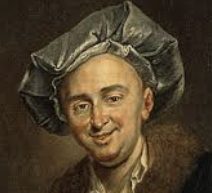
We hope that the analysis offered here will demonstrate that Hegel’s basic concepts are hostile to the tendencies that have led into Fascist theory and practice. Preface
3 months 4 weeks ago
One needs only eyes to see the necessary influence of old age on reason.
3 months 4 weeks ago
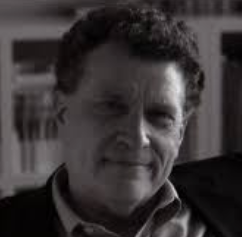
Accordingly, time logically supposes a continuous range of intensity of feeling. It follows then, from the definition of continuity, that when any particular kind of feeling is present, an infinitesimal continuum of all feelings differing infinitesimally from that, is present.
3 months 4 weeks ago
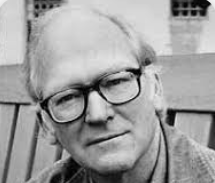
Here, we may well distinguish between Extreme Liberationism and Open Liberationism. So, as regards stealing, for example, the Extreme view holds that ... not only is it good to steal, but it's wrong not to do so. By contrast, Open Liberationism holds that it's at least good to steal and, while it's open to the (epistemic) possibility that it's wrong not to do so, it's also open to the possibility that it's not wrong. While I'm inclined to think that, in the end, even the Extreme view is correct, in this book it's enough to argue for Open Liberationism.
▼
Source
p. 13
3 months 4 weeks ago
The methodological advice to interpret in a way that optimizes agreement should not be conceived as resting on a charitable assumption about human intelligence that might turn out to be false. If we cannot find a way to interpret the utterances and other behaviour of a creature as revealing a set of beliefs largely consistent and true by our standards, we have no reason to count that creature as rational, as having beliefs, or as saying anything
▼
Source
Donald Davidson. "Radical interpretation." Dialectica 27.3‐4 (1973): p. 324; as cited in; Herman Parret, Jacques Bouveresse (1981) Meaning and Understanding, p. 186
3 months 4 weeks ago
Loren von Stein thus turned the dialectic into an ensemble of objective laws calling for social reform as the adequate solution of all contradictions and neutralized the critical elements of the dialectic. P. 388
3 months 4 weeks ago
In very different fashion does the book set to work that already in its very title declares that man is a machine. While the 'Natural History of the Soul' was cautious, cunningly arranged, and only gradually surprising us with its results, here, on the contrary,the final conclusion is expressed at the outset of the work. While the 'Natural History of the Soul' allied itself with the whole Aristotelian metaphysics only in order to prove by degrees that the soul is but an empty form, into which we may pour a materialistic content, here we no longer deal in all those fine distinctions.
3 months 4 weeks ago
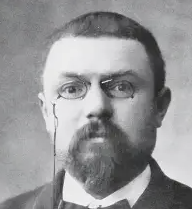
The third category of which I come now to speak is precisely that whose reality is denied by nominalism. For although nominalism is not credited with any extraordinarily lofty appreciation of the powers of the human soul, yet it attributes to it a power of originating a kind of ideas the like of which Omnipotence has failed to create as real objects, and those general conceptions which men will never cease to consider the glory of the human intellect must, according to any consistent nominalism, be entirely wanting in the mind of Deity.
▼
Source
Lecture II : The Universal Categories, §3. Laws: Nominalism, CP 5.62
3 months 4 weeks ago
The ones who are preoccupied by logic are above all; to read their works, one is tempted to believe they have advanced only step by step, after the manner of a Vauban who pushes on his trenches against the place besieged, leaving nothing to chance. The others are guided by intuition and, at the first stroke, make quick but sometimes precarious conquests, like bold cavalrymen of the advance guard.
▼
Source
quoted in Jacques Hadamard, An essay on the psychology of invention in the mathematical field (1954), pp. 106.
3 months 4 weeks ago
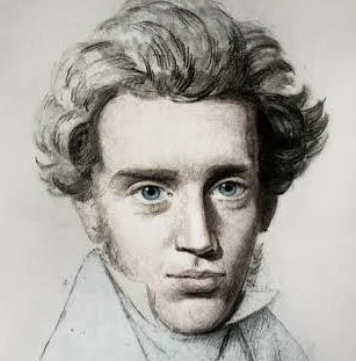
I have just now come from a party where I was its life and soul; witticisms streamed from my lips, everyone laughed and admired me, but I went away — yes, the dash should be as long as the radius of the earth's orbit ——————————— and wanted to shoot myself.
▼
Source
March 1836
3 months 4 weeks ago
Having discovered the true principle, I then derived all the laws that govern the motion of light, those concerning its direct propagation, its reflection and its refraction. I reserve for particular members of our Assembly the geometrical demonstration of my theory.I know the distaste that many mathematicians have for final causes applied to physics, a distaste that I share up to some point. I admit, it is risky to introduce such elements; their use is dangerous, as shown by the errors made by Fermat and Leibniz in following them. Nevertheless, it is perhaps not the principle that is dangerous, but rather the hastiness in taking as a basic principle that which is merely a consequence of a basic principle.
3 months 4 weeks ago
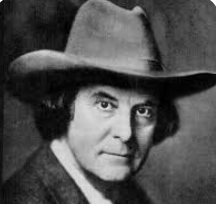
I believe that brutality tends to defeat itself. Prizefighters die young, gourmands get the gout, hate hurts worse the man who nurses it, and all selfishness robs the mind of its divine insight, and cheats the soul that would know. Mind alone is eternal. He, watching over Israel, slumbers not nor sleeps. My faith is great: out of the transient darkness of the present the shadows will flee away, and Day will yet dawn. I am an Anarchist.
3 months 4 weeks ago
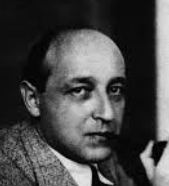
The slaves of developed industrial civilization are sublimated slaves.
▼
Source
p. 32
3 months 4 weeks ago
Once we recognize that all historical knowledge is relational knowledge, and can only be formulated with reference to the position of the observer, we are faced, once more, with the task of discriminating between what is true and what is false in such knowledge.
3 months 4 weeks ago
One of the greatest philosophers of all time.
▼
Source
Karl Popper, Objective Knowledge: An Evolutionary Approach (1972), p. 212
3 months 4 weeks ago
When an astronomer tells me that some stellar phenomenon, which his telescope reveals to him at this moment, happened... fifty years ago... I... ask... how he has measured the velocity of light.
3 months 4 weeks ago
Job endured everything — until his friends came to comfort him, then he grew impatient.
▼
Source
1849
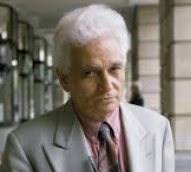
3 months 4 weeks ago
Il n'y a pas de hors-texte.
▼
Source
Of Grammatology (1967). G. Spivak translated this as "There is nothing outside the text," which Derrida opponents have characterized to mean that nothing exists but language. Later scholarship has translated it as "There is no outside-of-text" or "There i
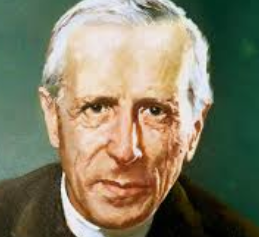
3 months 4 weeks ago
This book deals with man solely as a phenomenon; but... with the whole pheneomenon...
3 months 4 weeks ago
The great Big Black Things that have loomed against the horizon of my life, threatening to devour me, simply loomed and nothing more. The things that have really made me miss my train have always been sweet, soft, pretty, pleasant things of which I was not in the least afraid.
▼
Source
p. 61
3 months 4 weeks ago
When the whole is at stake, there is no crime except that of rejecting the whole, or not defending it. … Those who identify themselves with the whole, who are installed as the leaders and defenders of the whole can make mistakes, but they cannot do wrong—they are not guilty. They may become guilty again when this identification no longer holds, when they are gone.
▼
Source
pp. 82-83
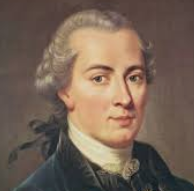
3 months 4 weeks ago
Let the letters a b c denote the three angular points of a rectilineal triangle. If the point did move continuously over the lines ab, bc, ca, that is, over the perimeter of the figure, it would be necessary for it to move at the point b in the direction ab, and also at the same point b in the direction bc. These motions being diverse, they cannot be simultaneous. There-fore, the moment of presence of the movable point at vertex b, considered as moving in the direction ab, is different from the moment of presence of the movable point at the same vertex b, considered as moving in the same direction bc. But between two moments there is time; therefore, the movable point is present at point b for some time, that is, it rests. Therefore it does not move continuously, which is contrary to the assumption. The same demonstration is valid for motion over any right lines including an assignable angle. Hence a body does not change its direction in continuous motion except by following a line no part of which is straight, that is, a curve, as Leibnitz maintained.
3 months 4 weeks ago
And how does the God's existence emerge from the proof? Does it follow straightway, without any breach of continuity? Or have we not here an analogy to the behavior of the little Cartesian dolls? As soon as I let go of the doll it stands on its head. As soon as I let it go – I must therefore let it go. So also with the proof. As long as I keep my hold on the proof, i.e., continue to demonstrate, the existence does not come out, if for no other reason than that I am engaged in proving it; but when I let the proof go, the existence is there. But this act of letting go is surely also something; it is indeed a contribution of mine. Must not this also be taken into the account, this little moment, brief as it may be – it need not be long, for it is a leap. However brief this moment, if only an instantaneous now, this "now" must be included in the reckoning.
▼
Source
p. 32
3 months 4 weeks ago
How can one be late to the end of history? A question for today. It is serious because it obliges one to reflect again, as we have been doing since Hegel, on what happens and deserves the name of event, after history; it obliges one to wonder if the end of history is but the end of a certain concept of history.
▼
Source
Injunctions of Marx
3 months 4 weeks ago
A breeze passes in the night. When did it spring up? Whence does it come? Whither is it going? No man knows.
▼
Source
The Divine Milieu, p. 128
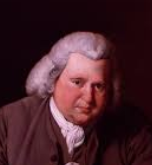
3 months 4 weeks ago
Roll on, ʏᴇ Sᴛᴀʀs! exult in youthful prime,Mark with bright curves the printless steps of Time;Near and more near your beamy cars approach,And lessening orbs on lessening orbs encroach;—Flowers of the sky! ye too to age must yield,Frail as your silken sisters of the field!Star after star from Heaven's high arch shall rush,Suns sink on suns, and systems systems crush,Headlong, extinct, to one dark centre fall,And Death and Night and Chaos mingle all!—Till o'er the wreck, emerging from the storm,Immortal Nᴀᴛᴜʀᴇ lifts her changeful form,Mounts from her funeral pyre on wings of flame,And soars and shines, another and the same.
▼
Source
[Immortal Nature], The Botanic Garden (1791), Part i, Canto iv, ll. 359-380.
3 months 4 weeks ago
The apparatus defeats its own purpose if its purpose is to create a humane existence on the basis of a humanized nature.
▼
Source
pp. 145-146
3 months 4 weeks ago
Reason in a creature is a faculty of widening the rules and purposes of the use of all its powers far beyond natural instinct; it acknowledges no limits to its projects. Reason itself does not work instinctively, but requires trial, practice, and instruction in order gradually to progress from one level of insight to another. Therefore a single man would have to live excessively long in order to learn to make full use of all his natural capacities. Since Nature has set only a short period for his life, she needs a perhaps unreckonable series of generations, each of which passes its own enlightenment to its successor in order finally to bring the seeds of enlightenment to that degree of development in our race which is completely suitable to Nature’s purpose. This point of time must be, at least as an ideal, the goal of man’s efforts, for otherwise his natural capacities would have to be counted as for the most part vain and aimless. This would destroy all practical principles, and Nature, whose wisdom must serve as the fundamental principle in judging all her other offspring, would thereby make man alone a contemptible plaything.
▼
Source
Second Thesis | Paraphrased variant: Reason does not work instinctively, but requires trial, practice, and instruction in order to gradually progress from one level of insight to another.
3 months 4 weeks ago
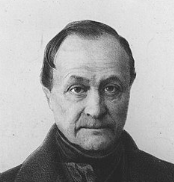
The first condition of unity is a subjective principle; and this principle in the Positive system is the subordination of the intellect to the heart: Without this the unity that we seek can never be placed on a permanent basis, whether individually or collectively. It is essential to have some influence sufficiently powerful to produce convergence amid the heterogeneous and often antagonistic tendencies of so complex an organism as ours.
▼
Source
p. 24
CivilSimian.com created by AxiomaticPanic, CivilSimian, Kalokagathia