
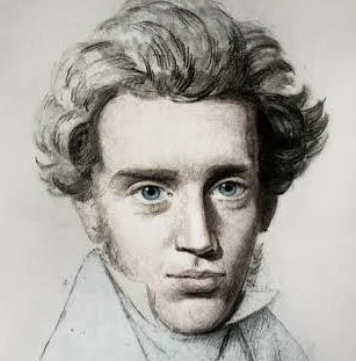
3 months 4 weeks ago
For as only one thing is necessary, and as the theme of the talk is the willing of only one thing: hence the consciousness before God of one's eternal responsibility to be an individual is that one thing necessary.
▼
Source
Søren Kierkegaard, Purity of Heart is to Will One Thing, 1847 p. 197-198
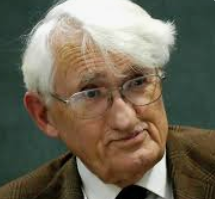
3 months 4 weeks ago
As historical and social beings we find ourselves always already in a linguistically structured lifeworld. In the forms of communication through which we reach an understanding with one another about something in the world and about ourselves, we encounter a transcending power. Language is not a kind of private property. No one possesses exclusive rights over the common medium of the communicative practices we must intersubjectively share. No single participant can control the structure, or even the course, of processes of reaching understanding and self-understanding. How speakers and hearers make use of their communicative freedom to take yes- or no-positions is not a matter of their subjective discretion. For they are free only in virtue of the binding force of the justifiable claims they raise towards one another. The logos of language embodies the power of the intersubjective, which precedes and grounds the subjectivity of speakers.
▼
Source
Habermas (2003) The Future of Human Nature. p. 10

3 months 4 weeks ago
It is a maxim universally agreed upon in agriculture, that nothing must be done too late; and again, that everything must be done at its proper season; while there is a third precept which reminds us that opportunities lost can never be regained.
▼
Source
Book XVIII, sec. 44.
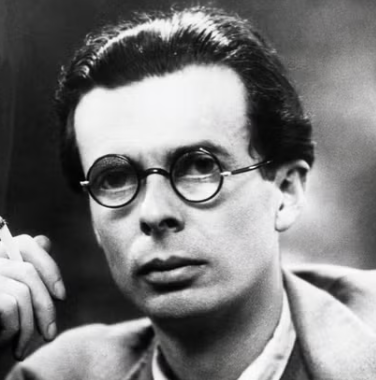
3 months 4 weeks ago
History teaches us that war is not inevitable. Once again, it is for us to choose whether we use war or some other method of settling the ordinary and unavoidable conflicts between groups of men.
▼
Source
What Are You Going To Do About It? The case for constructive peace (1936)
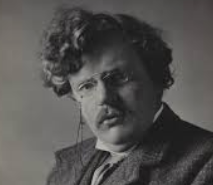
3 months 4 weeks ago
The simplification of anything is always sensational.
▼
Source
Varied Types (1903)
3 months 4 weeks ago
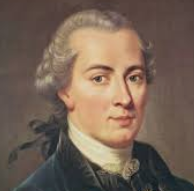
That all our knowledge begins with experience there can be no doubt. For how is it possible that the faculty of cognition should be awakened into exercise otherwise than by means of objects which affect our senses, and partly of them selves produce representations, partly rouse our powers of understanding into activity, to compare, to connect, or to separate these, and so to convert the raw material of our sensuous impressions into a knowledge of objects, which is called experience? In respect of time, therefore, no knowledge of ours is antecedent to experience, but begins with it. But though all our knowledge begins with experience, it by no means follows, that all arises out of experience. For, on the contrary, it is quite possible that our empirical knowledge is a compound of that which we receive through impressions, and that which the faculty of cognition supplies from itself (sensuous impressions giving merely the occasion)... It is, therefore, a question which requires close investigation, and is not to be answered at first sight,—whether there exists a knowledge altogether independent of experience, and even of all sensuous impressions? Knowledge of this kind is called à priori, in contradistinction to empirical knowledge which has its sources à posteriori, that is, in experience.
▼
Source
B 1
3 months 4 weeks ago
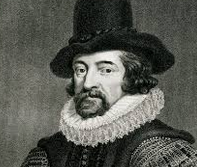
Let great authors have their due, as time, which is the author of authors, be not deprived of his due, which is, further and further to discover truth.
▼
Source
Book I, iv, 10
3 months 4 weeks ago
The greatest danger, that of losing one's own self, may pass off as quietly as if it were nothing; every other loss, that of an arm, a leg, five dollars, a wife etc., is sure to be noticed.
3 months 4 weeks ago
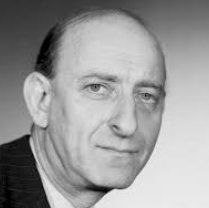
The man who no longer expects miraculous changes either from a revolution or from an economic plan is not obliged to resign himself to the unjustifiable. It is because he likes individual human beings, participates in communities, and respects the truth, that he refuses to surrender his soul to an abstract ideal of humanity, a tyrannical party, and an absurd scholasticism. . . . If tolerance is born of doubt, let us teach everyone to doubt all the models and utopias, to challenge all the prophets of redemption and the heralds of catastrophe. If they can abolish fanaticism, let us pray for the advent of the sceptics.
▼
Source
The Opium of Intellectuals (1955)
3 months 4 weeks ago
Defined in psychological terms, a fanatic is a man who consciously over-compensates a secret doubt.
▼
Source
"The Substitutes for Religion, The Religion of Sex"
3 months 4 weeks ago
There are two ways of dealing with nonsense in this world. One way is to put nonsense in the right place; as when people put nonsense into nursery rhymes. The other is to put nonsense in the wrong place; as when they put it into educational addresses, psychological criticisms, and complaints against nursery rhymes or other normal amusements of mankind.
▼
Source
Child Psychology and Nonsense (15 October 1921)
3 months 4 weeks ago
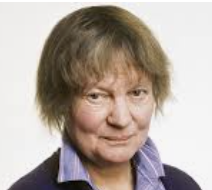
Happiness is a matter of one's most ordinary everyday mode of consciousness being busy and lively and unconcerned with self. To be damned is for one's ordinary everyday mode of consciousness to be unremitting agonising preoccupation with self.
▼
Source
The Nice and the Good (1968), ch. 22.
3 months 4 weeks ago
Even if a civil society were to be dissolved by the consent of all its members (e.g., if a people inhabiting an island decided to separate and disperse throughout the world), the last murderer remaining in prison would first have to be executed, so that each has done to him what his deeds deserve and blood guilt does not cling to the people for not having insisted upon this punishment; for otherwise the people can be regarded as collaborators in his public violation of justice.
▼
Source
Kt6:333
3 months 4 weeks ago
There are and can be only two ways of searching into and discovering truth. The one flies from the senses and particulars to the most general axioms, and from these principles, the truth of which it takes for settled and immovable, proceeds to judgment and to the discovery of middle axioms. And this way is now in fashion. The other derives axioms from the senses and particulars, rising by a gradual and unbroken ascent, so that it arrives at the most general axioms last of all. This is the true way, but as yet untried.
▼
Source
Aphorism 19
3 months 4 weeks ago
The person who is going to preach ought to live in the Christian thoughts and ideas: they ought to be his daily life. If so – this is the view of Christianity – then you, too, will have eloquence enough and precisely that which is needed when you speak extemporaneously without specific preparation. However, it is fallacious eloquence if someone, without otherwise occupying himself with, without living in these thoughts, once in a while sits down and laboriously collects such thoughts, perhaps in the field of literature, and then works them into a well-composed discourse, which is then committed to memory and delivered superbly, with respect both to voice and diction and gestures.
▼
Source
Soren Kierkegaard, For Self-Examination, Hong p. 10
3 months 4 weeks ago
I regard the two major male archetypes in 20th Century literature as Leopold Bloom and Hannibal Lecter. M.D. Bloom, the perpetual victim, the kind and gentle fellow who finishes last, represented an astonishing breakthrough to new levels of realism in the novel, and also symbolized the view of humanity that hardly anybody could deny c. 1900-1950. History, sociology, economics, psychology et al. confirmed Joyce’s view of Everyman as victim. Bloom, exploited and downtrodden by the Brits for being Irish and rejected by many of the Irish for being Jewish, does indeed epiphanize humanity in the first half of the 20th Century. And he remains a nice guy despite everything that happens... Dr Lecter, my candidate for the male archetype of 1951-2000, will never win any Nice Guy awards, I fear, but he symbolizes our age as totally as Bloom symbolized his. Hannibal's wit, erudition, insight into others, artistic sensitivity, scientific knowledge etc. make him almost a walking one man encyclopedia of Western civilization. As for his "hobbies" as he calls them — well, according to the World Game Institute, since the end of World War II, in which 60,000,000 human beings were murdered by other human beings, 193, 000,000 more humans have been murdered by other humans in brush wars, revolutions, insurrections etc. What better symbol of our age than a serial killer? Hell, can you think of any recent U.S. President who doesn't belong in the Serial Killer Hall of Fame? And their motives make no more sense, and no less sense, than Dr Lecter's Darwinian one-man effort to rid the planet of those he finds outstandingly loutish and uncouth.
▼
Source
"Previous Thoughts" at rawilson.com
3 months 4 weeks ago
The poet is, etymologically, the maker. Like all makers, he requires a stock of raw materials — in his case, experience. Now experience is not a matter of having actually swum the Hellespont, or danced with the dervishes, or slept in a doss-house. It is a matter of sensibility and intuition, of seeing and hearing the significant things, of paying attention at the right moments, of understanding and co-ordinating. Experience is not what happens to a man; it is what a man does with what happens to him. It is a gift for dealing with the accidents of existence, not the accidents themselves. By a happy dispensation of nature, the poet generally possesses the gift of experience in conjunction with that of expression. What he says so well is therefore intrinsically of value.
▼
Source
p. 5
3 months 4 weeks ago
The one stream of poetry which is continually flowing is slang.
▼
Source
"A Defence of Slang"
3 months 4 weeks ago
In the metaphysical elements of aesthetics the various nonmoral feelings are to be made use of; in the elements of moral metaphysics the various moral feelings of men, according to the differences in sex, age, education, and government, of races and climates, are to be employed.
▼
Source
Part III : Selection on Education from Kant's other Writings, Ch. I Pedagogical Fragments, # 58
3 months 4 weeks ago
Hope is a good breakfast, but it is a bad supper.
▼
Source
No. 36
3 months 4 weeks ago
For all its critical analysis philosophy has not yet managed to root out its psychopaths. What do we have psychiatric diagnosis for? That grizzler Kierkegaard also belongs in this galere.
▼
Source
Carl Jung, Personal letter to Arnold Künzli, 28 February 1943, as included in C.G. Jung Letters, Volume I, 1906-1950 at p. 331.
3 months 4 weeks ago
"Elohim," the name for the creative power in Genesis, is a female plural, a fact that generations of learned rabbis and Christian theologians have all explained as merely grammatical convention. The King James and most other Bibles translate it as "God," but if you take the grammar literally, it seems to mean "goddesses." Al Shaddai, god of battles, appears later, and YHWH, mispronounced Jehovah, later still.
▼
Source
Genesis, p. 197
3 months 4 weeks ago
There's only one corner of the universe you can be certain of improving, and that's your own self.
3 months 4 weeks ago
Fiction means the common things as seen by the uncommon people. Fairy tales mean the uncommon things as seen by the common people.
▼
Source
Ch 4: "The Pickwick Papers"
3 months 4 weeks ago
Kantian ethics
3 months 4 weeks ago
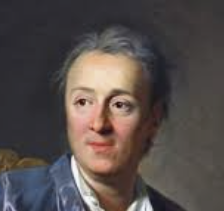
I am beginning to feel that I am growing old; soon, I shall have to eat mush like children. I shall no longer be able to speak, which will be a rather great advantage for others and but a small inconvenience for myself.... The time in which I count in years is gone; that in which I count in days is here.... I had thought that the fibers of the heart would grow callous with age, it's not at all the case. I am not sure that my sensitivity hasn't increased; everything moves me, affects me.... To fade out between a man feeling your pulse and another bothering your head; not to know where one comes from, why one came, where one is going ...
▼
Source
Letter to his sister Denise, as quoted in Diderot, Reason and Resonance (1982) by Élisabeth de Fontenay, pp. 270–271

3 months 4 weeks ago
Marxism exists in nineteenth-century thought as a fish exists in water; that is, it ceases to breathe anywhere else.
▼
Source
As quoted by , The lives of Michel Foucault (1993) p. 177. Citing 'Les Intellectuels et le Pouvoir', Le'Arc 49, 1972, pp. 3-10. Discussion with Gilles Deleuze, (4 March 1972). Reprinted, Le Nouvel Observateur, (8 May 1972) pp. 68-70. Tr. 'Intellectuals an
3 months 4 weeks ago
To be sure, we have to face at this point an important question; but it is a practical, not a theoretical question; it is the question of whether or not to accept the new linguistic forms. The acceptance cannot be judged as being either true or false because it is not an assertion. It can only be judged as being more or less expedient, fruitful, conducive to the aim for which the language is intended. Judgments of this kind supply the motivation for the decision of accepting or rejecting the kind of entities.
▼
Source
Ch. 3. What does acceptance of a kind of entities mean?
3 months 4 weeks ago
I mean, a genuinely productive society. I mean you could produce plenty of goods without much freedom, but I think the whole sort of creative life of man is ultimately impossible without a considerable measure of individual freedom, of initiative, creation, all these things which we value, and I think value properly, are impossible without a large measure of freedom.
3 months 4 weeks ago
It is the one great weakness of journalism as a picture of our modern existence, that it must be a picture made up entirely of exceptions. We announce on flaring posters that a man has fallen off a scaffolding. We do not announce on flaring posters that a man has not fallen off a scaffolding. Yet this latter fact is fundamentally more exciting, as indicating that that moving tower of terror and mystery, a man, is still abroad upon the earth. That the man has not fallen off a scaffolding is really more sensational; and it is also some thousand times more common. But journalism cannot reasonably be expected thus to insist upon the permanent miracles. Busy editors cannot be expected to put on their posters, "Mr. Wilkinson Still Safe," or "Mr. Jones, of Worthing, Not Dead Yet." They cannot announce the happiness of mankind at all. They cannot describe all the forks that are not stolen, or all the marriages that are not judiciously dissolved. Hence the complex picture they give of life is of necessity fallacious; they can only represent what is unusual. However democratic they may be, they are only concerned with the minority.
▼
Source
Part IV: "A Discussion at Dawn", 2nd paragraph
3 months 4 weeks ago
If there is one realm in which it is essential to be sublime, it is in wickedness. You spit on a petty thief, but you can’t deny a kind of respect for the great criminal.
3 months 4 weeks ago
To sum up all these steps, each of which is very lengthy and complex, we will have put the game of truth back in the network of constraints and dominations. Truth, I should say rather, the system of truth and falsity, will have revealed the face it turned away from us for so long and which is that of its violence.
▼
Source
p. 4
3 months 4 weeks ago
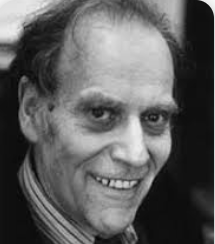
A student once interrupted him and said, "I just don't understand." He responded, "Why should you have the advantage over me?"
▼
Source
[https://web.archive.org/web/20040821091507/http://daily.nysun.com/Repository/getmailfiles.asp?Style=OliveXLib:ArticleToMail&Type=text/html&Path=NYS/2004/08/03&ID=Ar01400 Remembering Sidney Morgenbesser,] by Gary Shapiro in 'The New York Sun' 3 August 200
3 months 4 weeks ago
An intellectual is a person who has discovered something more interesting than sex.
▼
Source
As quoted without citation in Discovering Evolutionary Ecology: Bringing Together Ecology And Evolution (2006) by Peter J. Mayhew, p. 24
3 months 4 weeks ago
Heaven shall forgive you Bridge at dawn, The clothes you wear — or do not wear — And Ladies’ Leap-frog on the lawn And dyes and drugs, and petits verres.
▼
Source
Ballade d'une Grande Dame
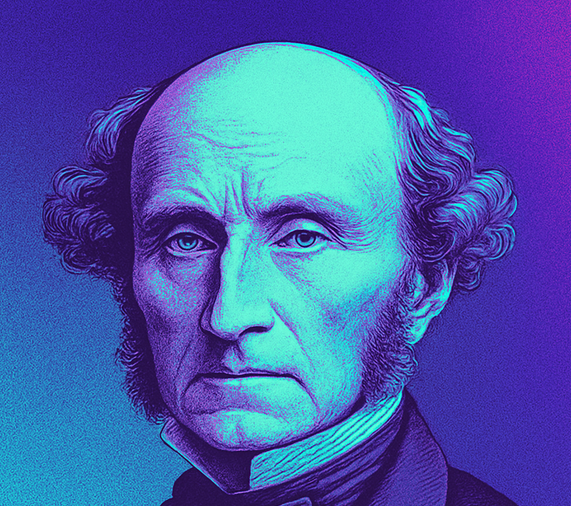
3 months 4 weeks ago
It is not because men's desires are strong that they act ill; it is because their consciences are weak.
▼
Source
On Liberty (1859)
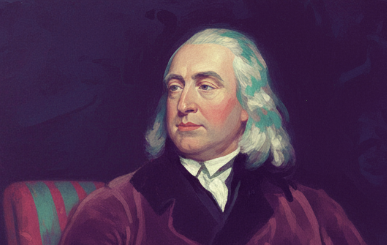
3 months 4 weeks ago
To what shall the character of utility be ascribed, if not to that which is a source of pleasure?
▼
Source
Théorie des peines et des récompenses (1811); translation by Richard Smith, The Rationale of Reward, J. & H. L. Hunt, London, 1825, Bk. 3, Ch. 1
3 months 4 weeks ago
Of course it would not do for the church to allow a man to die in peace who had added to the intellectual wealth of the world. The moment Diderot was dead, Catholic priests began painting and recounting the horrors of his expiring moments. They described him as overcome with remorse, as insane with fear; and these falsehoods have been repeated by the Protestant world, and will probably be repeated by thousands of ministers after we are dead. The truth is, he had passed his threescore years and ten. He had lived for seventy-one years. He had eaten his supper. He had been conversing with his wife. He was reclining in his easy chair. His mind was at perfect rest. He had entered, without knowing it, the twilight of his last day. Above the horizon was the evening star, telling of sleep. The room grew still and the stillness was lulled by the murmur of the street. There were a few moments of perfect peace. The wife said, "He is asleep." She enjoyed his repose, and breathed softly that he might not be disturbed. The moments wore on, and still he slept. Lovingly, softly, at last she touched him. Yes, he was asleep. He had become a part of the eternal silence.
▼
Source
Robert Green Ingersoll in "Diderot" in The Great Infidels (1881); The Works of Robert G. Ingersoll Vol. III (1900), p. 367
3 months 4 weeks ago
A great prison structure was planned, whose different levels would correspond exactly to the levels of the centralized administration. The scaffold, where the body of the tortured criminal had been exposed to the ritually manifested force of the sovereign, the punitive theatre in which the representation of punishment was permanently available to the social body, was replaced by a great enclosed, complex and hierarchized structure that was integrated into the very body of the state apparatus.
▼
Source
Chapter Three, The Gentle Way in Punishment

3 months 4 weeks ago
Dare to believe me. Dare!
▼
Source
Raimon to Regina. p. 31
3 months 4 weeks ago
A foreigner is a man who laughs at everything except jokes. He is perfectly entitled to laugh at anything, so long as he realises, in a reverent and religious spirit, that he himself is laughable. I was a foreigner in America; and I can truly claim that the sense of my own laughable position never left me. But when the native and the foreigner have finished with seeing the fun of each other in things that are meant to be serious, they both approach the far more delicate and dangerous ground of things that are meant to be funny. The sense of humour is generally very national; perhaps that is why the internationalists are so careful to purge themselves of it. I had occasion during the war to consider the rights and wrongs of certain differences alleged to have arisen between the English and American soldiers at the front. And, rightly or wrongly, I came to the conclusion that they arose from the failure to understand when a foreigner is serious and when he is humorous. And it is in the very nature of the best sort of joke to be the worst sort of insult if it is not taken as a joke.
▼
Source
[http://www.online-literature.com/chesterton/what-i-saw-in-america/10/ "Fads and Public Opinion"]
3 months 4 weeks ago
We need not suppose that when power resides in an exclusive class, that class will knowingly and deliberately sacrifice the other classes to themselves: it suffices that, in the absence of its natural defenders, the interest of the excluded is always in danger of being overlooked: and, when looked at, is seen with very different eyes from those of the persons whom it directly concerns.
▼
Source
Ch. III: The Ideally Best Polity
3 months 4 weeks ago
Parrhesia is ordinarily translated into English by "free speech"... the parrhesiastes is the one who uses parrhesia, i.e., the one who speaks the truth.
3 months 4 weeks ago
It is nonsense to assert that revelry, vice, ecstasy, passion, would become impossible if man and woman were equal in concrete matters; the contradictions that put the flesh in opposition to the spirit, the instant to time, the swoon of immanence to the challenge of transcendence, the absolute of pleasure to the nothingness of forgetting, will never be resolved; in sexuality will always be materialised the tension, the anguish, the joy, the frustration, and the triumph of existence. To emancipate woman is to refuse to confine her to the relations she bears to man, not to deny them to her; let her have her independent existence and she will continue none the less to exist for him also: mutually recognising each other as subject, each will yet remain for the other an other. The reciprocity of their relations will not do away with the miracles — desire, possession, love, dream, adventure — worked by the division of human beings into two separate categories; and the words that move us — giving, conquering, uniting — will not lose their meaning. On the contrary, when we abolish the slavery of half of humanity, together with the whole system of hypocrisy that it implies, then the 'division' of humanity will reveal its genuine significance and the human couple will find its true form.
3 months 4 weeks ago
A weak mind is like a microscope, which magnifies trifling things but cannot receive great ones.
▼
Source
Though sometimes misattributed to Chesterton, this is generally attributed to Philip Stanhope, 4th Earl of Chesterfield, with the first publication of this yet located is in a section of proverbs called "Diamond Dust" in Eliza Cook's Journal, No. 98 (15 M
3 months 4 weeks ago
Landlords... grow richer, as it were in their sleep, without working, risking, or economizing.
▼
Source
Book V, Chapter 1, Section 5
3 months 4 weeks ago
Life cannot wait until the sciences may have explained the universe scientifically. We cannot put off living until we are ready. The most salient characteristic of life is its coerciveness: it is always urgent, "here and now" without any possible postponement. Life is fired at us point-blank. And culture, which is but its interpretation, cannot wait any more than can life itself.
▼
Source
Original: "La vida no puede esperar a que las ciencias expliquen científicamente el Universo. No se puede vivir ad kalendas graecas. El atributo más esencial de la existencia es su perentoriedad: la vida es siempre urgente. Se vive aquí y ahora sin posibl
3 months 4 weeks ago
The hope may be entertained that some practitioner of the "sociology of knowledge" will one day have an interesting story to tell about -why the work of Michel Foucault generated such wide enthusiasm among certain intellectual elites for several decades in the latter half of the twentieth century. One or two hypotheses of my own may be hazarded. What is interesting about Foucault's unique rhetoric is that he steadfastly resists pronouncing explicit moral-political judgments, yet of course he is judging all the time. Foucault refuses to come clean on his normative commitments, but rather "insinuates" them throughout his work. This constitutes a kind of radical-left positivism that is somehow potently attractive to what I will call the hyper-liberal ethos of late modernity. The idea here is that one must avoid at all costs spelling out a normative vision, since it would ineluctably become the ground for a repressive regime of "normalization." This is clearly connected to the negativism one associates with postmodern writers.
▼
Source
Ronald Beiner, "Foucault's hyper‐liberalism", Critical Review: A Journal of Politics and Society (1995)

3 months 4 weeks ago
Either knowledge is not to be attained at all, or if at all, after death. For then, and not til then, the soul will be in herself alone and without the body.
3 months 4 weeks ago
Modern technology is not simply an extension of human making through the power of a perfected science, but is a new account of what it is to know and to make in which both activities are changed by their co-penetration.
▼
Source
p. 13
CivilSimian.com created by AxiomaticPanic, CivilSimian, Kalokagathia