
3 months 4 weeks ago
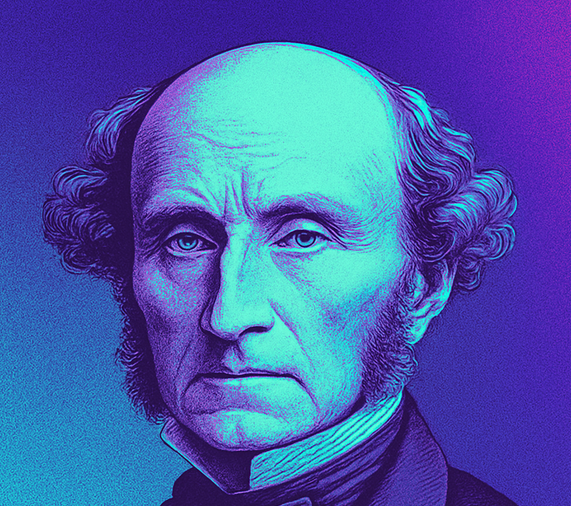
He thought human life a poor thing at best, after the freshness of youth and of unsatisfied curiosity had gone by. This was a topic on which he did not often speak, especially, it may be supposed, in the presence of young persons: but when he did, it was with an air of settled and profound conviction. He would sometimes say, that if life were made what it might be, by good government and good education, it would be worth having: but he never spoke with anything like enthusiasm even of that possibility.
▼
Source
([https://archive.org/details/autobiography01mill/page/48/mode/1up p. 48])
3 months 4 weeks ago
The form most contradictory to human life that can appear among the human species is the "self-satisfied man."
▼
Source
Chapter XI: The Self-Satisfied Age

3 months 4 weeks ago
And I rejoiced to think that I has found in Anaxagoras a teacher of the causes of existence such as I desired, and I imagined that he would tell me first whether the earth is flat or round; and then he would further explain that this position was the best, and I should be satisfied... and not want any other sort of cause. And I thought that I would then go and ask him about the sun and moon and stars, and he would explain to me their comparative swiftness, and their returnings and various states, and how their several affections, active and passive, were all for the best. For I could not imagine that when he spoke of mind as the disposer of them, he would give any other account of their being as they are, except that this was best; and I thought when he had explained to me in detail the cause of each and the cause of all, he would go on to explain to me what was best for me and what was best for all. ...I seized the books and read them as fast as I could in my eagerness to know the better and the worse.
3 months 4 weeks ago
Instead of gambling on the eternal impossibility of the revolution and on the fascist return of a war-machine in general, why not think that a new type of revolution is in the course of becoming possible, and that all kinds of mutating, living machines conduct wars, are combined and trace out a plane of consistence which undermines the plane of organization of the World and the States?
▼
Source
from Dialogues with Claire Parnet, p. 147 [emphasis in original].

3 months 4 weeks ago
I want to be free from freedom. Free.
3 months 4 weeks ago
The question was, whether, if the reformers of society and government could succeed in their objects, and every person in the community were free and in a state of physical comfort, the pleasures of life, being no longer kept up by struggle and privation, would cease to be pleasures.
▼
Source
([https://archive.org/details/autobiography01mill/page/145/mode/1up pp. 145-146])
3 months 4 weeks ago
Man is a substantial emigrant on a pilgrimage of being, and it is accordingly meaningless to set limits to what he is capable of being.
▼
Source
“Man has no nature”
3 months 4 weeks ago
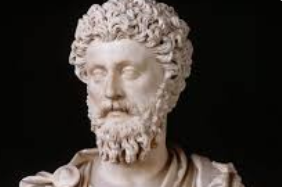
You could leave life right now. Let that determine what you do and say and think.
▼
Source
II, 11 (Hays translation)
3 months 4 weeks ago
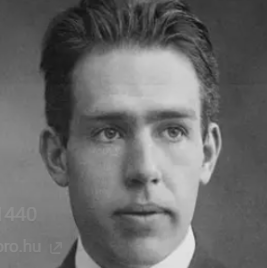
Oh, what idiots we all have been. This is just as it must be.
▼
Source
In response to Frisch & Meitner's explanation of nuclear fission, as quoted in The Physicists - A generation that changed the world (1981) by C.P.Snow, p. 96 | Variant: Oh what idiots we have all been not to have seen this before! This is wonderful! It ha
3 months 4 weeks ago
To be honest, I was somewhat disappointed... It's had effects around the margins, of course, but they have mostly been minor. When I wrote it, I really thought the book would change the world. I know it sounds a little grand now, but at the time the sixties still existed for us. It looked as if real changes were possible, and I let myself believe that this would be one of them. All you have to do is walk around the corner to McDonald's to see how successful I have been.
▼
Source
Quoted by Michael Specter on the impact of the book Animal Liberation, "[http://www.michaelspecter.com/1999/09/the-dangerous-philosopher/ The Dangerous Philosopher]", The New Yorker, 6 September 1999.
3 months 4 weeks ago
It is a disgrace to grow old through sheer carelessness before seeing what manner of man you may become by developing your bodily strength and beauty to their highest limit. But you cannot see that, if you are careless; for it will not come of its own accord.
▼
Source
Memorabilia III.7.8
3 months 4 weeks ago
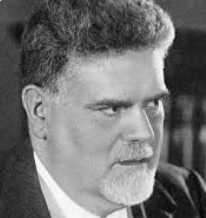
How many times has Fascism been accused with obtuse malevolence of barbarity? Well yes: once you understand the true significance of this barbarity we will boast of it, as the expression of the healthy energies which shatter false and baleful idols, and restore the health of the nation within the power of a State conscious of its sovereign rights which are its duties.
▼
Source
Che cosa è fascismo? ("What is fascism?"), lecture delivered in Florence (March 8, 1925)
3 months 4 weeks ago
I never knew a finer, tenderer, more sensitive or modest soul among the sons of men. There never was a more generous creature than he, nor a more modest.
▼
Source
Thomas Carlyle, response to Mill's death, quoted in Letters of Charles Eliot Norton, with Biographical Comment by His Daughter Sara Norton and M.A. DeWolfe Howe, Volume I (1913), pp. 495–496
3 months 4 weeks ago
Think on this doctrine,—that reasoning beings were created for one another's sake; that to be patient is a branch of justice, and that men sin without intending it.
▼
Source
IV, 3
3 months 4 weeks ago
Human social institutions can effect the course of human evolution. Just as climate-change, food supply, predators, and other natural forces of selection have molded our nature, so too can our culture.
▼
Source
Chapter 6, A New Understanding Of Ethics, p. 172
3 months 4 weeks ago
I would trade all of my technology for an afternoon with Socrates.
▼
Source
Steve Jobs in Newsweek (29 October 2001)

3 months 4 weeks ago
I have never felt any inward assurance of genius, or any presentiment of glory or of happiness. I have never seen myself in imagination great or famous, or even a husband, a father, an influential citizen. This indifference to the future, this absolute self-distrust, are, no doubt, to be taken as signs. What dreams I have are all vague and indefinite; I ought not to live, for I am now scarcely capable of living.
▼
Source
3 May 1849
3 months 4 weeks ago
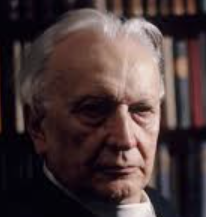
My path was not the normal one of professors of philosophy. I did not intend to become a doctor of philosophy by studying philosophy (I am in fact a doctor of medicine) nor did I by any means, intend originally to qualify for a professorship by a dissertation on philosophy. To decide to become a philosopher seemed as foolish to me as to decide to become a poet. Since my schooldays, however, I was guided by philosophical questions. Philosophy seemed to me the supreme, even the sole, concern of man. Yet a certain awe kept me from making it my profession.
3 months 4 weeks ago
Thou art a little soul bearing about a corpse, as Epictetus used to say.
▼
Source
IV, 41

3 months 4 weeks ago
It is no small pity, and should cause us no little shame, that, through our own fault, we do not understand ourselves, or know who we are. Would it not be a sign of great ignorance, my daughters, if a person were asked who he was, and could not say, and had no idea who his father or mother was, or from what country he came? Though that is a great stupidity, our own is incomparably greater if we make no attempt to discover what we are, and only know that we are living in these bodies and have a vague idea, because we have heard it, and because our faith tells us so, that we possess souls. As to what good qualities there may be in our souls, or who dwells within them, or how precious they are — those are things which seldom consider and so we trouble little about carefully preserving the soul's beauty. All our interest is centred in the rough setting of the diamond and in the outer wall of the castle – that is to say in these bodies of ours.
▼
Source
First Mansions, Ch. 1, as translated by E. Allison Peers (1961) p. 18

3 months 4 weeks ago
You may observe yourself...what a difference there is between the true strength of this nation and the fictitious one of the Whigs. How much time, how many lucky incidents, how many strains of power, how much money must go to create a majority of the latter; on the other hand, take but off the opinion that the Crown is another way inclined, the church interest rises with redoubled force, and by its natural genuine strength.
▼
Source
Letter to Mr. Drummond (10 November 1710), quoted in Gilbert Parke, Letters and Correspondence, Public and Private, of The Right Honourable Henry St. John, Lord Visc. Bolingbroke; during the Time he was Secretary of State to Queen Anne; with State Papers,
3 months 4 weeks ago
Just that you do the right thing. The rest doesn't matter. Cold or warm. Tired or well-rested. Despised or honored. Dying . . . or busy with other assignments. (Hays translation)
▼
Source
VI, 2

3 months 4 weeks ago
A well-written Life is almost as rare as a well-spent one.
▼
Source
Richter (1827).
3 months 4 weeks ago
I now inquire into your opinion, (to see) from what source you usurp this right to “the Church.”If, because the Lord has said to Peter, “Upon this rock will I build My Church,” “to thee have I given the keys of the heavenly kingdom;” or, “Whatsoever thou shalt have bound or loosed in earth, shall be bound or loosed in the heavens,” you therefore presume that the power of binding and loosing has derived to you, that is, to every Church akin to Peter, what sort of man are you, subverting and wholly changing the manifest intention of the Lord, conferring (as that intention did) this (gift) personally upon Peter? “On thee,” He says, “will I build My Church;” and, “I will give to thee the keys,” not to the Church; and, “Whatsoever thou shalt have loosed or bound,” not what they shall have loosed or bound.
▼
Source
Chapter XXI.—Of the Difference Between Discipline and Power, and of the Power of the Keys.
3 months 4 weeks ago
There are limitations indeed that would destroy the essential form of monarchy: or, in other words, a monarchical constitution may be changed, under pretence of limiting the monarch. This happened among us in the last century, when the vilest usurpation, and the most infamous tyranny, were established over our nation, by some of the worst and some of the meanest men in it. I will not say, that the essential form of monarchy should be preserved, tho the preservation of it were to cause the loss of liberty. Salus reipsuprema lex esto, is a fundamental law: and sure I am, the safety of a commonwealth is ill provided for, if the liberty be given up. But this I presume to say, and can demonstrate, that all the limitations necessary to preserve liberty, as long as the spirit of it subsists, and longer than that, no limitations of monarchy, nor any other form of government, can preserve it, are compatible with monarchy.
▼
Source
p. 96
3 months 4 weeks ago
Direct thy attention to what is said. Let thy understanding enter into the things that are doing and the things which do them.
▼
Source
VII, 30
3 months 4 weeks ago
Has any man, or any society of men, a truth to speak, a piece of spiritual work to do; they can nowise proceed at once and with the mere natural organs, but must first call a public meeting, appoint committees, issue prospectuses, eat a public dinner; in a word, construct or borrow machinery, wherewith to speak it and do it. Without machinery, they were hopeless, helpless.
3 months 4 weeks ago
A novel is never anything but a philosophy put into images. And in a good novel, the whole of the philosophy has passed into the images. But if once the philosophy overflows the characters and action, and therefore looks like a label stuck on the work, the plot loses its authenticity and the novel its life. Nevertheless, a work that is to last cannot dispense with profound ideas. And this secret fusion between experiences and ideas, between life and reflection on the meaning of life, is what makes the great novelist.
▼
Source
Review of Nausea by Jean-Paul Sartre, published in the newspaper Alger Républicain (20 October 1938), p. 5; reprinted in Selected Essays and Notebooks, translated and edited by Philip Thody
3 months 4 weeks ago
We worship unity in trinity, and trinity in unity; neither confounding the person nor dividing the substance. There is one person of the Father, another of the Son, and another of the Holy Ghost; but the Godhead of the Father, and of the Son, and of the Holy Ghost, is all one; the glory equal, the majesty co-eternal.
▼
Source
As quoted in Dictionary of Burning Words of Brilliant Writers (1895) edited by Josiah Hotchkiss Gilbert, p. 285 | Actually from the Athanasian Creed: Fides autem catholica haec est: ut unum Deum in Trinitate, et Trinitatem in unitate veneremur. Neque conf
3 months 4 weeks ago
And now to explain colours. I suppose that as bodies excite sounds of various tones and consequently vibrations, in the air of various bignesses, so when rays of light by impinging on the stiff refracting superficies excite vibrations in the ether, these rays excite vibrations of various bignesses... therefore, the ends of the capillamenta of the optic nerve which front or face the retina being such refracting superficies, when the rays impinge on them they must there excite these vibrations, which vibrations (like those of sound in a trumpet) will run along the pores or crystalline pith of the capillamenta through the optic nerves into the sensorium (which light itself cannot do), and there, I suppose, affect the sense with various colours, according to their bigness and mixture—the biggest with the strongest colours, reds and yellows; the least with the weakest, blues and violets; middle with green; and a confusion of all with white, much after the manner, that in the sense of hearing, nature makes use of aereal vibrations of several bignesses to generate sounds of divers tones; for the analogy of nature is to be observed.
3 months 4 weeks ago
In so far as we are individuals, each of us is a fragment of a species, a part of this universe, a single dot in the immense network of forces and influences, cosmic, ethnic, historic, whose laws we obey. We are subject to the determination of the physical world. But each man is also a person, he is not subject to the stars and atoms; for he subsists entirely with the very subsistence of his spiritual soul, and the latter is in him a principle of creative unity, of independence and of freedom.
▼
Source
Scholasticism and Politics (1940)
3 months 4 weeks ago
Short-lived are both the praiser and the praised, and rememberer and the remembered: and all this in a nook of this part of the world; and not even here do all agree, no, not any one with himself: and the whole earth too is a point.
▼
Source
VIII, 21

3 months 4 weeks ago
Haven't people learned yet that the time of superficial intellectual games is over, that agony is infinitely more important than syllogism, that a cry of despair is more revealing than the most subtle thought, and that tears always have deeper roots than smiles?
3 months 4 weeks ago
He who first shortened the labor of copyists by device of movable types was disbanding hired armies, and cashiering most kings and senates, and creating a whole new democratic world: he had invented the art of printing.
▼
Source
Bk. I, ch. 5.
3 months 4 weeks ago
I was assailed by memories of a life that wasn't mine anymore, but one in which I'd found the simplest and most lasting joys.
3 months 4 weeks ago
Ignorance gave this release the name of death, but properly it is the soul's birth and a charter that makes for her liberty.
3 months 4 weeks ago
It has never been recommended to confuse "loving" with "seeking to please"… ...Salome pleased Herod's guests; I can hardly believe she was burning with love for them. As for poor John the Baptist... ...she certainly did not envelop him in her love.
▼
Source
p. 91.
3 months 4 weeks ago
And you can also commit injustice by doing nothing. (Hays translation)
▼
Source
IX, 5
3 months 4 weeks ago
All the concessions we make to Eros are holes in our desire for the absolute.
3 months 4 weeks ago
History a distillation of Rumour.
▼
Source
Pt. I, Bk. VII, ch. 5.
3 months 4 weeks ago
The absurd does not liberate; it binds. It does not authorize all actions. "Everything is permitted" does not mean that nothing is forbidden.
3 months 4 weeks ago
Thus, Reader, have I published that knowledge which God gave me "to the fruit of a good conscience." I have not bushelled my light nor buried my talent in the ground. I will now withdraw and leave the stage to the next actor some Peripatetic perhaps, whose sic probo shall serve me for a comedy. I have seen scolds laughed at but never admired: so he that multiplies discourses makes a serious cause ridiculous.
3 months 4 weeks ago
The secret belief that the Lord of conscience loves and accepts each faithful sacrifice is the ultimate and sufficient support of all goodness; dispensing with the chorus of approving voices; replacing all vain self-reliance with a Divine strength; and with the peace of a reconciled nature consoling the inevitable sorrows of a devoted life.
▼
Source
Vol. II, p. 190.
3 months 4 weeks ago
With the abolition of otium and of the ego no aloof thinking is left. … Without otium philosophical thought is impossible, cannot be conceived or understood.
▼
Source
p. 39.
3 months 4 weeks ago
Acquire the contemplative way of seeing how all things change into one another, and constantly attend to it, and exercise thyself about this part [of philosophy]. For nothing is so much adapted to produce magnanimity. ...But as to what any man shall say or think about him, or do against him, he never even thinks of it, being himself contented with these two things: with acting justly in what he now does, and being satisfied with what is now assigned to him; and he lays aside all distracting and busy pursuits, and desires nothing else than to accomplish the straight course through the law, and by accomplishing the straight course to follow God.
▼
Source
X, 11
3 months 4 weeks ago
Religion may be purified. This great work was begun two hundred years ago: but men can only bear light to come in upon them by degrees.
▼
Source
[http://books.google.es/books?id=aItKAAAAcAAJ&printsec=frontcover&hl=es#v=onepage&q&f=false The critical review, or annals of literature, Volume XXVI], by A Society of Gentlemen (1768) p. 450
3 months 4 weeks ago
The only interesting philosophers are the ones who have stopped thinking and have begun to search for happiness.
3 months 4 weeks ago
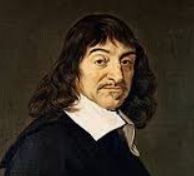
In the theory of the state of the seventeenth century, the monarch is identified with God and has in the state a position exactly analogous to that attributed to God in the Cartesian system of the world.
▼
Source
Carl Schmitt, Political Theology
3 months 4 weeks ago
What I called the perplexed jungle of Paganism sprang, we may say, out of many roots: every admiration, adoration of a star or natural object, was a root or fibre of a root; but Hero-worship is the deepest root of all; the tap-root, from which in a great degree all the rest were nourished and grown.
3 months 4 weeks ago
So many men are deprived of grace. How can one live without grace? One has to try it and do what Christianity never did: be concerned with the damned.
CivilSimian.com created by AxiomaticPanic, CivilSimian, Kalokagathia