
3 months 4 weeks ago
The freaks of chance are not determinable by calculation.
▼
Source
Book I, 1.84-[3]
3 months 4 weeks ago
Since no example of Leninist socialism is other than totalitarian and bureaucratic, one wonders how the doctrinaire ideologists can dismiss so disdainfully those who point out that the promise of socialism in freedom, while surely praiseworthy, remains a promise only, not something experienced in reality. The utopia of socialism with a human face has been crushed everywhere even before it could be born. How distressing that becoming humane, which should be the least we could expect from a regime dedicated to liberating humanity, should present for socialism a problem as impossible as squaring the circle.
▼
Source
p. 57
3 months 4 weeks ago
The significance of God, cause, number, substance or soul consists, as James asserts, in nothing but the tendency of the given concept to make us act or think. If the world should reach a point at which it ceases to care not only about such metaphysical entities but also about murders perpetrated behind closed frontiers or simply in the dark, one would have to conclude that the concepts of such murders have no meaning, that they represent no ‘distinct ideas’ or truths, since they do not make any ‘sensible difference to anybody.’
▼
Source
describing the pragmatist view, pp. 46-47.
3 months 4 weeks ago
Pain is the opposite of strength, and so is anger.
▼
Source
XI, 18(Hays translation)
3 months 4 weeks ago
A republic is not founded on virtue, but on the ambition of its citizens.
▼
Source
p. 57

3 months 4 weeks ago
Espousing the melancholy of ancient symbols, I would have freed myself.

3 months 4 weeks ago
I should say sincerity, a deep, great, genuine sincerity, is the first characteristic of all men in any way heroic.
3 months 4 weeks ago
Nothing can discourage the appetite for divinity in the heart of man.
3 months 4 weeks ago
The Spartans meanwhile, man to man, and with their war songs in the ranks, exhorted each brave comrade to remember what he had learned before; well aware that the long training of action was of more use for saving lives than any brief verbal exhortation, though ever so well delivered.
▼
Source
Book V, 5.69-[2]
3 months 4 weeks ago
One can imagine a computer simulation of the action of peptides in the hypothalamus that is accurate down to the last synapse. But equally one can imagine a computer simulation of the oxidation of hydrocarbons in a car engine or the action of digestive processes in a stomach when it is digesting pizza. And the simulation is no more the real thing in the case of the brain than it is in the case of the car or the stomach. Barring miracles, you could not run your car by doing a computer simulation of the oxidation of gasoline, and you could not digest pizza by running the program that simulates such digestion. It seems obvious that a simulation of cognition will similarly not produce the effects of the neurobiology of cognition.
▼
Source
"Is the Brain’s Mind a Computer Program?", Scientific American (January 1990).
3 months 4 weeks ago
Act well at the moment, and you have performed a good action to all eternity.
▼
Source
Reported in Josiah Hotchkiss Gilbert, Dictionary of Burning Words of Brilliant Writers (1895), p. 4
3 months 4 weeks ago
A person who doesn't know what the universe is doesn't know who they are. A person who doesn't know their purpose in life doesn't know who they are or what the universe is. A person who doesn't know any of these things doesn't know why they are here. So what to make of people who seek or avoid the praise of those who have no knowledge of where or who they are?
▼
Source
VIII. 52
3 months 4 weeks ago
With the world, do not resort to injuries, but only to irony and gayety: injury revolts, while irony makes one reflect, and gayety disarms.
▼
Source
p. 180
3 months 4 weeks ago
Man starts over again everyday, in spite of all he knows, against all he knows.
3 months 4 weeks ago
At bottom, it is the Poet's first gift, as it is all men's, that he have intellect enough. He will be a Poet if he have: a Poet in word; or failing that, perhaps still better, a Poet in act. Whether he write at all; and if so, whether in prose or in verse, will depend on accidents: who knows on what extremely trivial accidents, — perhaps on his having had a singing-master, on his being taught to sing in his boyhood! But the faculty which enables him to discern the inner heart of things, and the harmony that dwells there (for whatsoever exists has a harmony in the heart of it, or it would not hold together and exist), is not the result of habits or accidents, but the gift of Nature herself; the primary outfit for a Heroic Man in what sort soever. To the Poet, as to every other, we say first of all, See. If you cannot do that, it is of no use to keep stringing rhymes together, jingling sensibilities against each other, and name yourself a Poet; there is no hope for you. If you can, there is, in prose or verse, in action or speculation, all manner of hope. The crabbed old Schoolmaster used to ask, when they brought him a new pupil, 'But are ye sure he's not a dunce?' Why, really one might ask the same thing, in regard to every man proposed for whatsoever function; and consider it as the one inquiry needful: Are ye sure he's.
3 months 4 weeks ago
Truth, like light, blinds. Falsehood, on the contrary, is a beautiful twilight that enhances every object.
3 months 4 weeks ago
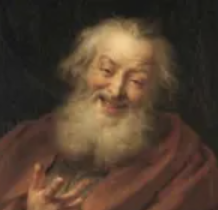
We know nothing accurately in reality, but [only] as it changes according to the bodily condition, and the constitution of those things that flow upon [the body] and impinge upon it.
▼
Source
Freeman (1948), p. 142
3 months 4 weeks ago
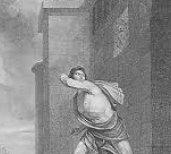
Every room Hath blaz'd with lights, and bray'd with minstrelsy.
▼
Source
Flavius, scene ii
3 months 4 weeks ago
I have only one real message in this lecture, and that is: consciousness is a biological phenomenon, like photosynthesis, digestion, mitosis—you know all the biological phenomena—and once you accept that, most, if not all about the hard problems of consciousness simply evaporate.
3 months 4 weeks ago
The public seldom forgive twice.
▼
Source
No. 606
3 months 4 weeks ago
Marcus Aurelius was the most modest, introspective and long-suffering of monarchs... [H]e was a good man and an enlightened ruler who wished only the best for his people. He had been carefully chosen and groomed for his job. Sickly and serious-minded as a child, he had developed (under the guidance of 25 distinguished tutors) into a dedicated Stoic, a practitioner of a philosophy that preached simplicity, self-discipline, endurance and duty. Here was the true philosopher-king that Plato had talked about long ago...
▼
Source
LIFE (Vol. 60, No. 22), 3 June 1966, p. 70
3 months 4 weeks ago
Mock on, mock on, Voltaire Rousseau;Mock on, mock on, 'tis all in vain!You throw the sand against the wind,And the wind blows it back again.
▼
Source
William Blake, Poems from Blake's Notebook, "Mock On" (1800-1803)
3 months 4 weeks ago
Death poses a problem which replaces all the others. What is deadly to philosophy, to the naive belief in the hierarchy of perplexities.
3 months 4 weeks ago
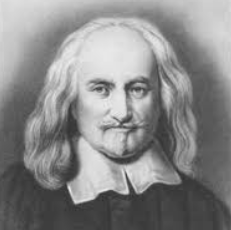
But Aversion wee have for things, not only which we know have hurt us; but also that we do not know whether they will hurt us, or not.
▼
Source
The First Part, Chapter 6, p. 24
3 months 4 weeks ago
I esteem the modern error, That all goes by self-interest and the checking and balancing of greedy knaveries, and that in short, there is nothing divine whatever in the association of men, a still more despicable error, natural as it is to an unbelieving century, than that of a "divine right" in people called Kings. I say, Find me the true Konning, King, or Able-man, and he has a divine right over me.
3 months 4 weeks ago
He who intends to enjoy life should not be busy about many things, and in what he does should not undertake what exceeds his natural capacity. On the contrary, he should have himself so in hand that even when fortune comes his way, and is apparently ready to lead him on to higher things, he should put her aside and not o'erreach his powers. For a being of moderate size is safer than one that bulks too big.
3 months 4 weeks ago
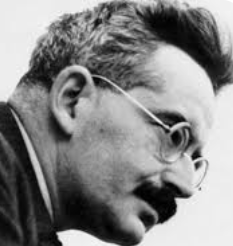
In what time does man live? The thinkers have always known that he does not live in any time at all. The immortality of thoughts and deeds banishes him to a timeless realm at whose heart an inscrutable death lies in wait. ... Devoured by the countless demands of the moment, time slipped away from him; the medium in which the pure melody of his youth would swell was destroyed. The fulfilled tranquility in which his late maturity would ripen was stolen from him. It was purloined by everyday reality, which, with its events, chance occurrences, and obligations, disrupted the myriad opportunities of youthful time, immortal time. ... From day to day, second to second, the self preserves itself, clinging to that instrument: time, the instrument that it was supposed to play.
▼
Source
"The Metaphysics of Youth," in Walter Benjamin: Selected Writings, Vol. 1 (1996), pp. 10-11
3 months 4 weeks ago
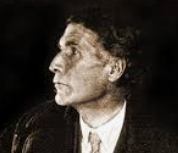
Leisurely, copious, humorous.
▼
Source
Conrad Aiken, review of Wolf Solent in The New York Post, quoted in H. P. Collins, John Cowper Powys: Old Earth-Man (1966), p. 77
3 months 4 weeks ago
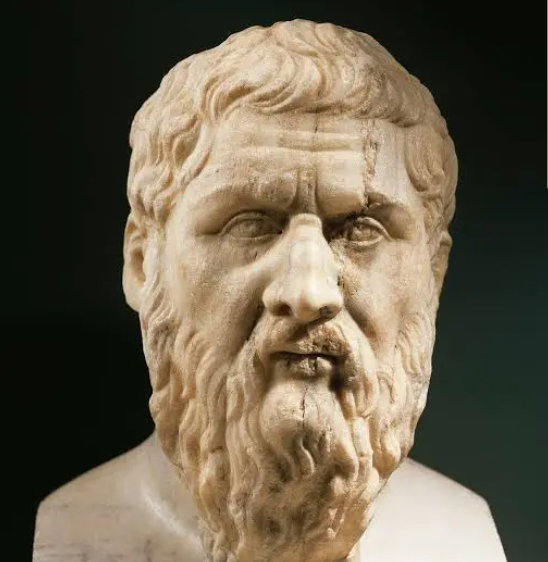
The whole business of the kingly weaving is comprised in this and this alone: in never allowing the self-restrained characters to be separated from the courageous, but in weaving them together by common beliefs and honors and dishonors and opinions and interchanges of pledges, thus making of them a smooth and, as we say, well-woven fabric, and then entrusting to them in common forever the offices of the state.
▼
Source
310e-311a
3 months 4 weeks ago
We always love . . . despite; and that "despite" covers an infinity.
3 months 4 weeks ago
And the Science of them, is the true and onely Moral Philosophy. For Moral Philosophy is nothing else but the Science of what is Good, and Evill, in the conversation, and Society of mankind. Good, and Evill, are names that signify our Appetites, and Aversions; which in different tempers, customes, and doctrines of men, are different:
▼
Source
The First Part, Chapter 15, p. 79
3 months 4 weeks ago
Man, little as he may suppose it, is necessitated to obey superiors. He is a social being in virtue of this necessity; nay he could not be gregarious otherwise. He obeys those whom he esteems better than himself, wiser, braver; and will forever obey such; and even be ready and delighted to do it.
3 months 4 weeks ago
Of all things the worst to teach the young is dalliance, for it is this that is the parent of those pleasures from which wickedness springs.
3 months 4 weeks ago
[I]n the wake of the growth of the animal-rights movement, there has recently arisen a hitherto unfelt need to demonise and demean our non-human victims - and those who try to help them - now that our previously well-nigh unquestioned right to kill and exploit them is being challenged. Bloodsports enthusiasts, for instance, currently spend a lot of time cataloguing the alleged depredations of our victims on the environment. Recreational animal-killers go to extraordinarily lengths to avoid admitting that they themselves enjoy hunting and killing other creatures for fun. But then until a few years ago such rationalisations seemed scarcely called for. Selfish DNA had honed our intuitions so that the most agonising bloodshed seemed simply "natural".
▼
Source
"[http://www.animal-rights-library.com/texts-m/pearce01.htm The Post-Darwinian Transition]", The Animal Rights Library, 1996
3 months 4 weeks ago
History breaks down in images not into stories.
3 months 4 weeks ago
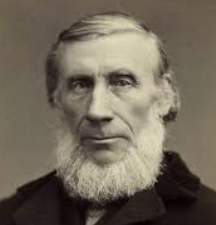
The Christian philosopher of to-day has larger capacities and fuller knowledge than the Israelite of the time of Moses. What the one accepted as literal truth the other cannot accept save as a myth or figure. The children of Israel received without idealisation the statements of their great lawgiver. To them the tables of the law were true tablets of stone, prepared, engraved, broken, and re-engraved; while the graving tool which thus inscribed the law was held undoubtingly to be the finger of God. To us such conceptions are impossible. We may by habit use the words, but we attach to them no definite meaning.
3 months 4 weeks ago
Beholding beauty with the eye of the mind, he will be enabled to bring forth, not images of beauty, but realities (for he has hold not of an image but of a reality), and bringing forth and nourishing true virtue to become the friend of God and be immortal, if mortal man may.
▼
Source
212
3 months 4 weeks ago
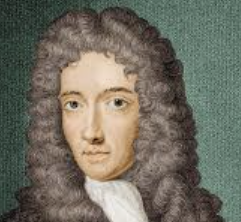
I find that even Eminent Writers (such as Raymund Lully, Paracelsus, and others) do so abuse the termes they employ, that as they will now and then give divers things one name, so they will oftentimes give one thing, many Names; and some of them (perhaps) such, as do much more properly signifie some Distinct Body of another kind; nay even in Technical Words or Termes of Art, they refrain not from this Confounding Liberty; but will, as I have Observ'd call the same Substance, sometimes the Sulphur, and Sometimes the Mercury, of a Body.
3 months 4 weeks ago
A people represents not so much an aggregate of ideas and theories as of obsessions.
3 months 4 weeks ago
Thomas Hobbes was the first sociobiologist, two hundred years before Darwin.
▼
Source
Daniel Dennett, Darwin's Dangerous Idea, p. 453
3 months 4 weeks ago
All great peoples are conservative; slow to believe in novelties; patient of much error in actualities; deeply and forever certain of the greatness that is in law, in custom once solemnly established, and now long recognized as just and final.
3 months 4 weeks ago
I predict we will abolish suffering throughout the living world. Our descendants will be animated by gradients of genetically pre-programmed well-being that are orders of magnitude richer than today's peak experiences.
▼
Source
Quoted in Ethics Matters (2012) by Peter and Charlotte Vardy, p. 114
3 months 4 weeks ago
Proverbs is in many respects a work on ethics, presenting arguments concerning the manner in which moral precepts relate to life and the good; Job investigates the reasons good individuals (and, by implication, good nations) should suffer catastrophe; Esther seeks an account of how God’s will works in political circumstances in which one sees nothing but the decisions and deeds of human actors; and so forth.
3 months 4 weeks ago
Think of transitional processes of various kinds: waking from sleep, emerging from a coma or from general anesthesia, a fetus developing sentience in the womb, or a lineage evolving sentience over millions of years. In all of these cases, we face the question of whether there is a sudden jump from the complete absence of phenomenal consciousness to its presence in at least minimal form – a ‘lights on’ moment – or a gradual transition with a region of borderline cases in which there is no determinant fact of the matter about whether phenomenal consciousness is present or absent. On this second view, the metaphor of the light switch is no longer appropriate (not even a dimmer switch, because a dimmer switch still has a sharp transition from off to on). The transition is more like the transition from being non-bald to bald, or young to old, where there is no sharp threshold, no single moment at which the transition happens
▼
Source
[https://confessionsofaconservative.com/2024/11/18/the-edge-of-sentience-and-the-beauty-of-being-wrong/]
3 months 4 weeks ago
Necessity is the mother of invention.
▼
Source
Commonly misattributed due to Benjamin Jowett's popular idiomatic translation (1871) of Plato's Republic, Book II, 369c as "The true creator is necessity, who is the mother of our invention." Jowett's translation is noted for injecting flowery, if n
3 months 4 weeks ago
His published works contain many well-authenticated chemical facts, which are commonly held to be the discovery of a later time.
3 months 4 weeks ago
We are all secularised anarchists today.
3 months 4 weeks ago
In the lowest broad strata of the population, equally as in the highest and narrowest, are produced men of every kind of genius; man for man, your chance of genius is as good among the millions as among the units;—and class for class, what must it be! From all classes, not from certain hundreds now but from several millions, whatsoever man the gods had gifted with intellect and nobleness, and power to help his country, could be chosen: O Heavens, could,—if not by Tenpound Constituencies and the force of beer, then by a Reforming Premier with eyes in his head, who I think might do it quite infinitely better. Infinitely better. For ignobleness cannot, by the nature of it, choose the noble: no, there needs a seeing man who is himself noble, cognizant by internal experience of the symptoms of nobleness.
3 months 4 weeks ago
The Hedonistic Imperative outlines how genetic engineering and nanotechnology will abolish suffering in all sentient life.This project is ambitious but technically feasible. It is also instrumentally rational and ethically mandatory. The metabolic pathways of pain and malaise evolved only because they once served the fitness of our genes. They will be replaced by a different sort of neural architecture. States of sublime well-being are destined to become the genetically pre-programmed norm of mental health. The world's last aversive experience will be a precisely dateable event.Two hundred years ago, powerful synthetic pain-killers and surgical anesthetics were unknown. The notion that physical pain could be banished from most people's lives would have seemed absurd. Today most of us in the technically advanced nations take its routine absence for granted. The prospect that what we describe as psychological pain, too, could ever be banished is equally counter-intuitive. The feasibility of its abolition turns its deliberate retention into an issue of social policy and ethical choice.
▼
Source
[https://www.hedweb.com/hedab.htm Abstract]
3 months 4 weeks ago
The problem is, eternity is barred to humans, and so humans, all too painfully aware of that and entertaining little hope of appealing against that verdict of fate, seek to stifle and deafen their tragic wisdom in a hubbub of frail and fleeting pleasures. This admittedly being a false calculation—for the same reason which prompted it (that tragic wisdom can never be chased or conjured away for good)—they condemn themselves, whatever their material wealth, to perpetual spiritual poverty: to continuous unhappiness (‘A man is as unhappy as he has convinced himself to be’). Instead of seeking the way to happiness within the limits of their predicament, they take a long detour, hoping that somewhere along the route their odious and repulsive destiny may be escaped or fooled—only to land back in the despair that prompted them to start on their voyage of (dearly wished for, yet unattainable) discovery. The only discovery humans can possibly make on that voyage is that the route they have taken was but a detour that sooner or later will bring them back to the starting line.
▼
Source
[paraphrasing the view of Seneca], p. 34.
CivilSimian.com created by AxiomaticPanic, CivilSimian, Kalokagathia