
3 months 4 weeks ago
It should now be clear that "wonder" and philosophizing are connected with each other in a more essential sense than may at first appear in the statement, "Philosophy begins in wonder." For wonder is not merely the beginning, in the sense of initium, the first stage or phase of philosophy. Rather, wonder is the beginning in the sense of the "principle" (principium), the abiding, ever-intrinsic origin of philosophizing. It is not true to say that the philosopher, insofar as he philosophizes, ever "emerges from his wonder" — if he does depart from his state of wonder, he has ceased to philosophize.
▼
Source
pp. 105–106

3 months 4 weeks ago
The skeptic is the least mysterious man in the world, and yet, starting from a certain moment, he no longer belongs to this world.

3 months 4 weeks ago
What the Universities have mainly done—what I have found the University did for me, was that it taught me to read in various languages and various sciences, so that I could go into the books that treated of these things, and try anything I wanted to make myself master of gradually, as I found it suit me. Whatever you may think of all that, the clearest and most imperative duty lies on every one of you to be assiduous in your reading; and learn to be good readers, which is, perhaps, a more difficult thing than you imagine. Learn to be discriminative in your reading—to read all kinds of things that you have an interest in, and that you find to be really fit for what you are engaged in.
3 months 4 weeks ago
After Hegel, philosophy confronts the possibility of its own death, and in some sense has to do so if it is to remain the most fundamental kind of thinking.
▼
Source
Chapter 4, Philosophy As Writing: The Case Of Hegel, p. 88
3 months 4 weeks ago
If A were not allowed his better position, B would be even worse off than he is.
▼
Source
Chapter II, Section 17, pg. 103
3 months 4 weeks ago
From the constitution of the solar system it is... probable that the temperature of the poles... are a little less than that of space... the same for all... although the distances from the sun may be unequal.

3 months 4 weeks ago
In the history of bourgeois society, legislative reform served to strengthen progressively the rising class till the latter was sufficiently strong to seize political power, to suppress the existing juridical system and to construct itself a new one.
▼
Source
Ch.8
3 months 4 weeks ago
Change alone is eternal, perpetual, immortal.
▼
Source
Unverified attribution noted in Respectfully Quoted: A Dictionary of Quotations (1993), ed. Suzy Platt, Library of Congress, p. 39; compare Heraclitus: Nothing endures but change.
3 months 4 weeks ago
If death had only negative aspects, dying would be an unmanageable action.
3 months 4 weeks ago
Can there be a more horrible object in existence than an eloquent man not speaking the truth?
▼
Source
Address as Lord Rector of Edinburgh University, (1866), reported in Bartlett's Familiar Quotations, 10th ed. (1919).
3 months 4 weeks ago
For it is the same thing that can be thought and that can be.
▼
Source
Frag. B 3, quoted by Plotinus, Enneads V, i.8
3 months 4 weeks ago
Being happy involves both a certain achievement in action and a rational assurance about the outcome.
▼
Source
Chapter IX, Section 83, p. 549
3 months 4 weeks ago
It may, perhaps, be true, though we cannot distinctly see it to be so, that as all finite things require a cause, infinites admit of none. It is evident, that nothing can begin to be without a cause; but it by no means follows from thence, that that must have had a cause which had no beginning. But whatever there may be in this conjecture, we are constrained, in pursuing the train of causes and effects, to stop at last at something uncaused. That any being should be self created is evidently absurd, because that would suppose that he had a being before he had, or that he existed, and did not exist at the same time. For want of clearer knowledge of this subject, we are obliged to content ourselves with terms that convey only negative ideas, and to say that God is a being untreated or uncaused; and this is all that we mean when we sometimes say that he is self existent.
▼
Source
Vol. I : Part I : The Being and Attributes of God, § 1 : Of the existence of God, and those attributes which art deduced from his being considered as uncaused himself, and the cause of every thing else (1772)
3 months 4 weeks ago
If we assume the viewpoint claimed as his own by Lenin and we fear the influence of intellectuals in the proletarian movement, we can conceive of no greater danger to the Russian party than Lenin's plan of organization. Nothing will more surely enslave a young labor movement to an intellectual elite hungry for power than this bureaucratic straightjacket, which will immobilize the movement and turn it into an automaton manipulated by a Central Committee. On the other hand there is no more effective guarantee against opportunist intrigue and personal ambition than the independent revolutionary action of the proletariat, as a result of which the workers acquire the sense of political responsibility and self-reliance.
3 months 4 weeks ago
Thus, because Christian morals leave animals out of consideration … therefore in philosophical morals they are of course at once outlawed; they are merely "things," simply means to ends of any sort; and so they are good for vivisection, for deer-stalking, bull-fights, horse-races, etc., and they may be whipped to death as they struggle along with heavy quarry carts. Shame on such a morality … which fails to recognize the Eternal Reality immanent in everything that has life, and shining forth with inscrutable significance from all eyes that see the sun!
▼
Source
Part II, Ch. VI, [https://archive.org/stream/basisofmorality00schoiala#page/94/mode/2up pp. 94]-95
3 months 4 weeks ago
I have all the defects of other people yet everything they do seems to me inconceivable.
3 months 4 weeks ago
When Froude took Lord Wolseley to see Carlyle, the sage bade the laurelled commander lock the doors of the parliamentary palaver, and walk off with the key.
▼
Source
John Morley, Recollections, Volume II (1917), p. 49
3 months 4 weeks ago
The happiness which belongs to man, is that state in which he enjoys as many of the good things, and suffers as few of the evils incident to human nature as possible; passing his days in a smooth course of permanent tranquility. A wise man, though deprived of sight or hearing, may experience happiness in the enjoyment of the good things which yet remain; and when suffering torture, or laboring under some painful disease, can mitigate the anguish by patience, and can enjoy, in his afflictions, the consciousness of his own constancy.
3 months 4 weeks ago
Parmenides does not say a word about "Being" anywhere. The assertion that it is...amounts to ...the universe is a plenum; and ...there is no ...empty space ...From this it follows that there can be no such thing as motion. Instead of endowing the One with an impulse to change, as Herakleitos... Parmenides dismissed change as an illusion. He showed... if you take the One seriously you are bound to deny everything else. All previous solutions... had missed the point.
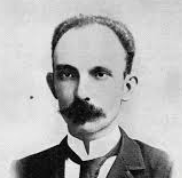
3 months 4 weeks ago
Man needs to go outside himself in order to find repose and reveal himself.
▼
Source
"Vivir en Sí" [To Live in Oneself] (1891)
3 months 4 weeks ago
Moderation, in the pursuit of honors or riches, is the only security against disappointment and vexation. A wise man, therefore, will prefer the simplicity of rustic life to the magnificence of courts.
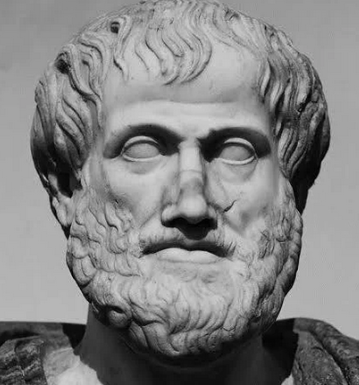
3 months 4 weeks ago
The ancient philosophers... all of them assert that the elements, and those things which are called by them principles, are contraries, though they establish them without reason, as if they were compelled to assert this by truth itself. They differ, however... that some of them assume prior, and others posterior principles; and some of them things more known according to reason, but others such as are more known according to sense: for some establish the hot and the cold, others the moist and the dry, others the odd and the even, and others strife and friendship, as the causes of generation. ...in a certain respect they assert the same things, and speak differently from each other. They assert different things... but the same things, so far as they speak analogously. For they assume principles from the same co-ordination; since, of contraries, some contain, and others are contained.
▼
Source
Book I, Ch. VI, pp. 57-59.
3 months 4 weeks ago
Barricades of ideas are worth more than barricades of stones. There is no prow that can cut through a cloudbank of ideas. A powerful idea, waved before the world at the proper time, can stop a squadron of iron-clad ships, like the mystical flag of the Last judgement.
3 months 4 weeks ago
The cinema is a place of intrinsic indiscernibility between art and non-art.
▼
Source
From Considérations sur l'état actuel du cinéma (1999), translated as Philosophy and Cinema in Infinite Thought: truth and the return of philosophy. London: Continuum, 2003. .
3 months 4 weeks ago
Do not shorten the morning by getting up late, or waste it in unworthy occupations or in talk; look upon it as the quintessence of life, as to a certain extent sacred. Evening is like old age: we are languid, talkative, silly. Each day is a little life: every waking and rising a little birth, every fresh morning a little youth, every going to rest and sleep a little death.
▼
Source
Vol. 2, Ch. 2: [http://ebooks.adelaide.edu.au/s/schopenhauer/arthur/counsels/chapter2.html Our Relation To Ourselves]
3 months 4 weeks ago
Only one thing matters: learning to be the loser.
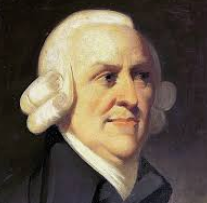
3 months 4 weeks ago
The man who barely abstains from violating either the person, or the estate, or the reputation of his neighbours, has surely very little positive merit. He fulfils, however, all the rules of what is peculiarly called justice, and does every thing which his equals can with propriety force him to do, or which they can punish him for not doing. We may often fulfil all the rules of justice by sitting still and doing nothing.
▼
Source
Section II, Chap. I.
3 months 4 weeks ago
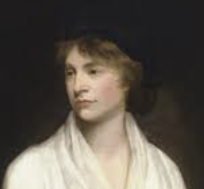
Tyrants and sensualists are in the right when they endeavour to keep women in the dark, because the former want only slaves, and the latter a play-thing.
▼
Source
Introduction

3 months 4 weeks ago
I suggest that scientific knowledge, though logically more articulate and far more complex, is of this sort. The books and teachers from whom it is acquired present concrete examples together with a multitude of theoretical generalizations. Both are essential carriers of knowledge, and it is therefore Pickwickian to seek a methodological criterion that supposes the scientist can specify in advance whether each imaginable instance fits or would falsify his theory.
▼
Source
"Logic of Discovery or Psychology of Research?", Criticism and the growth of knowledge edited by Imre Lakatos and Alan Musgrave (1970)
3 months 4 weeks ago
Just as it sometimes happens that deformed offspring are produced by deformed parents, and sometimes not, so the offspring produced by a female are sometimes female, sometimes not, but male, because the female is as it were a deformed male.
▼
Source
Generation of Animals as translated by Arthur Leslie Peck (1943), p. 175
3 months 4 weeks ago
Perhaps the enemies of liberty are such only because they judge it by its loud voice. If they knew its charms, the dignity that accompanies it, how much a free man feels like a king, the perpetual inner light that is produced by decorous self-awareness and realization, perhaps there would be no greater friends of freedom than those who are its worst enemies.

3 months 4 weeks ago
'Party,' in the general vocabulary of world intellectuals, is basically a unified social organization with a 'world-view,' an 'Ideology,' a 'philosophy of history,' and 'ideal social order,' a 'class foundation,' a 'class orientation,' a 'social leadership,' a 'political philosophy,' a 'political orientation,' a 'tradition,' a 'slogan,' a 'strategy,' a "tactic of struggle," and … a "hope" that wants to change the "status quo" in man, society, people, or a particular class, and establish the "desired status" in its stead.
▼
Source
Ali Shariati, in: The Islamic Quarterly, Vol. 27-29, (1983), p. 215; as quoted in: Ali Mirsepassi (2000), Intellectual Discourse and the Politics of Modernization, p. 126.
3 months 4 weeks ago
A man of intellect is like an artist who gives a concert without any help from anyone else, playing on a single instrument — a piano, say, which is a little orchestra in itself. Such a man is a little world in himself; and the effect produced by various instruments together, he produces single-handed, in the unity of his own consciousness. Like the piano, he has no place in a symphony; he is a soloist and performs by himself — in solitude, it may be; or if in the company with other instruments, only as principal; or for setting the tone, as in singing.
3 months 4 weeks ago
By what aberration has suicide, the only truly normal action, become the attribute of the flawed?
3 months 4 weeks ago
Every man is rich or poor according to the degree in which he can afford to enjoy the necessaries, conveniences, and amusements of human life. But after the division of labour has once thoroughly taken place, it is but a very small part of these with which a man's own labour can supply him. The far greater part of them he must derive from the labour of other people, and he must be rich or poor according to the quantity of that labour which he can command, or which he can afford to purchase. The value of any commodity, therefore, to the person who possesses it, and who means not to use or consume it himself, but to exchange it for other commodities, is equal to the quantity of labour which it enables him to purchase or command. Labour, therefore, is the real measure of the exchangeable value of all commodities.
▼
Source
Chapter V.
3 months 4 weeks ago
We reason deeply, when we forcibly feel.
▼
Source
Letter 19
3 months 4 weeks ago
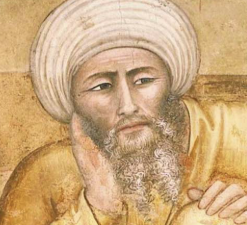
Praise be to God with all due praise, and a prayer for Muhammad His chosen servant and apostle. The purpose of this treatise is to examine, from the standpoint of the study of the Law, whether the study of philosophy and logic is allowed by the Law, or prohibited, or commanded either by way of recommendation or as obligatory.
▼
Source
Introduction
3 months 4 weeks ago
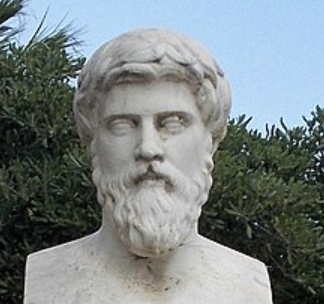
A prating barber asked Archelaus how he would be trimmed. He answered, "In silence."
▼
Source
33 Archelaus

3 months 4 weeks ago
Throughout the years in which the US was punishing countries that departed from fiscal prudence, it was borrowing on a colossal scale to finance tax cuts and fund its over-stretched military commitments. Now, with federal finances critically dependent on continuing large inflows of foreign capital, it will be the countries that spurned the American model of capitalism that will shape America's economic future.
3 months 4 weeks ago
The truly good and wise man will bear all kinds of fortune in a seemly way, and will always act in the noblest manner that the circumstances allow.
▼
Source
Book I, 1101a
3 months 4 weeks ago
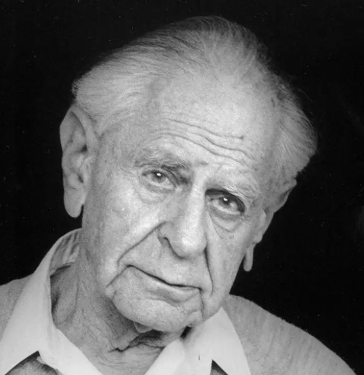
Those who promise us paradise on earth never produced anything but a hell.
▼
Source
As quoted in In Passing: Condolences and Complaints on Death, Dying, and Related Disappointments (2005) by Jon Winokur, p. 144
3 months 4 weeks ago
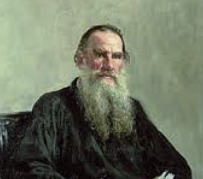
How good is it to remember one's insignificance: that of a man among billions of men, of an animal amid billions of animals; and one's abode, the earth, a little grain of sand in comparison with Sirius and others, and one's life span in comparison with billions on billions of ages. There is only one significance, you are a worker. The assignment is inscribed in your reason and heart and expressed clearly and comprehensibly by the best among the beings similar to you. The reward for doing the assignment is immediately within you. But what the significance of the assignment is or of its completion, that you are not given to know, nor do you need to know it. It is good enough as it is. What else could you desire?
▼
Source
Last Diaries (1979) edited by Leon Stilman, p. 77
3 months 4 weeks ago
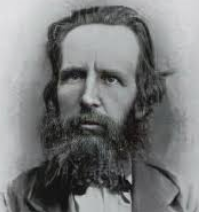
And if my friends refused to listen to me, then the walls had to hear me or the stones in the fields and the trees of the forests.
▼
Source
Quoted by Harry Slochower in "Julius Bahnsen, Philosopher of Heroic Despair, 1830-1881" (1932), The Philosophical Review, 41(4), p. 371

3 months 4 weeks ago
Palestine is a moral litmus test for the world
▼
Source
[https://www.aljazeera.com/program/upfront/2023/10/27/angela-davis-palestine-is-a-moral-litmus-test-for-the-world Angela Davis: 'Palestine is a moral litmus test for the world'] (27 Oct 2023)
3 months 4 weeks ago
A book can never be anything more than the impression of its author’s thoughts [Ein Buch kann nie mehr seyn, als der Abdruck der Gedanken des Verfassers]. The value of these thoughts lies either in the matter about which he has thought, or in the form in which he develops his matter — that is to say, what he has thought about it.
3 months 4 weeks ago
A word, once dissected, no longer signifies anything, is nothing. Like a body that, after an autopsy, is less than a corpse.
3 months 4 weeks ago
The retinue of a grandee in China or Indostan accordingly is, by all accounts, much more numerous and splendid than that of the richest subjects of Europe.
▼
Source
Chapter XI, Part III, Third Period, p. 240.
3 months 4 weeks ago
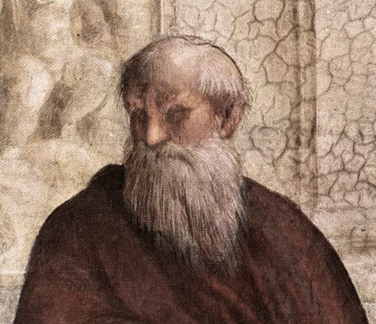
Perhaps, the good and the beautiful are the same, and must be investigated by one and the same process; and in like manner the base and the evil. And in the first rank we must place the beautiful, and consider it as the same with the good; from which immediately emanates intellect as beautiful. Next to this, we must consider the soul receiving its beauty from intellect, and every inferior beauty deriving its origin from the forming power of the soul, whether conversant in fair actions and offices, or sciences and arts. Lastly, bodies themselves participate of beauty from the soul, which, as something divine, and a portion of the beautiful itself, renders whatever it supervenes and subdues, beautiful as far as its natural capacity will admit. Let us, therefore, re-ascend to the good itself, which every soul desires; and in which it can alone find perfect repose. For if anyone shall become acquainted with this source of beauty he will then know what I say, and after what manner he is beautiful. Indeed, whatever is desirable is a kind of good, since to this desire tends. But they alone pursue true good, who rise to intelligible beauty, and so far only tend to good itself; as far as they lay aside the deformed vestments of matter, with which they become connected in their descent. Just as those who penetrate into the holy retreats of sacred mysteries, are first purified and then divest themselves of their garments, until someone by such a process, having dismissed everything foreign from the God, by himself alone, beholds the solitary principle of the universe, sincere, simple and pure, from which all things depend, and to whose transcendent perfections the eyes of all intelligent natures are directed, as the proper cause of being, life and intelligence. With what ardent love, with what strong desire will he who enjoys this transporting vision be inflamed while vehemently affecting to become one with this supreme beauty! For this it is ordained, that he who does not yet perceive him, yet desires him as good, but he who enjoys the vision is enraptured with his beauty, and is equally filled with admiration and delight. Hence, such a one is agitated with a salutary astonishment; is affected with the highest and truest love; derides vehement affections and inferior loves, and despises the beauty which he once approved. Such, too, is the condition of those who, on perceiving the forms of gods or daemons, no longer esteem the fairest of corporeal forms. What, then, must be the condition of that being, who beholds the beautiful itself?
3 months 4 weeks ago
After the battle in Pharsalia, when Pompey was fled, one Nonius said they had seven eagles left still, and advised to try what they would do. "Your advice," said Cicero, "were good if we were to fight jackdaws."
▼
Source
Cicero
3 months 4 weeks ago
As Malaparte saw it, Naples was a pagan city with an ancient sense of time. Christianity taught those who were converted to it to think of history as the unfolding of a single plot – a moral drama of sin and redemption. In the ancient world there was no such plot – only a multitude of stories that were forever being repeated. Inhabiting that ancient world, the Neapolitans did not expect any fundamental alteration in human affairs. Not having accepted the Christian story of redemption, they had not been seduced by the myth of progress. Never having believed civilization to be permanent, they were not surprised when it foundered.
▼
Source
An Old Chaos: Frozen Horses and Deserts of Brick (p. 22)
CivilSimian.com created by AxiomaticPanic, CivilSimian, Kalokagathia