

3 months 4 weeks ago
Later, after it was all over, the historian Friedrich Meinecke tried to explain 'the German catastrophe' by arguing that technical specialization had caused some educated Germans (not him, needless to say) to lose sight of the humanistic values of Goethe and Schiller; thus they were unable to resist Hitler's 'mass Machiavellianism'. Thomas Mann was unusual in being able to recognize even at the time that, in 'Brother Hitler', the entire German Bildungsburgertum possessed a monstrous younger sibling who embodied some of their deepest-rooted aspirations. An academic education, far from inoculating people against Nazism, made them more likely to embrace it. So much for the greatness of the German universities. Their fall from grace was personified by the readiness of Martin Heidegger, the greatest German philosopher of his generation, to jump on the Nazi bandwagon, a swastika pin in his lapel.
▼
Source
Niall Ferguson, The War of the World: Twentieth-Century Conflict and the Descent of the West (2006), p. xliii

3 months 4 weeks ago
In short, we may say that the theory of Malthus, by shaping into a pseudo-scientific form the secret desires of the wealth-possessing classes, became the foundation of a whole system of practical philosophy, which permeates the minds of both the educated and uneducated, and reacts, (as practical philosophy always does) upon the theoretical philosophy of our century.

3 months 4 weeks ago
Protagoras asserted that there were two sides to every question, exactly opposite to each other.
▼
Source
Protagoras, 3.

3 months 4 weeks ago
The fault with Hegel lies much deeper than in his glorification of the Prussian monarchy. He is guilty not so much of being servile as of betraying his highest philosophical ideas. His political doctrine surrenders society to nature, freedom to necessity, reason to caprice. And in so doing, it mirrors the destiny of the social order that falls, while in pursuit of its freedom, into a state of nature far below reason. P. 218

3 months 4 weeks ago
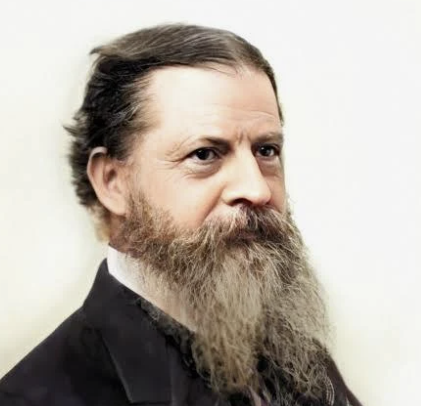
If one's organism is... the preeminent advantage, and the source of all others, education is the second. The best made brain would be a total loss without it...
3 months 4 weeks ago
But the extraordinary insight which some persons are able to gain of others from indications so slight that it is difficult to ascertain what they are, is certainly rendered more comprehensible by the view here taken.
3 months 4 weeks ago
Man lives very well upon flesh, you say, but, if he thinks this food to be natural to him, why does he not use it as it is, as furnished to him by Nature? But, in fact, he shrinks in horror from seizing and rending living or even raw flesh with his teeth, and lights a fire to change its natural and proper condition. … What is clearer than that man is not furnished for hunting, much less for eating, other animals? In one word, we seem to be admirably admonished by Cicero that man was destined for other things than for seizing and cutting the throats of other animals. If you answer that ‘that may be said to be an industry ordered by Nature, by which such weapons are invented,’ then, behold! it is by the very same artificial instrument that men make weapons for mutual slaughter. Do they this at the instigation of Nature? Can a use so noxious be called natural? Faculty is given by Nature, but it is our own fault that we make a perverse use of it.
▼
Source
Letter to Van Helmont, quoted in [https://archive.org/stream/ethicsofdietcate00will/ethicsofdietcate00will#page/n3/mode/2up The Ethics of Diet: A Catena of Authorities Deprecatory of the Practice of Flesh-eating] by Howard Williams (London: F. Pitman, 188
3 months 4 weeks ago
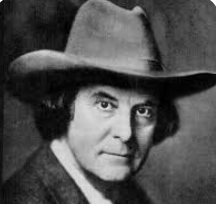
Responsibilities gravitate to the person who can shoulder them.
▼
Source
"J.B. Runs Things," Short Stories and Index: Elbert Hubbard's Selected Writings, Part 14 (1923), p. 278
3 months 4 weeks ago
The way in which a society organizes the life of its members … is one “project” of realization among others. But once the project has become operative in the basic institutions and relations, it tends to become exclusive and to determine the development of the society as a whole.
▼
Source
p. xlviii
3 months 4 weeks ago
Let us not pretend to doubt in philosophy what we do not doubt in our hearts.
▼
Source
Vol. V, par. 265
3 months 4 weeks ago
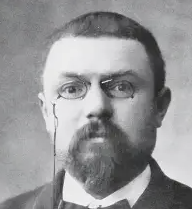
Two difficulties: (1) Can we transform psychologic time, which is qualitative, into a quantitative time? (2) Can we reduce to one and the same measure facts which transpire in different worlds of conscious beings!
3 months 4 weeks ago
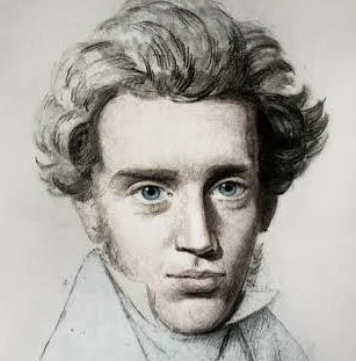
What is asked of a man that he may be able to pray for his enemies? To pray for one's enemies is the hardest thing of all. That is why it exasperates us so much in our present day situation.
▼
Source
Journals and Papers X4A 435
3 months 4 weeks ago
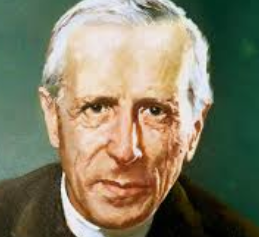
The truth is, indeed, that love is the threshold of another universe. Beyond the vibrations with which we are familiar, the rainbow-like range of its colours is still in full growth. But, for all the fascination that the lower shades have for us, it is only towards the "ultra" that the creation of light advances. It is in these invisible and, we might almost say, immaterial zones that we can look for true initiation into unity. The depths we attribute to matter are no more than the reflection of the peaks of spirit.
▼
Source
"The Evolution of Chastity" (1934), as translated by René Hague in Toward the Future (1975)
3 months 4 weeks ago
Do not take life too seriously – you will never get out of it alive.
▼
Source
p. 74
3 months 4 weeks ago
Paul Valéry insists on the inescapable commitment of the poetic language to the negation. The verses of this language “ne parlent jamais que de choses absentes.” They speak of that which, though absent, haunts the established universe of discourse and behavior as its most tabooed possibility—neither heaven nor hell, neither good nor evil but simply “le bonheur.”
▼
Source
p. 67
3 months 4 weeks ago
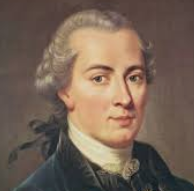
Have patience awhile; slanders are not long-lived. Truth is the child of time; erelong she shall appear to vindicate thee.
▼
Source
As quoted in Gems of Thought (1888) edited by Charles Northend
3 months 4 weeks ago
Every human being is tried this way in the active service of expectancy. Now comes the fulfillment and relieves him, but soon he is again placed on reconnaissance for expectancy; then he is again relieved, but as long as there is any future for him, he has not yet finished his service. And while human life goes on this way in very diverse expectancy, expecting very different things according to different times and occasions and in different frames of mind, all life is again one nightwatch of expectancy.
▼
Source
Eighteen Upbuilding Discourses: "Patience in Expectancy" (1844)

3 months 4 weeks ago
The dissimulation of the woven texture can in any case take centuries to undo its web: a web that envelops a web, undoing the web for centuries; reconstituting it too as an organism, indefinitely regenerating its own tissue behind the cutting trace, the decision of each reading. There is always a surprise in store for the anatomy or physiology of any criticism that might think it had mastered the game, surveyed all the threads at once, deluding itself, too, in wanting to look at the text without touching it, without laying a hand on the "object," without risking- which is the only chance of entering into the game, by getting a few fingers caught- the addition of some new thread.
▼
Source
Plato's Pharmacy
3 months 4 weeks ago
Autonomy, actuality, irreversibility, and... transcendence are the four attributes of Omega. In this way... we... enclose the energy-complex of our universe. ...Contrary to the appearances still admitted by physics, the Great Stability is not at the bottom in the infra-elementary sphere, but at the top in the ultra-synthetic sphere. ...[E]ntirely by its tangential envelope ...the world goes on dissipating itself in a chance way into matter. By its radial nucleus it finds its shape and... consistency in gravitating against the tide of probability towards a divine focus of mind which draws it onward.Thus something in the cosmos escapes from entropy, and does so more and more.
3 months 4 weeks ago
The greatest mistake you can make in life is to be continually fearing you will make one.
3 months 4 weeks ago
Dialectical thought understands the critical tension between “is” and “ought” first as an ontological condition, pertaining to the structure of Being itself. However, the recognition of this state of Being — its theory — intends from the beginning a concrete practice. Seen in the light of a truth which appears in them falsified or denied, the given facts themselves appear false and negative.
▼
Source
p. 133
3 months 4 weeks ago
The second is the partiality for unity proper to the philosophical mind, whence this wide-spread canon has flown forth: principles are not to be multiplied beyond supreme necessity, to which we give in our adhesion, not because we have insight into causal unity in the world either by reason or experience, but as seeking it by an impulse of the intellect which seems to itself to have by thus much advanced in the explication of phenomena, by as much as it is granted to it to descend from the same principle to a greater number of consequences,
3 months 4 weeks ago
A son is a mirror in which the father sees himself reflected, and the father is a mirror in which the son sees himself as he will be in the future.
▼
Source
Stages on Life's Way, 1845

3 months 4 weeks ago
Man alone at the very moment of his birth, cast naked upon the naked earth, does she [Nature] abandon to cries and lamentations.
▼
Source
Book VII, sec. 2.
3 months 4 weeks ago
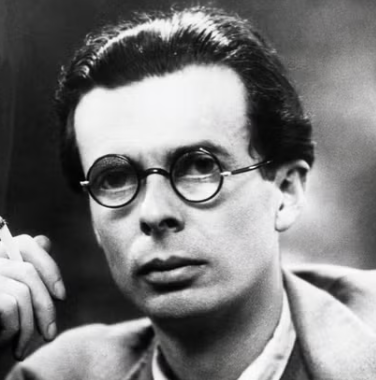
I suppose you imagined I was so insanely in love with you that I could commit any folly. When will you women understand that one isn't insanely in love? All one asks for is a quiet life, which you won't allow one to have. I don't know what the devil ever induced me to marry you. It was all a damned stupid, practical joke. And now you go about saying I'm a murderer. I won't stand it.
▼
Source
[http://www.online-literature.com/aldous_huxley/mortal-coils/1/ The Gioconda smile], in [http://www.online-literature.com/aldous_huxley/mortal-coils/ Mortal Coils (1921)]
3 months 4 weeks ago
Whoever voluntarily undertakes the necessary office of rearing and educating, obtains the parental power without generation.
▼
Source
Book III, Ch. II, § II
3 months 4 weeks ago
Another veteran communist calling for the revision of conventional contemporary Marxism was Herbert Marcuse. After emigrating from Nazi Germany in 1933, he took American citizenship and wrote prolifically about the need to graft several intellectual trends of the twentieth century – especially Freudianism and German sociology – on to the tree of the Marxist tradition. Marcuse rejected Stalin’s version of communism as dogmatic, narrow and plain wrong in its interpretation of Marx. He was a freer spirit than Lukács and refused to recognise Lenin as an absolute authority. He insisted that sexual drives as well as economic imperatives help to explain the mechanisms of politics and society. He scorned the Communist Party of the USA and refused to align himself with any organisation. His experiences as a young militant in Europe had eroded his faith in the revolutionary potential of the working class. Marcuse saw well-paid industrial workers as constituting one of the obstacles to humanity’s liberation from oppression. Based on the San Diego campus of the University of California, he counted instead upon the unemployed, the vagabond poor and the Hispanic immigrants; he also had a soft spot for college students. He regarded these groups as living in detachment from ‘bourgeois’ society and ready to overcome the ‘one-dimensional’ aspects of contemporary capitalist existence. Marcuse’s forte was as a philosopher. His preoccupation with epistemology and dialectics was typical of a growing trend among Marxist writers seeking to challenge the Marxism that had been customary since 1917.
▼
Source
Robert Service, Comrades: A History of World Communism (2009)
3 months 4 weeks ago
... happiness is not an ideal of reason, but of imagination, resting on merely empirical grounds,
▼
Source
4:418-19, p.29

3 months 4 weeks ago
The law of nature teaches me to speak in my own defence: With respect to this charge of bribery I am as innocent as any man born on St. Innocents Day. I never had a bribe or reward in my eye or thought when pronouncing judgment or order (…). I am ready to make an oblation of myself to the King. (17 April 1621)
▼
Source
Quoted by Baron John Campbell (1818), J. Murray in "The Lives of the Lord Chancellors and Keepers of the Great Seal of England"
3 months 4 weeks ago
He lived year after year. He attended only to himself and to God and this picture-but he did not understand himself.
▼
Source
p. 57
3 months 4 weeks ago
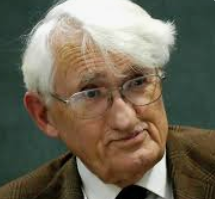
In Europe, you do philosophy by performing discourse on another guy's text, and so Derrida will go over Heidegger, and Habermas will extend Marx's corpus; but in America you could never get away with kinky stuff like that, for you have to generate philosophy from real things—like computers or television. You need to look at Omni magazine to get a feel for this new kind of mail-order, Popular Mechanics science of mind. It's full of articles about meditation helmets and downloading the soul into computers so that when your body wears out you can live forever. What is completely missing in Europe is precisely what you will find in America: namely, an electronic Umwelt in which history is replaced with movies, education is replaced with entertainment, and nature is replaced with technology. This peculiar wedding of low kitsch and high tech generates a posthistoric world that no European literary intellectual can quite fathom.
▼
Source
William Irwin Thompson (1991) Fast Foreword, from The American Replacement of Nature
3 months 4 weeks ago
This insistence on "having his say upon the universe" is the profoundest motive of William James thinking as well as of his filial gratitude.
▼
Source
The Thought and Character of William James (1935), vol. 1, ch. VIII
3 months 4 weeks ago
Brutes are merely brutal; men and women are capable of being devils and lunatics. They are no less capable of being fully human-even, occasionally, of being a bit more than fully human, of being saints, heroes and geniuses.
▼
Source
Introduction to You Are Not The Target by Laura Archera Huxley (1963)
3 months 4 weeks ago
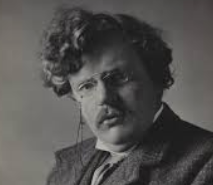
Among the rich you will never find a really generous man even by accident. They may give their money away, but they will never give themselves away; they are egotistic, secretive, dry as old bones. To be smart enough to get all that money you must be dull enough to want it.
▼
Source
A Miscellany of Men (1912)
3 months 4 weeks ago
Two things fill the mind with ever new and increasing admiration and awe, the oftener and the more steadily we reflect on them: the starry heavens above and the moral law within. I have not to search for them and conjecture them as though they were veiled in darkness or were in the transcendent region beyond my horizon; I see them before me and connect them directly with the consciousness of my existence. The former begins from the place I occupy in the external world of sense, and enlarges my connection therein to an unbounded extent with worlds upon worlds and systems of systems, and moreover into limitless times of their periodic motion, its beginning and continuance. The second begins from my invisible self, my personality, and exhibits me in a world which has true infinity, but which is traceable only by the understanding, and with which I discern that I am not in a merely contingent but in a universal and necessary connection, as I am also thereby with all those visible worlds. The former view of a countless multitude of worlds annihilates as it were my importance as an animal creature, which after it has been for a short time provided with vital power, one knows not how, must again give back the matter of which it was formed to the planet it inhabits (a mere speck in the universe). The second, on the contrary, infinitely elevates my worth as an intelligence by my personality, in which the moral law reveals to me a life independent of animality and even of the whole sensible world, at least so far as may be inferred from the destination assigned to my existence by this law, a destination not restricted to conditions and limits of this life, but reaching into the infinite.
▼
Source
Translated by Thomas Kingsmill Abbott
3 months 4 weeks ago
As we divided natural philosophy in general into the inquiry of causes, and productions of effects: so that part which concerneth the inquiry of causes we do subdivide according to the received and sound division of causes. The one part, which is physic, inquireth and handleth the material and efficient causes; and the other, which is metaphysic, handleth the formal and final causes.
▼
Source
Book VII, 3
3 months 4 weeks ago
The next thing you can learn from the woman who was a sinner, something she herself understood, is that with regard to finding forgiveness she is able to do nothing at all. P. 155
3 months 4 weeks ago
A true initiation never ends.
▼
Source
Masks of the Illuminati (1981), p. 257
3 months 4 weeks ago
Lord Edward was not listening to his assistant. He had taken his pipe out of his mouth, he had lifted his head and at the same time slightly cocked it on one side. He was frowning, as though making an effort to seize and remember something. He raised his hand in a gesture that commanded silence; Illidge interrupted himself in the middle of his sentence and also listened. A pattern of melody faintly traced itself upon the silence...Pongileoni's bowing and the scraping of the anonymous fiddlers had shaken the air in the great hall, had set the glass of the windows looking onto it vibrating: and thus in turn had shaken the air in Lord Edward's apartment on the further side. The shaking air rattled Lord Edward's membrane tympani; the interlocked malleus, incus, and stirrup bones were set in motion so as to agitate the membrane of the oval window and raise an infinitesimal storm in the fluid of the labyrinth. The hairy endings of the auditory nerve shuddered like weeds in a rough sea; a vast number of obscure miracles were performed in the brain, and Lord Edwards ecstatically whispered "Bach!" He smiled with pleasure, his eyes lit up. The young girl was singing to herself in solitude under the floating clouds. And then the cloud-solitary philosopher began poetically to meditate. "We must really go downstairs and listen," said Lord Edward. He got up, "Come," he said. "Work can wait. One doesn't hear this sort of thing every night."
▼
Source
Ch. 3
3 months 4 weeks ago
The cause which is blocking all progress today is the subtle scepticism which whispers in a million ears that things are not good enough to be worth improving. If the world is good we are revolutionaries, if the world is evil we must be conservatives. These essays, futile as they are considered as serious literature, are yet ethically sincere, since they seek to remind men that things must be loved first and improved afterwards.
▼
Source
"In Defence of a New Edition" — Preface to the second edition (1902)
3 months 4 weeks ago
The only satisfied rationalists today are blinkered scientists or Marxists.
▼
Source
Ch. 7, p. 113
3 months 4 weeks ago
Nature made women mature early and had them demand gentle and polite treatment from men, so that they would find themselves imperceptibly fettered by a child due to their own magnanimity; and they would find themselves brought, if not quite to morality itself, then at least to that which cloaks it, moral behavior, which is the preparation and introduction to morality.
▼
Source
Kant, Immanuel (1996), pages 219-220
3 months 4 weeks ago
The beginning is from God: for the business which is in hand, having the character of good so strongly impressed upon it, appears manifestly to proceed from God, who is the author of good, and the Father of Lights. Now in divine operations even the smallest beginnings lead of a certainty to their end. And as it was said of spiritual things, "The kingdom of God cometh not with observation," so is it in all the greater works of Divine Providence; everything glides on smoothly and noiselessly, and the work is fairly going on "before men are aware that it has begun. Nor should the prophecy of Daniel be forgotten, touching the last ages of the world: —"Many shall go to and fro, and knowledge shall be increased;" clearly intimating that the thorough passage of the world (which now by so many distant voyages seems to be accomplished, or in course of accomplishment), and the advancement of the sciences, are destined by fate, that is, by Divine Providence, to meet in the same age.
▼
Source
Aphorism 93
3 months 4 weeks ago
When Christianity came into the world the task was simply to proclaim Christianity. The same is the case wherever Christianity is introduced into a country the religion of which is not Christianity.
3 months 4 weeks ago
ONLY THE MADMAN IS ABSOLUTELY SURE.
▼
Source
Part I : The Eye in the Pyramid p. 176 of 1988 edition
3 months 4 weeks ago
At the core of the Perennial Philosophy we find four fundamental doctrines.First: the phenomenal world of matter and of individualized consciousness — the world of things and animals and men and even gods — is the manifestation of a Divine Ground within which all partial realities have their being, and apart from which they would be non-existent.Second: human beings are capable not merely of knowing about the Divine Ground by inference; they can also realize its existence by a direct intuition, superior to discursive reasoning. This immediate knowledge unites the knower with that which is known.Third: man possesses a double nature, a phenomenal ego and an eternal Self, which is the inner man, the spirit, the spark of divinity within the soul. It is possible for a man, if he so desires, to identify himself with the spirit and therefore with the Divine Ground, which is of the same or like nature with the spirit.Fourth: man's life on earth has only one end and purpose: to identify himself with his eternal Self and so to come to unitive knowledge of the Divine Ground.
3 months 4 weeks ago
Much of our modern difficulty, in religion and other things, arises merely from this: that we confuse the word "indefinable" with the word "vague." If some one speaks of a spiritual fact as "indefinable" we promptly picture something misty, a cloud with indeterminate edges. But this is an error even in commonplace logic. The thing that cannot be defined is the first thing; the primary fact. It is our arms and legs, our pots and pans, that are indefinable. The indefinable is the indisputable. The man next door is indefinable, because he is too actual to be defined. And there are some to whom spiritual things have the same fierce and practical proximity; some to whom God is too actual to be defined.
▼
Source
Ch 1: "The Dickens Period"
3 months 4 weeks ago
I was shocked many years ago when a physicist said to me that Kant was the greatest astrophysicist in a hundred-year period. And I asked “Why do you say that? You talk about Kant-Lagrange hypothesis?” He said “No, that was only a hypothesis. Kant showed by a very eloquent geometrical argument that we live near the edge of landscape galaxy in the center of the sphere that resembles Andromeda nebula”. I never heard of that, no philosopher told me that, no historian of philosophy told me that, an astronomer told me that! It was Steven Weinberg; he then said that Kant was the only astrophysicist in about a hundred years who believed that star clustering could be accounted for by gravitation alone.
▼
Source
Hilary Putnam, in [https://www.hardproblem.ru/en/posts/interviews/interview-with-hilary-putnam/ interview] with Vadim Vasilyev and Dmitry Volkov (April 21, 2010)
3 months 4 weeks ago
Choose the best life; for habit will make it pleasant.
▼
Source
Epictetus, Fragment 144

3 months 4 weeks ago
As for our celebrated lawgivers, who have cast us in our present awkward mold, you may be sure that they have acted to serve their interests and not ours. Witness all our political, civil, and religious institutions — examine them thoroughly: unless I am very much mistaken, you will see how, through the ages, the human race has been broken to the halter that a handful of rascals were itching to impose. Watch out for the fellow who talks about putting things in order! Putting things in order always means getting other people under your control.
▼
Source
"Supplement to Bougainville's Voyage" (1796) | Variant translation: | Never allow yourselves to forget that it is for their own sakes and not for yours that all those wise lawgivers have forced you into your present unnatural and rigid molds. And as evide
CivilSimian.com created by AxiomaticPanic, CivilSimian, Kalokagathia