
3 months 4 weeks ago
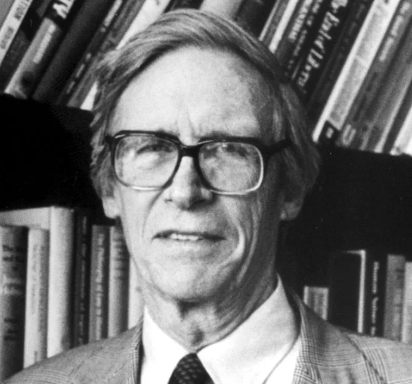
An intolerant sect has no right to complain when it is denied an equal liberty. … A person’s right to complain is limited to principles he acknowledges himself.
▼
Source
p. 217
3 months 4 weeks ago
And since every man retains, and can never be deprived of his natural right (founded on a regard to the general good) of relieving himself from all oppression, that is, from every thing that has been imposed upon him without his own consent; this must be the only true and proper foundation of all the governments subsisting in the world, and that to which the people who compose them have an unalienable right to bring them back.
▼
Source
Section II, "Of Political Liberty"

3 months 4 weeks ago
It makes no sense to regard the right of suffrage as a utopian product of fantasy, cut loose from social reality. And it is for this reason that it is not a serious instrument of the proletarian dictatorship. It is an anachronism, an anticipation of the juridical situation which is proper on the basis of an already completed socialist economy, but is not in the transition period of the proletarian dictatorship.
▼
Source
Chapter Five, "The Question of Suffrage"
3 months 4 weeks ago
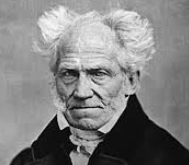
We see in tragedy the noblest men, after a long conflict and suffering, finally renounce forever all the pleasure of life and the aims till then pursued so keenly, or cheerfully and willingly give up life itself.
▼
Source
Book 1

3 months 4 weeks ago
We say: he has no talent, only tone. But tone is precisely what cannot be invented — we're born with it. Tone is an inherited grace, the privilege some of us have of making our organic pulsations felt — tone is more than talent, it is its essence.

3 months 4 weeks ago
He was a teacher and a prophet in the Jewish sense of the word. The prophecies of Isaiah and Jeremiah have become a part of the permanent spiritual inheritance of mankind, because events proved that they had interpreted correctly the signs of their own times, and their prophecies were fulfilled. Carlyle, like them, believed that he had a special message to deliver to the present age. Whether he was correct in that belief, and whether his message was a true message, remains to be seen. He has told us that our most cherished ideas of political liberty, with their kindred corollaries, are mere illusions, and that the progress which has seemed to go along with them is a progress towards anarchy and social dissolution. If he was wrong, he has misused his powers. The principles of his teaching are false. He has offered himself as a guide upon a road of which he had no knowledge; and his own desire for himself would be the speediest oblivion both of his person and his works. If, on the other hand, he has been right; if, like his great predecessors, he has read truly the tendencies of this modern age of ours, and his teaching is authenticated by facts, then Carlyle, too, will take his place among the inspired seers, and he will shine on, another fixed star in the intellectual sky.Time only can show how this will be.
▼
Source
James Anthony Froude, Thomas Carlyle: A History of the First Forty Years of His Life, 1795–1835, Vol. I (1882), pp. xv-xvi
3 months 4 weeks ago
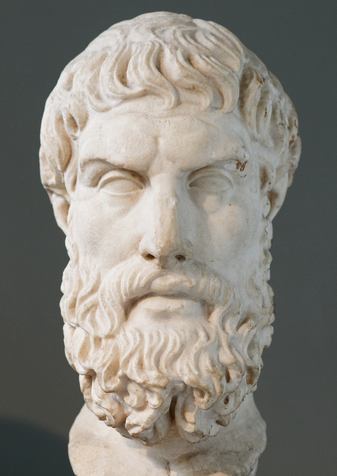
The flesh receives as unlimited the limits of pleasure; and to provide it requires unlimited time. But the mind, intellectually grasping what the end and limit of the flesh is, and banishing the terrors of the future, procures a complete and perfect life, and we have no longer any need of unlimited time. Nevertheless the mind does not shun pleasure, and even when circumstances make death imminent, the mind does not lack enjoyment of the best life.
3 months 4 weeks ago
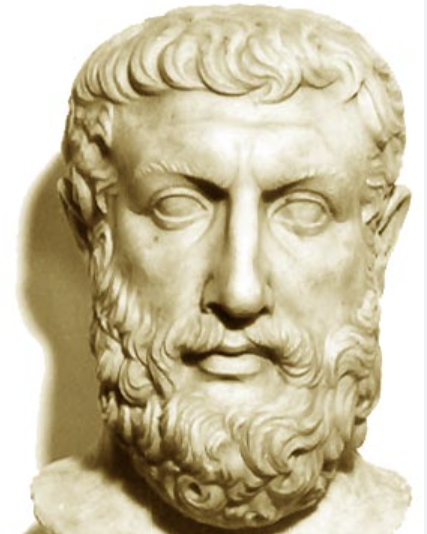
If I accede to Parmenides there is nothing left but the One; if I accede to Zeno, not even the One is left.
▼
Source
Seneca the Younger, as quoted in "Zeno", in The Presocratics (1966) edited by Philip Wheelwright, p. 106
3 months 4 weeks ago
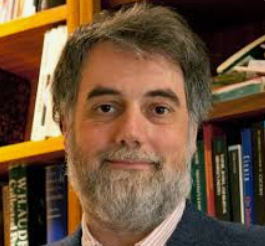
God is in command of history. Each crisis has something to teach us; each crisis is overcome by particular virtues and by reference to particular truths. The way out of a crisis is often unexpected, and often combines a decisive historical intervention by God, and a new spirit in the Church, animating new movements and new thinking. With hindsight we can even see in some cases how the crisis itself solved intractable problems which could not be solved in any other way
▼
Source
[https://remnantnewspaper.com/web/index.php/fetzen-fliegen/item/5036-interview-with-dr-joseph-shaw Interview with Dr. Joseph Shaw] (August 28, 2020)
3 months 4 weeks ago
Methink I am thrice-imprisoned—ask not me Of news that need no telling—By loss of sight, confinement in my house, And this vile body for my spirit’s dwelling.
▼
Source
Translation of Reynold Nicholson, as quoted in The Luzumiyat of Abu'l-Ala (1920) by Ameen Rihani
3 months 4 weeks ago
If, while hurrying ostensibly to the temple of truth, we hand the reins over to our personal interests which look aside at very different guiding stars, for instance at the tastes and foibles of our contemporaries, at the established religion, but in particular at the hints and suggestions of those at the head of affairs, then how shall we ever reach the high, precipitous, bare rock whereon stands the temple of truth?
▼
Source
E. Payne, trans. (1974) Vol. 1, pp. 22–23
3 months 4 weeks ago
Two enemies — the same man divided.
3 months 4 weeks ago
For if they imagine infinite spaces of time before the world, during which God could not have been idle, in like manner they may conceive outside the world infinite realms of space, in which, if any one says that the Omnipotent cannot hold His hand from working, will it not follow that they must adopt Epicurus' dream of innumerable worlds? with this difference only, that he asserts that they are formed and destroyed by the fortuitous movements of atoms, while they will hold that they are made by God's hand, if they maintain that, throughout the boundless immensity of space, stretching interminably in every direction round the world, God cannot rest, and that the worlds which they suppose Him to make cannot be destroyed. ... there is no place beside the world ...no time before the world.
▼
Source
Augustine of Hippo, The City of God, Book XI, Ch. 5 "That We Ought Not to Seek to Comprehend the Infinite Ages of Time Before the World, Nor the Infinite Realms of Space"
3 months 4 weeks ago
Let the world be grafted onto our republics, but the trunk must be our own. And let the vanquished pedant hold his tongue, for there are no lands in which a man may take greater pride than in our long-suffering American republics.
3 months 4 weeks ago
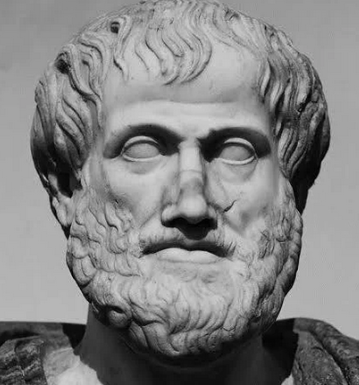
Let us consider, with respect to causes, what they are, and how many there are in number... this also must be done by us in discoursing concerning generation and corruption, and all physical mutation... knowing the principles of these...Cause... is after one manner said to be that, from which, being inherent, something is produced... But after another manner cause is form and paradigm (and this is the definition of the essence of a thing) and the genera of this. ...But it happens... that there are also many causes of the same thing, and this is not from accident. ...seed, a physician, he who consults, and, in short, he who makes, are all of them causes, as that whence the principle of mutation, or permanency, or motion is derived. ...It is, however, necessary always to investigate the supreme cause of every thing ...Further still, it is necessary to investigate the genera of genera; and the particulars of particulars... We should also explore the capacities of the capabilities, and the energizers of the things affected by energy.
▼
Source
Book II, Ch. III, pp. 107-113.
3 months 4 weeks ago
Let us say in passing that since (philosophical) remedies are often worse than the malady, our age, in order to be cured of the Plato sickness, has swallowed such doses of a relativist, vaguely skeptical, lightly spiritualist and insipidly moralist medicine, that it is in the process of gently dying, in the small bed of its supposed democratic comfort.
▼
Source
From Plato, Our Dear Plato!, Magazine littéraire, no. 447 (November 2005).
3 months 4 weeks ago
Newspapers are the second hand of history. This hand, however, is usually not only of inferior metal to the other hands, it also seldom works properly.
▼
Source
Vol. 2, Ch. 19, § 233
3 months 4 weeks ago
To have failed in everything, always, out of a love of discouragement.
3 months 4 weeks ago
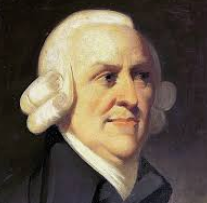
Let us suppose that the great empire of China, with all its myriads of inhabitants, was suddenly swallowed up by an earthquake, and let us consider how a man of humanity in Europe, who had no sort of connection with that part of the world, would be affected upon receiving intelligence of this dreadful calamity. He would, I imagine, first of all, express very strongly his sorrow for the misfortune of that unhappy people, he would make many melancholy reflections upon the precariousness of human life, and the vanity of all the labours of man, which could thus be annihilated in a moment. He would too, perhaps, if he was a man of speculation, enter into many reasonings concerning the effects which this disaster might produce upon the commerce of Europe, and the trade and business of the world in general. And when all this fine philosophy was over, when all these humane sentiments had been once fairly expressed, he would pursue his business or his pleasure, take his repose or his diversion, with the same ease and tranquillity, as if no such accident had happened. The most frivolous disaster which could befall himself would occasion a more real disturbance. If he was to lose his little finger to-morrow, he would not sleep to-night; but, provided he never saw them, he will snore with the most profound security over the ruin of a hundred millions of his brethren, and the destruction of that immense multitude seems plainly an object less interesting to him, than this paltry misfortune of his own. To prevent, therefore, this paltry misfortune to himself, would a man of humanity be willing to sacrifice the lives of a hundred millions of his brethren, provided he had never seen them? Human nature startles with horror at the thought, and the world, in its greatest depravity and corruption, never produced such a villain as could be capable of entertaining it. But what makes this difference? When our passive feelings are almost always so sordid and so selfish, how comes it that our active principles should often be so generous and so noble? When we are always so much more deeply affected by whatever concerns ourselves, than by whatever concerns other men; what is it which prompts the generous, upon all occasions, and the mean upon many, to sacrifice their own interests to the greater interests of others? It is not the soft power of humanity, it is not that feeble spark of benevolence which Nature has lighted up in the human heart, that is thus capable of counteracting the strongest impulses of self-love. It is a stronger power, a more forcible motive, which exerts itself upon such occasions. It is reason, principle, conscience, the inhabitant of the breast, the man within, the great judge and arbiter of our conduct.
▼
Source
Chap. III.

3 months 4 weeks ago
Till women are more rationally educated, the progress in human virtue and improvement in knowledge must receive continual checks.
▼
Source
Ch. 3
3 months 4 weeks ago
Men whose research is based on shared paradigms are committed to the same rules and standards for scientific practice. That commitment and the apparent consensus it produces are prerequisites for normal science, i.e., for the genesis and continuation of a particular research tradition.
▼
Source
p. 11 (2012 ed.)

3 months 4 weeks ago
Terror is not now, if it ever was, something that comes to us from outside. It is a part of the society in which we live. Both liberals and neoconservatives believe terrorism can be dealt with by removing its causes. The truth is less reassuring. Al-Qaeda has mutated into a decentralised, often locally based type of apocalyptic terrorism and, in this new guise, seems to be acquiring a formidable momentum.
▼
Source
[http://www.guardian.co.uk/uk/2005/jul/10/july7.terrorism "Look out for the enemy within,"] The Observer (2005-07-10)
3 months 4 weeks ago
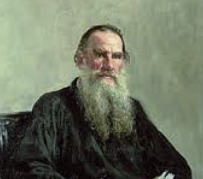
Error is the force that welds men together; truth is communicated to men only by deeds of truth. Only deeds of truth, by introducing light into the conscience of each individual, can dissolve the cohesion of error, and detach men one by one from the mass united together by the cohesion of error.
▼
Source
My Religion (1884), Ch. 12
3 months 4 weeks ago
Peoples are made of hate and of love, and more of hate than love. But love, like the sun that it is, sets afire and melts everything.
3 months 4 weeks ago
Those who assert that the mathematical sciences say nothing of the beautiful or the good are in error. For these sciences say and prove a great deal about them; if they do not expressly mention them, but prove attributes which are their results or definitions, it is not true that they tell us nothing about them. The chief forms of beauty are order and symmetry and definiteness, which the mathematical sciences demonstrate in a special degree.
▼
Source
Book XIII, 1078a.33
3 months 4 weeks ago
In the tradition of Abudhar, who is my mentor, whose thought, whose understanding of Islam and Shi'ism, and whose ideals, wants, and rage I emulate, I begin my talk with the name of the God of the oppressed (mustad'afan). My topic is very specific.
▼
Source
p. 1 Lead sentence.
3 months 4 weeks ago
If two men who were friends in their youth meet again when they are old, after being separated for a life-time, the chief feeling they will have at the sight of each other will be one of complete disappointment at life as a whole; because their thoughts will be carried back to that earlier time when life seemed so fair as it lay spread out before them in the rosy light of dawn, promised so much — and then performed so little.
▼
Source
"On the Sufferings of the World"
3 months 4 weeks ago
Eternity is absence.
3 months 4 weeks ago
The natural price, therefore, is, as it were, the central price, to which the prices of all commodities are continually gravitating.
▼
Source
Chapter VII, p. 69.
3 months 4 weeks ago
I firmly believe there does not exist her equal in the world. I know from experience we were formed to make each other happy. I have not the least expectation that I can now ever know happiness again.
▼
Source
William Godwin, in a letter to Thomas Holcroft, after his wife's death, as quoted in William Godwin : His Friends and Contemporaries (1876) by Charles Kegan Paul
3 months 4 weeks ago
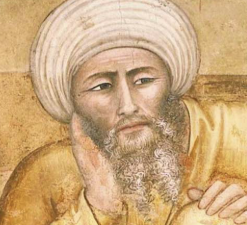
The world is divided into men who have wit and no religion and men who have religion and no wit.
▼
Source
This was declared without citation to have been attributed to Avicenna in A Rationalist Encyclopaedia : A Book of Reference on Religion, Philosophy, Ethics, and Science (1950), by Joseph McCabe, p. 43; it was also later wrongly attributed to Averroes in T
3 months 4 weeks ago
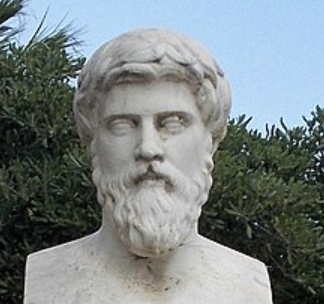
Being nimble and light-footed, his father encouraged him to run in the Olympic race. "Yes," said he, "if there were any kings there to run with me."
▼
Source
41 Alexander
3 months 4 weeks ago
Like other human freedoms, the freedoms embodied in market institutions are justified inasmuch as they meet human needs. Insofar as they fail to do this they can reasonably be altered. This is true not only of the rights that are involved in market institutions. It is true of all human rights.
▼
Source
'Modus Vivendi' (p.36)
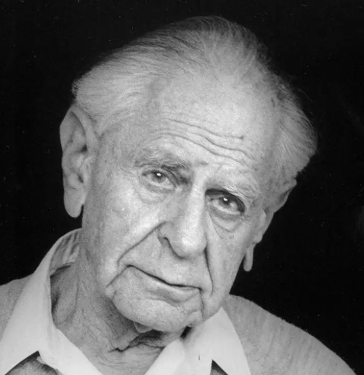
3 months 4 weeks ago
...non-reproducible single occurrences are of no significance to science.
▼
Source
Ch. 4 "Falsifiability", Section 12: Falsifiability and Falsification, p. 66.
3 months 4 weeks ago
I have lived through much, and now I think I have found what is needed for happiness. A quiet secluded life in the country, with the possibility of being useful to people to whom it is easy to do good, and who are not accustomed to have it done to them; then work which one hopes may be of some use; then rest, nature, books, music, love for one's neighbor -- such is my idea of happiness. And then, on the top of all that, you for a mate, and children perhaps -- what more can the heart of man desire?
▼
Source
Part 1, Chapter V
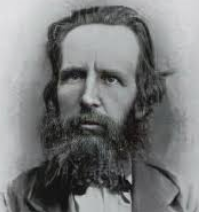
3 months 4 weeks ago
The greatest pain of all, Bahnsen maintains, comes from the death of a loved one. When we lose someone we cherish, someone in whom we have invested all our heart, we are shattered into a thousand pieces; our inner world is filled with “the infinity of nothingness". The most desolate emptiness of them all is “the dark feeling of loneliness” that comes with the loss of our nearest and dearest. In a world without providence, redemption or immortality, this loss is complete, eternal and irredeemable. There cannot be any comfort, there cannot be any compensation, for the loss. Of course, time heals all wounds; but we fear the dead becoming dead for us, because we know that, should we forget them, we too will be dead in our own best part.
▼
Source
Weltschmerz: Pessimism in German Philosophy, 1860-1900 (2016), p. 268.
3 months 4 weeks ago
Again, it is possible to fail in many ways (for evil belongs to the class of the unlimited ... and good to that of the limited), while to succeed is possible only in one way (for which reason also one is easy and the other difficult—to miss the mark easy, to hit it difficult); for these reasons also, then, excess and defect are characteristic of vice, and the mean of virtue; For men are good in but one way, but bad in many.
▼
Source
Book II, 1106b.28
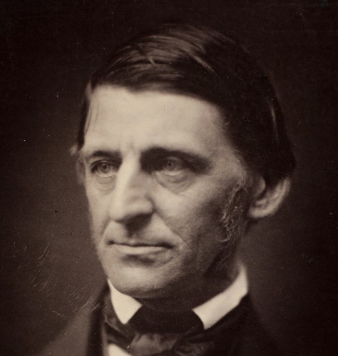
3 months 4 weeks ago
Slavery is disheartening; but Nature is not so helpless but it can rid itself of every last wrong. But the spasms of nature are centuries and ages and will tax the faith of short-lived men. Slowly, slowly the Avenger comes, but comes surely. The proverbs of the nations affirm these delays, but affirm the arrival. They say, "God may consent, but not forever." The delay of the Divine Justice — this was the meaning and soul of the Greek Tragedy, — this was the soul of their religion.
▼
Source
The Fugitive Slave Law, a lecture in NYC (March 7, 1854)

3 months 4 weeks ago
We believe that the most pressing political necessity is the consolidation of a United Front joining together all sections of the revolutionary, radical and democratic movements. Only a united front—led in the first place by the national liberation movements and the working people—can decisively counter, theoretically, ideologically and practically, the increasingly fascistic and genocidal posture of the present ruling clique
3 months 4 weeks ago
The bold theories and opinions expressed in Schopenhauer's works differ widely with those of the majority of our orthodox scientists... Every new phenomenon which they find themselves unable to explain, is triturated, compounded into incense, and burned on the altar of the goddess who patronizes modern scientists. No one can better treat his subject than does Schopenhauer in his Parerga. In this work he discusses at length animal magnetism, clairvoyance, sympathetic cures, seership, magic, omens, ghost-seeing, and other spiritual matters. "All these manifestations," he says, "are branches of one and the same tree, and furnish us with irrefutable proofs of the existence of a chain of beings..."
▼
Source
H.P. Blavatsky, Isis Unveiled, Vol. 1, Chapter 2, p. 59, Schopenhauer's Great Parerga
3 months 4 weeks ago
The fact that life has no meaning is a reason to live — moreover, the only one.
3 months 4 weeks ago
A man must be perfectly crazy who, where there is tolerable security, does not employ all the stock which he commands,...
▼
Source
Chapter I, p. 313 (see opportunity cost).
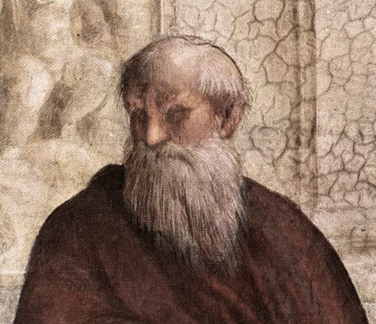
3 months 4 weeks ago
Withdraw into yourself and look. And if you do not find yourself beautiful yet, act as does the creator of a statue that is to be made beautiful: he cuts away here, he smoothes there, he makes this line lighter, this other purer. ... Cut away all that is excessive, straighten all that is crooked, bring light to all that is overcast, labor to make all one glow or beauty and never cease chiseling your statue, until there shall shine out on you from it the godlike splendor of virtue.
▼
Source
First Ennead, Sixth Tractate, Section 9
3 months 4 weeks ago
About Pontus there are some creatures of such an extempore being that the whole term of their life is confined within the space of a day; for they are brought forth in the morning, are in the prime of their existence at noon, grow old at night, and then die.
3 months 4 weeks ago
If there is anything unique about the human animal it is that it has the ability to grow knowledge at an accelerating rate while being chronically incapable of learning from experience. Science and technology are cumulative, whereas ethics and politics deal with recurring dilemmas. Whatever they are called, torture and slavery are universal evils; but these evils cannot be consigned to the past like redundant theories in science. They return under different names: torture as enhanced interrogation techniques, slavery as human trafficking. Any reduction in universal evils is an advance in civilization. But, unlike scientific knowledge, the restraints of civilized life cannot be stored on a computer disc. They are habits of behaviour, which once broken are hard to mend. Civilization is natural for humans, but so is barbarism.
▼
Source
An Old Chaos: Humanism and Flying Saucers (p. 75)
3 months 4 weeks ago
The history of science, like the history of all human ideas, is a history of irresponsible dreams, of obstinacy, and of error. But science is one of the very few human activities — perhaps the only one — in which errors are systematically criticized and fairly often, in time, corrected. This is why we can say that, in science, we often learn from our mistakes, and why we can speak clearly and sensibly about making progress there.
▼
Source
Ch. 1 "Science : Conjectures and Refutations"
3 months 4 weeks ago
History is the life of nations and of humanity. To seize and put into words, to describe directly the life of humanity or even of a single nation, appears impossible.
▼
Source
[http://www.classicreader.com/book/92/354/ Epilogue II, ch. 1]
3 months 4 weeks ago
Liberal relativism has its roots in the natural right tradition of tolerance or in the notion that everyone has a natural right to the pursuit of happiness as he understands happiness; but in itself it is a seminary of intolerance.
▼
Source
p. 6
3 months 4 weeks ago
Man is a goal-seeking animal. His life only has meaning if he is reaching out and striving for goals.
▼
Source
Attributed to Aristotle in Bernhoff A. Dahl, [http://books.google.gr/books?id=B1Z2XP_DamQC&dq= Optimize Your Life!], Trionics International Inc., 2005, p. 111.
3 months 4 weeks ago
People do not deserve to have good writing, they are so pleased with bad.
▼
Source
1841
CivilSimian.com created by AxiomaticPanic, CivilSimian, Kalokagathia