
3 months 4 weeks ago
One of the curious psychological facts, in connection with the various ways in which various minds function, is the fact that when in these days we seek to visualize, in some pictorial manner, our ultimate view of life, the images which are called up are geometrical or chemical rather than anthropomorphic. It is probable that even the most rational and logical among us as soon as he begins to philosophize at all is compelled by the necessity of things to form in the mind some vague pictorial representation answering to his conception of the universe. Most minds see the universe of their mental conception as something quite different from the actual stellar universe upon which we all gaze. Even the most purely rational minds who find the universe in "pure thought" are driven against their rational will to visualize this "pure thought" and to give it body and form and shape and movement.
▼
Source
Chapter I
3 months 4 weeks ago
Those who purge the soul believe that the soul can receive no benefit from any teachings offered to it until someone by cross-questioning reduces him who is cross-questioned to an attitude of modesty, by removing the opinions that obstruct the teachings, and thus purges him and makes him think that he knows only what he knows, and no more.
▼
Source
230c-d
3 months 4 weeks ago
Of all calumnies the worst is the one which attacks our indolence, which contests its authenticity.
3 months 4 weeks ago
And in these foure things, Opinion of Ghosts, Ignorance of second causes, Devotion towards what men fear, and Taking of things Casuall for Prognostics, consisteth the Natural seed of Religion; which by reason of the different Fancies, Judgements, and Passions of severall men, hath grown up into ceremonies so different, that those which are used by one man, are for the most part ridiculous to another.
▼
Source
The First Part, Chapter 12, p. 54

3 months 4 weeks ago
Genius is 'the inspired gift of God.' It is the clearer presence of God Most High in a man. Dim, potential in all men; in this man it has become clear, actual.
3 months 4 weeks ago
False men and shams talk big and do nothing.
3 months 4 weeks ago
Nothing that has ever happened should be regarded as lost for history. To be sure, only a redeemed mankind receives the fullness of its past — which is to say, only a redeemed mankind has its past become citable in all its moments. Each moment it has lived becomes a citation à l'ordre du jour — and that day is Judgement Day.
▼
Source
III
3 months 4 weeks ago
When mons. Descartes's philosophical Romance, by the Elegance of its Style and the plausible Accounts of natural Phænomena, had overthrown the Aristotelian Physics, the World received but little Advantage by the Change: For instead of a few Pedants, who, most of them, being conscious of their Ignorance, concealed it with hard Words and pompous Terms; a new Set of Philosophers started up, whose lazy Disposition easily fell in with a Philosophy, that required no Mathematicks to understand it, and who taking a few Principles for granted, without examining their Reality or Consistence with each other, fancied they could solve all Appearances mechanically by Matter and Motion; and, in their smattering Way, pretended to demonstrate such things, as perhaps Cartesius himself never believed ; his Philosophy (if he bad been in earnest) being unable to stand the test of the Geometry which he was Master of.
▼
Source
p. vi-v: Preface
3 months 4 weeks ago
Such was the vast power which the god settled in the lost island of Atlantis; and this he afterwards directed against our land for the following reasons, as tradition tells: For many generations, as long as the divine nature lasted in them, they were obedient to the laws, and well-affectioned towards the god, whose seed they were; for they possessed true and in every way great spirits, uniting gentleness with wisdom in the various chances of life, and in their intercourse with one another.
3 months 4 weeks ago
Not that I at all disallow the use of reasoning upon experiments, or the endeavouring to discern as early as we can the confederations, and differences, and tendencies of things: for such an absolute suspension of the exercise of reasoning were exceeding troublesome, if not impossible. And, as in that rule of arithmetic, which is commonly called ' by proceeding upon a conjecturally-supposed number, as if it were that, which we inquire after, we are wont to come to the knowledge of the true number sought for; so in physiology it is sometimes conducive to the discovery of truth, to permit the understanding to make an hypothesis, in order to the explication of this or that difficulty, that by examining how far the phænomena are, or are not, capable of being solved by that hypothesis, the understanding may, even by its own errors, be instructed.
3 months 4 weeks ago
Tolerance — the function of an extinguished ardor — tolerance cannot seduce the young.
3 months 4 weeks ago
And whereas many men, by accident unevitable, become unable to maintain themselves by their labour; they ought not to be left to the Charity of private persons; but to be provided for, (as far-forth as the necessities of Nature require,) by the Lawes of the Common-wealth. For as it is Unchariablenesse in any man, to neglect the impotent; so it is in the Soveraign of a Common-wealth, to expose them to the hazard of such uncertain Charity.
▼
Source
The Second Part, Chapter 30, p. 181
3 months 4 weeks ago
In all cases, therefore, we will agree with the judicious Mrs. Glass: 'First catch your hare!' First get your man; all is got: he can learn to do all things, from making boots, to decreeing judgments, governing communities; and will do them like a man.
3 months 4 weeks ago
If we already lived in a cruelty-free world, the notion of re-introducing suffering, exploitation and creatures eating each other would seem not so much frightful as unimaginable – no more seriously conceivable than reverting to surgery without anaesthesia today.
▼
Source
"[https://www.hedweb.com/abolitionist-project/reprogramming-predators.html Reprogramming Predators]", BLTC Research, 2009
3 months 4 weeks ago
The essential freedom, the ultimate and final freedom that cannot be taken from a man, is to say No. This is the basic premise in Sartre's view of human freedom: freedom is in its very essence negative, though the negativity is also creative.
▼
Source
Chapter Ten, Sartre, p. 215
3 months 4 weeks ago
That there were 'weeds' in the Bible requiring to be kept out of sight was to me... a new revelation. I take little pleasure in dwelling upon the errors and blemishes of a book rendered venerable to me by intrinsic wisdom and imperishable associations. But...when its passages are invoked to justify the imposition of a yoke, irksome because unnatural, we are driven in self-defence to be critical.
3 months 4 weeks ago
You want to know whether I can make a long speech, such as you are in the habit of hearing; but that is not my way.
▼
Source
Socrates speaking to Alcibiades
3 months 4 weeks ago
And of universal nature, the notion I would offer, should be something like this. Nature is the aggregate of the bodies, that make up the world, in its present state, considered as a principle, by virtue whereof, they act and suffer, according to the laws of motion, prescribed by the author of things.
▼
Source
Sect. 2.
3 months 4 weeks ago
Tyranny is just what one can develop a taste for, since it so happens that man prefers to wallow in fear rather than to face the anguish of being himself.
3 months 4 weeks ago
In all European countries, especially in England, one class of Captains and commanders of men, recognizable as the beginning of a new real and not imaginary "Aristocracy," has already in some measure developed itself: the Captains of Industry;—happily the class who above all, or at least first of all, are wanted in this time. In the doing of material work, we have already men among us that can command bodies of men. And surely, on the other hand, there is no lack of men needing to be commanded: the sad class of brother-men whom we had to describe as "Hodge's emancipated horses," reduced to roving famine,—this too has in all countries developed itself; and, in fatal geometrical progression, is ever more developing itself, with a rapidity which alarms every one. On this ground, if not on all manner of other grounds, it may be truly said, the "Organization of Labor" (not organizable by the mad methods tried hitherto) is the universal vital Problem of the world.
3 months 4 weeks ago
Confusion of sapience with sentience can be ethically catastrophic.
▼
Source
[https://www.hedweb.com/social-media/2016.html Social Media Unsorted Postings 2016]
3 months 4 weeks ago
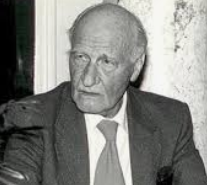
That's what would be expected from me, but I don't remember doing [anything like that]. I had nothing to do - I was sitting in my office and writing - it was hardly a field in which you could collect interesting information.
3 months 4 weeks ago
Worship itself is a given — or it does not exist at all.
▼
Source
p. 59
3 months 4 weeks ago
[I]n my early manhood I learned to respect ignorance, to regard ignorance as an object of legitimate interest and reflection; and as I say, a sort of unconsidered preparation for this attitude of mind appears to have run back almost to my infancy. Moreover, when I got around to read Plato, I found that he reinforced and copper-fastened the notion which experience had already rather forcibly suggested, that direct attempts to overcome and enlighten ignorance are a doubtful venture; the notion that it is impossible, as one of my friends puts it, to tell anybody anything which in a very real sense he does not already know. It seemed extraordinary that this should be so. Nevertheless, there it was; and apparently no one could give,—certainly no one, not even Plato, did give,—any more intelligent and satisfying reason why it should be so than I could give; and I could give none at all.
▼
Source
Albert Jay Nock, Memoirs of a Superflous Man (NY: Harper and Brothers, 1943), pp. 16–17
3 months 4 weeks ago
Why don't I kill myself? If I knew exactly what keeps me from doing so, I should have no more questions to ask myself since I should have answered them all.
3 months 4 weeks ago
Talk never yet could guide any man's or nation's affairs; nor will it yours, except towards the Limbus Patrum, where all talk, except a very select kind of it, lodges at last.
3 months 4 weeks ago
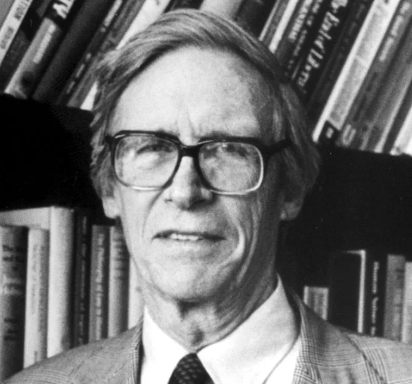
An intuitionist conception of justice is, one might say, but half a conception.
▼
Source
Chapter I, Section 8, pg. 41
3 months 4 weeks ago
Profound study of nature is the most fertile source of mathematical discoveries.
▼
Source
Ch. 1, p. 7
3 months 4 weeks ago
The first thinker was, without a doubt, the first man obsessed by why. An unaccustomed mania, not at all contagious: rare indeed are those who suffer from it, who are a prey to questioning, and who can accept no given because they were born in consternation.
3 months 4 weeks ago
Religion was the pole-star for my father. Rude and uncultivated as he otherwise was, it made him and kept him "in all points a man." Oh! when I think that all the area in boundless space he had seen was limited to a circle of some fifty miles' diameter (he never in his life was farther or elsewhere so far from home as at Craigenputtoch), and all his knowledge of the boundless time was derived from his Bible and what the oral memories of old men could give him, and his own could gather; and yet, that he was such, I could take shame to myself. I feel to my father — so great though so neglected, so generous also towards me — a strange tenderness, and mingled pity and reverence peculiar to the case, infinitely soft and near my heart. Was he not a sacrifice to me? Had I stood in his place, could he not have stood in mine, and more? Thou good father! well may I forever honor thy memory. Surely that act was not without its reward. And was not nature great, out of such materials to make such a man?
3 months 4 weeks ago
An intolerant sect has no right to complain when it is denied an equal liberty. … A person’s right to complain is limited to principles he acknowledges himself.
▼
Source
p. 217
3 months 4 weeks ago
And since every man retains, and can never be deprived of his natural right (founded on a regard to the general good) of relieving himself from all oppression, that is, from every thing that has been imposed upon him without his own consent; this must be the only true and proper foundation of all the governments subsisting in the world, and that to which the people who compose them have an unalienable right to bring them back.
▼
Source
Section II, "Of Political Liberty"
3 months 4 weeks ago
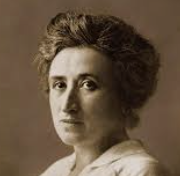
It makes no sense to regard the right of suffrage as a utopian product of fantasy, cut loose from social reality. And it is for this reason that it is not a serious instrument of the proletarian dictatorship. It is an anachronism, an anticipation of the juridical situation which is proper on the basis of an already completed socialist economy, but is not in the transition period of the proletarian dictatorship.
▼
Source
Chapter Five, "The Question of Suffrage"
3 months 4 weeks ago
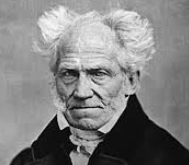
We see in tragedy the noblest men, after a long conflict and suffering, finally renounce forever all the pleasure of life and the aims till then pursued so keenly, or cheerfully and willingly give up life itself.
▼
Source
Book 1
3 months 4 weeks ago
We say: he has no talent, only tone. But tone is precisely what cannot be invented — we're born with it. Tone is an inherited grace, the privilege some of us have of making our organic pulsations felt — tone is more than talent, it is its essence.
3 months 4 weeks ago
He was a teacher and a prophet in the Jewish sense of the word. The prophecies of Isaiah and Jeremiah have become a part of the permanent spiritual inheritance of mankind, because events proved that they had interpreted correctly the signs of their own times, and their prophecies were fulfilled. Carlyle, like them, believed that he had a special message to deliver to the present age. Whether he was correct in that belief, and whether his message was a true message, remains to be seen. He has told us that our most cherished ideas of political liberty, with their kindred corollaries, are mere illusions, and that the progress which has seemed to go along with them is a progress towards anarchy and social dissolution. If he was wrong, he has misused his powers. The principles of his teaching are false. He has offered himself as a guide upon a road of which he had no knowledge; and his own desire for himself would be the speediest oblivion both of his person and his works. If, on the other hand, he has been right; if, like his great predecessors, he has read truly the tendencies of this modern age of ours, and his teaching is authenticated by facts, then Carlyle, too, will take his place among the inspired seers, and he will shine on, another fixed star in the intellectual sky.Time only can show how this will be.
▼
Source
James Anthony Froude, Thomas Carlyle: A History of the First Forty Years of His Life, 1795–1835, Vol. I (1882), pp. xv-xvi
3 months 4 weeks ago
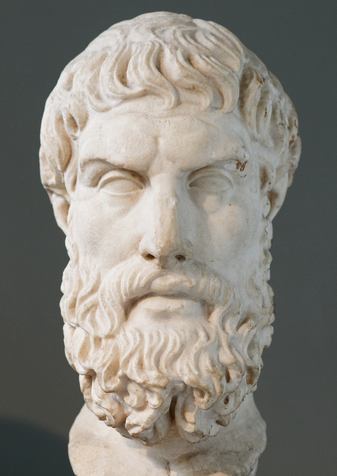
The flesh receives as unlimited the limits of pleasure; and to provide it requires unlimited time. But the mind, intellectually grasping what the end and limit of the flesh is, and banishing the terrors of the future, procures a complete and perfect life, and we have no longer any need of unlimited time. Nevertheless the mind does not shun pleasure, and even when circumstances make death imminent, the mind does not lack enjoyment of the best life.
3 months 4 weeks ago
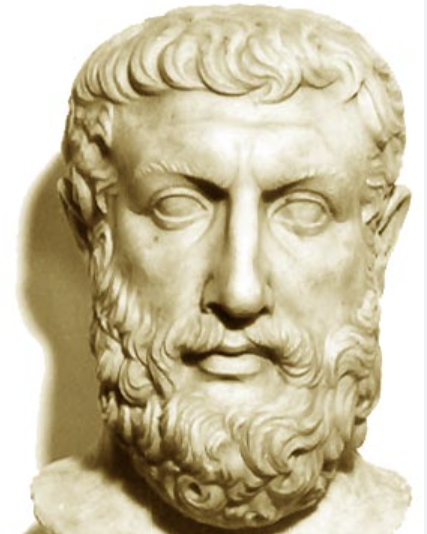
If I accede to Parmenides there is nothing left but the One; if I accede to Zeno, not even the One is left.
▼
Source
Seneca the Younger, as quoted in "Zeno", in The Presocratics (1966) edited by Philip Wheelwright, p. 106
3 months 4 weeks ago
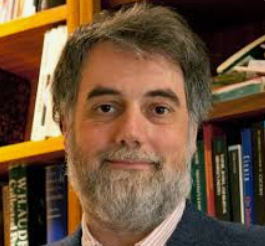
God is in command of history. Each crisis has something to teach us; each crisis is overcome by particular virtues and by reference to particular truths. The way out of a crisis is often unexpected, and often combines a decisive historical intervention by God, and a new spirit in the Church, animating new movements and new thinking. With hindsight we can even see in some cases how the crisis itself solved intractable problems which could not be solved in any other way
▼
Source
[https://remnantnewspaper.com/web/index.php/fetzen-fliegen/item/5036-interview-with-dr-joseph-shaw Interview with Dr. Joseph Shaw] (August 28, 2020)
3 months 4 weeks ago
Methink I am thrice-imprisoned—ask not me Of news that need no telling—By loss of sight, confinement in my house, And this vile body for my spirit’s dwelling.
▼
Source
Translation of Reynold Nicholson, as quoted in The Luzumiyat of Abu'l-Ala (1920) by Ameen Rihani
3 months 4 weeks ago
If, while hurrying ostensibly to the temple of truth, we hand the reins over to our personal interests which look aside at very different guiding stars, for instance at the tastes and foibles of our contemporaries, at the established religion, but in particular at the hints and suggestions of those at the head of affairs, then how shall we ever reach the high, precipitous, bare rock whereon stands the temple of truth?
▼
Source
E. Payne, trans. (1974) Vol. 1, pp. 22–23
3 months 4 weeks ago
Two enemies — the same man divided.
3 months 4 weeks ago
For if they imagine infinite spaces of time before the world, during which God could not have been idle, in like manner they may conceive outside the world infinite realms of space, in which, if any one says that the Omnipotent cannot hold His hand from working, will it not follow that they must adopt Epicurus' dream of innumerable worlds? with this difference only, that he asserts that they are formed and destroyed by the fortuitous movements of atoms, while they will hold that they are made by God's hand, if they maintain that, throughout the boundless immensity of space, stretching interminably in every direction round the world, God cannot rest, and that the worlds which they suppose Him to make cannot be destroyed. ... there is no place beside the world ...no time before the world.
▼
Source
Augustine of Hippo, The City of God, Book XI, Ch. 5 "That We Ought Not to Seek to Comprehend the Infinite Ages of Time Before the World, Nor the Infinite Realms of Space"
3 months 4 weeks ago
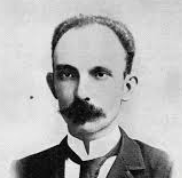
Let the world be grafted onto our republics, but the trunk must be our own. And let the vanquished pedant hold his tongue, for there are no lands in which a man may take greater pride than in our long-suffering American republics.
3 months 4 weeks ago
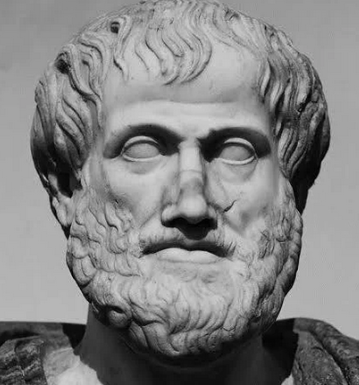
Let us consider, with respect to causes, what they are, and how many there are in number... this also must be done by us in discoursing concerning generation and corruption, and all physical mutation... knowing the principles of these...Cause... is after one manner said to be that, from which, being inherent, something is produced... But after another manner cause is form and paradigm (and this is the definition of the essence of a thing) and the genera of this. ...But it happens... that there are also many causes of the same thing, and this is not from accident. ...seed, a physician, he who consults, and, in short, he who makes, are all of them causes, as that whence the principle of mutation, or permanency, or motion is derived. ...It is, however, necessary always to investigate the supreme cause of every thing ...Further still, it is necessary to investigate the genera of genera; and the particulars of particulars... We should also explore the capacities of the capabilities, and the energizers of the things affected by energy.
▼
Source
Book II, Ch. III, pp. 107-113.
3 months 4 weeks ago
Let us say in passing that since (philosophical) remedies are often worse than the malady, our age, in order to be cured of the Plato sickness, has swallowed such doses of a relativist, vaguely skeptical, lightly spiritualist and insipidly moralist medicine, that it is in the process of gently dying, in the small bed of its supposed democratic comfort.
▼
Source
From Plato, Our Dear Plato!, Magazine littéraire, no. 447 (November 2005).
3 months 4 weeks ago
Newspapers are the second hand of history. This hand, however, is usually not only of inferior metal to the other hands, it also seldom works properly.
▼
Source
Vol. 2, Ch. 19, § 233
3 months 4 weeks ago
To have failed in everything, always, out of a love of discouragement.
3 months 4 weeks ago
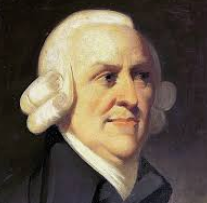
Let us suppose that the great empire of China, with all its myriads of inhabitants, was suddenly swallowed up by an earthquake, and let us consider how a man of humanity in Europe, who had no sort of connection with that part of the world, would be affected upon receiving intelligence of this dreadful calamity. He would, I imagine, first of all, express very strongly his sorrow for the misfortune of that unhappy people, he would make many melancholy reflections upon the precariousness of human life, and the vanity of all the labours of man, which could thus be annihilated in a moment. He would too, perhaps, if he was a man of speculation, enter into many reasonings concerning the effects which this disaster might produce upon the commerce of Europe, and the trade and business of the world in general. And when all this fine philosophy was over, when all these humane sentiments had been once fairly expressed, he would pursue his business or his pleasure, take his repose or his diversion, with the same ease and tranquillity, as if no such accident had happened. The most frivolous disaster which could befall himself would occasion a more real disturbance. If he was to lose his little finger to-morrow, he would not sleep to-night; but, provided he never saw them, he will snore with the most profound security over the ruin of a hundred millions of his brethren, and the destruction of that immense multitude seems plainly an object less interesting to him, than this paltry misfortune of his own. To prevent, therefore, this paltry misfortune to himself, would a man of humanity be willing to sacrifice the lives of a hundred millions of his brethren, provided he had never seen them? Human nature startles with horror at the thought, and the world, in its greatest depravity and corruption, never produced such a villain as could be capable of entertaining it. But what makes this difference? When our passive feelings are almost always so sordid and so selfish, how comes it that our active principles should often be so generous and so noble? When we are always so much more deeply affected by whatever concerns ourselves, than by whatever concerns other men; what is it which prompts the generous, upon all occasions, and the mean upon many, to sacrifice their own interests to the greater interests of others? It is not the soft power of humanity, it is not that feeble spark of benevolence which Nature has lighted up in the human heart, that is thus capable of counteracting the strongest impulses of self-love. It is a stronger power, a more forcible motive, which exerts itself upon such occasions. It is reason, principle, conscience, the inhabitant of the breast, the man within, the great judge and arbiter of our conduct.
▼
Source
Chap. III.
3 months 4 weeks ago
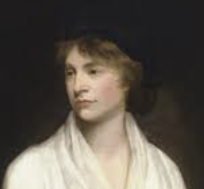
Till women are more rationally educated, the progress in human virtue and improvement in knowledge must receive continual checks.
▼
Source
Ch. 3
CivilSimian.com created by AxiomaticPanic, CivilSimian, Kalokagathia