

3 months 4 weeks ago
Of all calumnies the worst is the one which attacks our indolence, which contests its authenticity.
3 months 4 weeks ago
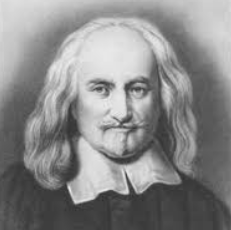
And in these foure things, Opinion of Ghosts, Ignorance of second causes, Devotion towards what men fear, and Taking of things Casuall for Prognostics, consisteth the Natural seed of Religion; which by reason of the different Fancies, Judgements, and Passions of severall men, hath grown up into ceremonies so different, that those which are used by one man, are for the most part ridiculous to another.
▼
Source
The First Part, Chapter 12, p. 54

3 months 4 weeks ago
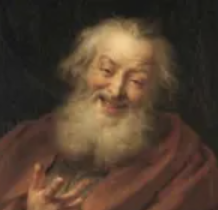
Genius is 'the inspired gift of God.' It is the clearer presence of God Most High in a man. Dim, potential in all men; in this man it has become clear, actual.
3 months 4 weeks ago
False men and shams talk big and do nothing.
3 months 4 weeks ago
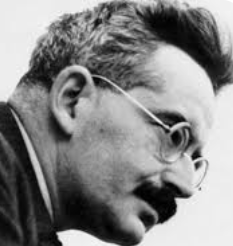
Nothing that has ever happened should be regarded as lost for history. To be sure, only a redeemed mankind receives the fullness of its past — which is to say, only a redeemed mankind has its past become citable in all its moments. Each moment it has lived becomes a citation à l'ordre du jour — and that day is Judgement Day.
▼
Source
III
3 months 4 weeks ago
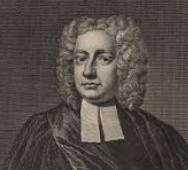
When mons. Descartes's philosophical Romance, by the Elegance of its Style and the plausible Accounts of natural Phænomena, had overthrown the Aristotelian Physics, the World received but little Advantage by the Change: For instead of a few Pedants, who, most of them, being conscious of their Ignorance, concealed it with hard Words and pompous Terms; a new Set of Philosophers started up, whose lazy Disposition easily fell in with a Philosophy, that required no Mathematicks to understand it, and who taking a few Principles for granted, without examining their Reality or Consistence with each other, fancied they could solve all Appearances mechanically by Matter and Motion; and, in their smattering Way, pretended to demonstrate such things, as perhaps Cartesius himself never believed ; his Philosophy (if he bad been in earnest) being unable to stand the test of the Geometry which he was Master of.
▼
Source
p. vi-v: Preface
3 months 4 weeks ago
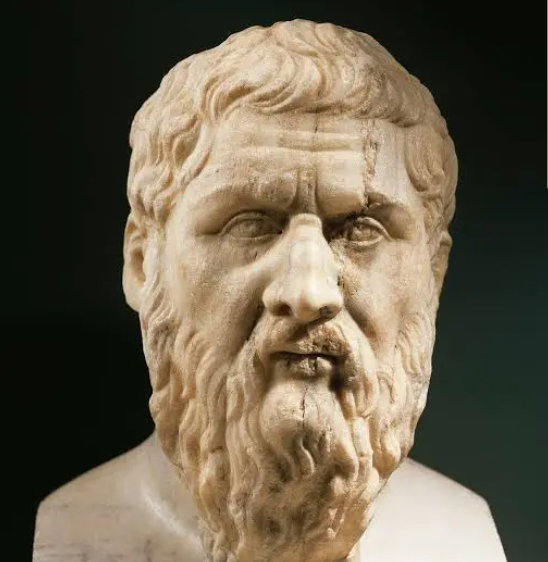
Such was the vast power which the god settled in the lost island of Atlantis; and this he afterwards directed against our land for the following reasons, as tradition tells: For many generations, as long as the divine nature lasted in them, they were obedient to the laws, and well-affectioned towards the god, whose seed they were; for they possessed true and in every way great spirits, uniting gentleness with wisdom in the various chances of life, and in their intercourse with one another.
3 months 4 weeks ago
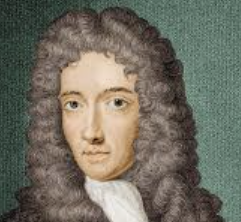
Not that I at all disallow the use of reasoning upon experiments, or the endeavouring to discern as early as we can the confederations, and differences, and tendencies of things: for such an absolute suspension of the exercise of reasoning were exceeding troublesome, if not impossible. And, as in that rule of arithmetic, which is commonly called ' by proceeding upon a conjecturally-supposed number, as if it were that, which we inquire after, we are wont to come to the knowledge of the true number sought for; so in physiology it is sometimes conducive to the discovery of truth, to permit the understanding to make an hypothesis, in order to the explication of this or that difficulty, that by examining how far the phænomena are, or are not, capable of being solved by that hypothesis, the understanding may, even by its own errors, be instructed.
3 months 4 weeks ago
Tolerance — the function of an extinguished ardor — tolerance cannot seduce the young.
3 months 4 weeks ago
And whereas many men, by accident unevitable, become unable to maintain themselves by their labour; they ought not to be left to the Charity of private persons; but to be provided for, (as far-forth as the necessities of Nature require,) by the Lawes of the Common-wealth. For as it is Unchariablenesse in any man, to neglect the impotent; so it is in the Soveraign of a Common-wealth, to expose them to the hazard of such uncertain Charity.
▼
Source
The Second Part, Chapter 30, p. 181
3 months 4 weeks ago
In all cases, therefore, we will agree with the judicious Mrs. Glass: 'First catch your hare!' First get your man; all is got: he can learn to do all things, from making boots, to decreeing judgments, governing communities; and will do them like a man.
3 months 4 weeks ago
If we already lived in a cruelty-free world, the notion of re-introducing suffering, exploitation and creatures eating each other would seem not so much frightful as unimaginable – no more seriously conceivable than reverting to surgery without anaesthesia today.
▼
Source
"[https://www.hedweb.com/abolitionist-project/reprogramming-predators.html Reprogramming Predators]", BLTC Research, 2009
3 months 4 weeks ago
The essential freedom, the ultimate and final freedom that cannot be taken from a man, is to say No. This is the basic premise in Sartre's view of human freedom: freedom is in its very essence negative, though the negativity is also creative.
▼
Source
Chapter Ten, Sartre, p. 215
3 months 4 weeks ago
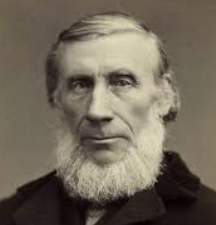
That there were 'weeds' in the Bible requiring to be kept out of sight was to me... a new revelation. I take little pleasure in dwelling upon the errors and blemishes of a book rendered venerable to me by intrinsic wisdom and imperishable associations. But...when its passages are invoked to justify the imposition of a yoke, irksome because unnatural, we are driven in self-defence to be critical.
3 months 4 weeks ago
You want to know whether I can make a long speech, such as you are in the habit of hearing; but that is not my way.
▼
Source
Socrates speaking to Alcibiades
3 months 4 weeks ago
And of universal nature, the notion I would offer, should be something like this. Nature is the aggregate of the bodies, that make up the world, in its present state, considered as a principle, by virtue whereof, they act and suffer, according to the laws of motion, prescribed by the author of things.
▼
Source
Sect. 2.
3 months 4 weeks ago
Tyranny is just what one can develop a taste for, since it so happens that man prefers to wallow in fear rather than to face the anguish of being himself.
3 months 4 weeks ago
In all European countries, especially in England, one class of Captains and commanders of men, recognizable as the beginning of a new real and not imaginary "Aristocracy," has already in some measure developed itself: the Captains of Industry;—happily the class who above all, or at least first of all, are wanted in this time. In the doing of material work, we have already men among us that can command bodies of men. And surely, on the other hand, there is no lack of men needing to be commanded: the sad class of brother-men whom we had to describe as "Hodge's emancipated horses," reduced to roving famine,—this too has in all countries developed itself; and, in fatal geometrical progression, is ever more developing itself, with a rapidity which alarms every one. On this ground, if not on all manner of other grounds, it may be truly said, the "Organization of Labor" (not organizable by the mad methods tried hitherto) is the universal vital Problem of the world.
3 months 4 weeks ago
Confusion of sapience with sentience can be ethically catastrophic.
▼
Source
[https://www.hedweb.com/social-media/2016.html Social Media Unsorted Postings 2016]
3 months 4 weeks ago
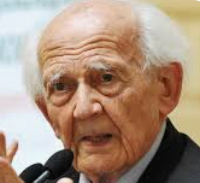
That's what would be expected from me, but I don't remember doing [anything like that]. I had nothing to do - I was sitting in my office and writing - it was hardly a field in which you could collect interesting information.
3 months 4 weeks ago
Worship itself is a given — or it does not exist at all.
▼
Source
p. 59
3 months 4 weeks ago
[I]n my early manhood I learned to respect ignorance, to regard ignorance as an object of legitimate interest and reflection; and as I say, a sort of unconsidered preparation for this attitude of mind appears to have run back almost to my infancy. Moreover, when I got around to read Plato, I found that he reinforced and copper-fastened the notion which experience had already rather forcibly suggested, that direct attempts to overcome and enlighten ignorance are a doubtful venture; the notion that it is impossible, as one of my friends puts it, to tell anybody anything which in a very real sense he does not already know. It seemed extraordinary that this should be so. Nevertheless, there it was; and apparently no one could give,—certainly no one, not even Plato, did give,—any more intelligent and satisfying reason why it should be so than I could give; and I could give none at all.
▼
Source
Albert Jay Nock, Memoirs of a Superflous Man (NY: Harper and Brothers, 1943), pp. 16–17
3 months 4 weeks ago
It should now be clear that "wonder" and philosophizing are connected with each other in a more essential sense than may at first appear in the statement, "Philosophy begins in wonder." For wonder is not merely the beginning, in the sense of initium, the first stage or phase of philosophy. Rather, wonder is the beginning in the sense of the "principle" (principium), the abiding, ever-intrinsic origin of philosophizing. It is not true to say that the philosopher, insofar as he philosophizes, ever "emerges from his wonder" — if he does depart from his state of wonder, he has ceased to philosophize.
▼
Source
pp. 105–106
3 months 4 weeks ago
The skeptic is the least mysterious man in the world, and yet, starting from a certain moment, he no longer belongs to this world.
3 months 4 weeks ago
What the Universities have mainly done—what I have found the University did for me, was that it taught me to read in various languages and various sciences, so that I could go into the books that treated of these things, and try anything I wanted to make myself master of gradually, as I found it suit me. Whatever you may think of all that, the clearest and most imperative duty lies on every one of you to be assiduous in your reading; and learn to be good readers, which is, perhaps, a more difficult thing than you imagine. Learn to be discriminative in your reading—to read all kinds of things that you have an interest in, and that you find to be really fit for what you are engaged in.
3 months 4 weeks ago
After Hegel, philosophy confronts the possibility of its own death, and in some sense has to do so if it is to remain the most fundamental kind of thinking.
▼
Source
Chapter 4, Philosophy As Writing: The Case Of Hegel, p. 88
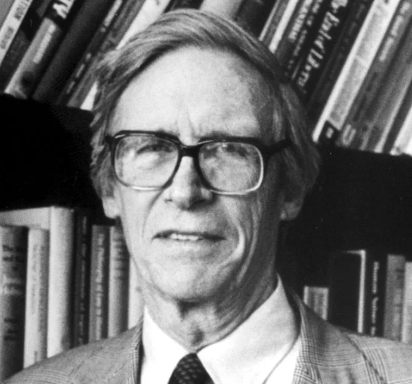
3 months 4 weeks ago
If A were not allowed his better position, B would be even worse off than he is.
▼
Source
Chapter II, Section 17, pg. 103
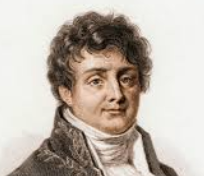
3 months 4 weeks ago
From the constitution of the solar system it is... probable that the temperature of the poles... are a little less than that of space... the same for all... although the distances from the sun may be unequal.
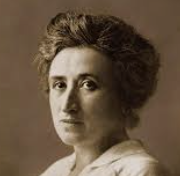
3 months 4 weeks ago
In the history of bourgeois society, legislative reform served to strengthen progressively the rising class till the latter was sufficiently strong to seize political power, to suppress the existing juridical system and to construct itself a new one.
▼
Source
Ch.8
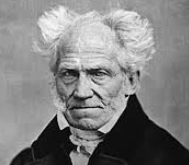
3 months 4 weeks ago
Change alone is eternal, perpetual, immortal.
▼
Source
Unverified attribution noted in Respectfully Quoted: A Dictionary of Quotations (1993), ed. Suzy Platt, Library of Congress, p. 39; compare Heraclitus: Nothing endures but change.
3 months 4 weeks ago
If death had only negative aspects, dying would be an unmanageable action.
3 months 4 weeks ago
Can there be a more horrible object in existence than an eloquent man not speaking the truth?
▼
Source
Address as Lord Rector of Edinburgh University, (1866), reported in Bartlett's Familiar Quotations, 10th ed. (1919).
3 months 4 weeks ago
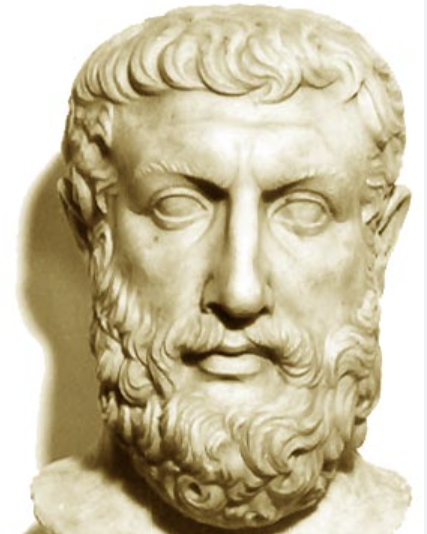
For it is the same thing that can be thought and that can be.
▼
Source
Frag. B 3, quoted by Plotinus, Enneads V, i.8
3 months 4 weeks ago
Being happy involves both a certain achievement in action and a rational assurance about the outcome.
▼
Source
Chapter IX, Section 83, p. 549
3 months 4 weeks ago
It may, perhaps, be true, though we cannot distinctly see it to be so, that as all finite things require a cause, infinites admit of none. It is evident, that nothing can begin to be without a cause; but it by no means follows from thence, that that must have had a cause which had no beginning. But whatever there may be in this conjecture, we are constrained, in pursuing the train of causes and effects, to stop at last at something uncaused. That any being should be self created is evidently absurd, because that would suppose that he had a being before he had, or that he existed, and did not exist at the same time. For want of clearer knowledge of this subject, we are obliged to content ourselves with terms that convey only negative ideas, and to say that God is a being untreated or uncaused; and this is all that we mean when we sometimes say that he is self existent.
▼
Source
Vol. I : Part I : The Being and Attributes of God, § 1 : Of the existence of God, and those attributes which art deduced from his being considered as uncaused himself, and the cause of every thing else (1772)
3 months 4 weeks ago
If we assume the viewpoint claimed as his own by Lenin and we fear the influence of intellectuals in the proletarian movement, we can conceive of no greater danger to the Russian party than Lenin's plan of organization. Nothing will more surely enslave a young labor movement to an intellectual elite hungry for power than this bureaucratic straightjacket, which will immobilize the movement and turn it into an automaton manipulated by a Central Committee. On the other hand there is no more effective guarantee against opportunist intrigue and personal ambition than the independent revolutionary action of the proletariat, as a result of which the workers acquire the sense of political responsibility and self-reliance.
3 months 4 weeks ago
Thus, because Christian morals leave animals out of consideration … therefore in philosophical morals they are of course at once outlawed; they are merely "things," simply means to ends of any sort; and so they are good for vivisection, for deer-stalking, bull-fights, horse-races, etc., and they may be whipped to death as they struggle along with heavy quarry carts. Shame on such a morality … which fails to recognize the Eternal Reality immanent in everything that has life, and shining forth with inscrutable significance from all eyes that see the sun!
▼
Source
Part II, Ch. VI, [https://archive.org/stream/basisofmorality00schoiala#page/94/mode/2up pp. 94]-95
3 months 4 weeks ago
I have all the defects of other people yet everything they do seems to me inconceivable.
3 months 4 weeks ago
When Froude took Lord Wolseley to see Carlyle, the sage bade the laurelled commander lock the doors of the parliamentary palaver, and walk off with the key.
▼
Source
John Morley, Recollections, Volume II (1917), p. 49
3 months 4 weeks ago
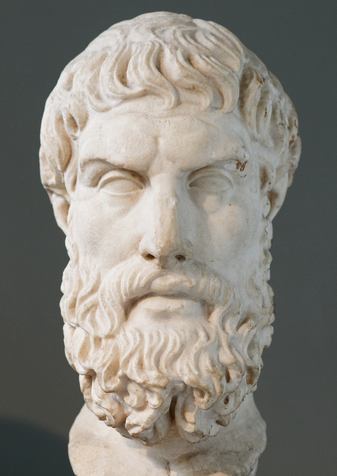
The happiness which belongs to man, is that state in which he enjoys as many of the good things, and suffers as few of the evils incident to human nature as possible; passing his days in a smooth course of permanent tranquility. A wise man, though deprived of sight or hearing, may experience happiness in the enjoyment of the good things which yet remain; and when suffering torture, or laboring under some painful disease, can mitigate the anguish by patience, and can enjoy, in his afflictions, the consciousness of his own constancy.
3 months 4 weeks ago
Parmenides does not say a word about "Being" anywhere. The assertion that it is...amounts to ...the universe is a plenum; and ...there is no ...empty space ...From this it follows that there can be no such thing as motion. Instead of endowing the One with an impulse to change, as Herakleitos... Parmenides dismissed change as an illusion. He showed... if you take the One seriously you are bound to deny everything else. All previous solutions... had missed the point.
3 months 4 weeks ago
Man needs to go outside himself in order to find repose and reveal himself.
▼
Source
"Vivir en Sí" [To Live in Oneself] (1891)
3 months 4 weeks ago
I then arrived at the certainty that it was necessary to posit that mathematics writes that which, of being itself, is pronounceable in the field of a pure theory of the Multiple. The entire history of rational thought appeared to me to be illuminated once one assumed the hypothesis that mathematics, far from being a game without object, draws the exceptional severity of its law from being bound to support the discourse of ontology.
▼
Source
Introduction
3 months 4 weeks ago
Our moral virtues benefit mainly other people; intellectual virtues, on the other hand, benefit primarily ourselves; therefore the former make us universally popular, the latter unpopular.
3 months 4 weeks ago
Paradise was unendurable, otherwise the first man would have adapted to it; this world is no less so, since here we regret paradise or anticipate another one. What to do? Where to go? Do nothing and go nowhere, easy enough.
3 months 4 weeks ago
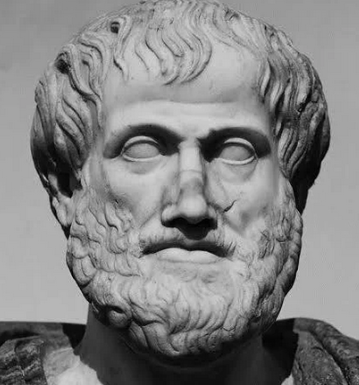
The infinite is in capacity. That, however, which is infinite in capacity is not to be assumed as that which is infinite in energy. ...It has its being in capacity, and in division and diminution. ...It is always possible to assume something beyond it. It does not, however, on this account surpass every definite magnitude; as in division it surpasses every definite magnitude, and will be less.
▼
Source
Book III, Ch. VIII, pp. 164-166.
3 months 4 weeks ago
My poems are like a dagger Sprouting flowers from the hilt; My poetry is like a fountain Sprinkling streams of coral water.
▼
Source
V

3 months 4 weeks ago
Political thought as we understand it began in Athens because the Athenians were a trading people who looked at their contemporaries and saw how differently they organized themselves. If they had not lived where they did and organized their economic lives as they did, they could not have seen the contrast. Given the opportunity, they might not have paid attention to it. The Israelites of the Old Testament narrative were very conscious of their neighbors, Egyptian, Babylonian, and other, not least because they were often reduced to slavery or near-slavery by them. That narrative makes nothing of the fact that Egypt was a bureaucratic theocracy; it emphasizes that the Egyptians did not worship Yahweh. The history of Old Testament politics is the history of a people who did their best to have no politics. They saw themselves as under the direct government of God, with little room to decide their own fate except by obeying or disobeying God’s commandments. Only when God took them at their word and allowed them to choose a king did they become a political society, with familiar problems of competition for office and issues of succession. For the Jews, politics was a fall from grace. For the Greeks, it was an achievement. Many besides Plato thought it a flawed achievement; when historians and philosophers began to articulate its flaws, the history of political thought began among the argumentative Athenians.
3 months 4 weeks ago
In our monogamous part of the world, to marry means to halve one’s rights and double one’s duties.
▼
Source
Vol. 2, Ch. 27, § 370 | Variant translation: To marry is to halve your rights and double your duties.
3 months 4 weeks ago
Even when nothing happens, everything seems too much for me. What can be said, then, in the presence of an event, any event?
CivilSimian.com created by AxiomaticPanic, CivilSimian, Kalokagathia