

7 months 2 weeks ago
The "through-and-through" universe seems to suffocate me with its infallible impeccable all-pervasiveness. Its necessity, with no possibilities; its relations, with no subjects, make me feel as if I had entered into a contract with no reserved rights ... It seems too buttoned-up and white-chokered and clean-shaven a thing to speak for the vast slow-breathing unconscious Kosmos with its dread abysses and its unknown tides.
▼
Source
source
Essays in Radical Empiricism (1912), Ch. 12 : Absolutism and Empiricism
7 months 3 weeks ago
When I endeavour to examine my own conduct, when I endeavour to pass sentence upon it, and either to approve or condemn it, it is evident that, in all such cases, I divide myself, as it were, into two persons; and that I, the examiner and judge, represent a different character from that other I, the person whose conduct is examined into and judged of.
▼
Source
source
Chap. I.

7 months 3 weeks ago
You're either excluding the right people or including the wrong people.
▼
Source
source
ComfortDragon
5 months 3 weeks ago
To dissimulate is to pretend not to have what one has. To simulate is to feign to have what one doesn't have. One implies a presence, the other an absence. But it is more complicated than that because simulating is not pretending: "Whoever fakes an illness can simply stay in bed and make everyone believe he is ill. Whoever simulates an illness produces in himself some of the symptoms" (Littré). Therefore, pretending, or dissimulating, leaves the principle of reality intact: the difference is always clear, it is simply masked, whereas simulation threatens the difference between the "true" and the "false," the "real" and the "imaginary."
▼
Source
source
"The Precession of Simulacra," p. 3
5 months 4 weeks ago
A book is a mirror: if an ape looks into it an apostle is hardly likely to look out. We have no words for speaking of wisdom to the stupid. He who understands the wise is wise already.
▼
Source
source
E 49
6 months 2 weeks ago
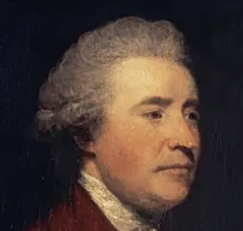
A diversity of opinion upon almost every principle of politics, had indeed drawn a strong line of separation between them and some others. However, they were desirous not to extend the misfortune by unnecessary bitterness; they wished to prevent a difference of opinion on the commonwealth from festering into rancorous and incurable hostility. Accordingly they endeavoured that all past controversies should be forgotten; and that enough for the day should be the evil thereof. There is however a limit at which forbearance ceases to be a virtue. Men may tolerate injuries, whilst they are only personal to themselves. But it is not the first of virtues to bear with moderation the indignities that are offered to our country.
▼
Source
source
Describing the Government's position at a previous time of deep division in British politics in fact over policy on America, Observations on a Late Publication on the Present State of the Nation (1769), page 2

6 months 2 weeks ago
Where are my sensations? They have melted into... me, and what is this me, this self, but the sum of these evaporated sensations?
7 months 2 weeks ago
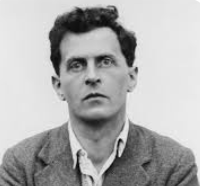
What do I know about God and the purpose of life? I know that this world exists. That I am placed in it like my eye in its visual field. That something about it is problematic, which we call its meaning. This meaning does not lie in it but outside of it. That life is the world. That my will penetrates the world. That my will is good or evil. Therefore that good and evil are somehow connected with the meaning of the world. The meaning of life, i.e. the meaning of the world, we can call God. And connect with this the comparison of God to a father. To pray is to think about the meaning of life.
▼
Source
source
Journal entry (11 June 1916), p. 72e and 73e
8 months 2 weeks ago
If the love of money is the root of all evil, the need of money is most certainly the root of all despair.
6 months 2 weeks ago
The Whigs of this day have before them, in this Appeal, their constitutional ancestors: They have the doctors of the modern school. They will choose for themselves. The author of the Reflections has chosen for himself. If a new order is coming on, and all the political opinions must pass away as dreams, which our ancestors have worshipped as revelations, I say for him, that he would rather be the last (as certainly he is the least) of that race of men, than the first and greatest of those who have coined to themselves Whig principles from a French die, unknown to the impress of our fathers in the constitution.
▼
Source
source
p. 476
6 months 4 days ago
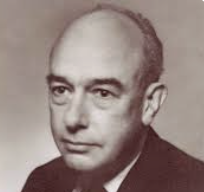
At root what is needed for scientific inquiry is just receptivity to data, skill in reasoning, and yearning for truth. Admittedly, ingenuity can help too.
▼
Source
source
S.4
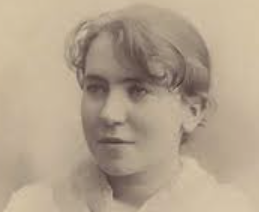
6 months 1 day ago
Truths dead and forgotten long ago, conceptions of the world and its people, covered with mould, even during the times of our grandmothers, are being hammered into the heads of our young generation.
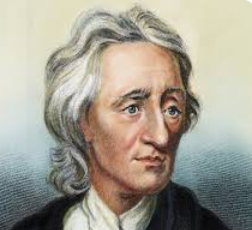
7 months 2 weeks ago
False and doubtful positions, relied upon as unquestionable maxims, keep those who build on them in the dark from truth. Such are usually the prejudices imbibed from education, party, reverence, fashion, interest, et cetera.
▼
Source
source
Book IV, Ch. 7
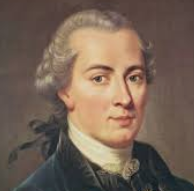
7 months 3 weeks ago
Man has his own inclinations and a natural will which, in his actions, by means of his free choice, he follows and directs. There can be nothing more dreadful than that the actions of one man should be subject to the will of another; hence no abhorrence can be more natural than that which a man has for slavery. And it is for this reason that a child cries and becomes embittered when he must do what others wish, when no one has taken the trouble to make it agreeable to him. He wants to be a man soon, so that he can do as he himself likes.
▼
Source
source
Part III : Selection on Education from Kant's other Writings, Ch. I Pedagogical Fragments, # 62
6 months 1 day ago
It is the private dominion over things that condemns millions of people to be mere nonentities, living corpses without originality or power of initiative, human machines of flesh and blood, who pile up mountains of wealth for others and pay for it with a gray, dull and wretched existence for themselves. I believe that there can be no real wealth, social wealth, so long as it rests on human lives - young lives, old lives and lives in the making.
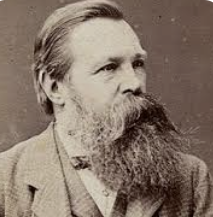
6 months 2 weeks ago
Democracy would be wholly valueless to the proletariat if it were not immediately used as a means for putting through measures directed against private property and ensuring the livelihood of the proletariat.

7 months ago
Remind yourself that all men assert that wisdom is the greatest good, but that there are few who strenuously seek out that greatest good.
▼
Source
source
Pythagorean Ethical Sentences From Stobæus

3 months 2 weeks ago
The idea of creating a national bank I do not concur in, because it seems now decided that Congress has not that power (although I sincerely wish they had it exclusively), and because I think there is already a vast redundancy rather than a scarcity of paper medium.
▼
Source
source
Letter to Thomas Law, 1813. FE 9:433
7 months 2 weeks ago
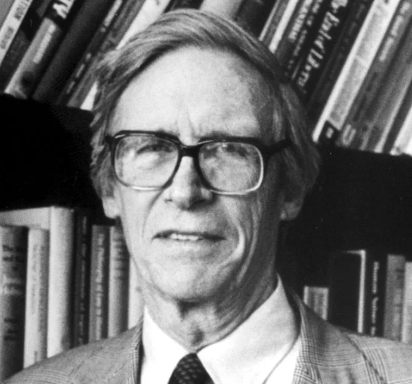
Let us now consider whether justice requires the toleration of the intolerant, and if so under what conditions. There are a variety of situations in which this question arises. Some political parties in democratic states hold doctrines that commit them to suppress the constitutional liberties whenever they have the power. Again, there are those who reject intellectual freedom but who nevertheless hold positions in the university. It may appear that toleration in these cases is inconsistent with the principles of justice, or at any rate not required by them.
▼
Source
source
p. 216
7 months ago
If thou intend to do any good; tarry not till to-morrow! for thou knowest not what may chance thee this night.
7 months 1 week ago
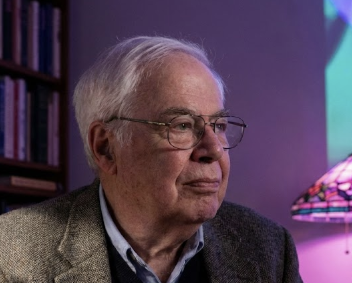
As long as we try to project from the relative and conditioned to the absolute and unconditioned, we shall keep the pendulum swinging between dogmatism and skepticism. The only way to stop this increasingly tiresome pendulum swing is to change our conception of what philosophy is good for. But that is not something which will be accomplished by a few neat arguments. It will be accomplished, if it ever is, by a long, slow process of cultural change - that is to say, of change in common sense, changes in the intuitions available for being pumped up by philosophical arguments.
▼
Source
source
Introduction to Truth and Progress: Philosophical Papers, Volume 3 (1998).
6 months 2 weeks ago
Without the faculty of forgetting, our past would weigh so heavily on our present that we should not have the strength to confront another moment, still less to live through it. Life would be bearable only to frivolous natures, those in fact who do not remember.
6 months 3 weeks ago
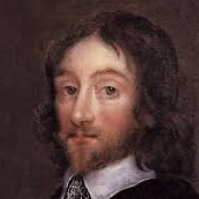
What song the Syrens sang, or what name Achilles assumed when he hid himself among women, though puzzling questions, are not beyond all conjecture.
▼
Source
source
Chapter V. Cf Suetonius, Lives of the Twelve Caesars: "Tiberius," Ch 70
8 months 2 weeks ago
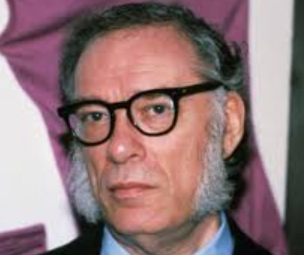
A robot must protect its own existence as long as such protection does not conflict with the First or Second Laws.
3 months 2 weeks ago
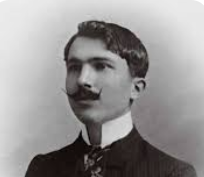
The ultimate most holy form of theory is action. Not to look on passively while the spark leaps from generation to generation, but to leap and to burn with it!
6 months 3 weeks ago
There is surely a Physiognomy, which those experienced and Master Mendicants observe... For there are mystically in our faces certain Characters that carry in them the motto of our Souls, wherein he that cannot read A.B.C. may read our natures.
▼
Source
source
Section 2
7 months 2 weeks ago
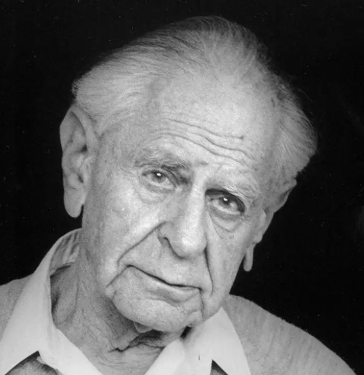
Darwinism is not a testable scientific theory, but a metaphysical research program. Unsourced variant: Evolution is not a fact. Evolution doesn't even qualify as a theory or as a hypothesis. It is a metaphysical research program, and it is not really testable science.
4 months 2 weeks ago
Of course, not everything old is beautiful, any more than everything black, or everything white, or everything young. But the notion that old means ugly is every bit as harmful as the prejudice that black is ugly. In one way it is even more pernicious. The notion that only what is new and young is beautiful poisons our relationship to the past and to our own future. It keeps us from understanding our roots and the greatest works of our culture and other cultures. It also makes us dread what lies ahead of us and leads many to shirk reality.
▼
Source
source
Time is an Artist (1978) Epilogue : Old is Beautiful
3 months 2 weeks ago
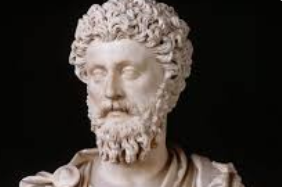
That to expect bad people not to injure others is crazy. It's to ask the impossible. And to let them behave like that to other people but expect them to exempt you is arrogant-the act of a tyrant.
▼
Source
source
(Hays translation) XI, 18
8 months 2 weeks ago
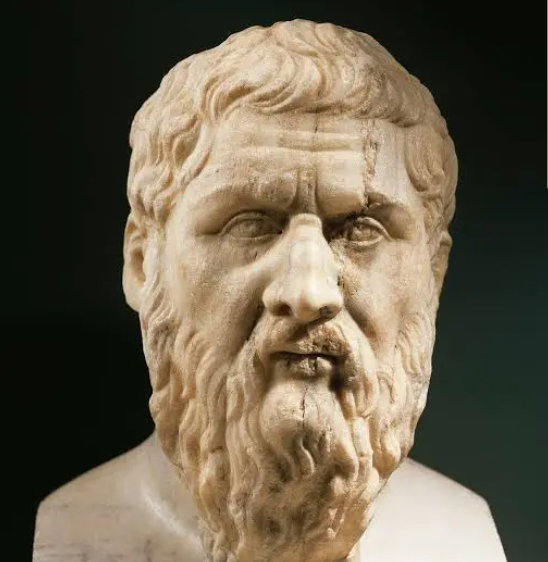
Beholding beauty with the eye of the mind, he will be enabled to bring forth, not images of beauty, but realities (for he has hold not of an image but of a reality), and bringing forth and nourishing true virtue to become the friend of God and be immortal, if mortal man may.
6 months 3 days ago
Ninety percent of our lives is governed by emotion. Our brains merely register and act upon what is telegraphed to them by our bodily experience. Intellect is to emotion as our clothes are to our bodies; we could not very well have civilized life without clothes, but we would be in a poor way if we had only clothes without bodies.
▼
Source
source
Ch. 29, June 10, 1943.
6 months 3 weeks ago
To make an end of all things on Earth, and our Planetical System of the World, he (God) need but put out the Sun.
4 months 1 week ago
See now the power of truth; the same experiment which at first glance seemed to show one thing, when more carefully examined, assures us of the contrary.
▼
Source
source
Salviati, Third Day. Naturally Accelerated Motion
8 months 1 week ago
When the Superior Man (Junzi) eats he does not try to stuff himself; at rest he does not seek perfect comfort; he is diligent in his work and careful in speech. He avails himself to people of the Tao and thereby corrects himself. This is the kind of person of whom you can say, "he loves learning."
5 months 3 weeks ago
Picturing others and everything which brings you closer to them is futile from the instant that 'communication' can make their presence immediate.
▼
Source
source
(p. 42)
6 months 5 days ago
I must avert here once again to my view of the opposition that exists between individuality and personality, notwithstanding the fact that the one demands the other. Individuality is, if I may so express it, the container or thing which contains, personality the content or thing contained, or I might say that my personality is in a certain sense my comprehension, that which I comprehend or embrace within myself - which is in a certain way the whole Universe - and that my individuality is my extension; the one my infinite, the other my finite.
6 months 2 weeks ago
If instead of expanding you, putting you in a state of energetic euphoria, your ordeals depress and embitter you, you can be sure you have no spiritual vocation.
6 months 1 week ago
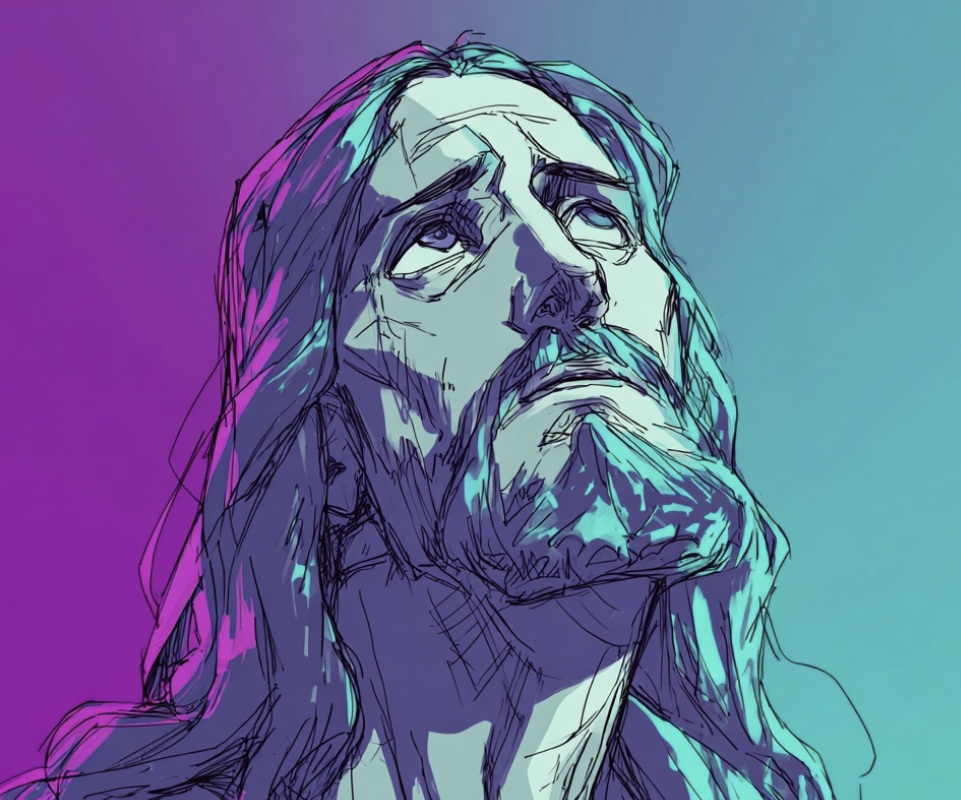
Thou shalt do no murder, Thou shalt not commit adultery, Thou shalt not steal, Thou shalt not bear false witness, Honour thy father and thy mother: and, Thou shalt love thy neighbour as thyself.
▼
Source
source
19:18-19 (KJV)

7 months 1 week ago
It is easy for us to criticize the prejudices of our grandfathers, from which our fathers freed themselves. It is more difficult to search for prejudices among the beliefs and values that we hold.
▼
Source
source
Ch. 3: Equality for Animals? (p. 49)

7 months 2 weeks ago
The essence of the Liberal outlook lies not in what opinions are held, but in how they are held: instead of being held dogmatically, they are held tentatively, and with a consciousness that new evidence may at any moment lead to their abandonment.
6 months 3 days ago
Life is an offensive, directed against the repetitious mechanism of the Universe.
▼
Source
source
p. 102.
6 months 5 days ago
But Don Quixote was converted. Yes - and died, poor soul. But the other, the real Don Quixote, he who remained on earth and lives among us with his spirit - this Don Quixote was not converted, this Don Quixote continues to incite us to make ourselves ridiculous, this Don Quixote must never die.
7 months 2 weeks ago
I observe that a very large portion of the human race does not believe in God and suffers no visible punishment in consequence. And if there were a God, I think it very unlikely that he would have such an uneasy vanity as to be offended by those who doubt his existence.
▼
Source
source
Bertrand Russell's Best: Silhouettes in Satire (1958), "On Religion".

7 months 1 week ago
Truly to escape Hegel involves an exact appreciation of the price we have to pay to detach ourselves from him. It assumes that we are aware of the extent to which Hegel, insidiously perhaps, is close to us; it implies a knowledge, in that which permits us to think against Hegel, of that which remains Hegelian. We have to determine the extent to which our anti-Hegelianism is possibly one of his tricks directed against us, at the end of which he stands, motionless, waiting for us.
▼
Source
source
Discourse on Language, Inaugural Lecture at the Collège de France, 1970-1971. tr. A. M. Sheridan Smith
7 months 3 weeks ago
Heaven and Hell suppose two distinct species of men, the good and the bad; but the greatest part of mankind float betwixt vice and virtue. -- Were one to go round the world with an intention of giving a good supper to the righteous, and a sound drubbing to the wicked, he would frequently be embarrassed in his choice, and would find that the merits and the demerits of most men and women scarcely amount to the value of either.
▼
Source
source
Essay on the Immortality of the Soul
7 months 2 weeks ago
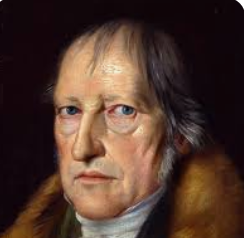
Reading the morning newspaper is the realist's morning prayer. One orients one's attitude toward the world either by God or by what the world is. The former gives as much security as the latter, in that one knows how one stands.
▼
Source
source
Miscellaneous writings of G.W.F. Hegel, translation by Jon Bartley Stewart, Northwestern University Press, 2002, page 247.
6 months 4 days ago
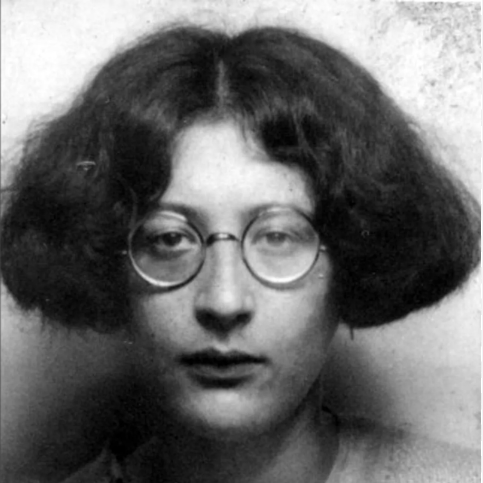
Moreover, nothing is so rare as to see misfortune fairly portrayed; the tendency is either to treat the unfortunate person as though catastrophe were his natural vocation, or to ignore the effects of misfortune on the soul, to assume, that is, that the soul can suffer and remain unmarked by it, can fail, in fact, to be recast in misfortune's image.
▼
Source
source
p. 193

4 months 1 week ago
We call that fire of the black thunder-cloud "electricity," and lecture learnedly about it, and grind the like of it out of glass and silk: but what is it? What made it? Whence comes it? Whither goes it? Science has done much for us; but it is a poor science that would hide from us the great deep sacred infinitude of Nescience, whither we can never penetrate, on which all science swims as a mere superficial film. This world, after all our science and sciences, is still a miracle; wonderful, inscrutable, magical and more, to whosoever will think of it.
CivilSimian.com created by AxiomaticPanic, CivilSimian, Kalokagathia