



6 months 1 week ago
The empiricist thinks he believes only what he sees, but he is much better at believing than at seeing.
▼
Source
source
"Objections to Belief in Substance", p. 201
3 months 2 weeks ago
There is the same difference between political theory and constitutional laws as there is between poetics and poetry. The illustrious Montesquieu is to Lycurgus, in the intellectual hierarchy, what Batteux is to Homer or Racine. Moreover, these two talents positively exclude each other, as can be seen by the example of Locke, who fumbled badly when he presumed to give laws to the Americans.
▼
Source
source
Chapter VI, p. 52
6 months 4 days ago
If we love God while thinking that he does not exist, he will manifest his existence.
▼
Source
source
p. 260
7 months 2 weeks ago
When we have chosen the vocation in which we can contribute most to humanity, burdens cannot bend us because they are only sacrifices for all. Then we experience no meager, limited, egotistic joy, but our happiness belongs to millions, our deeds live on quietly but eternally effective, and glowing tears of noble men will fall on our ashes.
▼
Source
source
Writings of the Young Marx on Philosophy and Society, L. Easton, trans. (1967), p. 39

7 months 1 week ago
The harmony between word and deed in Socrates' life is Dorian... manifested in the courage he showed at Delium. This harmonic accord... distinguishes Socrates from a sophist... [who] can give... fine and beautiful discourses on courage, but is not courageous... [U]nlike the sophist, he can use parrhesia and speak freely because what he says accords... with what he thinks... [which] accords... with what he does.

4 months 3 weeks ago
Human knowledge increases, while human irrationality stays the same. Scientific inquiry may be an embodiment of reason, but what such inquiry demonstrates is that humans are not rational animals. The fact that humanists refuse to accept the demonstration only confirms its truth.
▼
Source
source
An Old Chaos: Humanism and Flying Saucers (p. 81)
7 months 1 week ago
In the old system, the body of the condemned man became the king's property, on which the sovereign left his mark and brought down the effects of his power. Now he will be rather the property of society, the object of a collective and useful appropriation.
▼
Source
source
Chapter Three, The Gentle Way in Punishment

3 months 2 weeks ago
One of our fan-coloring biographers, who paints small men as very great, inquired of me lately with real affection too, whether he might consider as authentic, the change of my religion much spoken of in some circles. Now this supposed that they knew what had been my religion before, taking for it the word of their priests, whom I certainly never made the confidants of my creed. My answer was "say nothing of my religion. It is known to my God and myself alone. Its evidence before the world is to be sought in my life; if that has been honest and dutiful to society, the religion which has regulated it cannot be a bad one."
▼
Source
source
Letter to John Adams (11 January 1817), published in The Works of Thomas Jefferson in Twelve Volumes, Federal Edition, Paul Leicester Ford, ed., New York: G. P. Putnam's Sons, 1904, Vol. 12, pp. 48-49
5 months 2 weeks ago
Scientific and technological progress themselves are value-neutral. They are just very good at doing what they do. If you want to do selfish, greedy, intolerant and violent things, scientific technology will provide you with by far the most efficient way of doing so. But if you want to do good, to solve the world's problems, to progress in the best value-laden sense, once again, there is no better means to those ends than the scientific way.
4 months 3 days ago
One crime has to be concealed by another.
6 months 3 days ago
A general definition of civilization: a civilized society is exhibiting the five qualities of truth, beauty, adventure, art, peace.
▼
Source
source
p. 353.
7 months 1 week ago
Complaints about the social irresponsibility of the intellectual typically concern the intellectual's tendency to marginalize herself, to move out from one community by interior identification of herself with some other community-for example, another country or historical period. ... It is not clear that those who thus marginalize themselves can be criticized for social irresponsibility. One cannot be irresponsible toward a community of which one does not think of oneself as a member. Otherwise runaway slaves and tunnelers under the Berlin Wall would be irresponsible.
▼
Source
source
"Postmodernist bourgeois liberalism," Objectivity, Relativism and Truth (Cambridge: 1991), p. 197
7 months 2 weeks ago
To be a philosopher, that is to say, a lover of wisdom (for wisdom is nothing but truth), it is not enough for a man to love truth, in so far as it is compatible with his own interest, with the will of his superiors, with the dogmas of the church, or with the prejudices and tastes of his contemporaries; so long as he rests content with this position, he is only a philautos, not a philosophos [a lover of self, not a lover of wisdom]. For this title of honor is well and wisely conceived precisely by its stating that one should love the truth earnestly and with one's whole heart, and thus unconditionally and unreservedly, above all else, and, if need be, in defiance of all else. Now the reason for this is the one previously stated that the intellect has become free, and in this state it does not even know or understand any other interest than that of truth.
▼
Source
source
E. Payne, trans. (1974) Vol. 1, pp. 21-22
6 months 2 weeks ago
This method of mental training is, therefore, the immediate preparation for the moral; it completely destroys the root of immorality by never allowing sensuous enjoyment to become the motive. Formerly, that was the first motive to be stimulated and developed, because it was believed that otherwise the pupil could not be influenced or controlled at all.
▼
Source
source
General Nature of New Eduction contiunued p. 31
3 months 2 weeks ago
I learn with great satisfaction that you are about committing to the press the valuable historical and State papers you have been so long collecting. Time and accident are committing daily havoc on the originals deposited in our public offices. The late war has done the work of centuries in this business. The last cannot be recovered, but let us save what remains; not by vaults and locks which fence them from the public eye and use in consigning them to the waste of time, but by such a multiplication of copies, as shall place them beyond the reach of accident.
▼
Source
source
Letter to Mr. Hazard
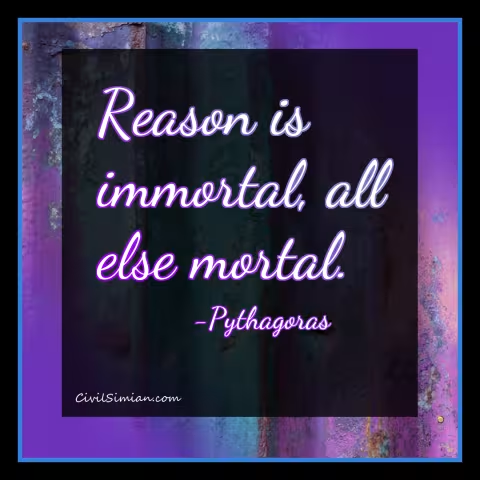
6 months 4 days ago
From the power to transform him into a thing by killing him there proceeds another power, and much more prodigious, that which makes a thing of him while he still lives.
▼
Source
source
in The Simone Weil Reader, p. 155
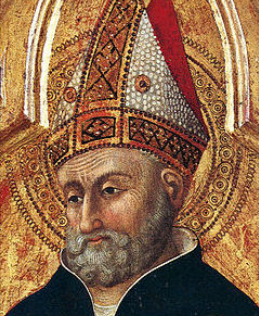
8 months 4 days ago
We are He, since we are His body and since He was made man in order to be our Head.
▼
Source
source
p.432

8 months 2 weeks ago
The evil that is in the world always comes of ignorance, and good intentions may do as much harm as malevolence, if they lack understanding. On the whole men are more good than bad; that, however, isn't the real point. But they are more or less ignorant, and it is this that we call vice or virtue; the most incorrigible vice being that of an ignorance which fancies it knows everything and therefore claims for itself the right to kill. There can be no true goodness, nor true love, without the utmost clear-sightedness.
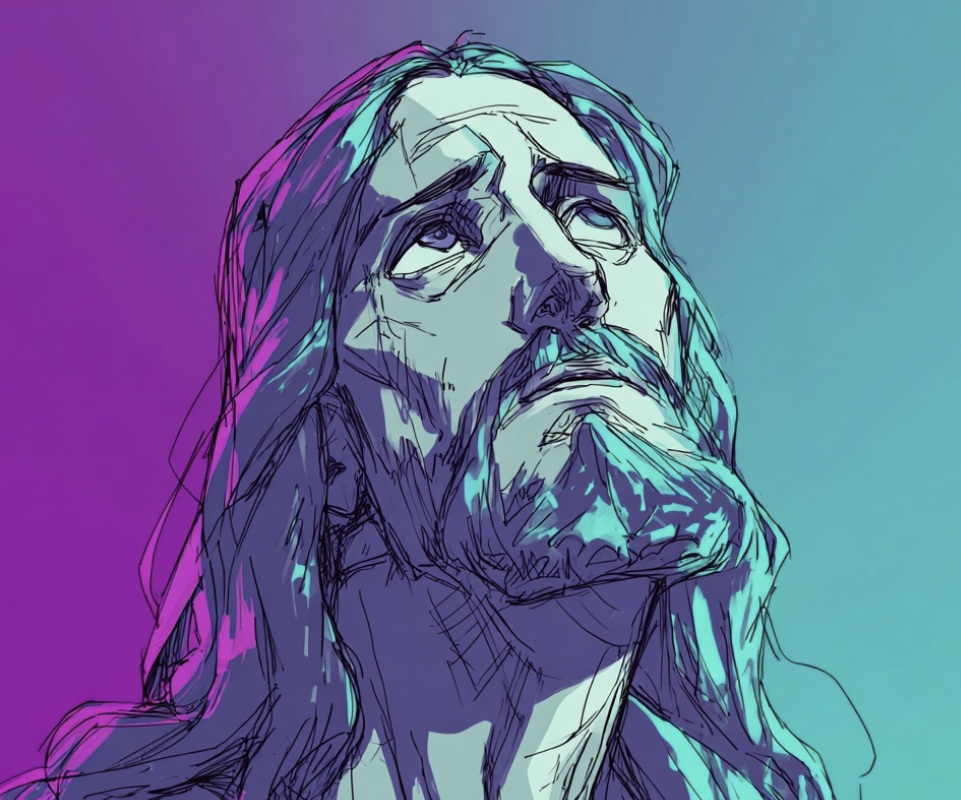
6 months 1 week ago
Be of good courage, and if you are discouraged, still take courage over against the various forms of nature. He who has ears to hear, let him hear.
▼
Source
source
Chapter 4.
3 months 2 weeks ago
A little patience, and we shall see the reign of witches pass over, their spells dissolve, and the people, recovering their true sight, restore their government to its true principles. It is true that in the meantime we are suffering deeply in spirit, and incurring the horrors of a war and long oppressions of enormous public debt. If the game runs sometimes against us at home we must have patience till luck turns, and then we shall have an opportunity of winning back the principles we have lost, for this is a game where principles are at stake.
▼
Source
source
From a letter to John Taylor (June 1798), after the passage of the Alien and Sedition Acts
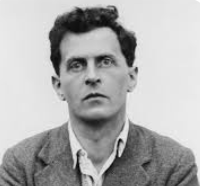
7 months 2 weeks ago
We are asleep. Our Life is a dream. But we wake up sometimes, just enough to know that we are dreaming.
7 months 2 weeks ago
Kant stated that he had "found it necessary to deny knowledge to make room for faith," but all he had "denied" was knowledge of things that are unknowable, and he had not made room for faith but for thought.
▼
Source
source
p. 63
4 months 2 weeks ago
If children are a joy for the well-to-do, they are a torment for seven-eights of all civlizees, who cannot afford to maintain and educate them.
8 months 1 week ago
I hear and I forget. I see and I remember. I do and I understand.
7 months 1 week ago
Thou shouldst not become presumptuous through life; for death comes upon thee at last, and the perishable part falls to the ground.
7 months 2 weeks ago
Why in the world shouldn't they have regarded with awe and reverence that act by which the human race is perpetuated. Not every religion has to have St. Augustine's attitude to sex. Why even in our culture marriages are celebrated in a church, everyone present knows what is going to happen that night, but that doesn't prevent it being a religious ceremony.
▼
Source
source
Intentionality, and Romanticism (1997) by Richard Thomas Eldridge, p. 130
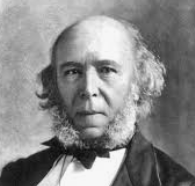
6 months 2 weeks ago
The tyranny of Mrs. Grundy is worse than any other tyranny we suffer under.
▼
Source
source
On Manners and Fashion

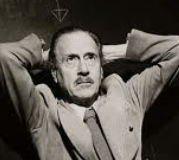
5 months 2 weeks ago
Applied knowledge in the Renaissance had to take the form of translation of the auditory into visual terms, of the plastic into retinal form.
▼
Source
source
(p. 180)

4 months 1 week ago
It has ever been held the highest wisdom for a man not merely to submit to Necessity,-Necessity will make him submit,-but to know and believe well that the stern thing which Necessity had ordered was the wisest, the best, the thing wanted there. To cease his frantic pretension of scanning this great God's-World in his small fraction of a brain; to know that it had verily, though deep beyond his soundings, a Just Law, that the soul of it was Good;-that his part in it was to conform to the Law of the Whole, and in devout silence follow that; not questioning it, obeying it as unquestionable.
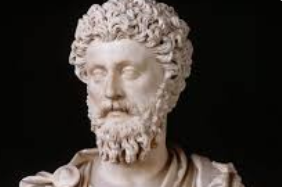
3 months 2 weeks ago
No matter what anyone says or does, my task is to be good.
▼
Source
source
(Hays translation) VII, 15
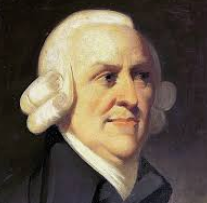
7 months 3 weeks ago
When the profits of trade happen to be greater than ordinary, over-trading becomes a general error both among great and small dealers.
▼
Source
source
Chapter I, p. 469.
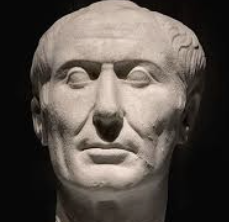
5 months 2 weeks ago
He is a despicable sage whose wisdom does not profit himself.
▼
Source
source
Maxim 629
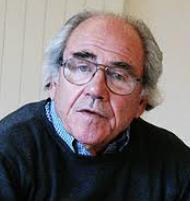
5 months 3 weeks ago
Simulation is no longer that of a territory, a referential being or substance. It is a generation by models of a real without origin or reality: a hyperreal.
▼
Source
source
"The Precession of Simulacra," p. 1
7 months 1 week ago
Absurdity destroys the and of the enumeration by making impossible the in where the things enumerated would be divided up.
▼
Source
source
Preface
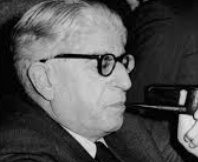
3 months 2 weeks ago
In ourselves alone the absolute light keeps shining, a sigillum falsi et sui, mortis et vitae aeternae [false signal and signal of eternal life and death itself], and the fantastic move to it begins: to the external interpretation of the daydream, the cosmic manipulation of a concept that is utopian in principle. Finding this concept, finding the right for whose sake it behoves us to live, to be organized, to have time-this is where we are headed, why we are clearing the metaphysically constitutive trails afresh, calling for what is not, building into the blue that lines all edges of the world; this is why we build ourselves into the blue and search for truth and reality where mere factuality vanishes.
▼
Source
source
p. 43
4 months 3 days ago
What madness this is, to punish oneself because one is unfortunate, and not to lessen, but to increase one's ills! You ought to display, in this matter also, that decent behaviour and modesty which has characterised all your life: for there is such a thing as self-restraint in grief also.
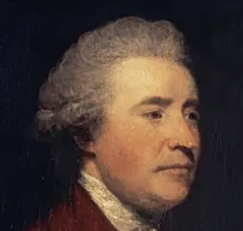
6 months 2 weeks ago
Old religious factions are volcanoes burnt out.
▼
Source
source
Speech on the Petition of the Unitarians
7 months 2 weeks ago
No doubt, when modesty was made a virtue, it was a very advantageous thing for the fools, for everybody is expected to speak of himself as if he were one.
▼
Source
source
Vol. 1, Ch. 3, Section 2: Pride
6 months ago
Psychoanalysis is essentially a theory of unconscious strivings, of resistance, of falsification of reality according to one's subjective needs and expectations.
▼
Source
source
p. 109

6 months 3 weeks ago
For the first time in sixty years, the priests, the old aristocracy and the people met in a common sentiment-a feeling of revenge, it is true, and not of affection; but even that is a great thing in politics, where a community of hatred is almost always the foundation of friendships.
4 months 4 days ago
Where the world comes in my way - and it comes in my way everywhere - I consume it to quiet the hunger of my egoism. For me you are nothing but - my food, even as I too am fed upon and turned to use by you. We have only one relation to each other, that of usableness, of utility, of use.
▼
Source
source
Dover 2005, p. 296, 297
7 months 3 weeks ago
No wind serves him who addresses his voyage to no certain port.
▼
Source
source
Book II, Ch. 1
7 months 2 weeks ago
Philosophy may in no way interfere with the actual use of language; it can in the end only describe it.
▼
Source
source
§ 124
7 months 3 weeks ago
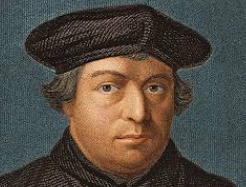
I'd rather be ruled by a competent Turk than an incompetent Christian.
▼
Source
source
The earliest published source for such a statement yet located is in Pat Robertson - Where He Stands (1988) by Hubert Morken, p. 42, where such a comment is attributed to Luther without citation.
CivilSimian.com created by AxiomaticPanic, CivilSimian, Kalokagathia