


10 months 2 weeks ago
The Dantean conceptions of Inferno were childish and unworthy of the Divine imagination: fire and torture. Boredom is much more subtle. The inner torture of a mind unable to escape itself in any way, condemned to fester in its own exuding mental pus for all time, is much more fitting. Oh, yes, my friend, we have been judged, and condemned, too, and this is not Heaven, but hell.


5 months 2 weeks ago
The wife of my God is matter; they wrestle with each other, they laugh and weep, they cry out in the nuptial bed of flesh. They spawn and are dismembered. They fill sea, land, and air with species of plants, animals, men, and spirits. This primordial pair embraces, is dismembered, and multiplies in every living creature. All the concentrated agony of the Universe bursts out in every living thing. God is imperiled in the sweet ecstasy and bitterness of flesh. But he shakes himself free, he leaps out of brains and loins, then clings to new brains and new loins until the struggle for liberation again breaks out from the beginning.
8 months 2 days ago
There are no whole truths; all truths are half-truths. It is trying to treat them as whole truths that plays the devil.
▼
Source
source
Prologue.

9 months 1 week ago
Animal Liberation is Human Liberation too.
▼
Source
source
Preface

9 months 2 weeks ago
One must look into hell before one has any right to speak of heaven.
▼
Source
source
Letter to Colette O'Niel, October 23, 1916; published in The Selected Letters of Bertrand Russell: The Public Years, 1914-1970, p. 87

9 months 2 weeks ago
To live without duties is obscene.
▼
Source
source
Aristocracy
8 months 4 days ago
Impulse, subjectivity and profanation, the old adversaries of materialistic alienation, now succumb to it. ... The representatives of the opposition to the authoritarian schema become witnesses to the authority of commercial success. ... In the service of success they renounce that insubordinate character which was theirs.
▼
Source
source
p. 273
10 months 2 weeks ago
Earth governments in moments of stress are not famous for being reasonable.

8 months 2 weeks ago
The more I see of the world, the more I am convinced that civilisation is a blessing not sufficiently estimated by those who have not traced its progress; for it not only refines our enjoyments, but produces a variety which enables us to retain the primitive delicacy of our sensations. Without the aid of the imagination all the pleasures of the senses must sink into grossness, unless continual novelty serve as a substitute for the imagination, which, being impossible, it was to this weariness, I suppose, that Solomon alluded when he declared that there was nothing new under the sun!
▼
Source
source
Letter 2
7 months 3 weeks ago
It is said that truth comes from the mouths of fools and children: I wish every good mind which feels an inclination for satire would reflect that the finest satirist always has something of both in him.
▼
Source
source
J 157
10 months 2 weeks ago
Individual science fiction stories may seem as trivial as ever to the blinder critics and philosophers of today — but the core of science fiction, its essence, the concept around which it revolves, has become crucial to our salvation if we are to be saved at all.
8 months 2 weeks ago
I define a Sign as anything which is so determined by something else, called its Object, and so determines an effect upon a person, which effect I call its Interpretant, that the latter is thereby mediately determined by the former.
▼
Source
source
Letter to Victoria, Lady Welby (1908) SS 80-81
9 months 2 weeks ago
Ah! Do not judge the gods, young man, they have painful secrets.
▼
Source
source
Jupiter, Act 1

5 months 2 weeks ago
The Constitution of the United States asserts that all power is inherent in the people; that they may exercise it by themselves; that it is their right and duty.
▼
Source
source
Letter to Justice William Johnson
6 months 1 week ago
From all these indignities, such as the very beasts of the field would not endure, you can deliver yourselves if you try, not by taking action, but merely by willing to be free.
9 months 3 weeks ago
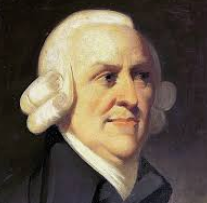
Monopoly of one kind or another, indeed, seems to be the sole engine of the mercantile system.
▼
Source
source
Chapter VII, Part Third, p. 684.

8 months 1 day ago
Stories on digital platforms like Facebook or Instagram are not genuine stories. They have no narrative duration. Rather, they are just sequences of momentary impressions that do not tell us anything.
7 months 2 weeks ago
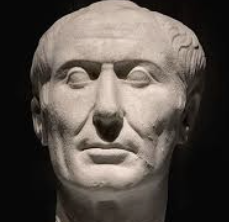
Pardon one offence and you encourage the commission of many.
▼
Source
source
Maxim 750
8 months 1 day ago
Zen Buddhism is inspired by a basic trust in the Here, a basic trust in the world.
6 months 1 week ago
A modern philosopher who has never once suspected himself of being a charlatan must be such a shallow mind that his work is probably not worth reading.
▼
Source
source
Metaphysical Horror

9 months 2 weeks ago
The safest road to Hell is the gradual one - the gentle slope, soft underfoot, without sudden turnings, without milestones, without signposts.
▼
Source
source
Letter XII
9 months 2 weeks ago
Many agnostics (including myself) are quite as doubtful of the body as they are of the soul, but this is a long story taking one into difficult metaphysics. Mind and matter alike, I should say, are only convenient symbol in discourse, not actually existing things.
▼
Source
source
What is an Agnostic?, 1953
9 months 1 week ago
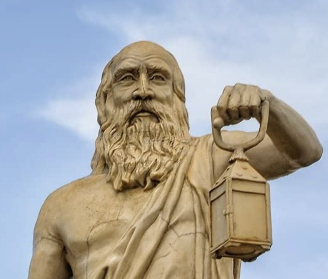
When the slave auctioneer asked in what he was proficient, he replied, "In ruling people."
▼
Source
source
Diogenes Laërtius, vi. 74
8 months 1 week ago
The inversion of external compulsion into the compulsion of conscience ... produces the machine-like assiduity and pliable allegiance required by the new rationality.
▼
Source
source
p. 34.
8 months 2 weeks ago
The secret is that only that which can destroy itself is truly alive.
▼
Source
source
Psychology and Alchemy
5 months 1 week ago
I have only two rules which I regard as principles of conduct. The first is: Have no rules. The second is: Be independent of the opinion of others.
9 months 2 weeks ago
Hitch your wagon to a star.
▼
Source
source
Civilization

8 months 3 weeks ago
The world that I regard is my selfe, it is the Microcosme of mine owne frame, that I cast mine eye on; for the other, I use it but like my Globe, and turne it round sometimes for my recreation. Men that look upon my outside, perusing onely my condition, and fortunes, do erre in my altitude; for I am above Atlas his shoulders.
▼
Source
source
Section 12

9 months 3 weeks ago
In this present that God has made us, there is nothing unworthy our care; we stand accountable for it even to a hair; and is it not a commission to man, to conduct man according to his condition; 'tis express, plain, and the very principal one, and the Creator has seriously and strictly prescribed it to us. Authority has power only to work in regard to matters of common judgment, and is of more weight in a foreign language; therefore let us again charge at it in this place.
▼
Source
source
Ch. 13

9 months 3 weeks ago
The greatest problem for the human race, to the solution of which Nature drives man, is the achievement of a universal civic society which administers law among men.
▼
Source
source
Fifth Thesis

6 months 3 weeks ago
Negative-utilitarianism is only one particular denomination of a broad church to which the reader may well in any case not subscribe. Fortunately, the program can be defended on grounds that utilitarians of all stripes can agree on. So a defence will be mounted against critics of the theory and application of a utilitarian ethic in general. For in practice the most potent and effective means of curing unpleasantness is to ensure that a defining aspect of future states of mind is their permeation with the molecular chemistry of ecstasy: both genetically precoded and pharmacologically fine-tuned. Orthodox utilitarians will doubtless find the cornucopian abundance of bliss this strategy delivers is itself an extra source of moral value. Future generations of native ecstatics are unlikely to disagree.
▼
Source
source
2.7 Why Be Negative?

8 months 2 weeks ago
The only thing the young should be taught is that there is virtually nothing to be hoped for from life. One dreams of a Catalogue of Disappointments which would include all the disillusionments reserved for each and every one of us, to be posted in the schools.
9 months 2 weeks ago
If children were brought into the world by an act of pure reason alone, would the human race continue to exist? Would not a man rather have so much sympathy with the coming generation as to spare it the burden of existence?
▼
Source
source
"On the Sufferings of the World"
9 months 2 weeks ago
For the moment, the jazz is playing; there is no melody, just notes, a myriad of tiny tremors. The notes know no rest, an inflexible order gives birth to them then destroys them, without ever leaving them the chance to recuperate and exist for themselves.... I would like to hold them back, but I know that, if I succeeded in stopping one, there would only remain in my hand a corrupt and languishing sound. I must accept their death; I must even want that death: I know of few more bitter or intense impressions.

10 months 2 weeks ago
Great feelings take with them their own universe, splendid or abject. They light up with their passion an exclusive world in which they recognize their climate. There is a universe of jealousy, of ambition, of selfishness or generosity. A universe in other words a metaphysic and an attitude of mind.

5 months 2 weeks ago
Whatever the virtue may be, from whatever source it may come, it is worthy of esteem... Mind, beauty, wealth, nobility, although the children of chance, all have their own value, as skill, learning and virtue have theirs.

8 months 4 days ago
The aim is to replace economic oligarchies by the State, which has a will-to-power of its own and is quite as little concerned with the public good; and a will-to-power, moreover, which is not economic but military and therefore much more dangerous to any good folk who have a taste for staying alive. And on the bourgeois side what on earth is the sense of objecting to State control in economic affairs if one accepts private monopolies which have all the economic and technical disadvantages of State monopolies and possibly some others as well?
▼
Source
source
p. 230

5 months 4 weeks ago
Only when the true ends of society have nothing to do with the sublime does "culture" become necessary as a veneer to cover over the void. Culture can at best appreciate the monuments of earlier faith; it cannot produce them.
▼
Source
source
"Commerce and Culture," p. 280.
9 months 2 weeks ago
An irrational fear should never be simply let alone, but should be gradually overcome by familiarity with its fainter forms.
▼
Source
source
On Education, Especially in Early Childhood (1926), Ch. 4: Fear

6 months 3 weeks ago
If there is anything unique about the human animal it is that it has the ability to grow knowledge at an accelerating rate while being chronically incapable of learning from experience. Science and technology are cumulative, whereas ethics and politics deal with recurring dilemmas. Whatever they are called, torture and slavery are universal evils; but these evils cannot be consigned to the past like redundant theories in science. They return under different names: torture as enhanced interrogation techniques, slavery as human trafficking. Any reduction in universal evils is an advance in civilization. But, unlike scientific knowledge, the restraints of civilized life cannot be stored on a computer disc. They are habits of behaviour, which once broken are hard to mend. Civilization is natural for humans, but so is barbarism.
▼
Source
source
An Old Chaos: Humanism and Flying Saucers (p. 75)
5 months 3 weeks ago
I feel, like all modern Americans, no consciousness of sin and simply do not believe in it. All I know is that if God loves me only half as much as my mother does, he will not send me to Hell. That is a final fact of my inner consciousness, and for no religion could I deny its truth.
▼
Source
source
p. 407
9 months 2 weeks ago
The imitator dooms himself to hopeless mediocrity. The inventor did it because it was natural to him, and so in him it has a charm. In the imitator something else is natural, and he bereaves himself of his own beauty, to come short of another man's.
▼
Source
source
p. 26
7 months 2 weeks ago
World War III is a guerrilla information war with no division between military and civilian participation.
▼
Source
source
(p.66)
5 months 4 weeks ago
I am of course confident that I will fulfil my tasks as a writer in all circumstances - from my grave even more successfully and more irrefutably than in my lifetime. No one can bar the road to truth, and to advance its cause I am prepared to accept even death. But may it be that repeated lessons will finally teach us not to stop the writer's pen during his lifetime? At no time has this ennobled our history.
▼
Source
source
Open letter to the Fourth Soviet Writers' Congress (16 May 1967); as translated in Solzhenitsyn: A Documentary Record (1970) edited by Leopold Labedz
8 months 3 weeks ago
That some have never dreamed is as improbable as that some have never laughed.
CivilSimian.com created by AxiomaticPanic, CivilSimian, Kalokagathia