

4 months 2 weeks ago
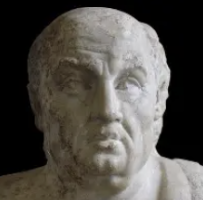
It would be some consolation for the feebleness of ourselves and our works, if all things should perish as slowly as they come into being; but as it is, increases are of sluggish growth, but the way to ruin is rapid.
▼
Source
source
Letters to Lucilius, letter 91, page 294.

7 months 1 day ago
Great joys, why do they bring us sadness? Because there remains from these excesses only a feeling of irrevocable loss and desertion which reaches a high degree of negative intensity. At such moments, instead of a gain, one keenly feels loss. sadness accompanies all those events in which life expends itself. its intensity is equal to its loss. Thus death causes the greatest sadness.
5 months 2 weeks ago
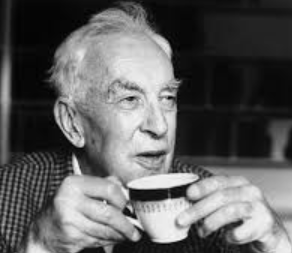
Our western science is a child of moral virtues; and it must now become the father of further moral virtues if its extraordinary material triumphs in our time are not to bring human history to an abrupt, unpleasant and discreditable end.
▼
Source
source
"A Turning Point in Man's Destiny", The New York Times Magazine (26 December 1954) p. 5
9 months 6 days ago
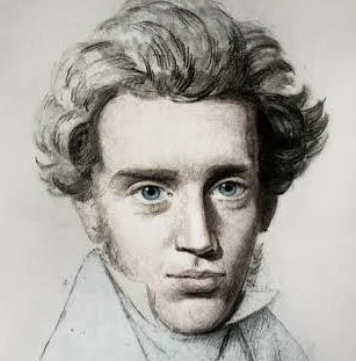
Not merely in the realm of commerce but in the world of ideas as well our age is organizing a regular clearance sale. Everything is to be had at such a bargain that it is questionable whether in the end there is anybody who will want to bid. Every speculative price-fixer who conscientiously directs attention to the significant march of modern philosophy, every Privatdocent, tutor, and student, every crofter and cottar goes further. Perhaps it would be untimely and ill-timed to ask them where they are going.
3 months 3 weeks ago
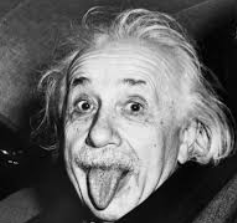
Everything should be made simple as possible but no simpler.
3 months 3 weeks ago
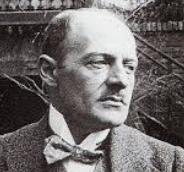
The state of mind which enables a man to do work of this kind is akin to that of the religious worshiper or the lover; the daily effort comes from no deliberate intention or program, but straight from the heart.
6 months 3 weeks ago
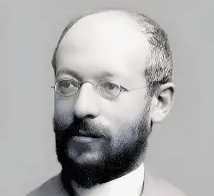
Antiquity believed that the forces of love in the universe were limited. Therefore they were to be used sparingly,and everyone was to be loved only according to his value.
▼
Source
source
L. Coser, trans. (1961), p. 94
4 months 2 weeks ago
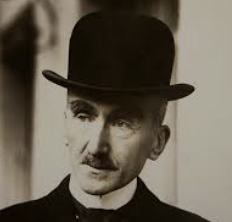
All relationships of people to each other rest, as a matter of course, upon the precondition that they know something about each other. The merchant knows that his correspondent wants to buy at the lowest price and to sell at the highest price. The teacher knows that he may credit to the pupil a certain quality and quantity of information. Within each social stratum the individual knows approximately what measure of culture he has to presuppose in each other individual.
▼
Source
source
p. 441: First lines of the article.
6 months 4 weeks ago
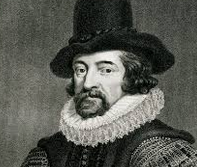
A philosopher worthy of the name has never said more than a single thing: and even then it is something he has tried to say, rather than actually said. And he has said only one thing because he has seen only one point: and at that it was not so much a vision as a contact...
▼
Source
source
"L'intuition philosophique (Philosophical Intuition)" (10 April 1911); translated by Mabelle L. Andison in: Henri Bergson, The Creative Mind: An Introduction to Metaphysics, Courier Dover Publications, 2012, p. 91
8 months 2 weeks ago
The human understanding is unquiet; it cannot stop or rest, and still presses onward, but in vain. Therefore it is that we cannot conceive of any end or limit to the world, but always as of necessity it occurs to us that there is something beyond... But he is no less an unskilled and shallow philosopher who seeks causes of that which is most general, than he who in things subordinate and subaltern omits to do so.
▼
Source
source
Aphorism 48
8 months 4 days ago
...the impossible must be supposed in order to explain the superdetermination of the event
▼
Source
source
p. 301

4 months 3 weeks ago
The fine arts once divorcing themselves from truth are quite certain to fall mad, if they do not die.
▼
Source
source
Latter Day Pamphlet, No. 8.

4 months 5 days ago
He who made us would have been a pitiful bungler, if he had made the rules of our moral conduct a matter of science. For one man of science, there are thousands who are not. What would have become of them? Man was destined for society. His morality, therefore, was to be formed to this object. He was endowed with a sense of right and wrong, merely relative to this.
4 months 6 days ago
Where are we going? Do not ask! Ascend, descend. There is no beginning and no end. Only this present moment exists, full of bitterness, full of sweetness, and I rejoice in it all.
5 months 1 day ago
Material production - the production, for example, or cars, televisions, clothing, and food - creates the means of social life. ... Immaterial production, by contrast, including the production of ideas, knowledges, communication, cooperation, and affective relations, tends to create not the means of social life but social life itself. (146)
▼
Source
source
146
6 months 3 weeks ago
The discourse on the Text should itself be nothing other than text, research, textual activity, since the Text is that social space which leaves no language safe, outside, nor any subject of the enunciation in position as judge, master, analyst, confessor, decoder. The theory of the Text can coincide only with a practice of writing.
▼
Source
source
Conclusion
4 months 1 week ago
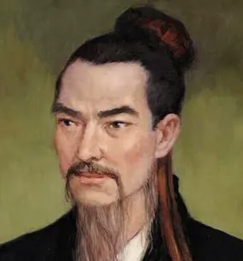
If one does not preserve the learned in a state he will be injuring the state; if one is not zealous (to recommend) the virtuous upon seeing one, he will be neglecting the ruler. Enthusiasm is to be shown only to the virtuous, and plans for the country are only to be shared with the learned. Few are those, who, neglecting the virtuous and slighting the learned, could still maintain the existence of their countries. Book 1; Befriending the Learned Variant translation: To enter upon rulership of a country but not preserve its scholars will result in the downfall of the country. To see the worthy but not hasten to them will make the country's ruler less able to perform his duties. To the unworthy is due no attention. The ignorant should remain without inclusion in the state's affairs. To impede the virtuous and neglect the scholarly and still maintain the survival of the state has yet to be, indeed.



8 months 5 days ago
In skating over thin ice our safety is our speed.
▼
Source
source
Prudence
8 months 1 week ago
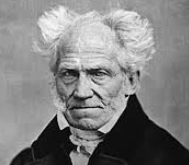
The presence of a thought is like the presence of a lover.
8 months 5 days ago
The soul is subject to dollars.
▼
Source
source
par. 6
8 months 1 day ago
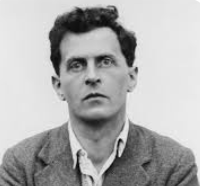
A proposition is completely logically analyzed if its grammar is made completely clear: no matter what idiom it may be written or expressed in...
▼
Source
source
Philosophical Remarks (1930), Part I (1)
9 months 6 days ago
Out of love, God becomes man. He says: Here you see what it is to be a human being; but he adds: Take care, for I am also God - blessed is he who takes no offense at me.
▼
Source
source
As translated by Howard V. Hong and EdnaH. Hong (1980) Variant translation; Out of love, God becomes man. He says: "See, here is what it is to be a human being."
4 months 3 weeks ago
Look upon yourself as more powerful than they give you out for, and you have more power; look upon yourself as more, and you have more.
▼
Source
source
Cambridge 1995, p. 318

5 months ago
In situations of de facto diversity, attempts to impose a single way of life on an entire population is a formula for dictatorship.

7 months 6 days ago
Free trade is not based on utility but on justice.
9 months 6 days ago
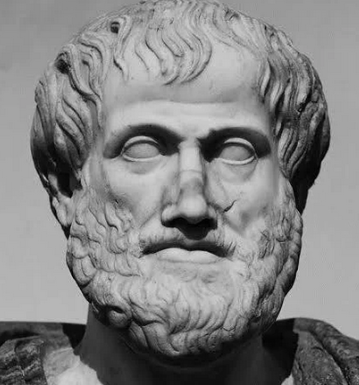
Now the mass of mankind are plainly... choosing a life like that of brute animals...
8 months 1 day ago
Nothing is more important than the formation of fictional concepts, which teach us at last to understand our own.
▼
Source
source
p. 85e
8 months 4 days ago
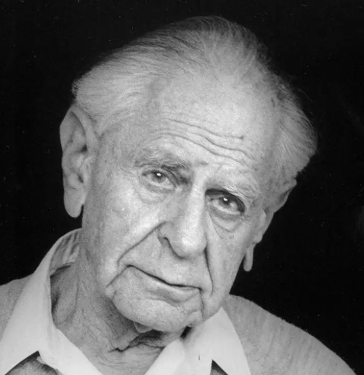
If I were to give a simple formula or recipe for distinguishing between what I consider to be admissible plans for social reform and inadmissible Utopian blueprints, I might say: Work for the elimination of concrete evils rather than for the realization of abstract goods. Do not aim at establishing happiness by political means. Rather aim at the elimination of concrete miseries.
▼
Source
source
p. 385
6 months 3 weeks ago
I know that all this is dull reading, tiresome, perhaps tedious, but it is all necessary. And I must repeat once again that we have nothing to do with a transcendental police system or with the conversion of God into a great Judge or Policeman - that is to say, we are not concerned with heaven or hell considered as buttresses to shore up our poor earthly mortality, nor are we concerned with anything egoistic or personal. It is not I myself alone, it is the whole human race that is involved, it is the ultimate finality of all our civilization. I am but one, but all men are I's.
7 months 1 week ago
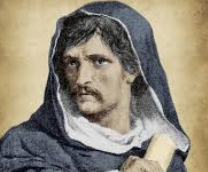
It is manifest... that every soul and spirit hath a certain continuity with the spirit of the universe, so that it must be understood to exist and to be included not only there where it liveth and feeleth, but it is also by its essence and substance diffused throughout immensity... The power of each soul is itself somehow present afar in the universe... Naught is mixed, yet is there some presence. Anything we take in the universe, because it has in itself that which is All in All, includes in its own way the entire soul of the world, which is entirely in any part of it.

8 months 3 weeks ago
The first duty of a man is the seeking after and the investigation of truth.
▼
Source
source
As quoted in A Crowd of One: The Future of Individual Identity (2007) by John Clippinger, p. 130 Compare: "The distinguishing property of man is to search for and to follow after truth." – De Officiis, Book I, 13

6 months 2 weeks ago
No artist can develop without increasing his self-knowledge; but self-knowledge supposes a certain preoccupation with the meaning of human life and the destiny of man. A definite set of beliefs - Methodist Christianity, for example - may only be a hindrance to development; but it is not more so than Beckett's refusal to think at all. Shaw says somewhere that all intelligent men must be preoccupied with either religion, politics, or sex. (He seems to attribute T. E. Lawrence's tragedy to his refusal to come to grips with any of them.) It is hard to see how an artist could hope to achieve any degree of self-knowledge without being deeply concerned with at least one of the three.
▼
Source
source
p. 197
7 months 1 day ago
Existing is plagiarism.
8 months 4 days ago
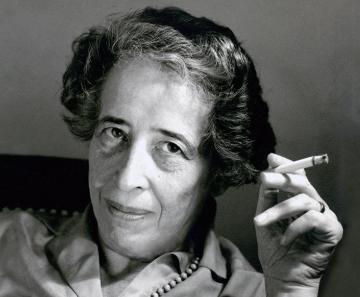
Hitler never intended to defend 'the West' against Bolshevism but always remained ready to join 'the Reds' for the destruction of the West, even in the middle of the struggle against Soviet Russia.
▼
Source
source
Part 3, Ch. 10

8 months 1 day ago
Who is to determine what the perfect is? It could only be those who are themselves perfect and who therefore know what it means. Here yawns the abyss of that circularity in which the whole of human Dasein moves. What health is, only the healthy can say. Yet healthfulness is measured according to the essential starting point of health. What truth is, only one who is truthful can discern; but the one who is truthful is determined according to the essential starting point of truth.
▼
Source
source
p. 127
6 months 1 week ago
The very ideology of "cultural production" is antithetical to all culture, as is that of visibility and of the polyvalent space: culture is a site of the secret, of seduction, of initiation, of a restrained and highly ritualized symbolic exchange.
▼
Source
source
"The Beaubourg Effect," p. 64
6 months 1 day ago
I have just discovered that without her father's consent this sweet, trusting, gullible six-year-old is being sent, for weekly instruction, to a Roman Catholic nun. What chance has she?
4 months 6 days ago
God, what is all this talk put out by the popes? Paradise is here, my good man. God, give me no other paradise!
▼
Source
source
Freedom and Death

7 months 6 days ago
Never wholly separate in your Mind the merits of any Political Question from the Men who are concerned in it.
▼
Source
source
Letter to Charles-Jean-François Depont (November 1789), quoted in Alfred Cobban and Robert A. Smith (eds.), The Correspondence of Edmund Burke, Volume VI: July 1789-December 1791 (1967), p. 47
8 months 6 days ago
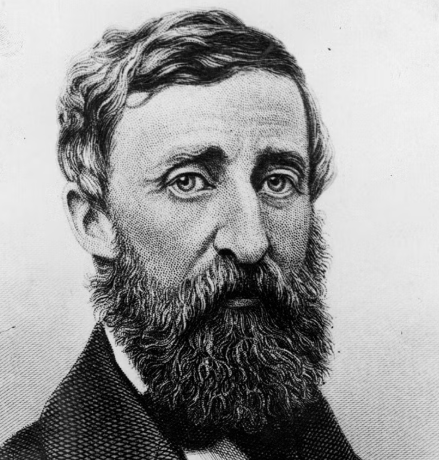
There are other letters for the child to learn than those which Cadmus invented.
5 months 2 weeks ago
The educated man is the man who does not live in immediate intuition, but in his recollection so that little is new to him any longer.
▼
Source
source
Chapter 4, Philosophy As Writing: The Case Of Hegel, p. 74
4 months 2 days ago
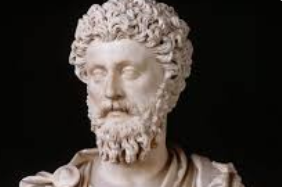
In the case of most pains let this remark of Epicurus aid thee, that the pain is neither intolerable nor everlasting, if thou bear in mind that it has its limits, and if thou addest nothing to it in imagination…
▼
Source
source
VII, 64
9 months 3 days ago
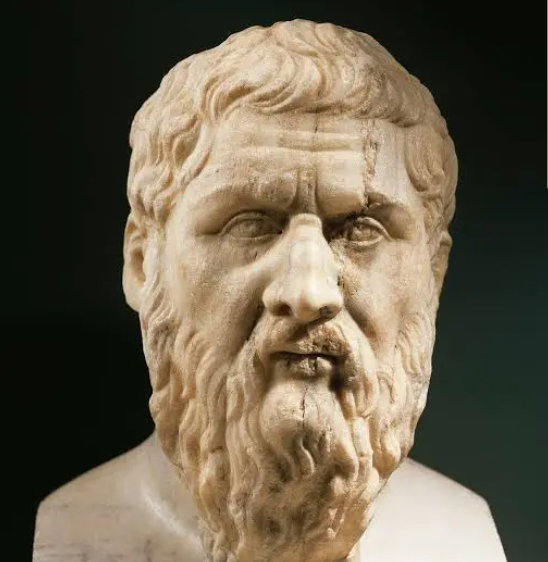
Of these not right forms of government, monarchy, when bound by good written rules, which we call laws, is the best of all the six; but without law it is hard and most oppressive to live with. The government of the few must be considered intermediate, both in good and in evil. The government of the multitude is weak in all respects and able to do nothing great, either good or bad, when compared with the other forms of government, therefore of all these governments when they are lawful, this is the worst, and when they are all lawless it is the best.
8 months 4 days ago
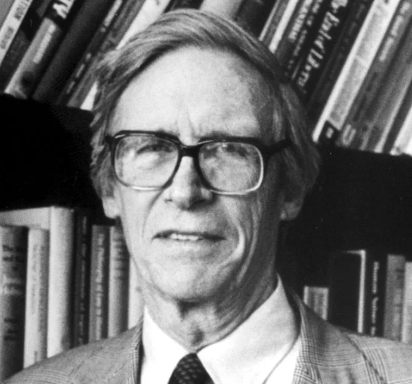
In justice as fairness society is interpreted as a cooperative venture for mutual advantage.
▼
Source
source
Chapter II, Section 14, pg. 84
7 months 1 week ago
Persecution is a bad and indirect way to plant Religion.
▼
Source
source
Section 25
CivilSimian.com created by AxiomaticPanic, CivilSimian, Kalokagathia