


5 months 4 weeks ago
In all the areas of life where people have sought and found consolation through forbidding their desires-sex in particular, and taste in general-the habit of judgment is now to be stamped out.
▼
Source
source
"Rays of Hope" (p. 106)

6 months 4 weeks ago
We return to our analysis of qualities. Something preserves itself throughout this flux, something that passes into other things, but also stands against them as a being for itself. This something can exist only as the product of a process through which it integrates its otherness with its own proper being. Hegel says that its existence comes about through 'the negation of the negation.' The first negation is the otherness in which it turns, and the second is the incorporation of this other into its own self. Such a process presupposes that things possess a certain power over their movement, that they exist in a certain self-relation that enables them to 'mediate' their existential conditions.
▼
Source
source
P. 132-133
4 months 4 days ago
Trade has ever been the extinguisher of war, the eradicator of prejudice, the diffuser of knowledge.
▼
Source
source
Ch. 6
8 months 5 days ago
Worry means always and invariably inhibition of associations and loss of effective power. Of course, the sovereign cure for worry is religious faith; and this, of course, you also know. The turbulent billows of the fretful surface leave the deep parts of the ocean undisturbed, and to him who has a hold on vaster and more permanent realities the hourly vicissitudes of his personal destiny seem relatively insignificant things. The really religious person is accordingly unshakable and full of equanimity, and calmly ready for any duty that the day may bring forth.
▼
Source
source
"The Gospel of Relaxation"
9 months 6 days ago
What, exactly, have the errors of exegesis and philosophy done in order to confuse Christianity, and how have they confused Christianity? Quite briefly and categorically, they have simply forced back the sphere of paradox-religion into the sphere of aesthetics, and in consequence have succeeded in brings Christian terminology to such a pass that terms which, so long as they remain within their sphere, are qualitative categories, can be put to almost any use as clever expressions.


7 months 1 day ago
Fear for the Other, fear for the other man's death is my fear, but is in no way an individual's taking fright.
▼
Source
source
The Levinas reader by Levinas, Emmanuel p. 84

6 months 3 weeks ago
As the oil is in the olive, so is the teshuvah, repentance, hidden within sin.
▼
Source
source
p. 44
8 months 6 days ago
I believe that Communism is necessary to the world, and I believe that the heroism of Russia has fired men's hopes in a way which was essential to the realization of Communism in the future. Regarded as a splendid attempt, without which ultimate success would have been very improbable, Bolshevism deserves the gratitude and admiration of all the progressive part of mankind.
▼
Source
source
Preface


6 months 2 weeks ago
Like Fichte, Brentano had one simple and powerful insight. He declared: there is a basic difference between a mental and physical act. if I slip on the snow and fall flat on my back, that is an unintentional physical act. But there is no such thing as an unintentional mental act. When I think, I have to think about something; I have to focus my mind on it. You could compare all mental acts (thinking, willing, loving, trying to remember something) to a searchlight beam stabbing into the darkness. There is an element of will, of 'intentionality,' in all mental activity. So it is quite inaccurate to compare mental activity to chemistry, or to a kind of drifting, like leaves on a stream. It flows purposefully or not at all.
▼
Source
source
p. 35

5 months 3 weeks ago
Far less import than your belief of whether god exists is what you think your belief entails. Does it direct your behaviour by rules and commandments that are set out before you or does it require you to think them through yourself? Does it require you to try to make sense of the world, or does it give up on sense itself? And I think these are the crucial distinctions. Not whether you add belief in a god to them.
4 months 2 weeks ago
Only at quite rare moments have I felt really glad to be alive. I could not but feel with a sympathy full of regret all the pain that I saw around me, not only that of men but that of the whole creation. From this community of suffering I have never tried to withdraw myself. It seemed to me a matter of course that we should all take our share of the burden of pain which lies upon the world.


8 months 6 days ago
He blamed as severely what he thought a bad action, when the motive was a feeling of duty, as if the agents had been consciously evil doers. He would not have accepted as a plea in mitigation for inquisitors, that they sincerely believed burning heretics to be an obligation of conscience. But though he did not allow honesty of purpose to soften his disapprobation of actions, it had its full effect on his estimation of characters. No one prized conscientiousness and rectitude of intention more highly, or was more incapable of valuing any person in whom he did not feel assurance of it.
▼
Source
source
(pp. 49-50)
8 months 3 weeks ago
Nearly allied to justice are the virtues of beneficence, compassion, gratitude, piety, and friendship.

6 months 4 weeks ago
What is exalted among men is an abomination in the sight of God.
▼
Source
source
16:15 ESV

4 months 2 days ago
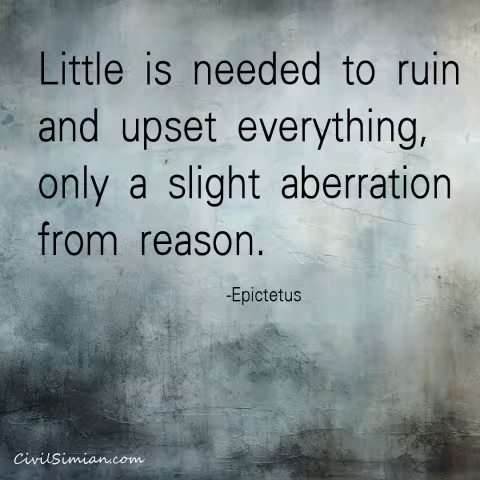
To live your brief life rightly, isn't that enough?
▼
Source
source
(Hays translation) X, 31

5 months 4 weeks ago
Hayek fails to account either for the passion among intellectuals for equality, or for the resulting success of socialists and their egalitarian successors in driving the liberal idea from the stage of politics. This passion for equality is not a new thing, and indeed pre-dates socialism by many centuries, finding its most influential expression in the writings of Rousseau. There is no consensus as to how equality might be achieved, what it would consist in if achieved, or why it is so desirable in the first place. But no argument against the cogency or viability of the idea has the faintest chance of being listened to or discussed by those who have fallen under its spell.
▼
Source
source
Hayek and conservatism, in Edward Feser (ed.), The Cambridge Companion to Hayek
4 months 1 week ago
Heinrich Himmler's political tendencies were philo-monarchist and Right-wing conservative, inherited from his father who had been the loyalist instructor of Heinrich, hereditary prince of Bavaria. He was especially fascinated by the ideal of the Order of Teutonic Knights, which we spoke of earlier. He wanted to make the SS a corps that would perform the same function of the state's central nucleus that the nobility had played with its unquestioning loyalty to the regime, but in a new form. For the formation of a man of the SS, he considered a blend of Spartan spirit and Prussian discipline. But he also had in view the order of Jesuits (Hitler jokingly used to call Himmler 'my Ignatius of Loyola').
4 months 3 weeks ago
The principle of the family was mutual aid; but the principle of society is competition, the struggle for existence, the elimination of the weak and the survival of the strong.
▼
Source
source
Ch. 2 : On Youth

4 months 4 weeks ago
I cannot sufficiently admire the eminence of those men's wits, that have received and held it to be true, and with the sprightliness of their judgments offered such violence to their own senses, as that they have been able to prefer that which their reason dictated to them, to that which sensible experiments represented most manifestly to the contrary. ...I cannot find any bounds for my admiration, how that reason was able in Aristarchus and Copernicus, to commit such a rape on their senses, as in despite thereof to make herself mistress of their credulity.
▼
Source
source
Thomas Salusbury translation (1661) p. 301 as quoted by Edwin Arthur Burtt, The Metaphysical Foundations of Modern Physical Science
7 months 3 weeks ago
I believe that there is a necessary connection in both directions between the physical and the mental, but that it cannot be discovered a priori. Opinion is strongly divided on the credibility of some kind of functionalist reductionism, and I won't go through my reasons for being on the antireductionist side of that debate. Despite significant attempts by a number of philosophers to describe the functional manifestations of conscious mental states, I continue to believe that no purely functionalist characterization of a system entails - simply in virtue of our mental concepts - that the system is conscious.
▼
Source
source
"Conceiving the Impossible and the Mind-Body Problem," Royal Institute of Philosophy annual lecture, given in London on February 18, 1998, published in Philosophy vol. 73 no. 285, July 1998, pp 337-352, Cambridge University Press, p. 337.

8 months 1 week ago
And why should man, added he, pretend to an exemption from the lot of all other animals? The whole earth, believe me, PHILO, is cursed and polluted. A perpetual war is kindled amongst all living creatures. Necessity, hunger, want, stimulate the strong and courageous: Fear, anxiety, terror, agitate the weak and infirm. The first entrance into life gives anguish to the new-born infant and to its wretched parent: Weakness, impotence, distress, attend each stage of that life: and it is at last finished in agony and horror.
▼
Source
source
Demea to Philo, Part X

7 months 1 week ago
No natural boundary seems to be set to the efforts of man; and what is not yet done is only what he has not yet attempted to do. Variant: What is not yet done is only what we have not yet attempted to do.
▼
Source
source
Chapter XVIII.
4 months 2 weeks ago
"You will have less money." Yes, and less trouble. "Less influence." Yes, and less envy.
6 months 3 weeks ago
Faith feels itself secure neither with universal consent, nor with tradition, nor with authority. It seeks support of its enemy, reason.

6 months 1 day ago
I am very conscious that you can't condemn people of an earlier era by the standards of ours. Just as we don't look back at the 18th and 19th centuries and condemn people for racism in the same way as we would condemn a modern person for racism, I look back a few decades to my childhood and see things like caning, like mild pedophilia, and can't find it in me to condemn it by the same standards as I or anyone would today.
▼
Source
source
Giles Whittell, "The world according to Richard Dawkins" (2013-09-07), The Times
8 months 5 days ago
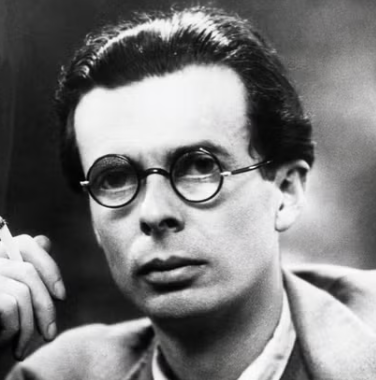
I suppose you imagined I was so insanely in love with you that I could commit any folly. When will you women understand that one isn't insanely in love? All one asks for is a quiet life, which you won't allow one to have. I don't know what the devil ever induced me to marry you. It was all a damned stupid, practical joke. And now you go about saying I'm a murderer. I won't stand it.
▼
Source
source
The Gioconda smile, in Mortal Coils, 1921

7 months 1 week ago
I can cure the gout or stone in some, sooner than Divinity, Pride, or Avarice in others.
▼
Source
source
Section 9
4 months 3 weeks ago
On the contrary, to educate rational people, that should be sufficient; it is not really intended for sensible people; to understand things and conditions, there is the matter ended,-to understand oneself does not seem to be everyman's concern.
▼
Source
source
p. 22

8 months 6 days ago
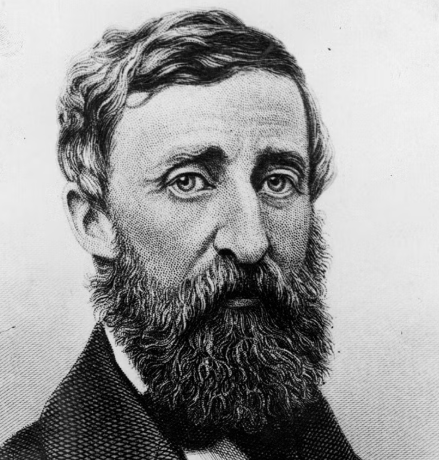
We may well be ashamed to tell what things we have read or heard in our day. I do not know why my news should be so trivial, - considering what one's dreams and expectations are, why the developments should be so paltry. The news we hear, for the most part, is not news to our genius. It is the stalest repetition.
▼
Source
source
p. 491
7 months 1 week ago
Laws are always unstable unless they are founded on the manners of a nation; and manners are the only durable and resisting power in a people.
▼
Source
source
Chapter XVI.
6 months 1 day ago
There is no duty we so much underrate as the duty of being happy.
▼
Source
source
An Apology for Idlers.

7 months 6 days ago
Nothing made a happy slave, but a degraded man. In proportion as the mind grew callous to its degradation, and all sense of manly pride was lost, the slave felt comfort. In fact, he was no longer a man. If he were to define a man, he would say with Shakspeare,"Man is a being, holding large discourse,Looking before and after."A slave was incapable of either looking before or after.
▼
Source
source
Speech in the House of Commons (12 May 1789), quoted in The Parliamentary History of England, From the Earliest Period to the Year 1803, Vol. XXVIII (1816), column 71
7 months 6 days ago
They who bow to the enemy abroad will not be of power to subdue the conspirator at home.
▼
Source
source
p. 18
8 months 5 days ago
Both of us victims of the same twentieth-century plague. Not the Black Death, this time; the Grey Life.

8 months 1 day ago
We think of beauty as being most worthy of reverence. But what is most worthy of reverence lights up only where the magnificent strength to revere is alive. To revere is not a thing for the petty and lowly, the incapacitated and underdeveloped. It is a matter of tremendous passion; only what flows from such passion is in the grand style.
▼
Source
source
p. 125
6 months 5 days ago
For us, with the rule of right and wrong given us by Christ, there is nothing for which we have no standard. And there is no greatness where there is not simplicity, goodness, and truth.
▼
Source
source
Bk. XIV, ch. 18

7 months 1 day ago
Woes and wonders of power, that tonic hell, synthesis of poison and panacea.
6 months 2 weeks ago
Familiar things happen, and mankind does not bother about them. It requires a very unusual mind to undertake the analysis of the obvious.
▼
Source
source
Ch. 1: "The Origins of Modern Science", p. 6

5 months 2 weeks ago
Like nonhuman animals in human factory farms, free-living nonhumans who are starving - or being disembowelled, asphyxiated or eaten alive - cannot console themselves by chanting the Four Noble Truths of Buddhism. The moral case for helping other sentient beings, regardless or race or species, does not rest on the distress their plight does (or doesn't) cause spectators.
▼
Source
source
Reply to Meet the people who want to turn predators into herbivores, TreeHugger, 2 Apr. 2015
CivilSimian.com created by AxiomaticPanic, CivilSimian, Kalokagathia