In that missed necessity or worry about potential problems is uncontrolled stress and suffering.....also, whether you understand or not MONEY can solve this issue as well without understanding......


All who say the same things do not possess them in the same manner; and hence the incomparable author of the Art of Conversation pauses with so much care to make it understood that we must not judge of the capacity of a man by the excellence of a happy remark that we heard him make. ...let us penetrate, says he, the mind from which it proceeds... it will oftenest be seen that he will be made to disavow it on the spot, and will be drawn very far from this better thought in which he does not believe, to plunge himself into another, quite base and ridiculous.
[Asked "Do you still favour English independence?"] No, I don't think I've ever really favoured English independence. My view is that if the Scots want to be independent then we should aim for the same thing. Scottish independence, I don't think the Welsh want independence, the Northern Irish certainly don't. The Scottish desire for independence is, to some extent, a fabrication. They want to identify themselves as Scots but still to be part of a,[sic] to enjoy the subsidy they get from being part of the kingdom. I can see there are Scottish nationalists who envision something more than that, but if that becomes a real political force then yeah, we should try for independence too. As it is, as you know, the Scots have two votes: they can vote for their own parliament and vote to put their people into our parliament, who come to our parliament with no interest in Scotland but an interest in bullying us.
In many ways an artistic nature unfits a man for practical existence.
I have twice gone fishing with rod and line just because other boys asked me to, but this sport was soon made impossible for me by the treatment of the worms that were put on the hook for bait, and the wrenching of the mouths of the fishes that were caught. I gave it up, and even found courage enough to dissuade other boys from going.

I'm prepared to teach acceptance of religion, but, religion has to agree to the social contract. If we have to do it church by church, I'm ready.
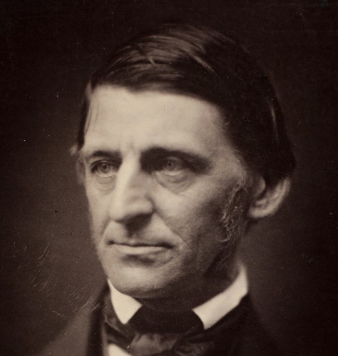
Do not yet see, that, if the single man plant himself indomitably on his instincts, and there abide, the huge world will come round to him.
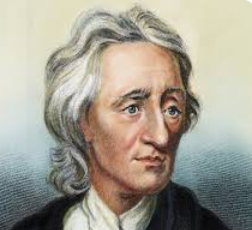
One thing I have frequently observed in children, that when they have got possession of any poor creature, they are apt to use it ill: they often torment, and treat it very roughly, young birds, butterflies, and such other poor animals which fall into their hands, and that with a seeming kind of pleasure. This I think should be watched in them, and if they incline to any such cruelty, they should be taught the contrary usage. For the custom of tormenting and killing of beasts, will, by degrees, harden their minds even towards men; and they will delight in the suffering and destruction of inferior creatures, will not be apt to be very compassionate or benign to those of their own kind. Our practice takes notice of this in the exclusion of butchers from juries of life and death.

Philosophy's error is to be too endurable.
The most elementary form of rebellion, paradoxically, expresses an aspiration for order.
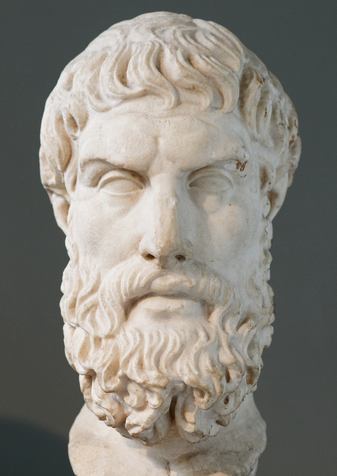
If you reject absolutely any single sensation without stopping to discriminate with respect to that which awaits confirmation between matter of opinion and that which is already present, whether in sensation or in feelings or in any immediate perception of the mind, you will throw into confusion even the rest of your sensations by your groundless belief and so you will be rejecting the standard of truth altogether. If in your ideas based upon opinion you hastily affirm as true all that awaits confirmation as well as that which does not, you will not escape error, as you will be maintaining complete ambiguity whenever it is a case of judging between right and wrong opinion.

Every toiling Manchester, its smoke and soot all burnt, ought it not, among so many world-wide conquests, to have a hundred acres or so of free greenfield, with trees on it, conquered, for its little children to disport in; for its all-conquering workers to take a breath of twilight air in? You would say so! A willing Legislature could say so with effect. A willing Legislature could say very many things! And to whatsoever 'vested interest,' or such like, stood up, gainsaying merely, "I shall lose profits,"-the willing Legislature would answer, "Yes, but my sons and daughters will gain health, and life, and a soul."-
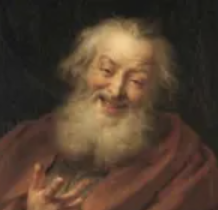
Now as of old the gods give men all good things, excepting only those that are baneful and injurious and useless. These, now as of old, are not gifts of the gods: men stumble into them themselves because of their own blindness and folly.
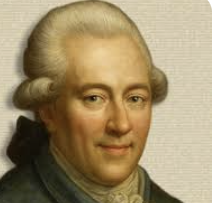
To receive applause for works which do not demand all our powers hinders our advance towards a perfecting of our spirit. It usually means that thereafter we stand still.
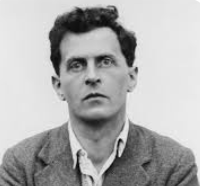
Frazer is much more savage than most of his savages, for they are not as far removed from the understanding of spiritual matter as a twentieth-century Englishman. His explanations of primitive practices are much cruder than the meaning of these practices themselves.
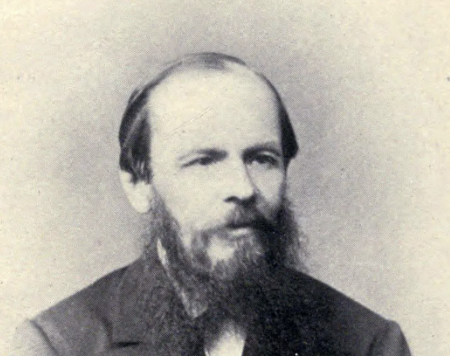
I have seen the truth; I have seen and I know that people can be beautiful and happy without losing the power of living on earth. I will not and cannot believe that evil is the normal condition of mankind. And it is just this faith of mine that they laugh at. But how can I help believing it? I have seen the truth - it is not as though I had invented it with my mind, I have seen it, seen it, and the living image of it has filled my soul for ever. I have seen it in such full perfection that I cannot believe that it is impossible for people to have it.
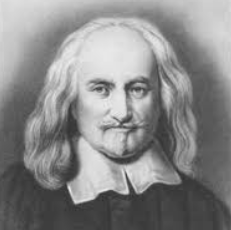
A Covenant not to defend my selfe from force, by force, is always voyd.
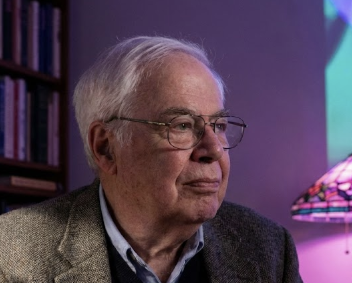
Philosophy makes progress not by becoming more rigorous but by becoming more imaginative.
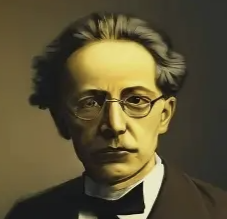
An appeal to men's self-sacrificing disposition and self-renouncing love ought at least to have lost its seductive plausibility when, after an activity of thousands of years, it has left nothing behind but the - misery of today. Why then still fruitlessly expect self-sacrifice to bring us better times? Why not rather hope for them from usurpation? Salvation comes no longer from the giver, the bestower, the loving one, but from the taker, the appropriator (usurper), the owner. Communism, and, consciously, egoism-reviling humanism, still count on love.
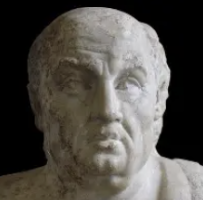
It is best to bear what cannot be changed.
All the seemingly positive valuations and judgments of ressentiment are hidden devaluations and negations.
Every great advance in science has issued from a new audacity of imagination.
The truth can be spoken only by someone who is already at home in it; not by someone who still lives in untruthfulness, and does no more than reach out towards it from within untruthfulness.
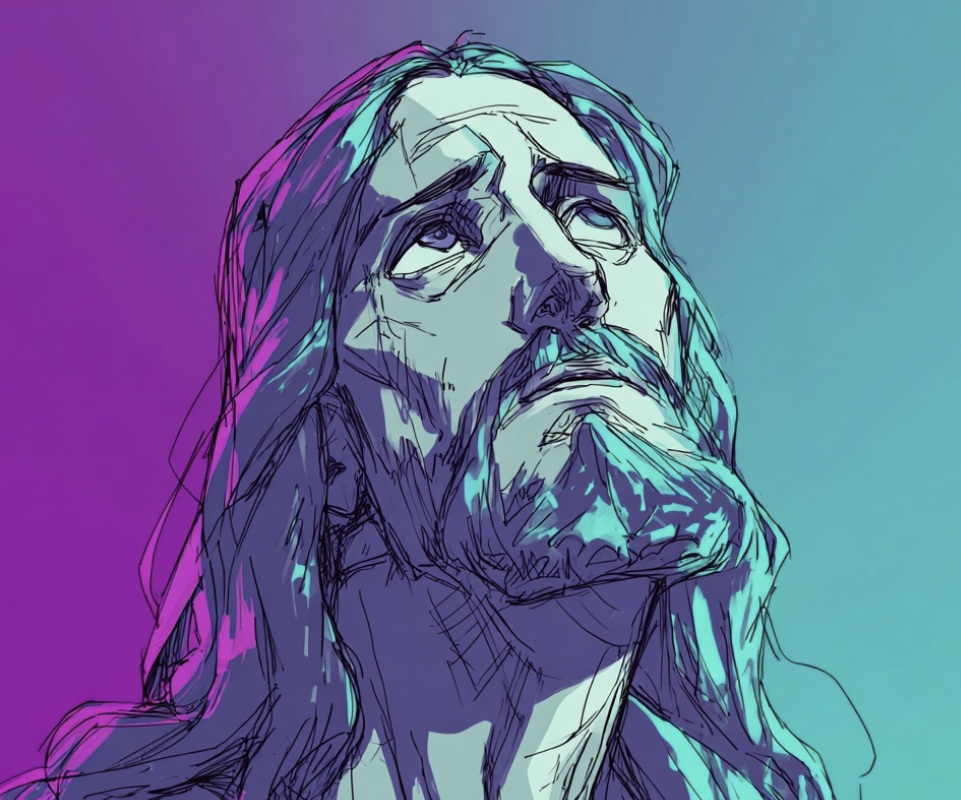
If those who lead you say, 'See, the Kingdom is in the sky,' then the birds of the sky will precede you. If they say to you, 'It is in the sea,' then the fish will precede you. Rather, the Kingdom is inside of you, and it is outside of you. When you come to know yourselves, then you will become known, and you will realize that it is you who are the sons of the living Father. But if you will not know yourselves, you dwell in poverty and it is you who are that poverty. (3) And when he was demanded of the Pharisees, when the kingdom of God should come, he answered them and said, The kingdom of God cometh not with observation: Neither shall they say, Lo here! or, lo there! for, behold, the kingdom of God is within you.
All parties seem to be agreed on one point, that the dialects commonly spoken among the natives of this part of India contain neither literary nor scientific information, and are moreover so poor and rude that, until they are enriched from some other quarter, it will not be easy to translate any valuable work into them.
Freedom and not servitude is the cure of anarchy; as religion, and not atheism, is the true remedy for superstition.

The sentiment that dominates all Rousseau's works is a certain plebeian anger that excites him against every kind of superiority. The energetic submission of the wise man bends nobly under the indispensable empire of social distinctions, and never does be appear greater than when he bows; but Rousseau has nothing at all of this loftiness. Weak and surly, he spent his life spouting insults to the great, as he would have offered the same to the people if he had been born a great lord.
For he who is unmusical is a child in music; he who is without letters is a child in learning; he who is untaught, is a child in life.
For my part for one, though I make no doubt of preferring the antient Course, or almost any other to this vile chimera, and sick mans dream of Government yet I could not actively, or with a good heart, and clear conscience, go to the establishment of a monarchical despotism in the place of this system of Anarchy.

The man who is tenacious of purpose in a rightful cause is not shaken from his firm resolve by the frenzy of his fellow citizens clamoring for what is wrong, or by the tyrant's threatening countenance.
There can be no doubt that the Virgin Mary is in heaven. How it happened we do not know.
In my work, I have always tried to unite the true with the beautiful; but when I had to choose one or the other, I usually chose the beautiful. In a conversation with Freeman Dyson.
We are fulfilled only when we aspire to nothing, when we are impregnated by that nothing to the point of intoxication.
This adoration, too, was not the same as the worship of God. In my opinion they did not yet recognize him as God, but they acted in keeping with the custom mentioned in Scripture, according to which Kings and important people were worshiped; this did not mean more than falling down before them at their feet and honoring them.
The theoretical understanding of the world, which is the aim of philosophy, is not a matter of great practical importance to animals, or to savages, or even to most civilized men.
By striving to do the impossible, man has always achieved what is possible. Those who have cautiously done no more than they believed possible have never taken a single step forward.
If religion has put forward the proposition that we are all of us sinners, I set another against it: we are all of us perfect! Because, in each moment, we are all we can be, and never need to be more.

Among these Jews there suddenly turns up a man who goes about talking as if He was God. He claims to forgive sins. He says He has always existed. He says He is coming to judge the world at the end of time. Now let us get this clear. Among Pantheists, like the Indians, anyone might say that he was a part of God, or one with God: there would be nothing very odd about it. But this man, since He was a Jew, could not mean that kind of God. God, in their language, meant the Being outside of the world, who had made it and was infinitely different from anything else. And when you have grasped that, you will see that what this man said was, quite simply, the most shocking thing that has ever been uttered by human lips.
Skepticism is the chastity of the intellect, and it is shameful to surrender it too soon or to the first comer: there is nobility in preserving it coolly and proudly through long youth, until at last, in the ripeness of instinct and discretion, it can be safely exchanged for fidelity and happiness.
But though an old man, I am but a young gardener.
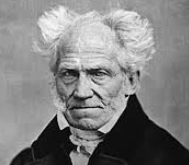
Every man takes the limits of his own field of vision for the limits of the world.
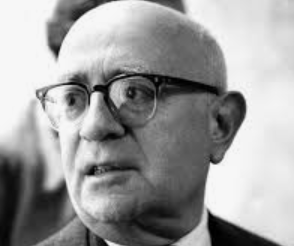
When I speak of 'negative dialectics' not the least important reason for doing so is my desire to dissociate myself from this fetishization of the positive.
If you have been given a talent, exercise it freely and happily like the sun: give everyone from your splendour.
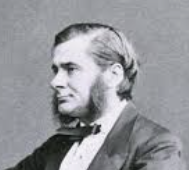
So far from the posterior lobe, the posterior cornu, and the hippocampus minor, being structures peculiar to and characteristic of man, as they have been over and over again asserted to be, even after the publication of the clearest demonstration of the reverse, it is precisely these structures which are the most marked cerebral characters common to man with the apes. They are among the most distinctly Simian peculiarities which the human organism exhibits.
CivilSimian.com created by AxiomaticPanic, CivilSimian, Kalokagathia