




6 months 1 week ago
Today's fashion magazines may carry an article about the dangers of anorexia while bombarding its readers with images of emaciated young bodies representing the height of beauty and desirability.
▼
Source
source
As quoted in Feminism is for Everybody: Passionate Politics (2014), p.34


7 months 1 week ago
None can be free who is a slave to, and ruled by, his passions.
▼
Source
source
As quoted in Florilegium, XVIII, 23, as translated in Dictionary of Quotations (1906) by Thomas Benfield Harbottle, p. 368

6 months 3 weeks ago
A self-respecting man is a man without a country. A fatherland is birdlime...
7 months 1 week ago
There is geometry in the humming of the strings. There is music in the spacings of the spheres.
▼
Source
source
As quoted in the preface of the book entitled Music of the Spheres by Guy Murchie

5 months 1 week ago
The value of the goal lies in the goal itself; and therefore the goal cannot be attained unless it is pursued for its own sake.
▼
Source
source
Vol. 12
6 months 3 weeks ago
A minimum of unconsciousness is necessary if one wants to stay inside history. To act is one thing; to know one is acting is another. When lucidity invests the action, insinuates itself into it, action is undone, and with it, prejudice, whose function consists, precisely, in subordinating, in enslaving consciousness to action. The man who unmasks his fictions renounces his own resources and, in a sense, himself. Consequently, he will accept other fictions which will deny him, since they will not have cropped up from his own depths. No man concerned with his equilibrium may exceed a certain degree of lucidity and analysis.

6 months 1 week ago
They certainly demonstrate that Seth, whether an aspect of Jane Robert's unconscious mind or a genuine "spirit," was of a high level of intelligence. Yet when Jane Roberts produced a book that purported to be the after-death journal of the philosopher William James, it was difficult to take it seriously. James's works are noted for their vigour and clarity of style; Jane Robert's "communicator" writes like an undergraduate . . . there is a clumsiness here that is quite unlike James's swift-moving, colloquial prose.
▼
Source
source
p. 390
3 months 3 weeks ago
Objective judgment, now, at this very moment. Unselfish action, now, at this very moment. Willing acceptance-now, at this very moment-of all external events. That's all you need.
▼
Source
source
(Hays translation) IX, 6

6 months 3 weeks ago
Hegel's theological discussion repeatedly asks what the true relation is between the individual man and a state that no longer satisfies his capacities but exists rather as an 'estranged' institution from which the active political interest of the citizens has disappeared. Hegel defined this state with almost the same categories as those of eighteenth century liberalism: the state rests on the consent of the individuals, it circumscribes their rights and duties and protects its members from those internal and external dangers that might threaten the perpetuation of the whole.
▼
Source
source
P. 32
7 months 2 weeks ago
When Alexander the Great addressed him with greetings, and asked if he wanted anything, Diogenes replied "Yes, stand a little out of my sunshine."
▼
Source
source
From Plutarch, Alexander, 14. Cf. Diogenes Laërtius, vi. 38, Cicero, Tusculan Disputations, v. 32
3 months 4 weeks ago
The basis of all Natural Systems of Classification is the Idea of Natural Affinity. The Principle which this Idea involves is this:-Natural arrangements, obtained from 'different' sets of characters, must 'coincide' with each other.
5 months 3 weeks ago
The culture of a civilization is the art and literature through which it rises to consciousness of itself and defines its vision of the world.
▼
Source
source
"What is Culture?" (p. 2)

7 months 3 weeks ago
The public execution, then, has a juridico-political function. It is a ceremonial by which a momentarily injured sovereignty is reconstituted. It restores that sovereignty by manifesting it at its most spectacular. The public execution, however hasty and everyday, belongs to a whole series of great rituals in which power is eclipsed and restored (coronation, entry of the king into a conquered city, the submission of rebellious subjects); over and above the crime that has placed the sovereign in contempt, it deploys before all eyes an invincible force. Its aim is not so much to re-establish a balance as to bring into play, as its extreme point, the dissymmetry between the subject who has dared to violate the law and the all-powerful sovereign who displays his strength.
▼
Source
source
Chapter One, The Spectacle of the Scaffold
7 months 1 week ago
Rejoice not in another man's misfortune!
7 months 4 weeks ago
Only that day dawns to which we are awake. There is more day to dawn. The sun is but a morning star.
▼
Source
source
p. 375

6 months 1 week ago
Steiner goes further than this -- and this is his own central contribution to modern thought. He states that once we have made a habit of remembering Mozart and the stars, we shall find ourselves developing powers of 'spiritual vision.' We shall never again feel ourselves to be helpless victims of the external world.
▼
Source
source
p. 169
5 months 2 days ago
In a free system any large, popular, revolutionary movement should be able to bring about its ends by such a voluntary process. As more and more people see how it works more and more will wish to participate in or support it. And so it will grow, without being necessary to force everyone or a majority or anyone into the pattern.
▼
Source
source
Ch. 10 : A Framework for Utopia; Utopian Means and Ends, p. 327

4 months 1 week ago
Macbeth's self-justifications were feeble - and his conscience devoured him. Yes, even Iago was a little lamb too. The imagination and the spiritual strength of Shakespeare's evildoers stopped short at a dozen corpses. Because they had no ideology.
▼
Source
source
The Gulag Archipelago
6 months 1 week ago
The struggle to end sexist oppression that focuses on destroying the cultural basis for such domination strengthens other liberation struggles. Individuals who fight for the eradication of sexism without struggles to end racism or classism undermine their own efforts. Individuals who fight for the eradication of racism or classism while supporting sexist oppression are helping to maintain the cultural basis of all forms of group oppression.

5 months 3 weeks ago
Everybody knows there is no fineness or accuracy of suppression; if you hold down one thing, you hold down the adjoining.
▼
Source
source
Ch. 1
7 months 4 weeks ago
Wit makes its own welcome, and levels all distinctions. No dignity, no learning, and no force of character can make any stand against good wit.
▼
Source
source
The Comic
5 months 3 weeks ago
Schopenhauer argues that the empirical world exists only as a representation: 'every object, whatever its origin, is, as object, already conditioned by the subject, and thus is essentially only the subject's representation.' A representation is a subjective state that has been ordered according to space, time and causality - the primary forms of sensibility and understanding. So long as we turn our thoughts towards the natural world, and search for the thing-in-itself behind the representation is futile. Every argument and every experience leads only to the same end: the system of representations, standing like a veil between the subject and the thing-in-itself. No scientific investigation can penetrate the veil; and yet it is only a veil, Schopenhauer affirms, a tissue of illusions which we can, if we choose, penetrate by other means. The way to penetrate the veil was stumbled upon by Kant.
▼
Source
source
A Short History of Modern Philosophy (1981; 2nd ed. 1995), p. 177
7 months 3 weeks ago
Our greatest stupidities may be very wise.
▼
Source
source
p. 39e
8 months 1 week ago
If the room is smoky, if only moderately, I will stay; if there is too much smoke I will go. Remember this, keep a firm hold on it, the door is always open.
▼
Source
source
Book I, ch. 25, 18.
6 months 4 weeks ago
Influences of various kinds conspire to increase corporate action and decrease individual action. And the change is being on all sides aided by schemers, each of whom thinks only of his pet plan and not at all of the general reorganization which his plan, joined with others such, are working out. It is said that the French Revolution devoured its own children. Here, an analogous catastrophe seems not unlikely. The numerous socialistic changes made by Act of Parliament, joined with the numerous others presently to be made, will by-and-by be all merged in State-socialism-swallowed in the vast wave which they have little by little raised."But why is this change described as 'the coming slavery'?," is a question which many will still ask. The reply is simple. All socialism involves slavery.
8 months 4 weeks ago
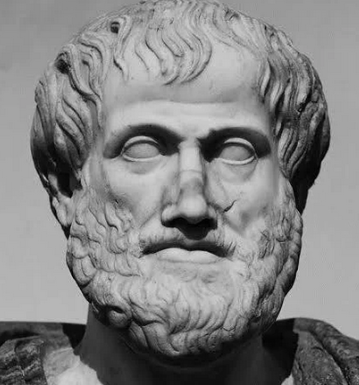
But voice is a certain sound of that which is animated; for nothing inanimate emits a voice; but they are said to emit a voice from similitude, as a pipe, and a lyre, and such other inanimate things, have extension, modulation, and dialect; for thus it appears, because voice, also, has these.

3 months 3 weeks ago
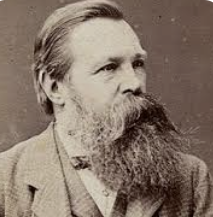
What is our task in the question of peace? It does not consist merely in vigorously demonstrating at all times the love of peace of the Social Democrats; but first and foremost our task is to make clear to the masses of people the nature of militarism and sharply and clearly to bring out the differences in principle between the standpoint of the Social Democrats and that of the bourgeois peace enthusiasts.
6 months 3 weeks ago
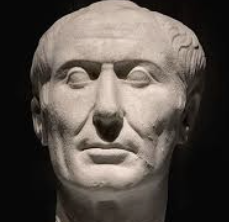
The abolition of private property is, doubtless, the shortest and most significant way to characterize the revolution in the whole social order which has been made necessary by the development of industry - and for this reason it is rightly advanced by communists as their main demand.
5 months 3 weeks ago
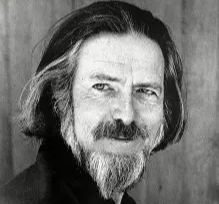
No tears are shed, when an enemy dies.
▼
Source
source
Maxim 376
4 months 1 week ago
If you know that "I", in the sense of the person, the front, the ego, it really doesn't exist. Then...it won't go to your head too badly, if you wake up and discover that you're God.
8 months 2 days ago
II. The tax which each individual is bound to pay ought to be certain, and not arbitrary.
▼
Source
source
Chapter II, Part II, p. 892.

8 months 3 weeks ago
Only it takes time to be happy. A lot of time. Happiness, too, is a long patience.
7 months 4 weeks ago
The gods we stand by are the gods we need and can use, the gods whose demands on us are reinforcements of our demands on ourselves and on one another. What I then propose to do is, briefly stated, to test saintliness by common sense, to use human standards to help us decide how far the religious life commends itself as an ideal kind of human activity . ... It is but the elimination of the humanly unfit, and the survival of the humanly fittest, applied to religious beliefs; and if we look at history candidly and without prejudice, we have to admit that no religion has ever in the long run established or proved itself in any other way. Religions have approved themselves; they have ministered to sundry vital needs which they found reigning. When they violated other needs too strongly, or when other faiths came which served the same needs better, the first religions were supplanted.
▼
Source
source
Lectures XIV and XV, "The Value of Saintliness"

6 months 2 weeks ago
The chief requirement of the good life... is to live without any image of oneself.
▼
Source
source
The Bell (1958), ch. 9; 2001, p. 119.
6 months 2 weeks ago
The primary meaning of the words "modern," "modernity," with which recent times have baptised themselves, brings out very sharply that feeling of "the height of time" which I am at present analysing. "Modern" is what is "in the fashion, "that is to say, the new fashion or modification which has arisen over against the old traditional fashions used in the past. The word "modern" then expresses a consciousness of a new life, superior to the old one, and at the same time an imperative call to be at the height of one's time. For the "modern" man, not to be "modern" means to fall below the historic level.
▼
Source
source
Chap. III: The Height Of The Times

4 months 3 weeks ago
Resolve to serve no more, and you are at once freed. I do not ask that you place hands upon the tyrant to topple him over, but simply that you support him no longer; then you will behold him, like a great Colossus whose pedestal has been pulled away, fall of his own weight and break in pieces.
7 months 4 weeks ago
We are never without a pilot. When we know not how to steer, and dare not hoist a sail, we can drift. The current knows the way, though we do not. The ship of heaven guides itself, and will not accept a wooden rudder.
▼
Source
source
"The Sovereignty of Ethics", in The North America Review, no. 262 (May-June 1878) p. 407

8 months 2 weeks ago
You called and cried out loud and shattered my deafness. You were radiant and resplendent, you put to flight my blindness. You were fragrant, and I drew in my breath and now pant after you. I tasted you, and I feel but hunger and thirst for you. You touched me, and I am set on fire to attain the peace which is yours.
6 months 1 day ago
Forgetting extermination is part of extermination, because it is also the extermination of memory, of history, of the social, etc. This forgetting is as essential as the event in any case unlocatable by us, inaccessible to us in its truth. This forgetting is still too dangerous, it must be effaced by an artificial memory (today, everywhere, it is artificial memories that effect the memory of man, that efface man in his own memory). This artificial memory will be the restaging of extermination-but late, much too late for it to be able to make real waves and profoundly disturb something, and especially, especially through medium that is itself cold, radiating forgetfulness, deterrence, and extermination in a still more systematic way, if that is possible, than the camps themselves.
▼
Source
source
"Holocaust," p. 49

5 months 2 weeks ago
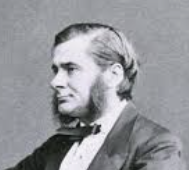
If a well were sunk at our feet in the midst of the city of Norwich, the diggers would very soon find themselves at work in that white substance almost too soft to be called rock, with which we are all familiar as "chalk".
7 months 4 weeks ago
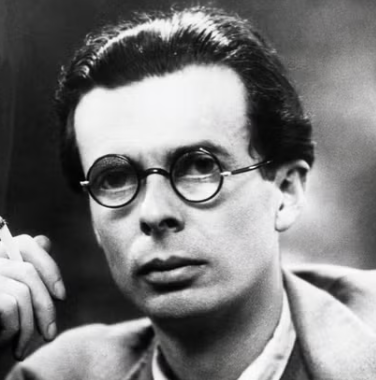
The Bhagavad-Gita is perhaps the most systematic scriptural statement of the Perennial Philosophy. To a world at war, a world that, because it lacks the intellectual and spiritual prerequisites to peace, can only hope to patch up some kind of precarious armed truce, it stands pointing, clearly and unmistakably, to the only road of escape from the self-imposed necessity of self-destruction.
7 months 3 weeks ago
Human beings have a physical need to tell themselves when at work: "Let's have done with it now," and it's having constantly to go on thinking in the face of this need when philosophizing that makes this work so strenuous.
▼
Source
source
p. 86e

7 months 3 weeks ago
Legal and economic equality are absolutely necessary remedies for the Fall, and protection against cruelty.
8 months 3 weeks ago
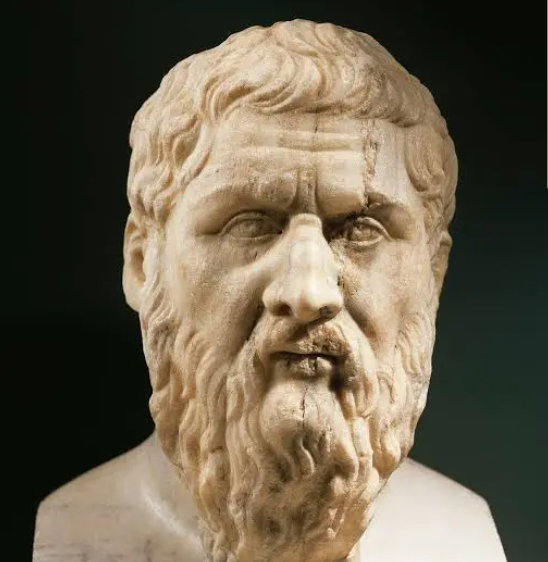
The inexperienced in wisdom and virtue, ever occupied with feasting and such, are carried downward, and there, as is fitting, they wander their whole life long, neither ever looking upward to the truth above them nor rising toward it, nor tasting pure and lasting pleasures. Like cattle, always looking downward with their heads bent toward the ground and the banquet tables, they feed, fatten, and fornicate. In order to increase their possessions they kick and butt with horns and hoofs of steel and kill each other, insatiable as they are.
CivilSimian.com created by AxiomaticPanic, CivilSimian, Kalokagathia