I posted a Substack link to a piece on this earlier today...


The Upanishads and the Vedas haunt me. In them I have found eternal compensation, unfathomable power, unbroken peace.
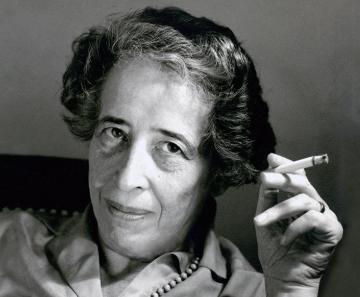
Kant stated defensively that he had "found it necessary to deny knowledge. . . to make room for faith," but he had not made room for faith; he had made room for thought, and he had not "denied knowledge" but separated knowledge from thinking.
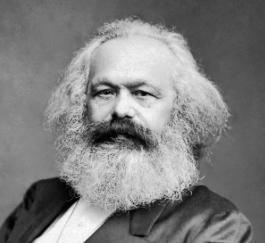
The monopoly of capital becomes a fetter upon the mode of production, which has sprung up and flourished along with, and under it. Centralisation of the means of production and socialisation of labour at last reach a point where they become incompatible with their capitalist integument. This integument is burst asunder. The knell of capitalist private property sounds. The expropriators are expropriated.
The Communists disdain to conceal their views and aims. They openly declare that their ends can be attained only by the forcible overthrow of all existing social conditions. Let the ruling classes tremble at a Communistic revolution. The proletarians have nothing to lose but their chains. They have a world to win. WORKING MEN OF ALL COUNTRIES, UNITE!
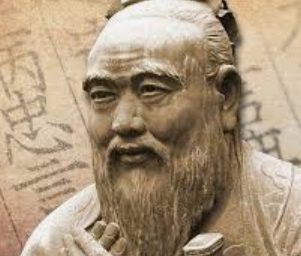
It is soft, smooth and shining like intelligence. Its edges seem sharp but do not cut like justice. It hangs down to the ground like humility. When struck, it gives a clear, ringing sound like music. The strains in it are not hidden and add to its beauty like truthfulness.' What imagination! Confucius extolled Jade's virtues this way.
The sociologist permits himself to see only what is acceptable to his colleagues.
Equally there is no rhythm when variations are not placed. There is a wealth of suggestions in the phrase "takes place". The change not only comes but it belongs; it had its definite place in a larger whole.

Some have made the love of God the foundation of morality. This, too, is but a branch of our moral duties, which are generally divided into duties to God and duties to man. If we did a good act merely from the love of God and a belief that it is pleasing to Him, whence arises the morality of the Atheist? It is idle to say, as some do, that no such being exists. We have the same evidence of the fact as of most of those we act on, to-wit: their own affirmations, and their reasonings in support of them. I have observed, indeed, generally, that while in protestant countries the defections from the Platonic Christianity of the priests is to Deism, in catholic countries they are to Atheism. Diderot, D'Alembert, D'Holbach, Condorcet, are known to have been among the most virtuous of men. Their virtue, then, must have had some other foundation than the love of God.
Never let the future disturb you. You will meet it, if you have to, with the same weapons of reason which today arm you against the present.
When a person is haughty, he distances himself from other people and thereby deprives himself of one of life's biggest pleasures-open, joyful communication with everyone.
We cannot grasp any idea, any organ of meditation, we cannot possess it in full force, until we have felt and sensed it, as much so as if it were an odor or a color.

Sit and be still until in the time of no rain you hear beneath the dry wind's commotion in the trees the sound of flowing water among the rocks, a stream unheard before, and you are where breathing is prayer.
All men are stuck in a kind of fog. They're surrounded by a wall of fog. They think this is perfectly normal, but it's not. It means that since they can't see much beyond their own little situation, they tend to vegetate. They need some immediate stimulus to keep them alert.
You ask if I mean to publish anything on the subject of a letter of mine to my friend Charles Thompson? Certainly not. I write nothing for publication, and last of all things should it be on the subject of religion. On the dogmas of religion as distinguished from moral principles, all mankind, from the beginning of the world to this day, have been quarrelling, fighting, burning and torturing one another, for abstractions unintelligible to themselves and to all others, and absolutely beyond the comprehension of the human mind. Were I to enter on that arena, I should only add an unit to the number of Bedlamites.
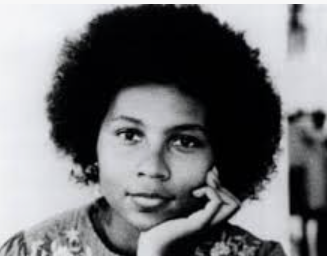
It is obvious that many women have appropriated feminism to serve their own ends, especially those white women who have been at the forefront of the movement; but rather than resigning myself to this appropriation I choose to re-appropriate the term "feminism," to focus on the fact that to be "feminist" in any authentic sense of the term is to want for all people, female and male, liberation from sexist role patterns, domination, and oppression.
Timid men prefer the calm of despotism to the tempestuous sea of liberty.
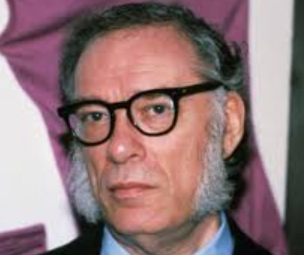
Creationists make it sound as though a "theory" is something you dreamt up after being drunk all night.
By surpassing writing, we have regained our wholeness, not on a national or cultural but cosmic plane.
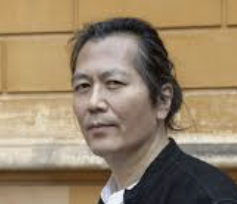
Power turns pure being into a having.
When the representative body have lost the confidence of their constituents, when they have notoriously made sale of their most valuable rights, when they have assumed to themselves powers which the people never put into their hands, then indeed their continuing in office becomes dangerous to the state, and calls for an exercise of the power of dissolution.
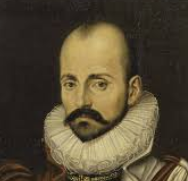
I have gathered a posy of other men's flowers, and nothing but the thread that binds them is mine own.
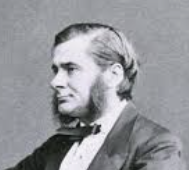
The antagonism between science and religion, about which we hear so much, appears to me to be purely factitious - fabricated, on the one hand, by short-sighted religious people who confound a certain branch of science, theology, with religion; and, on the other, by equally short-sighted scientific people who forget that science takes for its province only that which is susceptible of clear intellectual comprehension; and that, outside the boundaries of that province, they must be content with imagination, with hope, and with ignorance.
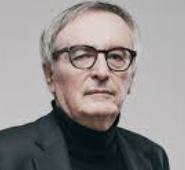
As Malaparte saw it, Naples was a pagan city with an ancient sense of time. Christianity taught those who were converted to it to think of history as the unfolding of a single plot - a moral drama of sin and redemption. In the ancient world there was no such plot - only a multitude of stories that were forever being repeated. Inhabiting that ancient world, the Neapolitans did not expect any fundamental alteration in human affairs. Not having accepted the Christian story of redemption, they had not been seduced by the myth of progress. Never having believed civilization to be permanent, they were not surprised when it foundered.
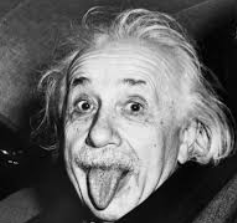
As a child, I received instruction both in the Bible and in the Talmud. I am a Jew, but I am enthralled by the luminous figure of the Nazarene.

Remember Bostrom's definition of existential risk, which refers to the annihilation not of human beings, but of "Earth-originating intelligent life." The replacement of our species by some other form of conscious intelligent life is not in itself, impartially considered, catastrophic. Even if the intelligent machines kill all existing humans, that would be...a very small part of the loss of value that Parfit and Bostrom believe would be brought about by the extinction of Earth-originating intelligent life. The risk posed by the development of AI, therefore, is not so much whether it is friendly to us, but whether it is friendly to the idea of promoting wellbeing in general, for all sentient beings it encounters, itself included.
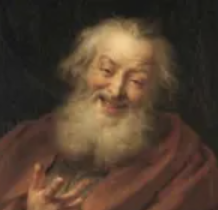
There are many who know many things, yet are lacking in wisdom.
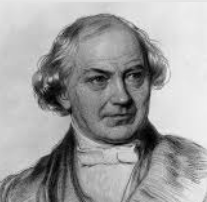
Coexistent polarities are fundamentally identical.
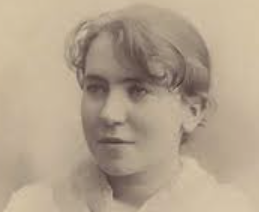
Crime is naught but misdirected energy. So long as every institution of today, economic, political, social, and moral, conspires to misdirect human energy into wrong channels; so long as most people are out of place doing the things they hate to do, living a life they loathe to live, crime will be inevitable, and all the laws on the statutes can only increase, but never do away with, crime.

The hardness of God is kinder than the softness of men, and His compulsion is our liberation.
The scientific organization and comprehensive exposition in accessible form of the Talmud has a twofold importance for us Jews. It is important in the first place that the high cultural values of the Talmud should not be lost to modern minds among the Jewish people nor to science, but should operate further as a living force. In the second place, The Talmud must be made an open book to the world, in order to cut the ground from under certain malevolent attacks, of anti-Semitic origin, which borrow countenance from the obscurity and inaccessibility of certain passages in the Talmud. To support this cultural work would thus mean an important achievement for the Jewish people.
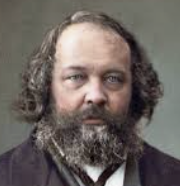
All religions are cruel, all founded on blood; for all rest principally on the idea of sacrifice - that is, on the perpetual immolation of humanity to the insatiable vengeance of divinity.
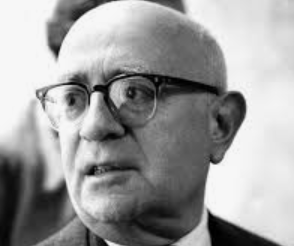
Even the most insensitive hit song enthusiast cannot always escape the feeling that the child with a sweet tooth comes to know in the candy store.

Had there not been a natural goodness and indestructible force in my father, I see not how be could have bodied himself forth from these mean impediments. I suppose good precepts were not wanting. There was the Bible to read. Old John Orr, the schoolmaster, used from time to time to lodge with them; be was religious and enthusiastic (though in practice irregular with drink). In my grandfather, also, there seems to have been a certain geniality; for instance, he and a neighbor, Thomas Hogg, read "Anson's Voyages;" also tho "Arabian Nights," for which latter my father, armed with zealous conviction, scrupled not to censure them openly. By one means and another, at an early age he had acquired principles, lights that not only flickered, but shone steadily to guide his way.
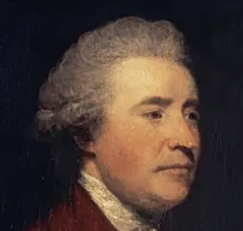
In their nomination to office they will not appoint to the exercise of authority as to a pitiful job, but as to a holy function.
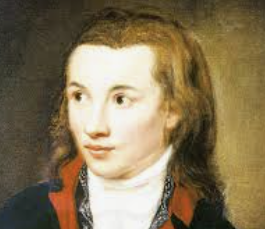
The ideal of Morality has no more dangerous rival than the ideal of highest Strength, of most powerful life; which also has been named (very falsely as it was there meant) the ideal of poetic greatness. It is the maximum of the savage; and has, in these times, gained, precisely among the greatest weaklings, very many proselytes. By this ideal, man becomes a Beast-Spirit, a Mixture; whose brutal wit has, for weaklings, a brutal power of attraction.

When I was a student in the 1950s, I read Husserl, Sartre, Merleau-Ponty. When you feel an overwhelming influence, you try to open a window. Paradoxically enough, Heidegger is not very difficult for a Frenchman to understand. When every word is an enigma, you are in a not-too-bad position to understand Heidegger. Being and Time is difficult, but the more recent works are clearer. Nietzsche was a revelation to me. I felt that there was someone quite different from what I had been taught. I read him with a great passion and broke with my life, left my job in the asylum, left France: I had the feeling I had been trapped. Through Nietzsche, I had become a stranger to all that.
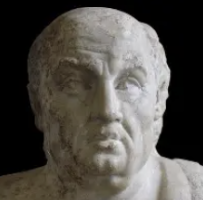
He who does not prevent a crime, when he can, encourages it.
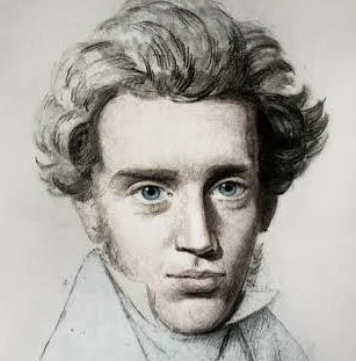
The Sophist demonstrates that everything is true and nothing is true.
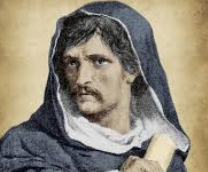
When we consider the being and substance of that universe in which we are immutably set, we shall discover that neither we ourselves nor any substance doth suffer death; for nothing is in fact diminished in its substance, but all things, wandering through infinite space, undergo change of aspect.
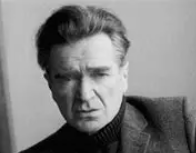
He detested objective truths, the burden of argument, sustained reasoning. He disliked demonstrating, he wanted to convince no one. Others are a dialectician's invention.
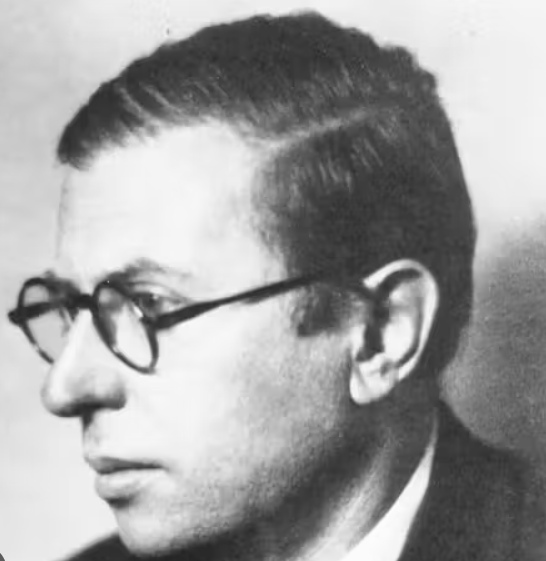
The consciousness of being betrayed is to the collective consciousness of a sacred group what a certain form of schizophrenia is to the individual...it is a form of madness.
The user of the electric light -- or a hammer, or a language, or a book -- is the content. As such, there is a total metamorphosis of the user by the interface. It is the metamorphosis that I consider the message.
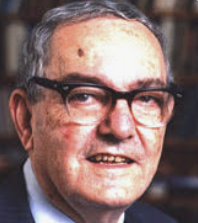
Computers were within my sphere of attention, but only computers used as number crunchers. In spite of the "giant brain" metaphor, there is little suggestion in this 1950 talk that the most important application of computers might lie in imitating intelligence symbolically, not numerically.
Humans already massively intervene in Nature, whether through habitat destruction, captive breeding programs for big cats, "rewilding", etc. So the question is not whether humans should "interfere", but rather what ethical principles should govern our interventions.
To take Macaulay out of literature and society and put him in the House of Commons, is like taking the chief physician out of London during a pestilence.
Between ourselves and our real natures we interpose that wax figure of idealizations and selections which we call our character.
CivilSimian.com created by AxiomaticPanic, CivilSimian, Kalokagathia