


4 months 2 weeks ago
Sarcasm I now see to be, in general, the language of the Devil; for which reason I have, long since, as good as renounced it.
▼
Source
source
Bk. II, ch. 4.
5 months 4 weeks ago
There is no single speech nor article in which it is not said that the purpose of all these orgies is the peace of Europe. At a dinner given by the representatives of French literature, all breathe of peace. M. Zola, who, a short time previously, had written that war was inevitable, and even serviceable; M. de Vogue, who more than once has stated the same in print, say, neither of them, a word as to war, but speak only of peace. The sessions of Parliament open with speeches upon the past festivities; the speakers mention that such festivities are an assurance of peace to Europe. It is as if a man should come into a peaceful company, and commence energetically to assure everyone present that he has not the least intention to knock out anyone's teeth, blacken their eyes, or break their arms, but has only the most peaceful ideas for passing the evening.
▼
Source
source
Ch. 1
6 months 3 weeks ago
The old dualistic notion of mind and matter, so prominent in Cartesianism, as two radically different kinds of substance, will hardly find defenders to-day. Rejecting this, we are driven to some form of hylopathy, otherwise called monism.
5 months 2 weeks ago
From the point of view of the moralist the animal world is on about the same level as a gladiator's show. The creatures are fairly well treated, and set to fight-whereby the strongest, the swiftest and the cunningest live to fight another day. The spectator has no need to turn his thumbs down, as no quarter is given.
▼
Source
source
(February 1888) "The Struggle for Existence: A Programme". The Nineteenth Century 23: 161-180. (quote from p. 163)
7 months 3 weeks ago
Diversity makes critical argument fruitful. ...[P]artners in an argument must share ...the wish to know, and the readiness to learn from the other ...by severely criticizing his views... and hearing... [the] reply. ...the so-called method of science consists in this kind of criticism.
7 months 4 weeks ago
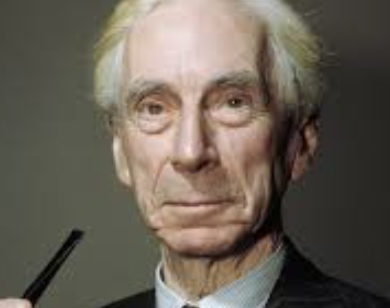
I have lived in the pursuit of a vision, both personal and social. Personal: to care for what is noble, for what is beautiful, for what is gentle; to allow moments of insight to give wisdom at more mundane times. Social: to see in imagination the society that is to be created, where individuals grow freely, and where hate and greed and envy die because there is nothing to nourish them. These things I believe, and the world, for all its horrors, has left me unshaken.
7 months 4 weeks ago
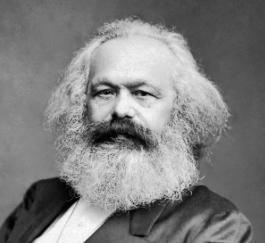
The Communists disdain to conceal their views and aims. They openly declare that their ends can be attained only by the forcible overthrow of all existing social conditions. Let the ruling classes tremble at a Communistic revolution. The proletarians have nothing to lose but their chains. They have a world to win. WORKING MEN OF ALL COUNTRIES, UNITE!
▼
Source
source
Section 4, paragraph 11 (last paragraph) Variant translation: Workers of the world, unite!

7 months 2 weeks ago
To a wise man, the whole earth is open; for the native land of a good soul is the whole earth.
▼
Source
source
Freeman (1948), p. 166 \

7 months 1 week ago
None but a Craftsman can judge of a craft.
6 months 3 weeks ago
People will do anything, no matter how absurd, in order to avoid facing their own souls. They will practice Indian yoga and all its exercises, observe a strict regimen of diet, learn the literature of the whole world-all because they cannot get on with themselves and have not the slightest faith that anything useful could ever come out of their own souls. Thus the soul has gradually been turned into a Nazareth from which nothing good can come.
▼
Source
source
CW 12, par. 126 (p 99)
6 months 2 weeks ago
When I was a student I was assigned "Mythologies" and "A Lover's Discourse," by Roland Barthes, and felt at once that something momentous had happened to me, that I had met a writer who had changed my course in life somehow; and looking back now, I think he did.
▼
Source
source
Zadie Smith Interview
8 months 6 days ago
Writing does not cause misery. It is born of misery.
3 months 2 weeks ago
Only a life lived for others is a life worthwhile.
7 months 4 weeks ago
In my individual heart I fully believe my faith is as robust as yours. The trouble with your robust and full bodied faiths, however, is, that they begin to cut each others throats too soon, and for getting on in the world and establishing a modus vivendi these pestilential refinements and reasonablenesses and moderations have to creep in.
▼
Source
source
Letter to John Jay Chapman, 5 April 1897

5 months 2 weeks ago
Statues are not about history. We don't memorialize each piece of history. We memorialize things that we want to value and things that we want our children to walk by and say "This person embodied the values that I care about." Therefore, statues are about values not about history.
6 months 1 week ago
To counter the fixation on a rhetoric of victimhood, black folks must engage in a discourse of self-determination.
7 months 4 weeks ago
[E]xperience has taught me that those who give their time to the absorbing claims of what is called society, not having leisure to keep up a large acquaintance with the organs of opinion, remain much more ignorant of the general state either of the public mind, or of the active and instructed part of it, than a recluse who reads the newspapers need be.
▼
Source
source
(p. 262)
6 months 2 weeks ago
There are in our minds in solution a vast number of emotional attitudes, feelings ready to be re-excited when the proper stimulus arrives, and more than anything else it is these forms, this residue of experience, which, fuller and richer than in the mind if the ordinary man, constitute the artist's capital. What is called the magic of the artist resides in his ability to transfer these values from one field of experience to another, to attach them to objects of our common life, and by his imaginative insight make these objects poignant and momentous. Not colors, not sense qualities as such, are either matter or form, but these qualities as thoroughly imbued, impregnated, with transferred value. And then they are either matter or form according to the direction of our interest.
▼
Source
source
p. 123
3 months 4 weeks ago
Every word is an adamantine shell which encloses a great explosive force. To discover its meaning you must let it burst inside you like a bomb and in this way liberate the soul which it imprisons.
▼
Source
source
Massacre, Ch. 10, p. 88
6 months 3 weeks ago
After all, why should ordinary people want to contemplate the End, especially when we see the condition of those who do?
4 months 1 week ago
One indeed is the Creator of all things, but many are the creative powers revolving in the heavens; we must, therefore, place the influence of the Sun as intermediate with respect to each single operation affecting the earth. Moreover, the principle productive of Life is vastly superabundant in the Intelligible World; our world, also, is evidently full of generative life. It is therefore clear that the life-producing power of the sovereign Sun is intermediate between these two, since the phenomena of Nature bear testimony to the fact; for some kinds of things the Sun brings to perfection, others of them he brings to pass, others he regulates, others he excites, and there exists nothing that, without the creative influence of the Sun, comes to light and is born.
6 months 2 weeks ago
Because energy is not restrained by other elements that are at once antagonistic and cooperative, action proceeds by jerks and spasms. There is discontinuity.
▼
Source
source
p. 189
7 months 4 weeks ago
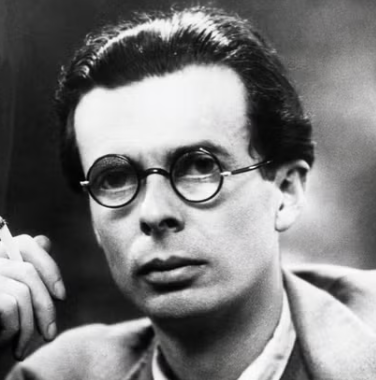
Children are nowhere taught, in any systematic way, to distinguish true from false, or meaningful from meaningless, statements. Why is this so? Because their elders, even in the democratic countries, do not want them to be given this kind of education.
▼
Source
source
Chapter 11 (p. 106)
6 months 3 weeks ago
To think we could have spared ourselves from living all that we have lived!
4 months 2 weeks ago
There are depths in man which go down the length of the lowest Hell, as there are heights which reach the highest Heaven; - for are not both Heaven and Hell made out of him, everlasting Miracle and Mystery that he is?
▼
Source
source
Pt. III, Bk. I, ch. 4. This was slightly paraphrased in A Dictionary of Thoughts : Being a Cyclopedia of Laconic Quotations from the Best Authors, Both Ancient and Modern (1891) edited by Tryon Edwards. p. 327.
4 months 3 weeks ago
The cultural atmosphere of Russia in those years had an adolescent quality, common to all periods of revolution: the belief that life is just beginning, that the future is unlimited, and that mankind is no longer bound by the shackles of history.
▼
Source
source
(pg. 47)
7 months 4 weeks ago
There are some simple maxims which I think might be commanded to writers of expository prose. First: never use a long word if a short word will do. Second: if you want to make a statement with a great many qualifications, put some of the qualifications in separate sentences. Third: do not let the beginning of your sentence lead the reader to an expectation which is contradicted by the end.
▼
Source
source
"How I Write", The Writer, September 1954
7 months 3 weeks ago
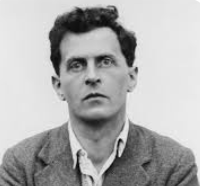
One age misunderstands another; and a petty age misunderstands all the others in its own ugly way.
▼
Source
source
p. 98e

4 months 1 week ago
The de-eroticization of the world, a companion to its disenchantment ... seems to result from a combination of causes-our democratic regime and its tendencies toward leveling and self-protection, a reductionist-materialist science that inevitably interprets eros as sex, and the atmosphere generated by "the death of God" and of the subordinate god, Eros.
▼
Source
source
p. 15.
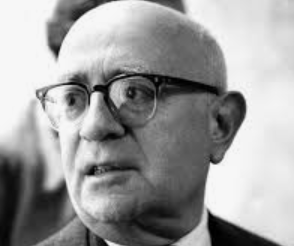
6 months 2 weeks ago
We cannot think any true thought unless we want the true. Thinking is itself an aspect of practice.
▼
Source
source
p. 45
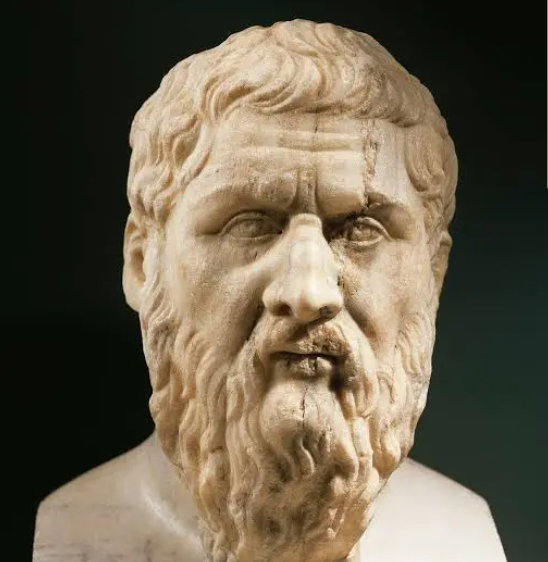
8 months 3 weeks ago
The characters of self-restrained officials are exceedingly careful and just and conservative, but they lack keenness and a certain quick and active boldness. The courageous natures, on the other hand, are deficient in justice and caution in comparison with the former, but excel in boldness of action; and unless both these qualities are present it is impossible for a state to be entirely prosperous in public and private matters.
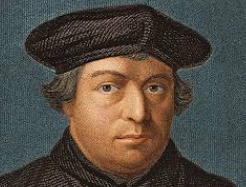
8 months 6 days ago
If women get tired and die of bearing, there is no harm in that; let them die as long as they bear; they are made for that.
▼
Source
source
-- Essays, quoted in Luther On "Woman"

8 months 2 weeks ago
Knowledge is the conformity of the object and the intellect.
4 months 4 weeks ago
Heresy is a set of opinions "at variance with established or generally received principles." In this sense, heresy is the price of all originality and innovation.
7 months 4 weeks ago
In reality, the labourer belongs to capital before he has sold himself to capital.
▼
Source
source
Vol. I, Ch. 23, pg. 633.

6 months 1 week ago
The martyr sacrifices herself (himself in a few instances) entirely in vain. Or rather not in vain; for she (or he) makes the selfish more selfish, the lazy more lazy, the narrow narrower.
▼
Source
source
As quoted in Forever Yours (1990) by Martha Vicinus and Bea Nergaard , p. 275. Letter, c. 1867, to the scholar Benjamin Jowett.
6 months 2 weeks ago
Life cannot wait until the sciences may have explained the universe scientifically. We cannot put off living until we are ready. The most salient characteristic of life is its coerciveness: it is always urgent, "here and now" without any possible postponement. Life is fired at us point-blank. And culture, which is but its interpretation, cannot wait any more than can life itself.
▼
Source
source
Mission of the University [Misión de la Universidad (PDF)] (1930; translation © 1944, first published 1946), p. 73 [p. 15 in Spanish PDF], translated by Howard Lee Nostrand. ISBN 978-1-56000-560-5
6 months 3 weeks ago
As long as one believes in philosophy, one is healthy; sickness begins when one starts to think.
3 months 4 weeks ago
Enlighten the people generally, and tyranny and oppressions of body and mind will vanish like evil spirits at the dawn of day.
▼
Source
source
Letter to Éleuthère Irénée du Pont de Nemours
7 months 4 weeks ago
Every man would like to be God, if it were possible; some few find it difficult to admit the impossibility.
▼
Source
source
Ch. 1: The Impulse to Power
7 months 4 weeks ago
It is so rare to meet with a man out-doors who cherishes a worthy thought in his mind, which is independent of the labor of his hands.
3 months 4 weeks ago
I strive to discover how to signal my companions before I die, how to give them a hand, how to spell out for them in time one complete word at least, to tell them what I think this procession is, and toward what we go. And how necessary it is for all of us together to put our steps and hearts in harmony. To say in time a simple word to my companions, a password, like conspirators. Yes, the purpose of Earth is not life, it is not man. Earth has existed without these, and it will live on without them. They are but the ephemeral sparks of its violent whirling. Let us unite, let us hold each other tightly, let us merge our hearts, let us create - so long as the warmth of this earth endures, so long as no earthquakes, cataclysms, icebergs or comets come to destroy us - let us create for Earth a brain and a heart, let us give a human meaning to the superhuman struggle. This anguish is our second duty.
6 months 2 weeks ago
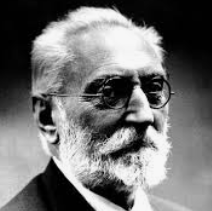
The march, as ever, is toward the future, and he who marches is getting there, even though he march walking backwards. And who knows if that is not the better way!...
7 months 4 weeks ago
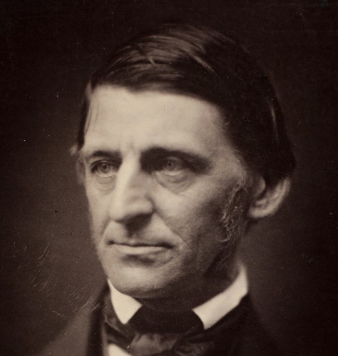
I had better never see a book than to be warped by its attraction clean out of my own orbit, and made a satellite instead of a system. The one thing in the world, of value, is the active soul.
▼
Source
source
par. 15

5 months 3 weeks ago
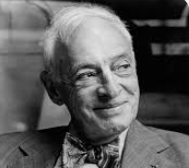
The late philosopher Morris R. Cohen of CCNY was asked by a student in the metaphysics course, "Professor Cohen, how do I know that I exist?" The keen old prof replied, "And who is asking?"
▼
Source
source
Humboldt's Gift (1996), p. 163
CivilSimian.com created by AxiomaticPanic, CivilSimian, Kalokagathia