

8 months ago
My basis is supported by the authority of the greatest moralist of modern times; for such, undoubtedly, J. J. Rousseau is,-that profound reader of the human heart, who drew his wisdom not from books, but from life, and intended his doctrine not for the professorial chair, but for humanity; he, the foe of all prejudice, the foster-child of nature, whom alone she endowed with the gift of being able to moralise without tediousness, because he hit the truth and stirred the heart.
▼
Source
source
Part III, Ch. VIII, 9, p. 230
8 months 2 days ago
...the competition of the poor takes away from the reward of the rich.
▼
Source
source
Chapter X, Part II, p. 154.
6 months 4 weeks ago
It is the love of the people; it is their attachment to their government, from the sense of the deep stake they have in such a glorious institution, which gives you both your army and your navy, and infuses into both that liberal obedience, without which your army would be a base rabble, and your navy nothing but rotten timber.
7 months 2 weeks ago
As Athenodorus was taking his leave of Cæsar, "Remember," said he, "Cæsar, whenever you are angry, to say or do nothing before you have repeated the four-and-twenty letters to yourself."
▼
Source
source
Cæsar Augustus
6 months 2 weeks ago
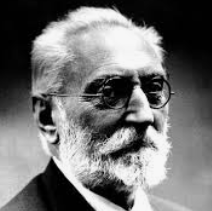
There is no tyranny in the world more hateful than that of ideas. Ideas bring ideophobia, and the consequence is that people begin to persecute their neighbors in the name of ideas. I loathe and detest all labels, and the only label that I could now tolerate would be that of ideoclast or idea breaker.
▼
Source
source
Recalled by Walter Starkie from a conversation he had with Unamuno, as related in the Epilogue of Unamuno.

8 months 2 weeks ago
If any one will piously and soberly consider the sermon which our Lord Jesus spoke on the mount, as we read it in the Gospel according to Matthew, I think that he will find in it, so far as regards the highest morals, a perfect standard of the Christian life: and this we do not rashly venture to promise, but gather it from the very words of the Lord Himself. For the sermon itself is brought to a close in such a way, that it is clear there are in it all the precepts which go to mould the life. He has sufficiently indicated, as I think, that these sayings which He uttered on the mount so perfectly guide the life of those who may be willing to live according to them, that they may justly be compared to one building upon a rock.
▼
Source
source
On the Sermon on the Mount, as translated by William Findlay (1888), Book I, Ch. 1
6 months 3 weeks ago
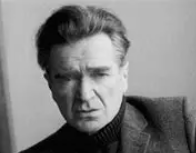
If I were to be totally sincere, I would say that I do not know why I live and why I do not stop living. The answer probably lies in the irrational character of life which maintains itself without reason.
5 months 1 week ago
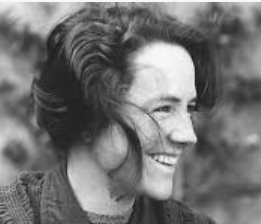
I want to write - I want to write - I want to write and never never never will. I know it and I am so unhappy and it seems as though nothing else mattered. Whatever I'm doing, it's always there, an ultimate longing there saying, "Write this - write that - write -" and I can't. Lack ability, time, strength, and duration of vision. I wish someone would tell me brutally, "You can never write anything. Take up home gardening!"
7 months 4 weeks ago
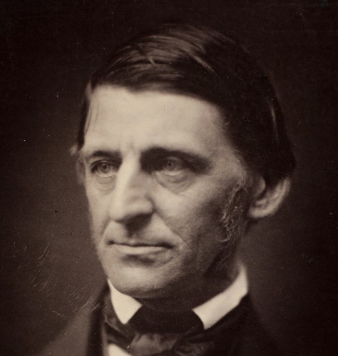
Slavery is disheartening; but Nature is not so helpless but it can rid itself of every last wrong. But the spasms of nature are centuries and ages and will tax the faith of short-lived men. Slowly, slowly the Avenger comes, but comes surely. The proverbs of the nations affirm these delays, but affirm the arrival. They say, "God may consent, but not forever." The delay of the Divine Justice - this was the meaning and soul of the Greek Tragedy, - this was the soul of their religion.
▼
Source
source
The Fugitive Slave Law, a lecture in NYC, March 7, 1854
8 months 2 days ago
No fixed capital can yield any revenue but by means of a circulating capital.
▼
Source
source
Chapter I, p. 311.
6 months 2 weeks ago
No human acquisition is stable. Even what appears to us most completely won and consolidated can disappear in a few generations. This thing we call "civilization" - all these physical and moral comforts, all these conveniences, all these shelters, all these virtues and disciplines which have become habit now, on which we count, and which in effect constitute a repertory or system of securities which man made for himself like a raft in the initial shipwreck which living always is - all these securities are insecure securities which in the twinkling of an eye, at the least carelessness, escape from man's hands and vanish like phantoms.
▼
Source
source
p. 25


6 months 1 week ago
What the horrors of war are, no one can imagine - they are not wounds and blood and fever, spotted and low, or dysentery, chronic and acute, cold and heat and famine - they are intoxication, drunken brutality, demoralization and disorder on the part of the inferior, jealousies, meanness, indifference, selfish brutality on the part of the superior.
▼
Source
source
Letter (5 May 1855), published in Florence Nightingale : An Introduction to Her Life and Family (2001), edited by Lynn McDonald, p. 141


7 months 1 week ago
Wind indeed increases fire, but custom love.
▼
Source
source
Pythagorean Ethical Sentences From Stobæus
7 months 3 weeks ago
There is a divergence between private and social accounting that the market fails to register. One essential task of law and government is to institute the necessary conditions.
▼
Source
source
Chapter V, Section 42, p. 268
4 months 2 weeks ago
Every love to which there clings but the smallest speck of obligation is an unselfish love, and, so far as this speck reaches, a possessedness. He who believes that he owes the object of his love anything loves romantically or religiously.
▼
Source
source
Cambridge 1995, p. 260

6 months 3 weeks ago
If any man will come after me, let him deny himself, and take up his cross, and follow me. For whosoever will save his life shall lose it: and whosoever will lose his life for my sake shall find it. For what is a man profited, if he shall gain the whole world, and lose his own soul? or what shall a man give in exchange for his soul? For the Son of man shall come in the glory of his Father with his angels; and then he shall reward every man according to his works. Verily I say unto you, There be some standing here, which shall not taste of death, till they see the Son of man coming in his kingdom.
▼
Source
source
16:24-28 (KJV)

7 months 3 weeks ago
What would really satisfy us would be a God who said of anything we happened to like, "What does it matter so long as they are contented?" We want, in fact, not so much a Father in Heaven as a grandfather in heaven - a senile benevolence who, as they say, "liked to see young people enjoying themselves" and whose plan for the universe was simply that it might be truly said at the end of each day, "a good time was had by all".
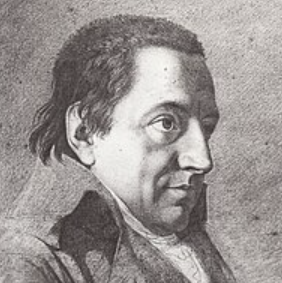
6 months 4 weeks ago
It is a proof that the state is not an arbitrary invention, but is established by nature and reason, when we actually find that, in places where men have lived together for a time and have become educated, states are erected, although the people in the one such place know not that the same thing has been done in other places. Each people, which does not live in a condition of nature, but has a government, no matter how constituted, has a right to compel its recognition from all adjoining states.
▼
Source
source
P. 474, 477

3 months 3 weeks ago
The Triad has a special beauty and fairness beyond all numbers, primarily because it is the very first to make actual the potentiality of the Monad - oddness, perfection, proportionality, unification, limit.
▼
Source
source
On the Triad
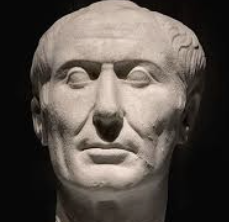
5 months 3 weeks ago
Tension weakens the bow; the want of it, the mind.
▼
Source
source
Maxim 59
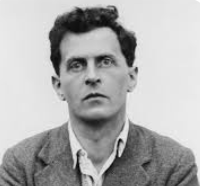
7 months 3 weeks ago
A philosopher is a man who has to cure many intellectual diseases in himself before he can arrive at the notions of common sense.
▼
Source
source
p. 44e
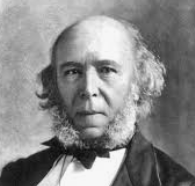
6 months 4 weeks ago
The blindness of those who think it absurd to suppose that complex organic forms may have arisen by successive modifications out of simple ones becomes astonishing when we remember that complex organic forms are daily being thus produced. A tree differs from a seed immeasurably in every respect... Yet is the one changed in the course of a few years into the other: changed so gradually, that at no moment can it be said - Now the seed ceases to be, and the tree exists.

8 months ago
Eloquence may strike the ear, but the language of poverty strikes the heart; the first may charm like music, but the second alarms like a knell.
▼
Source
source
The Case of the Officers of Excise (1772), p. 20
6 months 2 weeks ago
The intellectual world is divided into two classes - dilettantes, on the one hand, and pedants, on the other.
7 months 4 weeks ago
The man who renounces himself, comes to himself.
▼
Source
source
p. 6
9 months 1 day ago
If each us had a different kind of sense perception — if we could only perceive things now as a bird, now as a worm, now as a plant, or if one of us saw a stimulus as red, another as blue, while a third even heard the same stimulus as a sound, then no one would speak of such a regularity of nature, rather, nature would be grasped only as a creation which is subjective in the highest degree. After all, what is a law of nature as such for us? We are not acquainted with it in itself, but only with its effects, which means in its relation to other laws of nature which, in turn, are known to us only as sums of relations. Therefore all these relations always refer again to others and are thoroughly incomprehensible to us in their essence.
7 months 2 weeks ago
I have enough to eat till my hunger is stayed, to drink till my thirst is sated; to clothe myself withal; and out of doors not Callias there, with all his riches, is more safe than I from shivering; and when I find myself indoors, what warmer shirting do I need than my bare walls? what ampler greatcoat than the tiles above my head?
▼
Source
source
iv. 34
4 months 1 week ago
It is almost always impossible to evaluate at the time events which you have already experienced, and to understand their meaning with the guidance of their effects. All the more unpredictable and surprising to us will be the course of future events.
▼
Source
source
Autobiographical sketch (1970), at Nobelprize.org
6 months 3 weeks ago
But if it bee well considered, The praise of Ancient Authors, proceeds not from the reverence of the Dead, but from the competition and mutual envy of the Living.
▼
Source
source
Review and Conclusion, p. 395
4 months 2 weeks ago
Ever since prehistoric antiquity one field of study after another has crossed the divide between what the historian might call its prehistory as a science and its history proper. These transitions to maturity have seldom been so sudden or so unequivocal as my necessarily schematic discussion may have implied. But neither have they been historically gradual, coextensive, that is to say, with the entire development of the fields within which they occurred.
▼
Source
source
p. 22

3 months 3 weeks ago
Either everything is illusion, nature as well as revelation, or experience alone can explain faith.
8 months ago
Fools admire everything in an author of reputation.

4 months 2 weeks ago
If you are in a strait, a very good indication as to choice-perhaps the best you could get-is a book you have a great curiosity about. You are then in the readiest and best of all possible conditions to improve by that book.
7 months 3 weeks ago
If the inner psychic ground of our individual appearance were not always the same, there could be no science of psychology, which qua science relies on a psychic "inside we are all alike," just as the science of physiology and medicine relies on the sameness of our inner organs. The monstrous sameness and pervasive ugliness so highly characteristic of the findings of modern psychology, and contrasting so obviously with the enormous variety and richness of overt human conduct, witness to the radical difference between the inside and the outside of the human body.
▼
Source
source
pp. 34-35
8 months 1 day ago
It is difficult for the isolated individual to work himself out of the immaturity which has become almost natural for him. He has even become fond of it and for the time being is incapable of employing his own intelligence, because he has never been allowed to make the attempt. Statutes and formulas, these mechanical tools of a serviceable use, or rather misuse, of his natural faculties, are the ankle-chains of a continuous immaturity. Whoever threw it off would make an uncertain jump over the smallest trench because he is not accustomed to such free movement. Therefore there are only a few who have pursued a firm path and have succeeded in escaping from immaturity by their own cultivation of the mind.
9 months 1 day ago
Man has an invincible inclination to allow himself to be deceived and is, as it were, enchanted with happiness when the rhapsodist tells him epic fables as if they were true, or when the actor in the theater acts more royally than any real king. So long as it is able to deceive without injuring, that master of deception, the intellect, is free; it is released from its former slavery and celebrates its Saturnalia. It is never more luxuriant, richer, prouder, more clever and more daring.
6 months 3 weeks ago
Born in a prison, with burdens on our shoulders and our thoughts, we could not reach the end of a single day if the possibilities of ending it all did not incite us to begin the next day all over again.
6 months 2 weeks ago
Science is a cemetery of dead ideas, even though life may issue from them.
7 months 4 weeks ago
Since labour is motion, time is its natural measure.
▼
Source
source
Notebook I, The Chapter on Money, p. 125.

6 months 3 weeks ago
The radical empiricist onslaught ... provides the methodological justification for the debunking of the mind by the intellectuals-a positivism which, in its denial of the transcending elements of Reason, forms the academic counterpart of the socially required behavior.
▼
Source
source
p. 13

7 months 2 weeks ago
It is difficult to speak of the universal specifically.
▼
Source
source
Line 128
9 months 1 day ago
No one talks more passionately about his rights than he who in the depths of his soul doubts whether he has any. By enlisting passion on his side he wants to stifle his reason and its doubts: thus he will acquire a good conscience and with it success among his fellow men.
4 months 1 week ago
But both courses are to be avoided; you should not copy the bad simply because they are many, nor should you hate the many because they are unlike you.
6 months 3 weeks ago
The happy consciousness is shaky enough-a thin surface over fear, frustration, and disgust.
▼
Source
source
p. 76

6 months 2 weeks ago
It is a paralogism to say, that the good of the individual should give way to that of the public; this can never take place, except when the government of the community, or, in other words, the liberty of the subject is concerned; this does not affect such cases as relate to private property, because the public good consists in everyone's having his property, which was given him by the civil laws, invariably preserved.
▼
Source
source
Book XXVI, Chapter 15.
7 months 3 weeks ago
People are deeply imbedded in philosophical, i.e., grammatical confusions. And to free them presupposes pulling them out of the immensely manifold connections they are caught up in.
▼
Source
source
Ch. 9 : Philosophy, p. 185
CivilSimian.com created by AxiomaticPanic, CivilSimian, Kalokagathia