


3 months 3 weeks ago
When governments fear the people, there is liberty. When the people fear the government, there is tyranny.
▼
Source
source
Thomas Jefferson Encyclopedia. It first appears in 1914, in Barnhill, John Basil (1914). "Indictment of Socialism No. 3" (PDF). Barnhill-Tichenor Debate on Socialism. Saint Louis, Missouri: National Rip-Saw Publishing. pp. p. 34. Retrieved on 2008-10-16.

6 months 3 weeks ago
Why don't I kill myself? If I knew exactly what keeps me from doing so, I should have no more questions to ask myself since I should have answered them all.
6 months 2 weeks ago
The State is always, whatever be its form - primitive, ancient, medieval, modern - an invitation issued by one group of men to other human groups to carry out some enterprise in common. That enterprise, be its intermediate processes what they may, consists in the long run in the organisation of a certain type of common life. ... [As Renan says,] "To have common glories in the past, a common will in the present; to have done great things together; to wish to do greater; these are the essential conditions which make up a people.... In the past, an inheritance of glories and regrets; in the future, one and the same programme to carry out.... The existence of a nation is a daily plebiscite."
▼
Source
source
Chapter XIV: Who Rules The World?

5 months 3 weeks ago
We are interested in others, when they are interested in us.
▼
Source
source
Maxim 16
7 months 4 weeks ago
Where there is friendship, there is our natural soil.
▼
Source
source
Letter to Nicolas-Claude Thieriot, 1734
7 months 4 weeks ago
If this is the best of possible worlds, what then are the others?

4 months 2 weeks ago
Men's hearts ought not to be set against one another; but set with one another, and all against the Evil Thing only.
3 months 2 weeks ago
Science is international but its success is based on institutions, which are owned by nations. If therefore, we wish to promote culture we have to combine and to organize institutions with our own power and means.

7 months 3 days ago
But the Quincunx of Heaven runs low, and 'tis time to close the five ports of knowledge. We are unwilling to spin out our awaking thoughts into the phantasmes of sleep, which often continueth præcogitations; making Cables of Cobwebbes and Wildernesses of handsome Groves. Beside Hippocrates hath spoke so little and the Oneirocriticall Masters, have left such frigid Interpretations from plants, that there is little encouragement to dream of Paradise it self. Nor will the sweetest delight of Gardens afford much comfort in sleep; wherein the dulnesse of that sense shakes hands with delectable odours; and though in the Bed of Cleopatra, can hardly with any delight raise up the ghost of a Rose.
▼
Source
source
Ch. 5

3 months 3 weeks ago
As a violin string or a harpsichord key vibrates and gives forth sound, so the cerebral fibres, struck by waves of sound, are stimulated to render or repeat the words that strike them.
4 months 3 weeks ago
It is the simple hypotheses of which one must be most wary; because these are the ones that have the most chances of passing unnoticed.
▼
Source
source
Thermodynamique: Leçons professées pendant le premier semestre 1888-1889 (1892), Preface
7 months 4 weeks ago
Do we call this the land of the free? What is it to be free from King George and continue the slaves of King Prejudice? What is it to be born free and not to live free? What is the value of any political freedom, but as a means to moral freedom? Is it a freedom to be slaves, or a freedom to be free, of which we boast? We are a nation of politicians, concerned about the outmost defences only of freedom. It is our children's children who may perchance be really free.
▼
Source
source
p. 493

7 months 2 weeks ago
In peace, as a wise man, he should make suitable preparation for war.
▼
Source
source
Book II, satire ii, line 111
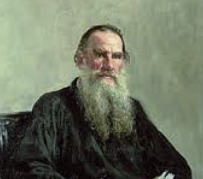
5 months 3 weeks ago
It is often better for a person to recognize a sin than to do a good deed. Recognizing a sin makes a person humble. Doing a good deed often can feed a person's pride.
▼
Source
source
p. 108

7 months 3 weeks ago
When Confucius and the Indian Scriptures were made known, no claim to monopoly of ethical wisdom could be thought of... It is only within this century [the 1800 's] that England and America discovered that their nursery tales were old German and Scandinavian stories; and now it appears that they came from India, and are therefore the property of all the nations.
▼
Source
source
Quoted in S. Londhe, A Tribute to Hinduism, 2008
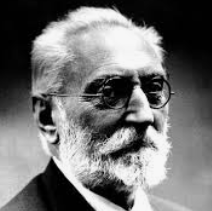
6 months 2 weeks ago
But if ether is nothing but an hypothesis explanatory of light, air on the other hand, is a thing that is directly felt; and even if it did not enable us to explain the phenomenon of sound, we should nevertheless always be directly aware of it, and above all, of the lack of it in moments of suffocation or air-hunger. And in the same way God Himself, not the idea of God, may become a reality that is immediately felt; and even though the idea of God does not enable us to explain either the existence or essence of the Universe, we have at times the direct feeling of God, above all in moments of spiritual suffocation. And the feeling, mark it well, for all that is tragic in it and the whole tragic sense of life is founded upon this - this feeling is a feeling of hunger for God, of the lack of God. To believe in God is, in the first instance... to wish that there may be a God, to be unable to live without Him.
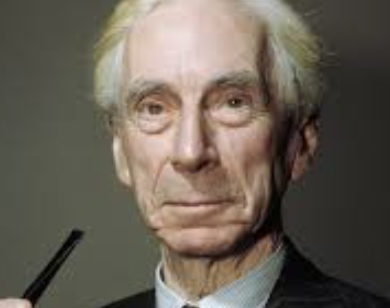
7 months 4 weeks ago
There is something feeble and a little contemptible about a man who cannot face the perils of life without the help of comfortable myths. Almost inevitably some part of him is aware that they are myths and that he believes them only because they are comforting. But he dare not face this thought! Moreover, since he is aware, however dimly, that his opinions are not rational, he becomes furious when they are disputed.
▼
Source
source
p. 219-220

8 months 1 week ago
In each separate thing that you do consider the matters which come first, and those which follow after, and only then approach the thing itself.
▼
Source
source
Book III, ch. 15, 1 (= Enchiridion 29, 1).

8 months 1 week ago
Why dost thou not retire like a guest sated with the banquet of life, and with calm mind embrace, thou fool, a rest that knows no care?
▼
Source
source
Book III, lines 938-939 (tr. Bailey)
3 months 3 weeks ago
The friend, enemy, and combat concepts receive their real meaning precisely because they refer to the real possibility of physical killing. War follows from enmity. War is the existential negation of the enemy.
7 months 3 weeks ago
What is the case, the fact, is the existence of atomic facts.
▼
Source
source
(2) Original German: Was der Fall ist, die Tatsache, ist das Bestehen von Sachverhalten.

4 months 3 weeks ago
We share bodies with two eyes, ten fingers, ten toes; we share life on this earth; we share capitalist regimes of production and exploitation; we share common dreams of a better future.
▼
Source
source
128

8 months 5 days ago
It is the part of cowardice, not of courage, to go and crouch in a hole under a massive tomb, to avoid the blows of fortune.
▼
Source
source
Ch. 3. A Usage of the Island of Cea, tr. George B. Ives, 1925
7 months 4 weeks ago
The economic concept of value does not occur in antiquity.
▼
Source
source
Notebook VII, The Chapter on Capital, p. 696.
6 months 2 weeks ago
The assurance that we have no means of answering final questions is no valid excuse for callousness towards them. The more deeply should we feel, down to the roots of our being, their pressure and their sting. Whose hunger has ever been sated with the knowledge that he could not eat?
▼
Source
source
p. 15
8 months 2 weeks ago
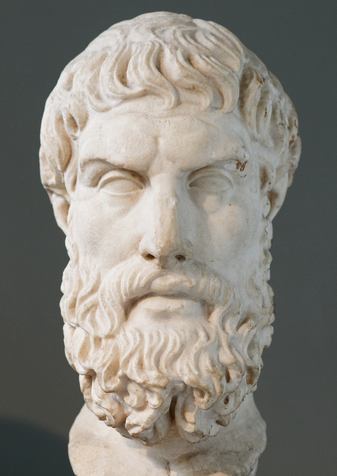
Virtuous, worthy, wise and capable people are chosen as leaders.
8 months 2 weeks ago
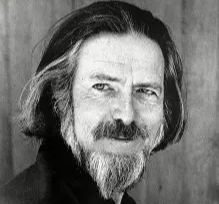
It is impossible for a man who secretly violates the terms of the agreement not to harm or be harmed to feel confident that he will remain undiscovered, even if he has already escaped ten thousand times; for until his death he is never sure that he will not be detected.
4 months 1 week ago
Psychotherapists ... are dealing with people whose distress arises from what may be termed maya, to use the Hindu-Buddhist word whose exact meaning is not merely 'illusion' but the entire world-conception of a culture, considered as illusion in the strict etymological sense of a play (Latin, ludere). The aim of a way of liberation is not the destruction of maya but seeing it for what it is, or seeing through it. Play is not to be taken seriously, or, in other words, ideas of the world and of oneself which are social conventions and institutions are not to be confused with reality.
▼
Source
source
p. 9

7 months 3 weeks ago
I have known only one person in my life who claimed to have seen a ghost. It was a woman; and the interesting thing is that she disbelieved in the immortality of the soul before seeing the ghost and still disbelieves after having seen it. She thinks it was a hallucination. In other words, seeing is not believing. This is the first thing to get clear in talking about miracles.
▼
Source
source
"Miracles" (1942), p. 25

6 months 2 weeks ago
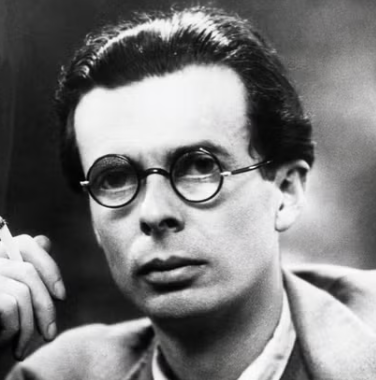
Suffer it to be so now: for thus it becometh us to fulfil all righteousness.
▼
Source
source
3:15 (KJV) Said to John the Baptist.
7 months 3 weeks ago
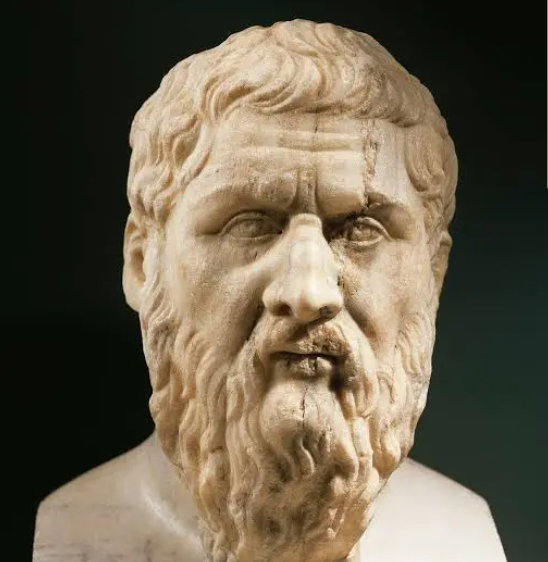
There has been a general trend in recent times toward a Unitarian mythology and the worship of one God. This is the tendency which it is customary to regard as spiritual progress. On what grounds? Chiefly, so far as one can see, because we in the Twentieth Century West are officially the worshippers of a single divinity. A movement whose consummation is Us must be progressive. Quod erat demonstrandum.
▼
Source
source
"One and Many," p. 16

8 months 3 weeks ago
Now in this island of Atlantis there was a great and wonderful empire which had rule over the whole island and several others, and over parts of the continent and, furthermore, the men of Atlantis had subjected the parts of Libya within the columns of Heracles as far as Egypt, and of Europe as far as Tyrrhenia. This vast power, gathered into one, endeavored to subdue at a blow our country and yours and the whole of the region within the straits, and then, Solon, your country shone forth, in the excellence of her virtue and strength, among all mankind.
5 months 3 weeks ago
The mosaic form of the TV image demands participation and involvement in depth, of the whole being, as does the sense of touch.
▼
Source
source
(p. 334)
7 months 4 weeks ago
The entire process seems simple and natural, i.e., possesses the naturalness of a shallow rationalism.
▼
Source
source
Vol. II, Ch. III, p. 95.

7 months 1 week ago
Without Justice, no realm may prosper.
4 months 3 weeks ago
Colonization on a grand scale is a political necessity of absolutely the first order. A nation that does not colonize is irrevocably vowed to socialism, to war between rich and poor. The conquest of a nation of inferior race by a superior race, which establishes itself as the ruler, has nothing shocking about it.
▼
Source
source
92-93
8 months 4 weeks ago
Who is to blame but her and the third factor, from whence no one knows, which moved me with its stimulus and transformed me? After all, what I have done is praised in others.-Or is becoming a poet my compensation? I reject all compensation, I demand my rights-that is, my honor. I did not ask to become one, I will not buy it at this price. – Or if I am guilty, then I certainly should be able to repent of my guilt and make it good again. Tell me how. On top of that, must I perhaps repent that the world plays with me as a child plays with a beetle?-Or is it perhaps best to forget the whole thing? Forget-indeed, I shall have ceased to be if I forget it. Or what kind of life would it be if along with my beloved I have lost honor and pride and lost them in such a way that no one knows how it happened, for which reason I can never retrieve them again? Shall I allow myself to be shoved out in this manner? Why, then, was I shoved in?
7 months 3 weeks ago
Nothing is yet in its true form.

7 months 3 weeks ago
What all these people are doing is not aggressive; they are inventing new possibilities of pleasure with strange parts of their body - through the eroticization of the body. I think it's ... a creative enterprise, which has as one of its main features what I call the desexualization of pleasure.
▼
Source
source
In reference to Sadism and Masochism, as quoted in Who's Who in Contemporary Gay & Lesbian History: From World War II to the Present Day (2001) by Robert Aldrich and Gary Wotherspoon
7 months 3 weeks ago
The chief pleasure of his life in these days was to go down the road and look through the window in the wall in the hope of seeing the beautiful Island. ... the sight of the Island and the sounds became very rare ... and the yearning for the sight ... became so terrible that John thought he would die if he did not have them again soon. ... it came into his head that he might perhaps get the old feeling-for what, he thought, had the Island ever given him but a feeling?-by imagining. He shut his eyes and set his teeth again and made a picture of the Island in his mind.
▼
Source
source
Pilgrim's Regress 12-13
8 months ago
That which has no existence cannot be destroyed - that which cannot be destroyed cannot require anything to preserve it from destruction. Natural rights is simple nonsense: natural and imprescriptible rights, rhetorical nonsense - nonsense upon stilts. But this rhetorical nonsense ends in the old strain of mischievous nonsense for immediately a list of these pretended natural rights is given, and those are so expressed as to present to view legal rights. And of these rights, whatever they are, there is not, it seems, any one of which any government can, upon any occasion whatever, abrogate the smallest particle. The often-quoted phrase 'nonsense upon stilts' is often modernised to 'nonsense on stilts'.
4 months 3 weeks ago
Fleeing from a life of constant insecurity and forced mobility is good preparation for dealing with and resisting the typical forms of exploitation of immaterial labor.
▼
Source
source
133
7 months 4 weeks ago
Consider MacArthur and his Republican supporters. So limited is his intelligence and his imagination that he is never puzzled for one moment. All we have to do is to go back to the days of the Opium War. After we have killed a sufficient number of millions of Chinese, the survivors among them will perceive our moral superiority and hail MacArthur as a saviour. But let us not be one-sided. Stalin, I should say, is equally simple- minded and equally out of date. He, too, believes that if his armies could occupy Britain and reduce us all to the economic level of Soviet peasants and the political level of convicts, we should hail him as a great deliverer and bless the day when we were freed from the shackles of democracy. One of the painful things about our time is that those who feel certainty are stupid, and those with any imagination and understanding are filled with doubt and indecision.
▼
Source
source
Part I: Man and Nature, Ch. 1: Current Perplexities, pp. 4-5
3 months 4 weeks ago
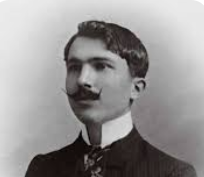
Humanity is such a lump of mud, each one of us is such a lump of mud. What is our duty? To struggle so that a small flower may blossom from the dunghill of our flesh and mind. Out of things and flesh, out of hunger, out of fear, out of virtue and sin, struggle continually to create God.

6 months 1 week ago
Just as a vagrant accused of stealing a carrot from a field stands before a comfortably seated judge who keeps up an elegant flow of queries, comments and witticisms while the accused is unable to stammer a word, so truth stands before an intelligence which is concerned with the elegant manipulation of opinions.
▼
Source
source
p. 68
3 months 3 weeks ago
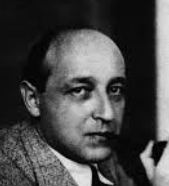
Every bureaucracy, therefore, in accord with the peculiar emphasis on its own position, tends to generalize its own experience and to overlook the fact that the realm of administration and of smoothly functioning order represents only a part of the total political reality. Bureaucratic thought does not deny the possibility of the science of politics, but regards it as identical with the science of administration. Thus irrational factors are overlooked, and when these nevertheless force themselves to the fore, they are treated as "routine matters of state."
CivilSimian.com created by AxiomaticPanic, CivilSimian, Kalokagathia