


7 months 2 days ago
The French are ... the most brilliant and the most dangerous nation of Europe, and the one that is surest to inspire admiration, hatred, terror, or pity, but never indifference.
▼
Source
source
p. 245
8 months 4 weeks ago
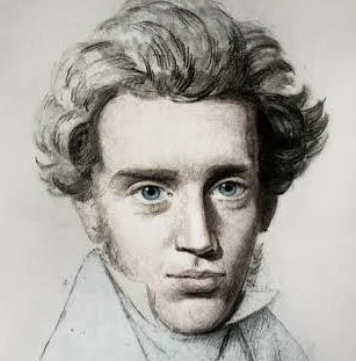
The reason I cannot really say that I positively enjoy nature is that I do not quite realize what it is that I enjoy. A work of art, on the other hand, I can grasp. I can - if I may put it this way - find that Archimedian point, and as soon as I have found it, everything is readily clear for me. Then I am able to pursue this one main idea and see how all the details serve to illuminate it.
6 months 6 days ago
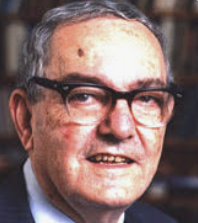
Organizations are systems of coordinated action among individuals and groups whose preferences, information, interests, or knowledge differ. Organization theories describe the delicate conversion of conflict into cooperation, the mobilization of resources, and the coordination of effort that facilitate the joint survival of an organization and its members.
▼
Source
source
Simon (1993. p. 2); Cited in Mario Catalani, Giuseppe F. Clerico (1996) Decision making structures. p. 1.
6 months ago
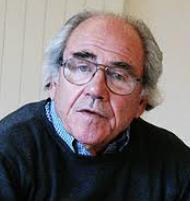
Once animals had a more sacred, more divine character than men. There is not even a reign of the "human" in primitive societies, and for a long time the animal order has been the order of reference. Only the animal is worth being sacrificed, as a god, the sacrifice of man only comes afterward, according to a degraded order. Men qualify only by their affiliation to the animal: the Bororos "are" macaws. "
▼
Source
source
The Animals: Territory and Metamorphoses," p. 133
4 months 1 week ago
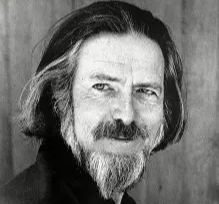
Living, loving, being natural or sincere-all these are spontaneous forms of behavior: they happen "of themselves" like digesting food or growing hair. As soon as they are forced they acquire that unnatural, contrived, and phony atmosphere which everyone deplores-weak and scentless like forced flowers and tasteless like forced fruit. Life and love generate effort, but effort will not generate them. Faith-in life, in other people, and in oneself-is the attitude of allowing the spontaneous to be spontaneous, in its own way and in its own time.
▼
Source
source
p. 56


6 months ago
There is no aphrodisiac like innocence.
▼
Source
source
Chapter 5
4 months 3 weeks ago
Between ourselves and our real natures we interpose that wax figure of idealizations and selections which we call our character.
▼
Source
source
Ch. VI: "Some Necessary Iconoclasm", p. 168.
8 months 3 weeks ago
Life continues, and some mornings, weary of the noise, discouraged by the prospect of the interminable work to keep after, sickened also by the madness of the world that leaps at you from the newspaper, finally convinced that I will not be equal to it and that I will disappoint everyone, all I want to do is sit down and wait for evening. This is what I feel like, and sometimes I yield to it.
7 months 4 weeks ago
As a philosopher, if I were speaking to a purely philosophic audience I should say that I ought to describe myself as an Agnostic, because I do not think that there is a conclusive argument by which one prove that there is not a God. On the other hand, if I am to convey the right impression to the ordinary man in the street I think that I ought to say that I am an Atheist, because, when I say that I cannot prove that there is not a God, I ought to add equally that I cannot prove that there are not the Homeric gods.
▼
Source
source
"Proof of God"
7 months 4 weeks ago
It is difficult, if not impossible, to define the limit of our reasonable desires in respect of possessions.
▼
Source
source
E. Payne, trans. (1974) Vol. 1, p. 346
8 months 5 days ago
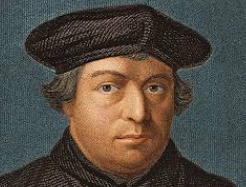
We must remove the Decalogue out of sight and heart.
▼
Source
source
Wilhelm Martin Leberecht De Wette, 4, 188. As cited by Jonathan Ramachandran (January 1, 2019), Lake of Fire - Hope for the Wicked One Day? - Essays in First Christianity, 5 Loaf 2 Fish Publications, p. 1264.

4 months 2 weeks ago
All work, even cotton spinning, is noble; work is alone noble ... A life of ease is not for any man, nor for any god.
▼
Source
source
Bk. III, ch. 4.
7 months 3 weeks ago
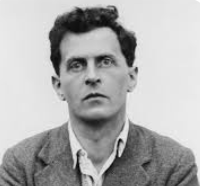
All testing, all confirmation and disconfirmation of a hypothesis takes place already within a system. And this system is not a more or less arbitrary and doubtful point of departure for all our arguments; no it belongs to the essence of what we call an argument. The system is not so much the point of departure, as the element in which our arguments have their life.

8 months 1 week ago
Of how much more passion than reason has Jupiter composed us? putting in, as one would say, "scarce half an ounce to a pound."

6 months 3 weeks ago
Everything turns on pain; the rest is accessory, even nonexistent, for we remember only what hurts. Painful sensations being the only real ones, it is virtually useless to experience others.
3 months 3 weeks ago
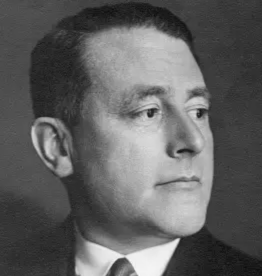
A science that observes the laws of causation, and so is value-free, threatens human freedom and man's religious, ethical, and legal responsibility. The philosophy of values raised to that challenge, in the sense that it opposed a sphere of values, as a realm of ideal valuations, to a sphere of being that was only causally understood. It was an attempt to assert the human being as a free, responsible creature, indeed not in itself, but at least, in its valuation, what one called value. That attempt was put forth as a positivistic substitute for the metaphysical.
8 months 1 week ago
Two principles we should always have ready that there is nothing good or evil save in the will; and that we are not to lead events, but to follow them.
▼
Source
source
Book III, ch. 10, 18.
6 months 3 weeks ago
His power to adore is responsible for all his crimes: a man who loves a god unduly forces other men to love his god, eager to exterminate them if they refuse.
4 months 1 week ago
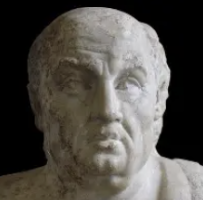
"He is a slave." His soul, however, may be that of a freeman. "He is a slave." But shall that stand in his way? Show me a man who is not a slave; one is a slave to lust, another to greed, another to ambition, and all men are slaves to fear.
6 months 1 week ago
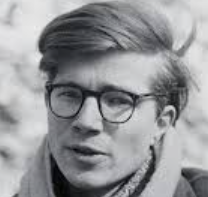
Jung fiercely resented the implication that he was a hypocritical, self-seeking Judas, a 'rat'. Yet there was just enough truth in it to strike home. He was undoubtedly a man who liked his own way, no matter what the cost to others.
▼
Source
source
p. 72
4 months 3 weeks ago
There is nothing disastrous in the temporary nature of our ideas. They are always that. But there may very easily be a train of evil in the self-deception which regards them as final. I think God will forgive us our skepticism sooner than our Inquisitions.
▼
Source
source
Ch. VII: "The Making of Creeds", p. 236

6 months 2 weeks ago
The sun will be darkened, and the moon will not give its light; the stars will fall from the sky, and the heavenly bodies will be shaken. They will see the Son of Man coming on the clouds of the sky, with power and great glory... I tell you the truth, this generation will certainly not pass away until all these things have happened.
▼
Source
source
24:29-34 (NIV)
7 months 4 weeks ago
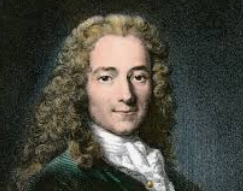
Religion may be purified. This great work was begun two hundred years ago: but men can only bear light to come in upon them by degrees.
▼
Source
source
The critical review, or annals of literature, Volume XXVI, by A Society of Gentlemen (1768) p. 450
6 months 4 weeks ago
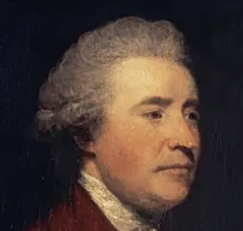
Vice itself lost half its evil by losing all its grossness.
▼
Source
source
Volume iii, p. 332
6 months 4 weeks ago
Freedom and not servitude is the cure of anarchy; as religion, and not atheism, is the true remedy for superstition.
3 months 3 weeks ago
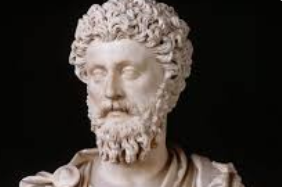
But if we judge only those things which are in our power to be good or bad, there remains no reason either for finding fault with God or standing in a hostile attitude to man.
▼
Source
source
VI, 41
4 months 2 weeks ago
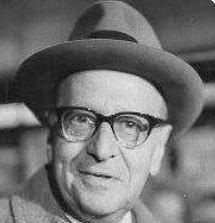
We have chosen Mahomet not as the most eminent Prophet; but as the one we are freest to speak of. He is by no means the truest of Prophets; but I do esteem him a true one. Farther, as there is no danger of our becoming, any of us, Mahometans, I mean to say all the good of him I justly can. It is the way to get at his secret: let us try to understand what he meant with the world; what the world meant and means with him, will then be a more answerable question. Our current hypothesis about Mahomet, that he was a scheming Impostor, a Falsehood incarnate, that his religion is a mere mass of quackery and fatuity, begins really to be now untenable to any one. The lies, which well-meaning zeal has heaped round this man, are disgraceful to ourselves only.
6 months 2 weeks ago
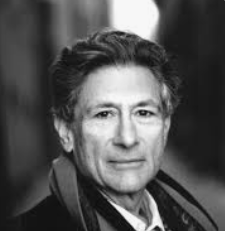
At present, when the prevailing forms of society have become hindrances to the free expression of human powers, it is precisely the abstract branches of science, mathematics and theoretical physics, which ... offer a less distorted form of knowledge than other branches of science which are interwoven with the pattern of daily life, and the practicality of which seemingly testifies to their realistic character.
▼
Source
source
p. 133.
6 months 1 week ago
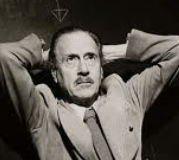
Everything I have written in these lectures underlines the importance to the intellectual of passionate engagement, risk, exposure, commitment to principles, vulnerability in debating and being involved in worldly causes. For example, the difference I drew earlier between a professional and an amateur intellectual rests precisely on this, that the professional claims detachment on the basis of a profession and pretends to objectivity, whereas the amateur is moved neither by reward nor by the fulfillment of an immediate career plan but by a committed engagement with ideas and values in the public sphere.
▼
Source
source
p. 109
5 months 3 weeks ago
To the blind all things are sudden.
▼
Source
source
(p. 41)
6 months 3 weeks ago
Anyone can escape into sleep, we are all geniuses when we dream, the butcher's the poet's equal there.

6 months 2 weeks ago
Because energy is not restrained by other elements that are at once antagonistic and cooperative, action proceeds by jerks and spasms. There is discontinuity.
▼
Source
source
p. 189
4 months 2 weeks ago
Blessed is the healthy nature; it is the coherent, sweetly co-operative, not incoherent, self-distracting, self-destructive one!
6 months 2 weeks ago
Sex-appeal is the keynote of our whole civilization.
▼
Source
source
Chapter IV
5 months 1 week ago
The supreme accomplishment is to blur the line between work and play.
▼
Source
source
In Ellen J. Langer (ed.) Mindfulness (Merloyd Lawrence Books, 1989) p. 133
6 months 3 weeks ago
The rights and duties of man thus simplified, it seems almost impertinent to attempt to illustrate truths that appear so incontrovertible: yet such deeply rooted prejudices have clouded reason, and such spurious qualities have assumed the name of virtues, that it is necessary to pursue the course of reason as it has been perplexed and involved in error, by various adventitious circumstances, comparing the simple axiom with casual deviations.Men, in general, seem to employ their reason to justify prejudices, which they have imbibed, they cannot trace how, rather than to root them out. The mind must be strong that resolutely forms its own principles; for a kind of intellectual cowardice prevails which makes many men shrink from the task, or only do it by halves. Yet the imperfect conclusions thus drawn, are frequently very plausible, because they are built on partial experience, on just, though narrow, views.
▼
Source
source
Ch. 1
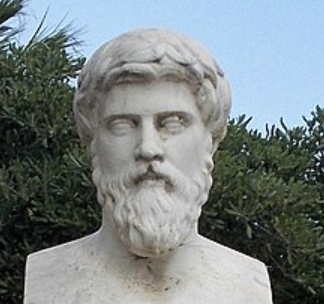
7 months 2 weeks ago
He made one of Antipater's recommendation a judge; and perceiving afterwards that his hair and beard were coloured, he removed him, saying, "I could not think one that was faithless in his hair could be trusty in his deeds."
▼
Source
source
40 Philip
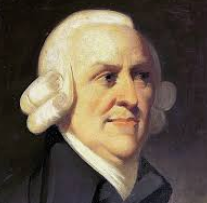
8 months 1 day ago
A man must be perfectly crazy who, where there is tolerable security, does not employ all the stock which he commands…
▼
Source
source
Chapter I, p. 313 (see opportunity cost).

8 months 5 days ago
As to fidelity, there is no animal in the world so treacherous as man. Our histories have recorded the violent pursuits that dogs have made after the murderers of their masters.
▼
Source
source
Ch. 12, tr. Cotton, rev. W. Carew Hazlitt, 1877
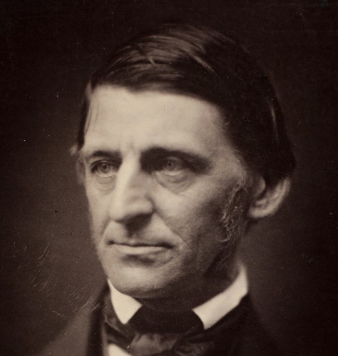
7 months 3 weeks ago
We are always getting ready to live, but never living.
▼
Source
source
April 12, 1834
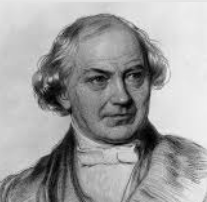
3 months 3 weeks ago
'Intuitive' is opposed to 'discursive' reason. In intuition, we obtain our conclusions by dwelling upon 'one' aspect of the fundamental Idea; in discursive reasoning, we combine several aspects of the Idea
5 months 3 weeks ago
Further acquaintance with the labors of the Quakers and their works - with Fox, Penn, and especially the work of Dymond (published in 1827) - showed me not only that the impossibility of reconciling Christianity with force and war had been recognized long, long ago, but that this irreconcilability had been long ago proved so clearly and so indubitably that one could only wonder how this impossible reconciliation of Christian teaching with the use of force, which has been, and is still, preached in the churches, could have been maintained in spite of it.
▼
Source
source
Chapter I, The Doctrine of Non-resistance to Evil by Force has been Professed by a Minority of Men from the Very Foundation of Christianity
6 months ago
People no longer look at each other, but there are institutes for that. They no longer touch each other, but there is contactotherapy. They no longer walk, but they go jogging, etc. Everywhere one recycles lost faculties, or lost bodies, or lost sociality, or the lost taste for food.
▼
Source
source
"The Precession of Simulacra," p. 13

7 months 1 week ago
It is better wither to be silent, or to say things of more value than silence. Sooner throw a pearl at hazard than an idle or useless word; and do not say a little in many words, but a great deal in a few.
▼
Source
source
As quoted in A Dictionary of Thoughts: Being a Cyclopedia of Laconic Quotations from the Best Authors of the World, both Ancient and Modern (1908) by Tyron Edwards, p. 525
6 months 4 weeks ago
We have an enemy, to whose virtues we can owe nothing; but on this occasion we are infinitely obliged to one of his vices. We owe more to his insolence than to our own precaution.
▼
Source
source
p.3
7 months 3 weeks ago
Philosophers are often like little children, who first scribble random lines on a piece of paper with their pencils, and now ask an adult "What is that?"
▼
Source
source
Ch. 9 : Philosophy, p. 193
8 months 5 days ago
I want death to find me planting my cabbages.
▼
Source
source
Ch. 20. Of the Force of Imagination (tr. Donald M. Frame)
CivilSimian.com created by AxiomaticPanic, CivilSimian, Kalokagathia