


7 months 4 weeks ago
I do not think it can be questioned that sympathy is a genuine motive, and that some people at some times are made somewhat uncomfortable by the sufferings of some other people. It is sympathy that has produced the many humanitarian advances of the last hundred years. We are shocked when we hear stories of the ill-treatment of lunatics, and there are now quite a number of asylums in which they are not ill-treated. Prisoners in Western countries are not supposed to be tortured, and when they are, there is an outcry if the facts are discovered. We do not approve of treating orphans as they are treated in Oliver Twist.
4 months 1 week ago
An ardent Jehovah's Witness once tried to convince me that if there were a God of love, he would certainly provide mankind with a reliable and infallible textbook for the guidance of conduct. I replied that no considerate God would destroy the human mind by making it so rigid and unadaptable as to depend upon one book, the Bible, for all the answers. For the use of words, and thus of a book, is to point beyond themselves to a world of life and experience that is not mere words or even ideas. Just as money is not real, consumable wealth, books are not life. To idolize scriptures is like eating paper currency.
▼
Source
source
p. 14
8 months 4 days ago
So blind is the curiosity by which mortals are possessed, that they often conduct their minds along unexplored routes, having no reason to hope for success, but merely being willing to risk the experiment of finding whether the truth they seek lies there.
▼
Source
source
Rules for the Direction of the Mind: IV
3 months 3 weeks ago
He who flies from his master is a runaway; but the law is master, and he who breaks the law is a runaway. And he also who is grieved or angry or afraid, is dissatisfied because something has been or is or shall be of the things which are appointed by Him who rules all things, and He is Law, and assigns to every man what is fit. He then who fears or is grieved or is angry is a runaway.
▼
Source
source
X, 25

7 months 3 weeks ago
The human body is essentially something other than an animal organism.
▼
Source
source
Letter on Humanism

5 months 2 weeks ago
The picture of modern philosophy as centered in epistemology and driven by the desire to ground our representations is so tenacious that some philosophers are prepared to bite the bullet and declare the effort simply wasted. Rorty, for example, finds it easier to reject modern philosophy altogether than to reject the standard accounts of its history. His narrative is more polemical than most, but it's a polemical version of the story told in most philosophy departments in the second half of the twentieth century. The story is one of tortuously decreasing interest. Philosophy, like some people, was prepared to accept boredom in exchange for certainty as it grew to middle age.

4 months 3 weeks ago
There is a left wing version of this longing for community... because in a liberal society we never move as quickly as we should towards full equality, and therefore there are many marginalized groups who feel that the liberal society is... hypocritical, that it's promising an equality of recognition, and of rights, but it is not delivering... and therefore the very concept of liberal universalism is challenged in favor of a definition of rights that is tied to the specific groups.
▼
Source
source
18:44
5 months 3 weeks ago
We may with advantage at times forget what we know.
▼
Source
source
Maxim 234
4 months 3 weeks ago
We should say: 'Causes almost identical take almost the same time to produce almost the same effects.'
8 months 1 day ago
If a workman can conveniently spare those three halfpence, he buys a pot of porter. If he cannot, he contents himself with a pint, and, as a penny saved is a penny got, he thus gains a farthing by his temperance.
▼
Source
source
Chapter II, Part II, Article IV, p. 951.
8 months ago
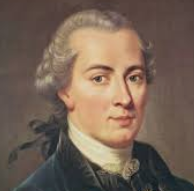
Newton... (after having remarked that geometry only requires two of the mechanical actions which it postulates, namely, to describe a straight line and a circle) says: geometry is proud of being able to achieve so much while taking so little from extraneous sources. One might say of metaphysics, on the other hand: it stands astonished, that with so much offered it by pure mathematics it can effect so little. In the meantime, this little is something which mathematics indispensably requires in its application to natural science, which, inasmuch as it must here necessarily borrow from metaphysics, need not be ashamed to allow itself to be seen in company with the latter.
▼
Source
source
Preface, Tr. Bax (1883) citing Isaac Newton's Principia
3 months 3 weeks ago
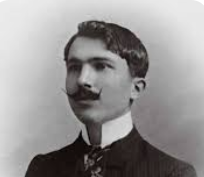
God huddles in a knot in every cell of flesh. When I break a fruit open, this is how every seed is revealed to me. When I speak to men, this what I discern in their thick and muddy brains. God struggles in every thing, his hands flung upward toward the light. What light? Beyond and above every thing!

6 months 2 weeks ago
I have compassion on the multitude, because they continue with me now three days, and have nothing to eat: and I will not send them away fasting, lest they faint in the way.
▼
Source
source
15:32 (KJV)
4 months 1 week ago
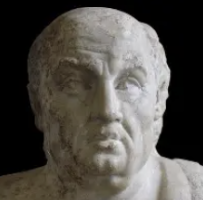
A golden bit does not make a better horse.

3 months 3 weeks ago
There is no chastisement that does not purify; there is no disorder that ETERNAL LOVE does not turn against the principle of evil.
▼
Source
source
Chapter III, p. 31
6 months 1 week ago
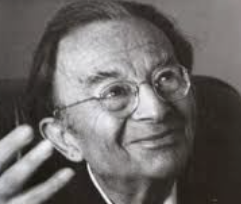
In the dominant Western religious system, the love of God is essentially the same as the belief in God, in God's existence, God's justice, God's love. The love of God is essentially a thought experience. In the Eastern religions and in mysticism, the love of God is an intense feeling experience of oneness, inseparably linked with the expression of this love in every act of living.
▼
Source
source
Ch. 2


8 months 5 days ago
How many valiant men we have seen to survive their own reputation!
▼
Source
source
Ch. 16
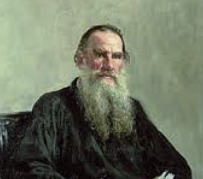
5 months 3 weeks ago
The whole life of the upper classes is a constant inconsistency. The more delicate a man's conscience is, the more painful this contradiction is to him.
▼
Source
source
Chapter V, Contradiction Between our Life and our Christian Conscience
7 months 4 weeks ago
The great majority of men and women, in ordinary times, pass through life without ever contemplating or criticising, as a whole, either their own conditions or those of the world at large. They find themselves born into a certain place in society, and they accept what each day brings forth, without any effort of thought beyond what the immediate present requires. Almost as instinctively as the beasts of the field, they seek the satisfaction of the needs of the moment, without much forethought, and without considering that by sufficient effort the whole conditions of their lives could be changed.
▼
Source
source
Introduction, p. 4
5 months 3 weeks ago
One touch of nature makes the whole world tin.

8 months 3 weeks ago
He could almost wish he were superstitious. He could then console himself with the thought that the casual meaningless meeting had really been directed by a knowing and purposeful Fate.
6 months 2 weeks ago
I have always observed that to succeed in the world one should appear like a fool but be wise.

6 months 4 weeks ago
The acts of France were acts of hostility to this country; her whole system, every speech, every decree, every act, bespoke an intention preclusive of accommodation. No man, he would venture to say, had a more lively sense of the importance of the question before the House, or of the evils of war, than himself. A war with France, under such circumstances as now governed her conduct, must be terrible, but peace much more so. A nation that had abandoned all its valuable distinctions, arts, sciences, religion, law order, every thing but the sword, was most formidable and dreadful to all nations composed of citizens who only used soldiers as a defence; as such, France should be resisted with spirit and temper, without fear or scruple.
▼
Source
source
Speech in the House of Commons upon the outbreak of war with France (12 February 1793)
6 months ago
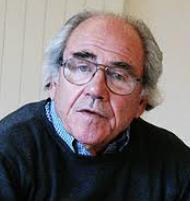
The world is not dialectical -- it is sworn to extremes, not to equilibrium, sworn to radical antagonism, not to reconciliation or synthesis. This is also the principle of evil.
▼
Source
source
Jean Baudrillard in: Eldon Taylor What Does That Mean?: Exploring Mind, Meaning, and Mysteries, Hay House, Inc, 15 January 2010, p. 171

8 months 4 weeks ago
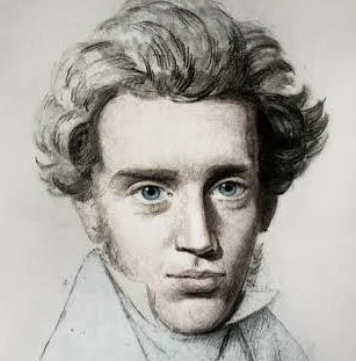
My dear reader, read aloud, if possible! If you do so, allow me to thank you for it: if you not only do it yourself, if you also influence others to do it, allow me to thank each one of them, and you again and again!

7 months 2 days ago
To be nameless in worthy deeds exceeds an infamous history.But the iniquity of oblivion blindly scattereth her poppy, and deals with the memory of men without distinction to merit of perpetuity. Who can but pity the founder of the Pyramids? Herostratus lives that burnt the Temple of Diana, he is almost lost that built it.
▼
Source
source
Chapter V

6 months 1 week ago
Men and women meet now to be idle. Is it extraordinary that they do not know each other, and that, in their mutual ignorance, they form no surer friendships? Did they meet to do something together, then indeed they might form some real tie. But, as it is, they are not there, it is only a mask which is there - a mouth-piece of ready-made sentences about the "topics of the day"; and then people rail against men for choosing a woman "for her face" - why, what else do they see?

8 months 2 weeks ago
Anything done against faith or conscience is sinful.
▼
Source
source
Commentary on Romans, cap 14, I 3
6 months 3 weeks ago
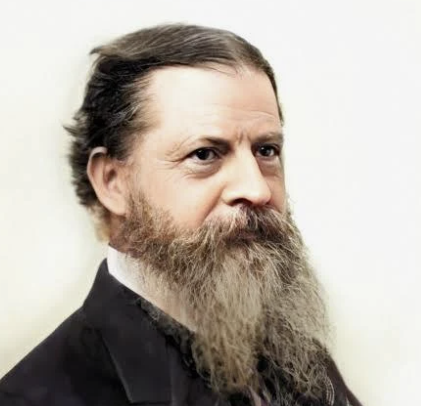
The third argument, enclosing and defending the other two, consists in the development of those principles of logic according to which the humble argument is the first stage of a scientific inquiry into the origin of the three Universes, but of an inquiry which produces, not merely scientific belief, which is always provisional, but also a living, practical belief, logically justified in crossing the Rubicon with all the freightage of eternity.
▼
Source
source
V
8 months 3 weeks ago
The machine is only a tool after all, which can help humanity progress faster by taking some of the burdens of calculations and interpretations off its back. The task of the human brain remains what it has always been; that of discovering new data to be analyzed, and of devising new concepts to be tested.

7 months 3 weeks ago
I can imagine no man who will look with more horror on the End than a conscientious revolutionary who has, in a sense sincerely, been justifying cruelties and injustices inflicted on millions of his contemporaries by the benefits which he hopes to confer on future generations: generations who, as one terrible moment now reveals to him, were never going to exist. Then he will see the massacres, the faked trials, the deportations, to be all ineffaceably real, an essential part, his part, in the drama that has just ended: while the future Utopia had never been anything but a fantasy.

7 months 2 weeks ago
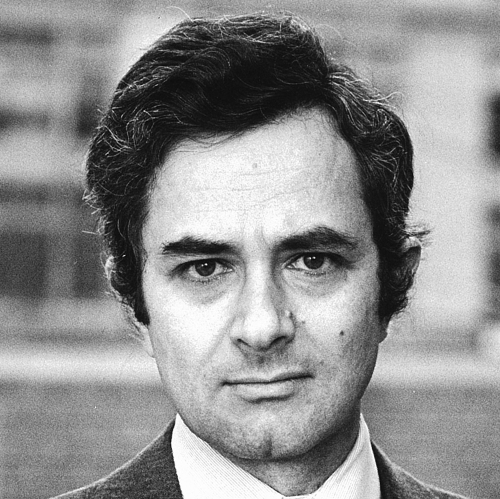
Usually, when we are told that X is Y we know how it is supposed to be true, but that depends on a conceptual or theoretical background and is not conveyed by the 'is' alone. ... But when the two terms of the identification are very disparate it may not be so clear how it could be true ... and a theoretical framework may have to be supplied to enable us to understand this. Without the framework, an air of mysticism surrounds the identification.This explains the magical flavor of popular presentations of fundamental scientific discoveries, given out as propositions to which one must subscribe without really understanding them. For example, people are now told at an early age that all matter is really energy. But despite the fact that they know what 'is' means, most of them never form a conception of what makes this claim true, because they lack the theoretical background.
▼
Source
source
pp. 176-177.

7 months 4 days ago
The universe comprises all being in a totality; for nothing that exists is outside or beyond infinite being, as the latter has no outside or beyond.

6 months 3 weeks ago
The real, the unique misfortune: to see the light of day. A disaster which dates back to aggressiveness, to the seed of expansion and rage within origins, to the tendency to the worst which first shook them up.
5 months 2 weeks ago
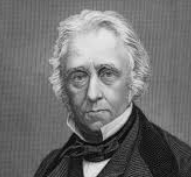
Many evils, no doubt, were produced by the civil war. They were the price of our liberty.
▼
Source
source
p. 39
7 months 4 weeks ago
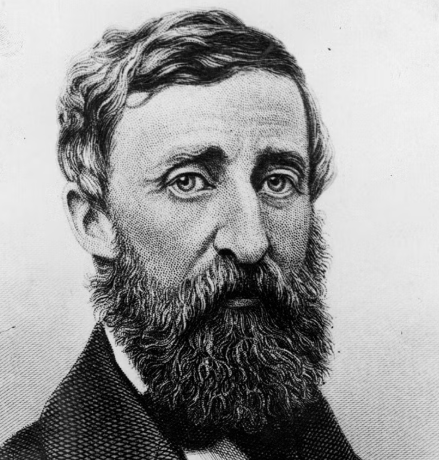
The Hindoos are most serenely and thoughtfully religious than the Hebrews. They have perhaps a purer, more independent and impersonal knowledge of God. Their religious books describe the first inquisitive and contemplative access to God; the Hebrew bible a conscientious return, a grosser and more personal repentance. Repentance is not a free and fair highway to God. A wise man will dispense with repentance. It is shocking and passionate. God prefers that you approach him thoughtful, not penitent, though you are chief of sinners. It is only by forgetting yourself that you draw near to him. The calmness and gentleness with which the Hindoo philosophers approach and discourse on forbidden themes is admirable. In 1853.
▼
Source
source
A Tribute to Hinduism, 2008
8 months 5 days ago
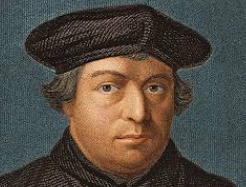
In Matthew 12:23 Christ says: "Either make the tree good, and its fruit good; or make the tree bad and its fruit bad," as if to say: "Let the one who wishes to have good fruit begin by planting a good tree." Therefore, let the person who wishes to do good works being not with the works but with the believing, for this alone makes a person good.
▼
Source
source
p. 76
7 months 3 weeks ago
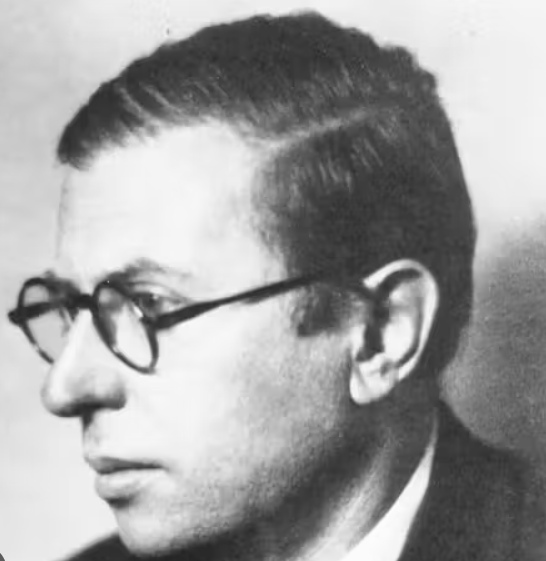
The homosexual never thinks of himself when someone is branded in his presence with the name homosexual. ...His sexual tastes will doubtless lead him to enter into relationships with this suspect category, but he would like to make use of them without being likened to them. Here, too, the ban that is cast on certain men by society has destroyed all possibility of reciprocity among them. Shame isolates.
8 months 3 weeks ago
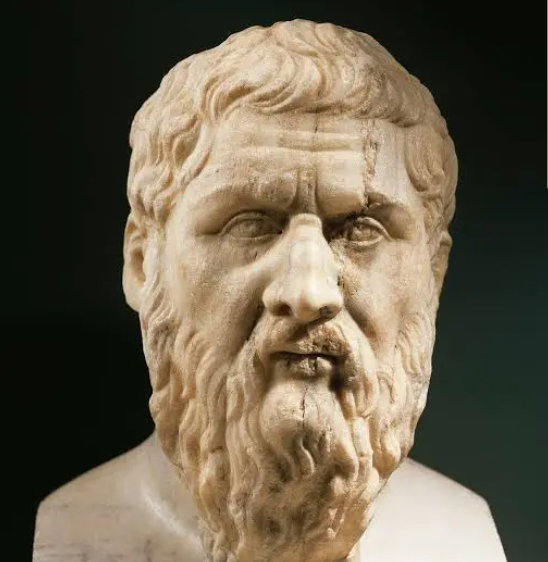
Zeno: The many do not know that except by this devious passage through all things the mind cannot attain to the truth. Zeno: Most people are not aware that this roundabout progress through all things is the only way in which the mind can attain truth and wisdom.
6 months 3 weeks ago
We are always on stage, even when we are stabbed in earnest at the end.
▼
Source
source
Act II.
6 months 1 week ago
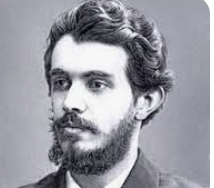
There is absolute truth in anarchism and it is to be seen in its attitude to the sovereignty of the state and to every form of state absolutism. ... The religious truth of anarchism consists in this, that power over man is bound up with sin and evil, that a state of perfection is a state where there is no power of man over man, that is to say, anarchy. The Kingdom of God is freedom and the absence of such power... the Kingdom of God is anarchy.
▼
Source
source
Slavery and Freedom (1939), p. 147
7 months 3 weeks ago
The victory of vivisection marks a great advance in the triumph of ruthless, non-moral utilitarianism over the old world of ethical law; a triumph in which we, as well as animals, are already the victims, and of which Dachau and Hiroshima mark the more recent achievements.
▼
Source
source
"Vivisection" (1947), p. 228
7 months 4 weeks ago
Have you learned the alphabet of heaven and can count three? Do you know the number of God's family? Can you put mysteries into words? Do you presume to fable of the ineffable? Pray, what geographer are you, that speak of heaven's topography? Whose friend are you that speak of God's personality? ... Tell me of the height of the mountains of the moon, or of the diameter of space, and I may believe you, but of the secret history of the Almighty, and I shall pronounce thee mad.
7 months 3 weeks ago
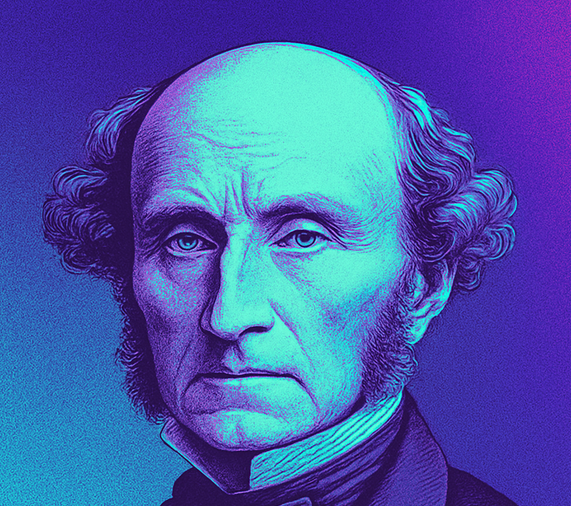
The experiences of this period had two very marked effects on my opinions and character. In the first place, they led me to adopt a theory of life, very unlike that on which I had before acted, and having much in common with what at that time I certainly had never heard of, the anti-self-consciousness theory of Carlyle.
▼
Source
source
(pp. 141-142)
7 months 3 weeks ago
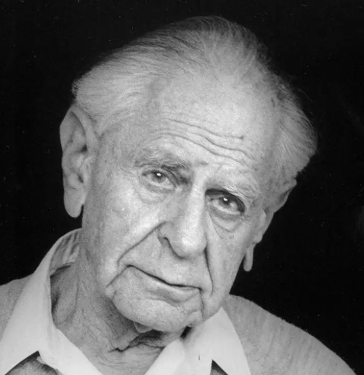
I think so badly of philosophy that I don't like to talk about it. ... I do not want to say anything bad about my dear colleagues, but the profession of teacher of philosophy is a ridiculous one. We don't need a thousand of trained, and badly trained, philosophers - it is very silly. Actually most of them have nothing to say.
▼
Source
source
As quoted in "At 90, and Still Dynamic : Revisiting Sir Karl Popper and Attending His Birthday Party" by Eugene Yue-Ching Ho, in Intellectus 23
CivilSimian.com created by AxiomaticPanic, CivilSimian, Kalokagathia