


4 months 1 week ago
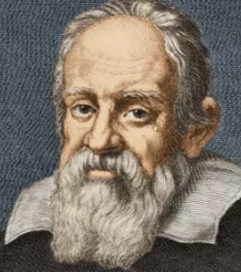
All truths are easy to understand once they are discovered; the point is to discover them.
▼
Source
source
As quoted in Angels in the workplace: stories and inspirations for creating a new world of work (1999) by Melissa Giovagnoli
6 months 5 days ago
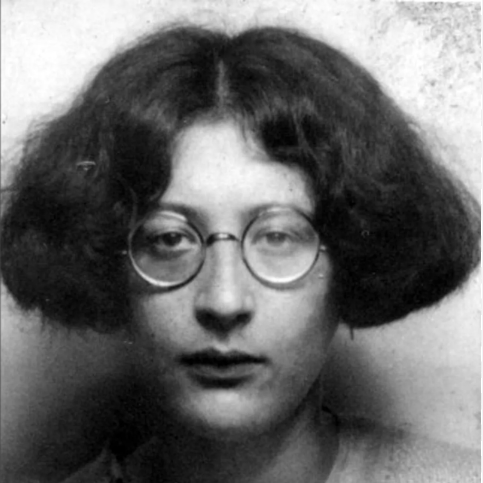
Art is the symbol of the two noblest human efforts: to construct and to refrain from destruction.
▼
Source
source
The Pre-War Notebook (1933-1939), published in First and Last Notebooks (1970) edited by Richard Rees
7 months 4 weeks ago
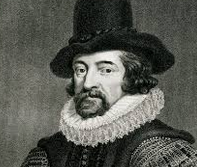
When you wander, as you often delight to do, you wander indeed, and give never such satisfaction as the curious time requires. This is not caused by any natural defect, but first for want of election, when you, having a large and fruitful mind, should not so much labour what to speak as to find what to leave unspoken. Rich soils are often to be weeded.
▼
Source
source
Letter of Expostulation to Coke, reported in Bartlett's Familiar Quotations, 10th ed.
5 months 2 weeks ago
Three days later the little princess was buried, and Prince Andrei went up the steps to where the coffin stood, to give her the farewell kiss. And there in the coffin was the same face, though with closed eyes. "Ah, what have you done to me?" it still seemed to say, and Prince Andrei felt that something gave way in his soul and that he was guilty of a sin he could neither remedy nor forget.
▼
Source
source
Bk. IV, Ch. 9

3 months 2 weeks ago
The mind, like the body, has its contagious diseases and its scurvy. …We catch everything from those with whom we come in contact; their gestures, their accent, etc.
6 months 2 days ago
It must be borne in mind that it is through the channel of the child that the development of the mature man must go, and that the present ideas of the educating or training of the latter in the school and the family - even the family of the liberal or radical - are such as to stifle the natural growth of the child. Every institution of our day, the family, the State, our moral codes, sees in every strong, beautiful, uncompromising personality a deadly enemy; therefore every effort is being made to cramp human emotion and originality of thought in the individual into a straight-jacket from its earliest infancy; or to shape every human being according to one pattern; not into a well-rounded individuality, but into a patient work slave, professional automaton, tax-paying citizen, or righteous moralist.
6 months 1 week ago
Gottlob Frege created modern logic including "for all," "there exists," and rules of proof. Leibniz and Boole had dealt only with what we now call "propositional logic" (that is, no "for all" or "there exists"). They also did not concern themselves with rules of proof, since their aim was to reach truth by pure calculation with symbols for the propositions. Frege took the opposite track: instead of trying to reduce logic to calculation, he tried to reduce mathematics to logic, including the concept of number.
▼
Source
source
Michael J. Beeson, "The Mechanization of Mathematics," in Alan Turing: Life and Legacy of a Great Thinker2004
5 months 3 days ago
If you look at the graph of the growth of G.M.O.s, the growth of application of glyphosate and autism, it's literally a one-to-one correspondence. And you could make that graph for kidney failure, you could make that graph for diabetes, you could make that graph even for Alzheimer's.
▼
Source
source
On the correlation of autism, kidney failure, diabetes and Alzheimer's with GMOs and glyphosate, as quoted in "Seeds of Doubt" by Michael Specter, The New Yorker

6 months 1 week ago
The sabbath was made for man, and not man for the sabbath.
▼
Source
source
Mark 2:27 (KJV)

7 months 3 weeks ago
Let's go dance under the elms:
Step lively, young lassies.
Let's go dance under the elms:
Gallants, take up your pipes.
▼
Source
source
Le devin du village, 1752
7 months 2 weeks ago
Let me never fall into the vulgar mistake of dreaming that I am persecuted whenever I am contradicted.
▼
Source
source
November 8, 1838
4 months 4 days ago
"He is a slave." His soul, however, may be that of a freeman. "He is a slave." But shall that stand in his way? Show me a man who is not a slave; one is a slave to lust, another to greed, another to ambition, and all men are slaves to fear.

3 months 2 weeks ago
Happy in the prospect of a restoration of primitive Christianity, I must leave to younger athletes to encounter and lop off the false branches which have been engrafted into it by the mythologists of the middle and modern ages.
▼
Source
source
Letter to Doctor Waterhouse
6 months 2 weeks ago
The rich in all societies may be thrown into two classes. The first is of those who are powerful as well as rich, and conduct the operations of the vast political machine. The other is of those who employ their riches wholly in the acquisition of pleasure. As to the first sort, their continual care and anxiety, their toilsome days and sleepless nights, are next to proverbial. These circumstances are sufficient almost to level their condition to that of the unhappy majority; but there are other circumstances which place them in a far lower condition. Not only their understandings labour continually, which is the severest labour, but their hearts are torn by the worst, most troublesome, and insatiable of all passions, by avarice, by ambition, by fear and jealousy. No part of the mind has rest. Power gradually extirpates from the mind every humane and gentle virtue. Pity, benevolence, friendship, are things almost unknown in high stations.
7 months 2 weeks ago
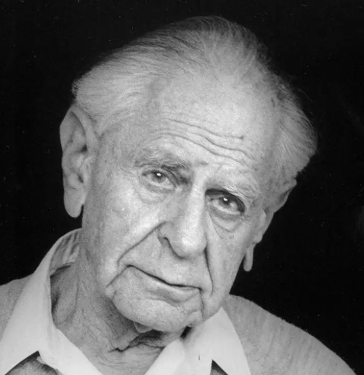
Good tests kill flawed theories; we remain alive to guess again.
▼
Source
source
As quoted in My Universe : A Transcendent Reality (2011) by Alex Vary, Part II
7 months 3 weeks ago
Men are most apt to believe what they least understand.
▼
Source
source
Book III, Ch. 11. Of Cripples

7 months 1 week ago
Strength and beauty are the blessings of youth; temperance, however, is the flower of old age.
▼
Source
source
Fragment quoted in H. Diels and W. Kranz (eds.) Die Fragmente der Vorsokratiker, Vol. II (1952), no. 294
7 months 2 weeks ago
In philosophy the race is to the one who can run slowest-the one who crosses the finish line last.
▼
Source
source
p. 40e
6 months 2 weeks ago
The true object of moral and political disquisition is pleasure or happiness.The primary, or earliest, class of human pleasure is the pleasures of external senses.In addition to these, man is susceptible of certain secondary pleasures, as the pleasures of intellectual feeling, the pleasures of sympathy, and the pleasures of self-approbation. The secondary pleasures are probably more exquisite than the primary; Or, at least,The most desirable state of man is that in which he has access to all these sources of pleasure, and is in possession of a happiness the most varied and uninterrupted. This state is a state of high civilization.
▼
Source
source
Summary of Principles 1.1
6 months 2 weeks ago
Surely this voice meant our Teacher; for it is he that can collect the indications which lie scattered on all sides. A singular light kindles in his looks, when at length the high Rune lies before us, and he watches in our eyes whether the star has yet risen upon us, which is to make the Figure visible and intelligible.
3 months 2 weeks ago
Let your occupations be few, says the sage, "if you would lead a tranquil life."
▼
Source
source
IV, 24
6 months 1 week ago
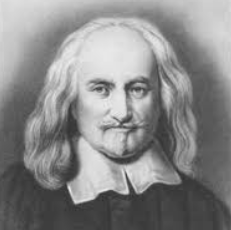
... and where men build on false grounds, the more they build, the greater is the ruine.
▼
Source
source
The Second Part, Chapter 26, p. 140
3 months 2 weeks ago
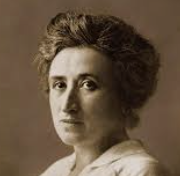
The Utopianism of the standpoint which expects an era of peace and retrenchment of militarism in the present social order is plainly revealed in the fact that it is having recourse to project making. For it is typical of Utopian strivings that, in order to demonstrate their practicability, they hatch "practical" recipes with the greatest possible details. To this also belongs the project of the "United States of Europe" as a basis for the limitation of international militarism.
6 months 2 weeks ago
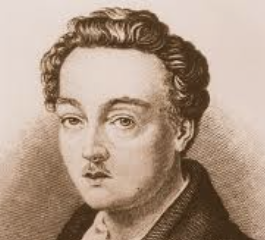
You women could make someone fall in love even with a lie.
▼
Source
source
Act I.
5 months 2 weeks ago
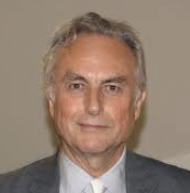
The genes are the master programmers, and they are programming for their lives.
▼
Source
source
Ch. 4. The Gene machine
3 months 2 weeks ago
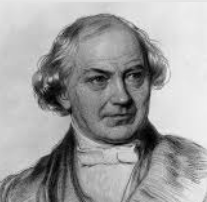
It is better to form new words as technical terms, than to employ old ones in which the last three Aphorisms cannot be complied with.
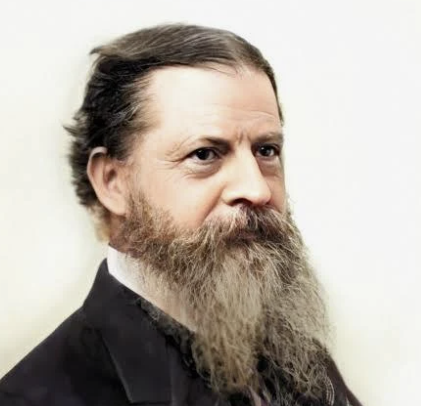
6 months 2 weeks ago
All the evolution we know of proceeds from the vague to the definite.
▼
Source
source
Vol. VI, par. 191
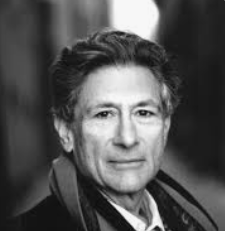
6 months 2 days ago
The central fact for me is, I think, that the [role of the] intellectual ... cannot be played without a sense of being someone whose place it is publicly to raise embarrassing questions, to confront orthodoxy and dogma (rather than to produce them), to be someone who cannot easily be co-opted by governments or corporations, and whose raison d'être is to represent all those people and issues that are routinely forgotten or swept under the rug. Representation of the Intellectual
▼
Source
source
1994
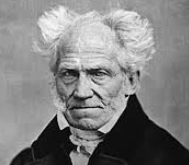
7 months 3 weeks ago
If two men who were friends in their youth meet again when they are old, after being separated for a life-time, the chief feeling they will have at the sight of each other will be one of complete disappointment at life as a whole; because their thoughts will be carried back to that earlier time when life seemed so fair as it lay spread out before them in the rosy light of dawn, promised so much - and then performed so little.
▼
Source
source
"On the Sufferings of the World"
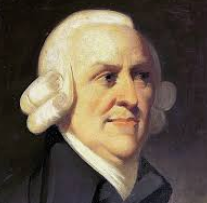
7 months 3 weeks ago
In public, as well as in private expences, great wealth may, perhaps, frequently be admitted as an apology for great folly.
▼
Source
source
Chapter V, p. 563.
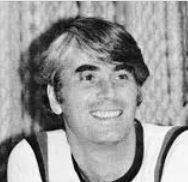
4 months 3 weeks ago
Though the framework is libertarian and laissez-faire, individual communities within it need not be, and perhaps no community within it will choose to be so. Thus, the characteristics of the framework need not pervade the individual communities. In this laissez-faire system it could turn out that though they are permitted, there are no actually functioning "capitalist" institutions; or that some communities have them and others don't or some communities have some of them, or what you will.
▼
Source
source
Ch. 10 : A Framework for Utopia; The Framework as Utopian Common Ground, p. 320
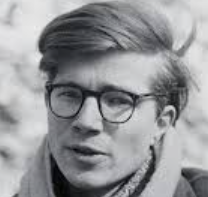
6 months 2 days ago
What is beginning to emerge, then, is a theory about psychic sensitivity. It runs as follows. When I relax deeply, it is as if someone opened up the partition between the two compartments of my brain, turning them into a single large room. I experience a sense of mental freedom as if I can suddenly breathe more deeply, and a feeling of contact with things. Everyone has had the experience of being in a state of hurry or excitement, and failing to notice that they have bruised or scratched themselves -- until the excitement evaporates and the pain makes itself known. Hurry and tension raise our sensitivity threshold, and at the same time, erect a glass wall between us and reality. In the "unicameral" state, this wall vanishes, and everything seems more real.
▼
Source
source
p. 51
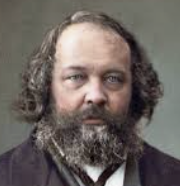
6 months 2 weeks ago
In a word, we reject all legislation, all authority, and all privileged, licensed, official, and legal influence, even though arising from universal suffrage, convinced that it can turn only to the advantage of a dominant minority of exploiters against the interest of the immense majority in subjection to them. This is the sense in which we are really Anarchists.
4 months 1 week ago
The superior man has three things in which he delights, and to be ruler over the kingdom is not one of them. That his father and mother are both alive, and that the condition of his brothers affords no cause for anxiety;-this is one delight. That, when looking up, he has no occasion for shame before Heaven, and, below, he has no occasion to blush before men;-this is a second delight. That he can get from the whole kingdom the most talented individuals, and teach and nourish them;-this is the third delight.
▼
Source
source
7A:20, as translated by James Legge in The Chinese Classics, Vol. II (1861), p. 335
6 months 1 week ago
For Prudence, is but Experience; which equal time, equally bestows on all men, in those things they equally apply themselves unto.
▼
Source
source
The First Part, Chapter 13, p. 60
6 months 2 weeks ago
The Crown of Great Britain cannot, in my opinion, be too magnificent. Let us see some great public works set on foot; let it never be said, that the Commons of Great Britain failed in what they owe to the first Crown in the world. Looking up to royalty, I do say, it is the oldest and one of the best parts of our constitution. I wish it should look like royalty; that it should look like a King; like a King of Great Britain.
▼
Source
source
Speech in the House of Commons (28 February 1769)
4 months 4 days ago
What we should be after death, we have to attain in life, i.e. holiness and bliss. Here on earth the Kingdom of God begins.
5 months 2 weeks ago
If you want to be happy, be.
▼
Source
source
Attributed in Wisdom for the Soul : Five Millennia of Prescriptions for Spiritual Healing (2006) by Larry Chang, p. 352
8 months 1 week ago
In archery we have something like the way of the superior man. When the archer misses the center of the target, he turns round and seeks for the cause of his failure in himself.
6 months 2 days ago
Catastrophic fatality abruptly switches over into salvation.
8 months 2 weeks ago
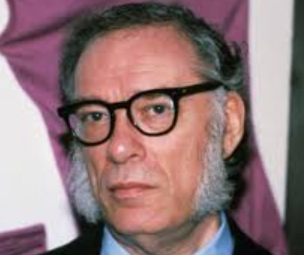
It built itself up endlessly, like a chess game, and the telemetrists began to use a computer to program the computer that designed the program for the computer that programmed the robot-controlling computer.
6 months 2 weeks ago
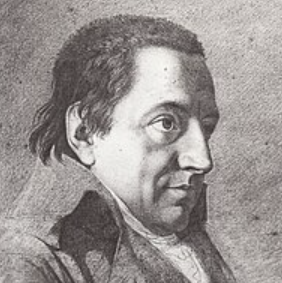
Should it seem to me that truth has been put to silence, and virtue trampled under foot, and that folly and vice will certainly triumph; should it happen, when all hearts were filled with hope for the human race, that the horizon should suddenly darken around them as it had never done before; should the work, well and happily begun, on which all eyes were fixed with joyous expectation, suddenly and unexpectedly be turned into a deed of shame, - yet will I not be dismayed; nor if the good cause should appear to grow and flourish, the lights of freedom and civilization be diffused, and peace and good-will amongst men be extended, shall yet my efforts be relaxed.
▼
Source
source
Jane Sinnett, trans 1846 p.123
5 months 3 weeks ago
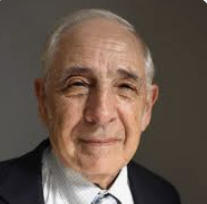
Just acquiring this amount of "education" will not, by itself, make you an educated person, even less will it give you what Oakeshott calls "judgment." But if the manner of instruction is adequate, the student should be able to acquire this much knowledge in a way that combines intellectual openness, critical scrutiny, and logical clarity. If so, learning will not stop when the student leaves the university.
5 months 2 weeks ago
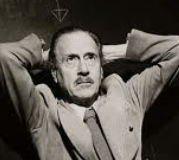
Even pacifist agitation or the nation-wide fever of big sports competitions acts as a spur to war fever in circumstances like ours. Any kind of excitement or emotion contributes to the possibility of dangerous explosions when the feelings of huge populations are kept inflamed even in peacetime for the sake of the advancement of commerce. Headlines mean street sales. It takes emotion to move merchandise. And wars and rumors of wars are the merchandise and also the emotion of the popular press.
▼
Source
source
p. 7
5 months 1 week ago
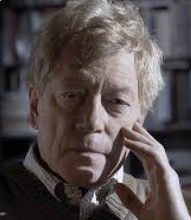
In 1970s Britain, conservative philosophy was the preoccupation of a few half-mad recluses.
▼
Source
source
"Why I became a conservative," The New Criterion
7 months 2 weeks ago
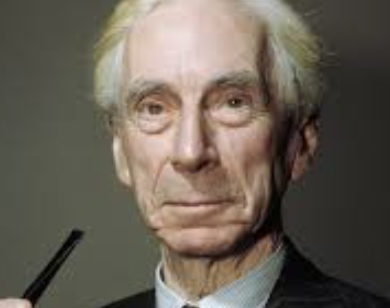
Indignation is a submission of our thoughts, but not of our desires.
CivilSimian.com created by AxiomaticPanic, CivilSimian, Kalokagathia