

4 months 3 weeks ago
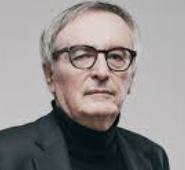
Terror is not now, if it ever was, something that comes to us from outside. It is a part of the society in which we live. Both liberals and neoconservatives believe terrorism can be dealt with by removing its causes. The truth is less reassuring. Al-Qaeda has mutated into a decentralised, often locally based type of apocalyptic terrorism and, in this new guise, seems to be acquiring a formidable momentum.
▼
Source
source
"Look out for the enemy within," The Observer

6 months 2 weeks ago
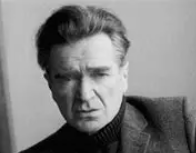
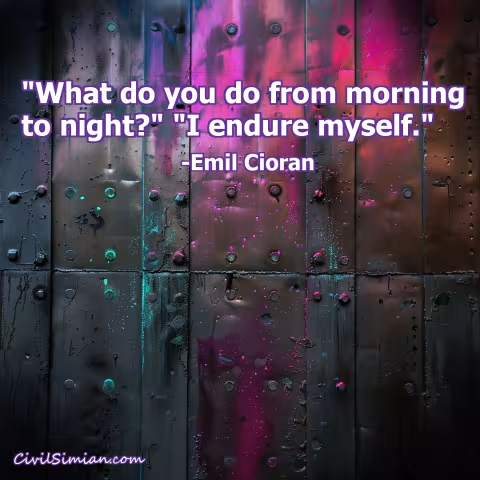
If I were to be totally sincere, I would say that I do not know why I live and why I do not stop living. The answer probably lies in the irrational character of life which maintains itself without reason.
3 months 2 weeks ago
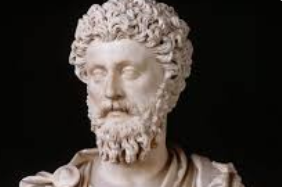
Think not so much of what thou hast not as of what thou hast: but of the things which thou hast, select the best, and then reflect how eagerly they would have been sought, if thou hadst them not. At the same time, however, take care that thou dost not, through being so pleased with them, accustom thyself to overvalue them, so as to be disturbed if ever thou shouldst not have them.
▼
Source
source
Variant Translation: Let not thy mind run on what thou lackest as much as on what thou hast already. VII, 27
6 months 2 weeks ago
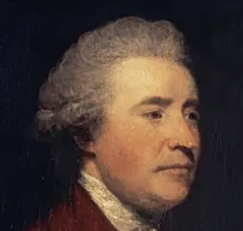
People will not look forward to posterity, who never look backward to their ancestors.
▼
Source
source
Volume iii, p. 274
6 months 2 days ago
Emptiness is not a denial of the proper but an affirmation of it.
7 months 2 weeks ago
In the past, there was a small leisure class and a larger working class. The leisure class enjoyed advantages for which there was no basis in social justice; this necessarily made it oppressive, limited its sympathies, and caused it to invent theories by which to justify its privileges.
▼
Source
source
Ch. 1: In Praise of Idleness, p. 13
6 months 2 weeks ago
The liberty of man consists solely in this: that he obeys natural laws because he has himself recognized them as such, and not because they have been externally imposed upon him by any extrinsic will whatever, divine or human, collective or individual.

3 months 2 weeks ago
The Pythagoreans thought those who teach for the sake of reward show themselves worse than sculptors, or artists who perform the work sitting. For these, when someone orders wood to make a statue of Hermes, search for wood suited to receive the proper form; while those pretend that they can readily produce the works of virtue from every nature.
3 months 2 weeks ago
The selfish spirit of commerce knows no country, and feels no passion or principle but that of gain.
▼
Source
source
Letter to Larkin Smith
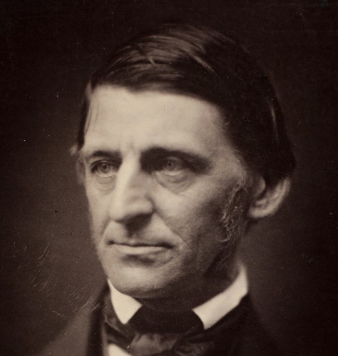
7 months 2 weeks ago
To-day unbind the captive, So only are ye unbound; Lift up a people from the dust, Trump of their rescue, sound!
▼
Source
source
Boston Hymn, st. 17
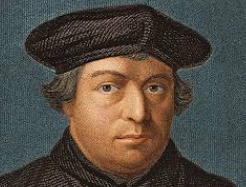
7 months 3 weeks ago
Tell your master that if there were as many devils at Worms as tiles on its roofs, I would enter.
▼
Source
source
Psalm. Ein feste Burg ist unser Gott (translated by Frederic H. Hedge), Reported in Bartlett's Familiar Quotations, 10th ed. (1919).
5 months 2 weeks ago
The business of art is no longer the communication of thoughts or feelings which are to be conceptually ordered, but a direct participation in an experience. The whole tendency of modern communication...is towards participation in a process, rather than apprehension of concepts.
▼
Source
source
Letter to Harold Adam Innis (14 March 1951), published in Essential McLuhan (1995), edited by Eric McLuhan and Frank Zingrone, p. 73

4 months 1 week ago
For the Scepticism, as I said, is not intellectual only; it is moral also; a chronic atrophy and disease of the whole soul. A man lives by believing something; not by debating and arguing about many things.
7 months 2 weeks ago
I wish that life should not be cheap, but sacred. I wish the days to be as centuries, loaded, fragrant.
▼
Source
source
Considerations by the Way

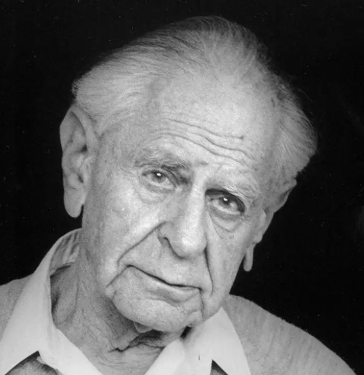
7 months 2 weeks ago
Science is not a system of certain, or well established, statements; nor is it a statement which steadily advances towards state of finality. Our science is not knowledge (epistēmē): it can newer claim to have attained truth, or even substitute for it, such as probability. . . . We do not know; we can only guess.
▼
Source
source
Ch. 10 "Corroboration, or How a Theory Stands up to Tests", section 85: The Path of Science, p. 278.

5 months 2 weeks ago
4 ways: Agnosticism, Relativism, Amorality, Morality. 1) I don't know. 2) Everybody is different. 3) Do whatever you can. 4) Do what you should.
7 months 2 weeks ago
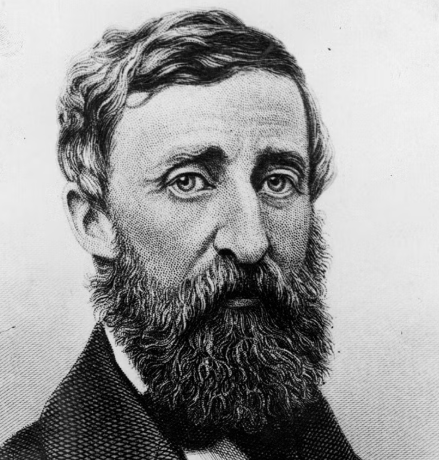
As for my own business, even that kind of surveying which I could do with most satisfaction my employers do not want. They would prefer that I should do my work coarsely and not too well, ay, not well enough. When I observe that there are different ways of surveying, my employer commonly asks which will give him the most land, not which is most correct.
▼
Source
source
p. 486
8 months 2 weeks ago
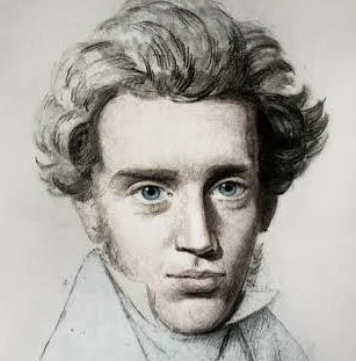
Someone in despair despairs over something. So, for a moment, it seems, but only for a moment. That same instant the true despair shows itself, or despair in its true guise. In despairing over something he was really despairing over himself, and he wants now to be rid of himself.
6 months 2 weeks ago
Consciousness is nature's nightmare.
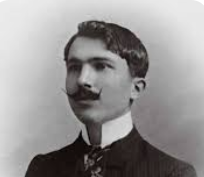
3 months 2 weeks ago
The moment is ripe: leave the heart and the mind behind you, go forward, take the third step. Free yourself from the simple complacency of the mind that thinks to put all things in order and hopes to subdue phenomena. Free yourself from the terror of the heart that seeks and hopes to find the essence of things. Conquer the last, the greatest temptation of all: Hope. This is the third duty.
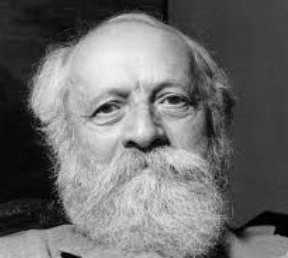
6 months 1 week ago
The great man, whether we comprehend him in the most intense activity of his work or in the restful equipoise of his forces, is powerful, involuntarily and composedly powerful, but he is not avid for power. What he is avid for is the realization of what he has in mind, the incarnation of the spirit.
▼
Source
source
p. 151
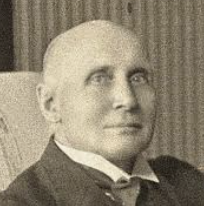
6 months 4 days ago
In the inescapable flux, there is something that abides; in the overwhelming permanence, there is an element that escapes into flux. Permanence can be snatched only out of flux; and the passing moment can find its adequate intensity only by its submission to permanence.

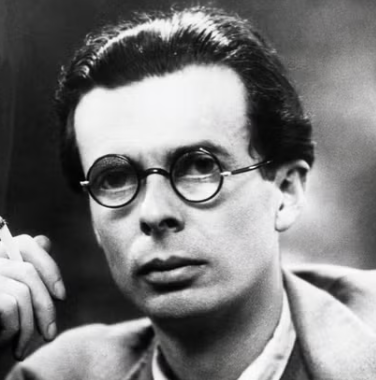
7 months 2 weeks ago
The effectiveness of political and religious propaganda depends upon the methods employed, not upon the doctrines taught. These doctrines may be true or false, wholesome or pernicious-it makes little or no difference.
▼
Source
source
Chapter 7 (p. 63)
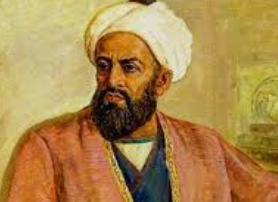
6 months 3 weeks ago
The proximity between the counterfeit and the good coin does not make the good coin counterfeit nor the counterfeit good. In the same way the proximity between truth and falsehood does not make truth falsehood nor falsehood truth.
▼
Source
source
III. The Classes of Seekers, p. 33.
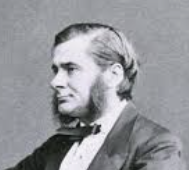
5 months 5 days ago
Mathematics may be compared to a mill of exquisite workmanship, which grinds you stuff of any degree of fineness; but, nevertheless, what you get out depends upon what you put in; and as the grandest mill in the world will not extract wheat-flour from peascod, so pages of formulae will not get a definite result out of loose data.
▼
Source
source
Geological Reform, Quarterly Journal of the Geological Society of London, Vol. 25 (1869); as reprinted in Huxley, Discourses, Biological and Geological essays (1909), pp. 335-336
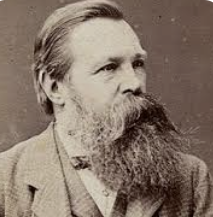
6 months 2 weeks ago
Big industry, and the limitless expansion of production which it makes possible, bring within the range of feasibility a social order in which so much is produced that every member of society will be in a position to exercise and develop all his powers and faculties in complete freedom. It thus appears that the very qualities of big industry which, in our present-day society, produce misery and crises are those which, in a different form of society, will abolish this misery and these catastrophic depressions.We see with the greatest clarity: (i) That all these evils are from now on to be ascribed solely to a social order which no longer corresponds to the requirements of the real situation; and (ii) That it is possible, through a new social order, to do away with these evils altogether.
6 months 2 weeks ago
If there is a devil in human history, that devil is the principle of command. It alone, sustained by the ignorance and stupidity of the masses, without which it could not exist, is the source of all the catastrophes, all the crimes, and all the infamies of history.
▼
Source
source
On the Program of the Alliance (1871), in Bakunin on Anarchy (1971), translated and edited by Sam Dolgoff Variant translation: If there is a devil in history, it is the power principle.

7 months 1 week ago
Remember Bostrom's definition of existential risk, which refers to the annihilation not of human beings, but of "Earth-originating intelligent life." The replacement of our species by some other form of conscious intelligent life is not in itself, impartially considered, catastrophic. Even if the intelligent machines kill all existing humans, that would be...a very small part of the loss of value that Parfit and Bostrom believe would be brought about by the extinction of Earth-originating intelligent life. The risk posed by the development of AI, therefore, is not so much whether it is friendly to us, but whether it is friendly to the idea of promoting wellbeing in general, for all sentient beings it encounters, itself included.
▼
Source
source
Chapter 15: Preventing Human Extinction (p. 176)
5 months 5 days ago
Lamarck, sagacious as many of his views were, mingled them with so much that was crude and even absurd, as to neutralize the benefit which his originality might have effected had he been a more sober and cautious thinker…
▼
Source
source
Ch.2, p. 125
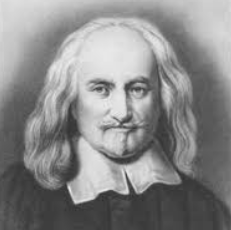
6 months 1 week ago
And in these foure things, Opinion of Ghosts, Ignorance of second causes, Devotion towards what men fear, and Taking of things Casuall for Prognostics, consisteth the Natural seed of Religion; which by reason of the different Fancies, Judgements, and Passions of severall men, hath grown up into ceremonies so different, that those which are used by one man, are for the most part ridiculous to another.
▼
Source
source
The First Part, Chapter 12, p. 54
8 months 2 weeks ago
A genius and an Apostle are qualitatively different, they are definitions which each belong in their own spheres: the sphere of immanence, and the sphere of transcendence.
7 months 3 weeks ago
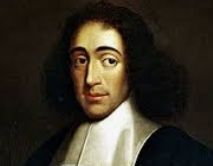
After experience had taught me that all the usual surroundings of social life are vain and futile; seeing that none of the objects of my fears contained in themselves anything either good or bad, except in so far as the mind is affected by them, I finally resolved to inquire whether there might be some real good having power to communicate itself, which would affect the mind singly, to the exclusion of all else: whether, in fact, there might be anything of which the discovery and attainment would enable me to enjoy continuous, supreme, and unending happiness.
▼
Source
source
I, 1
7 months 3 weeks ago
The Apostle Paul wants us to work with our hands in order to share with the needy (Ephesians 5:28). Notice that he could have said that we should work to support ourselves. But Paul says that we work to give to those in need. This is why caring for our body is also a Christian work. If the body is healthy and fit, we are able to work and save money that can be used to help those in need.
▼
Source
source
p. 80

4 months 2 weeks ago
In Kant's words, human beings are uncaused causes, and therefore have infinite value, and a liberal regime protects that autonomy by giving people rights... The right to speak, to organize, to associate, and ultimately to have a share of power by being able to vote. ...This is ...the moral status, the dignity that life in a liberal regime that does respect individual rights, gives us, and it is one of the reasons that to this day, people do not want to live in authoritarian countries that do not recognize the fundamental dignity of their... citizens.
▼
Source
source
11:47
5 months 2 weeks ago
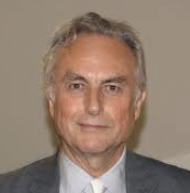
The second requirement of a virus-friendly environment - that it should obey a program of coded instructions - is again only quantitatively less true for brains than for cells or computers. We sometimes obey orders from one another, but also we sometimes don't. Nevertheless, it is a telling fact that, the world over, the vast majority of children follow the religion of their parents rather than any of the other available religions. Instructions to genuflect, to bow towards Mecca, to nod one's head rhythmically towards the wall, to shake like a maniac, to "speak in tongues" - the list of such arbitrary and pointless motor patterns offered by religion alone is extensive - are obeyed, if not slavishly, at least with some reasonably high statistical probability.
7 months 3 weeks ago
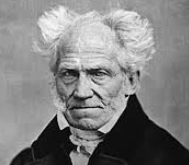
As the strata of the earth preserve in succession the living creatures of past epochs, so the shelves of libraries preserve in succession the errors of the past and their expositions, which like the former were very lively and made a great commotion in their own age but now stand petrified and stiff in a place where only the literary palaeontologist regards them.
▼
Source
source
Vol. 2 "On Books and Writing" as translated in Essays and Aphorisms (1970), as translated by R. J. Hollingdale
4 months 1 week ago
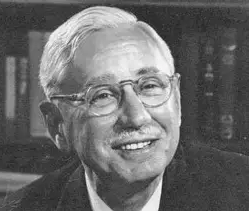
It is life that educates, and perhaps love more than anything else in life.
▼
Source
source
Ch. 2 : On Youth

3 months 4 weeks ago
Time! Time! Time! - we must not impugn the Scripture Chronology, but we must interpret it in accordance with whatever shall appear on fair enquiry to be the truth for there cannot be two truths. And really there is scope enough: for the lives of the Patriarchs may as reasonably be extended to 5000 or 50000 years apiece as the days of Creation to as many thousand millions of years.
▼
Source
source
Letter to Charles Lyell after being inspired by his Principles of Geology
7 months 4 weeks ago
The unassisted hand and the understanding left to itself possess but little power. Effects are produced by the means of instruments and helps, which the understanding requires no less than the hand; and as instruments either promote or regulate the motion of the hand, so those that are applied to the mind prompt or protect the understanding.
▼
Source
source
Aphorism 2
8 months 2 weeks ago
When Christianity came into the world the task was simply to proclaim Christianity. The same is the case wherever Christianity is introduced into a country the religion of which is not Christianity.
7 months 2 weeks ago
The harm that is done by a religion is of two sorts, the one depending on the kind of belief which it is thought ought to be given to it, and the other upon the particular tenets believed. As regards the kind of belief: it is thought virtuous to have faith-that is to say, to have a conviction which cannot be shaken by contrary evidence. Or, if contrary evidence might induce doubt, it is held that contrary evidence must be suppressed.
▼
Source
source
preface xxiii
7 months 2 weeks ago
The South may keep her pine-apples, and we will be content with our strawberries, which are, as it were, pine-apples with "going a-strawberrying" stirred into them, infinitely enhancing their flavor.
6 months 2 weeks ago
There is but one Temple in the World; and that is the Body of Man. Nothing is holier than this high form. Bending before men is a reverence done to this Revelation in the Flesh. We touch Heaven, when we lay our hand on a human body. Variant translation: There is but one temple in the Universe and that is the Body of Man.
▼
Source
source
As inscribed on the Library of Congress, quoted in Handbook of the New Library of Congress (1897) by Herbert Small, p. 53
6 months 2 weeks ago
Show me what thou truly lovest, what thou seekest and strivest for with thy whole heart when thou hopest to attain to true en joyment of thyself-and thou hast thereby shown me thy Life. What thou lovest, in that thou livest. This very Love is thy Life, the root, the seat, the central point of thy being. All other emotions within thee have life only in so far as they are governed by this one central emotion.
▼
Source
source
P. 3
CivilSimian.com created by AxiomaticPanic, CivilSimian, Kalokagathia