


4 months 1 week ago
There is a science of Dynamics in man's fortunes and nature, as well as of Mechanics. There is a science which treats of, and practically addresses, the primary, unmodified forces and energies of man, the mysterious springs of Love, and Fear, and Wonder, of Enthusiasm, Poetry, Religion, all which have a truly vital and infinite character; as well as a science which practically addresses the finite, modified developments of these, when they take the shape of immediate "motives," as hope of reward, or as fear of punishment.
6 months 6 days ago
Rousseau has said in his Emile (book iv.): "Even though philosophers should be in a position to discover the truth, which of them would take any interest in it? Each one knows well that his system is not better founded than the others, but he supports it because it is his. ...The essential thing is to think differently from others. With believers he is an atheist; with atheists he is a believer." How much substantial truth there is in these gloomy confessions of this man of painful sincerity.
7 months 4 weeks ago
There are also Idols formed by the intercourse and association of men with each other, which I call Idols of the Market Place, on account of the commerce and consort of men there. For it is by discourse that men associate, and words are imposed according to the apprehension of the vulgar. And therefore the ill and unfit choice of words wonderfully obstructs the understanding. Nor do the definitions or explanations wherewith in some things learned men are wont to guard and defend themselves, by any means set the matter right. But words plainly force and overrule the understanding, and throw all into confusion, and lead men away into numberless empty controversies and idle fancies.
▼
Source
source
Aphorism 43
7 months 1 week ago
When he was asked what advantage had accrued to him from philosophy, his answer was, "The ability to hold converse with myself."
▼
Source
source
§ 4
3 months 4 weeks ago
The most profound reason... why the metropolis conduces to the urge for the most individual personal existence... appears to me to be the following: the development of modern culture is characterized by the preponderance of what one may call the "objective spirit" over the "subjective spirit."
▼
Source
source
p. 421 as cited in: Kenneth Allan (2009) Explorations in Classical Sociological Theory: Seeing the Social World. p. 212
4 months ago
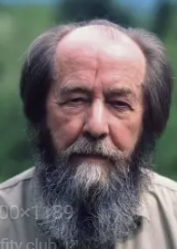
In recent times it has been fashionable to talk of the levelling of nations, of the disappearance of different races in the melting-pot of contemporary civilization. I do not agree with this opinion, but its discussion remains another question. Here it is merely fitting to say that the disappearance of nations would have impoverished us no less than if all men had become alike, with one personality and one face. Nations are the wealth of mankind, its collective personalities; the very least of them wears its own special colours and bears within itself a special facet of divine intention.
4 months 2 weeks ago
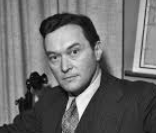
The principles of the good society call for a concern with an order of being--which cannot be proved existentially to the sense organs--where it matters supremely that the human person is inviolable, that reason shall regulate the will, that truth shall prevail over error.
▼
Source
source
p. 127

7 months 1 week ago
It is now generally accepted that the roots of our ethics lie in patterns of behavior that evolved among our pre-human ancestors, the social mammals and that we retain within our biological nature elements of these evolved responses. We have learned considerably more about these responses, and we are beginning to to understand how they interact with our capacity to reason.
▼
Source
source
Preface To The 2011 edition, p. xi
7 months 3 weeks ago
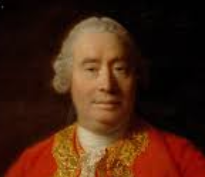
The slaving Poor are incapable of any Principles: Gentlemen may be converted to true Principles, by Time and Experience. The middling Rank of Men have Curiosity and Knowledge enough to form Principles, but not enough to form true ones, or correct any Prejudices that they may have imbib'd: And 'tis among the middling Rank, that Tory Principles do at present prevail most in England.
▼
Source
source
Part I, Essay 9: Of The Parties of Great Britain; final lines of this essay in the 1741 and 1742 editions of Essays, Moral and Political, they were not included in later editions.
3 months 4 weeks ago
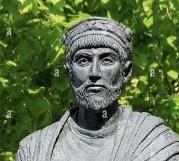
To what purpose, pray, exist all these things that be born? Whence come male and female? Whence the difference in kind of all things that be, amongst visible species, unless there be certain pre-existing and previously established Reasons and Causes subsisting beforehand, in the nature of a pattern? With regard to which, though we are dull of sight, yet let us strive to clear away the mist from the eyes of the soul.
4 months 1 week ago
History a distillation of Rumour.
▼
Source
source
Pt. I, Bk. VII, ch. 5.
6 months 2 weeks ago
History is mere Empiricism; it has only facts to communicate, and all its proofs are founded upon facts alone. To attempt to rise to Primeval History on this foundation of fact, or to argue by this means how such or such a thing might have been, and then to take for granted that it has been so in reality,is to stray beyond the limits of History, and produce an a priori History; just as the Philosophy of Nature, referred to in our preceding lecture, endeavoured to find an a priori Science of Physics.
▼
Source
source
p. 140

8 months 2 weeks ago
To the contemporary, Christ can only say: I will offer myself as a sacrifice for the sins of the world and for yours also. Is this easier to believe now than when he has done it, has offered himself? Or is the comfort greater because of his saying that he will do it than it is because of his having done it? There is no greater love than this, that someone lays down his life for another, but when is it easier to believe, and when is the comfort greater: when the loving one says he will do it, or when he has done it?
7 months 2 weeks ago
Capitalist production, therefore, develops technology, and the combining together of various processes into a social whole, only by sapping the original sources of all wealth - the soil and the labourer.
▼
Source
source
Vol. I, Ch. 15 (last sentence), pg. 556.
7 months 3 weeks ago
The trade of insurance gives great security to the fortunes of private people, and by dividing among a great many that loss which would ruin an individual, makes it fall light and easy upon the whole society.
▼
Source
source
Chapter I, Part III, p. 821.
7 months 3 weeks ago
When anyone tells me, that he saw a dead man restored to life, I immediately consider with myself, whether it be more probable, that this person should either deceive or be deceived, or that the fact, which he relates, should really have happened. I weigh the one miracle against the other; and according to the superiority, which I discover, I pronounce my decision, and always reject the greater miracle. If the falsehood of his testimony would be more miraculous, than the event which he relates; then, and not till then, can he pretend to command my belief or opinion.
▼
Source
source
Section 10 : Of Miracles Pt. 1
4 months 3 weeks ago
For a consistent naturalist science can only be a refinement of animal exploration, a practice humans have devised for finding their way in the bit of the universe in which they have so far survived. Instead of thinking of science as a law-seeking activity, we can think of it as a tool humans use to cope with a world they will never understand.
▼
Source
source
Sweet Morality (p. 224)
6 months 2 weeks ago
The obsession with suicide is characteristic of the man who can neither live nor die, and whose attention never swerves from this double impossibility.
6 months 2 weeks ago
Thus then does the Doctrine of Knowledge, which in its substance is the realisation of the absolute Power of intelligising which has now been defined, end with the recognition of itself as a mere Schema in a Doctrine of Wisdom, although indeed a necessary and indispensable means to such a Doctrine: - a Schema, the sole aim of which is, with the knowledge thus acquired, - by which knowledge alone a Will, clear and intelligible to itself and reposing upon itself without wavering or perplexity, is possible, - to return wholly into Actual Life; - not into the Life of blind and irrational Instinct which we have laid bare in all its nothingness, but into the Divine Life which shall become visible to us.
5 months 4 weeks ago
That man is the noblest creature may also be inferred from the fact that no other creature has yet contested this claim.
▼
Source
source
D 58 The proof that man is the noblest of all creatures is that no other creature has ever denied it.
6 months 2 weeks ago
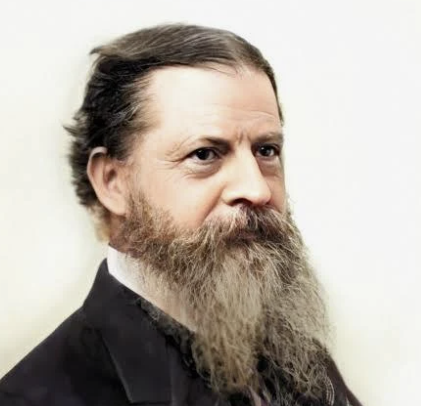
The tendency to regard continuity, in the sense in which I shall define it, as an idea of prime importance in philosophy conveniently may be be termed synechism. The present paper is intended chiefly to show what synechism is, and what it leads to.
7 months 2 weeks ago
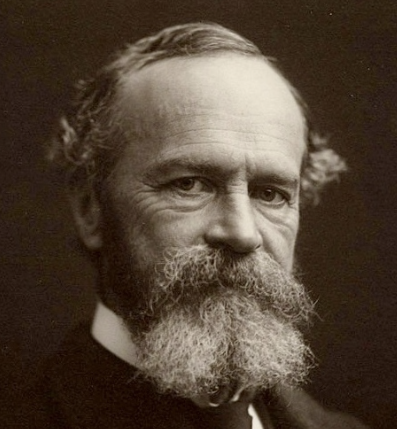
In its widest possible sense, however, a man's Self is the sum total of all that he can call his, not only his body and his psychic powers, but his clothes and his house, his wife and children, his ancestors and friends, his reputation and works, his lands and horses, and yacht and bank-account. All these things give him the same emotions. If they wax and prosper, he feels triumphant; if they dwindle and die away, he feels cast down.
▼
Source
source
Ch. 10
6 months 2 weeks ago
Good order is the foundation of all good things.
7 months 3 weeks ago
Reason, if consulted with, would advise, that their children's time should be spent in acquiring what might be useful to them when they come to be men, rather than to have their heads stuff'd with a deal of trash, a great part whereof they usually never do ('tis certain they never need to) think on again as long as they live: and so much of it as does stick by them they are only the worse for.
▼
Source
source
Sec. 94
7 months 2 weeks ago
History, is a conscious, self-mediating process - Spirit emptied out into Time; but this externalization, this kenosis, is equally an externalization of itself; the negative is the negative of itself. ... Thus absorbed in itself, it is sunk in the night of its self-consciousness; but in that night its vanished outer existence is perserved, and this transformed existence - the former one, but now reborn of the Spirit's knowledge - is the new existence, a new world and a new shape of Spirit.
6 months 2 weeks ago
Science raises itself above all Ages and all Times, embracing and apprehending the ONE UNCHANGING TIME as the higher source of all Ages and Epochs, and grasping that vast idea in its free, unbounded comprehension.
▼
Source
source
p. 11
7 months 3 weeks ago
There are 80,000 prostitutes in London alone and what are they, if not bloody sacrifices on the altar of monogamy?
▼
Source
source
"Of Women"
8 months 3 weeks ago
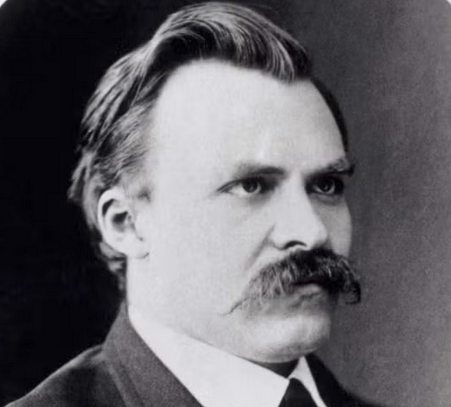
Haste is universal because everyone is in flight from himself.
6 months 1 week ago
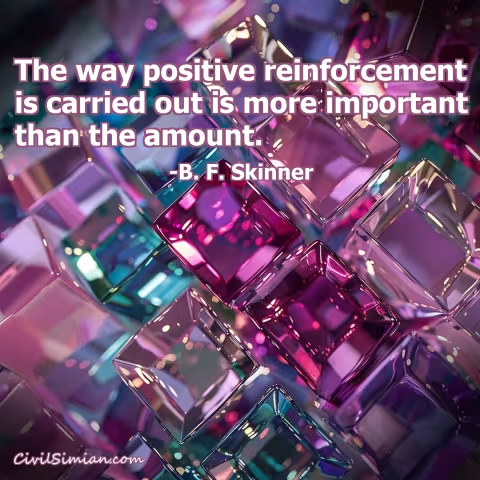
In the face of the idea that truth might afford the opposite of satisfaction and turn out to be completely shocking to humanity at any given historical moment, ... the fathers of pragmatism made the satisfaction of the subject the criterion of truth. For such a doctrine there is no possibility of rejecting or even criticizing any species of belief that is enjoyed by its adherents.
▼
Source
source
p. 52.
7 months 3 weeks ago
The evident justice and utility of the foregoing maxims have recommended them more or less to the attention of all nations.
▼
Source
source
Chapter II, Part II, p. 894.

6 months 3 weeks ago
You may set the Negro free, but you cannot make him otherwise than an alien to the European. Nor is this all we scarcely acknowledge the common features of humanity in this stranger whom slavery has brought among us. His physiognomy is to our eyes hideous, his understanding weak, his tastes low; and we are almost inclined to look upon him as a being intermediate between man and the brutes.
▼
Source
source
Chapter XVIII.
7 months 2 weeks ago
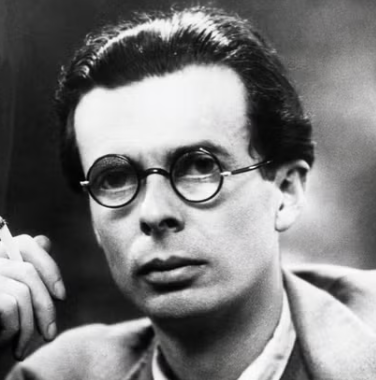
There has been a general trend in recent times toward a Unitarian mythology and the worship of one God. This is the tendency which it is customary to regard as spiritual progress. On what grounds? Chiefly, so far as one can see, because we in the Twentieth Century West are officially the worshippers of a single divinity. A movement whose consummation is Us must be progressive. Quod erat demonstrandum.
▼
Source
source
"One and Many," p. 16
3 months 2 weeks ago
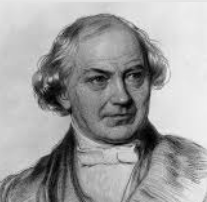
[W]e can ascend to remote periods by a chain of causes, but in none can we ascend to a 'beginning' of the chain.
6 months 2 weeks ago
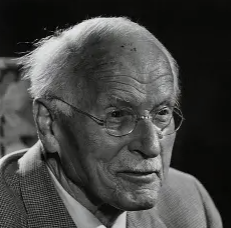
For lack of empirical data I have neither knowledge nor understanding of such forms of being, which are commonly called spiritual. ...Nevertheless, we have good reason to suppose that behind this veil there exists the uncomprehended absolute object which affects and influences us-and to suppose it even, or particularly, in the case of psychic phenomena about which no verifiable statements can be made.
▼
Source
source
p.351
5 months 3 weeks ago
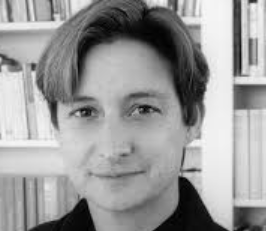
There is no practice of nonviolence that does not negotiate fundamental ethical and political ambiguities, which means that "nonviolence" is not an absolute principle, but the name of an ongoing struggle.
▼
Source
source
p. 23
3 months 2 weeks ago
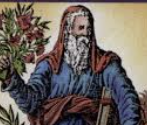
Furthermore, the monad produces itself and is produced from itself, since it is self-sufficient and has no power set over it and is everlasting; and it is evidently the cause of permanence, just as God is thought to be in the case of actual physical things, and to be the preserver and maintainer of natures.
▼
Source
source
On the Monad
5 months 4 weeks ago
Actual aristocracy cannot be abolished by any law: all the law can do is decree how it is to be imparted and who is to acquire it.
▼
Source
source
L 44
8 months 2 weeks ago
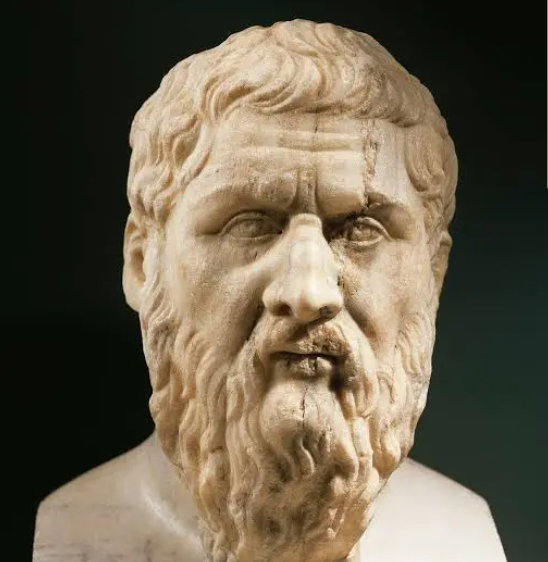
The characters of self-restrained officials are exceedingly careful and just and conservative, but they lack keenness and a certain quick and active boldness. The courageous natures, on the other hand, are deficient in justice and caution in comparison with the former, but excel in boldness of action; and unless both these qualities are present it is impossible for a state to be entirely prosperous in public and private matters.
7 months 2 weeks ago
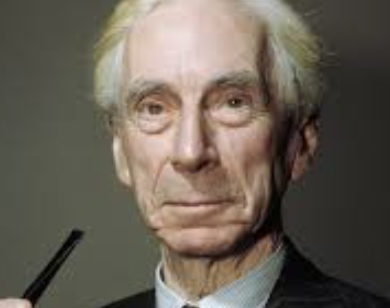
The process of philosophizing, to my mind, consists mainly in passing from those obvious, vague, ambiguous things, that we feel quite sure of, to something precise, clear, definite, which by reflection and analysis we find is involved in the vague thing that we start from, and is, so to speak, the real truth of which that vague thing is a sort of shadow.
6 months 5 days ago
Creatures inveterately wrong in their inductions have a pathetic but praiseworthy tendency to die before reproducing their kind.
▼
Source
source
"Natural Kinds", in Ontological Relativity and Other Essays (1969), p. 126
4 months 5 days ago
No social co-operation under the division of labour is possible when some people or unions of people are granted the right to prevent by violence and the threat of violence other people from working. When enforced by violence, a strike in vital branches of production or a general strike are tantamount to a revolutionary destruction of society.
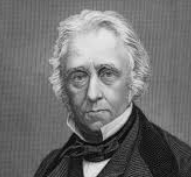
5 months 1 week ago
I finished the Iliad to-day... I never admired the old fellow so much, or was so strongly moved by him. What a privilege genius like his enjoys! I could not tear myself away. I read the last five books at a stretch during my walk to-day, and was at last forced to turn into a bypath, lest the parties of walkers should see me blubbering for imaginary beings, the creations of a ballad-maker who has been dead two thousand seven hundred years. What is the power and glory of Caesar and Alexander to that? Think what it would be to be assured that the inhabitants of Monomotapa would weep over one's writings.
▼
Source
source
Anno Domini 4551! Letter to his niece Margaret (August 1851), quoted in George Otto Trevelyan, The Life and Letters of Lord Macaulay, Volume II (1876), pp. 186-187
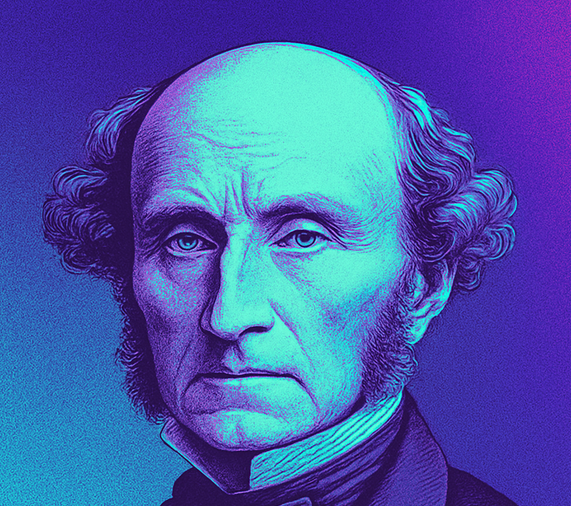
7 months 2 weeks ago
Their worship was not paid to the demon which such a being as they imagined would really be, but to their own idea of excellence. The evil is, that such a belief keeps the ideal wretchedly low; and opposes the most obstinate resistance to all thought which has a tendency to raise it higher. Believers shrink from every train of ideas which would lead the mind to a clear conception and an elevated standard of excellence, because they feel (even when they do not distinctly see) that such a standard would conflict with many of the dispensations of nature, and with much of what they are accustomed to consider as the Christian creed.
▼
Source
source
(p. 42)
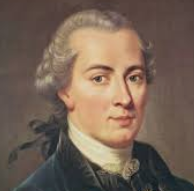
7 months 3 weeks ago
All the interests of my reason, speculative as well as practical, combine in the three following questions: 1. What can I know? 2. What ought I to do? 3. What may I hope?
▼
Source
source
B 832-833
7 months 2 weeks ago
In every stock-jobbing swindle everyone knows that some time or other the crash must come, but every one hopes that it may fall on the head of his neighbour, after he himself has caught the shower of gold and placed it in safety.
▼
Source
source
Vol. I, Ch. 10, Section 5, pg. 296.
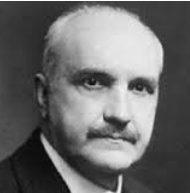
6 months 1 week ago
Although a poem be not made by counting of syllables upon the fingers, yet "numbers" is the most poetical synonym we have for verse, and "measure" the most significant equivalent for beauty, for goodness, and perhaps even for truth. Those early and profound philosophers, the followers of Pythagoras, saw the essence of all things in number, and it was by weight, measure, and number, as we read in the Bible, that the Creator first brought Nature out of the void.
▼
Source
source
Interpretations of Poetry and Religion (1900), p. 251
CivilSimian.com created by AxiomaticPanic, CivilSimian, Kalokagathia