

1 month 2 weeks ago
If you feel irritated by the absurd remarks of two people whose conversation you happen to overhear, you should imagine that you are listening to a dialogue of two fools in a comedy.
▼
Source
source
T. B. Saunders, trans., § 38
1 month 1 week ago
When the rich make war, it's the poor that die.
Just now
A real reconciliation of East and West is impossible and inconceivable on the basis of a materialistic Communism, or of a materialistic Capitalism, or indeed of a materialistic Socialism. The third way will neither be "anti-Communist" nor "anti-Capitalist". It will recognize the truth in liberal democracy, and it will equally recognize the truth in Communism. A critique of Communism and Marxism does not entail an enmity towards Soviet Russia, just as a critique of liberal democracy is not entail enmity towards the west. ... But the final and most important justification of a "third way" is that there must be a place from which we may boldly testify to, and proclaim, truth, love and justice. No one today likes truth: utility and self interest have long ago been substituted for truth.
▼
Source
source
p. 80
1 month 2 weeks ago
He who can buy bravery is brace, though a coward. As money is not exchanged for anyone specific quality, for any one specific thing, or for any particular human essential power, but for the entire objective world of man and nature, from the standpoint of its possessor it therefore serves to exchange every property for every other, even contradictory, property and object: it is the fraternization of impossibilities. It makes contradictions embrace.
▼
Source
source
p. 105, The Marx-Engels Reader
1 week ago
By MANNERS, I mean not here Decency of behaviour; as how one man should salute another, or how a man should wash his mouth, or pick his teeth before company, and such other points of the Small Morals; But those qualities of mankind that concern their living together in Peace and Unity. To which end we are to consider that the Felicity of this life consisteth not in the repose of a mind satisfied. For there is no such Finis ultimus (utmost aim) nor Summum Bonum (greatest good) as is spoken of in the books of the old Moral Philosophers. Nor can a man any more live whose desires are at an end than he whose Senses and Imaginations are at a stand.
▼
Source
source
The First Part, Chapter 11, p. 47
Just now
If one is to take Lulu's twelve-tone chord as the integral totality of complementary harmony, then Berg's allegorical genius proves itself within a historical perspective which makes the brain reel: just as Lulu in the world of total illusion longs for nothing but her murderer and finally finds him in that sound, so does all harmony of unrequited happiness long for its fatal chord as the cipher of fulfillment - twelve-tone music is not to be separated from dissonance. Fatal: because all dynamics come to a standstill within it without finding release. The law of complementary harmony already implies the end of the musical experience of time, as this was heralded in the dissociation of time according to Expressionistic extremes.
▼
Source
source
Philosophy of Modern Music (1973) as translated by Anne G. Mitchell and Wesley V. Blomster
2 months ago
The inclination to seek the truth is safer than the presumption which regards unknown things as known.
▼
Source
source
(Cambridge: 2002), Book 9, Chapter 1, p. 24
1 month 2 weeks ago
Every emancipation is a restoration of the human world and of human relationships to a man himself.

3 weeks 5 days ago
None but a Craftsman can judge of a craft.

1 month 1 week ago
Indeed, if we consider the unblushing promises of reward and the staggering nature of the rewards promised in the Gospels, it would seem that Our Lord finds our desires, not too strong, but too weak. We are half-hearted creatures, fooling about with drink and sex and ambition when infinite joy is offered us, like an ignorant child who wants to go on making mud pies in a slum because he cannot imagine what is meant by the offer of a holiday at the sea. We are far too easily pleased.
2 months 4 days ago
War is the father and king of all: some he has made gods, and some men; some slaves and some free.

2 months 2 weeks ago
Death cannot explain itself. The earnestness consists precisely in this, that the observer must explain it to himself.
2 months 2 weeks ago
If someone were to expound that godliness is to belong to childhood in the temporal sense and thus dwindle and die with the years as childhood does, is to be a happy frame of mind that cannot be preserved but only recollected; if someone were to expound that repentance as a weakness of old age accompanies the decline of one's powers, when the senses are dulled, when sleep no longer strengthens but increases lethargy-this would be ungodliness and foolishness.

1 week 3 days ago
Death is too exact; it has all the reasons on its side. Mysterious for our instincts, it takes shape, to our reflection, limpid, without glamor, and without the false lures of the unknown. By dint of accumulating non-mysteries and monopolizing non-meanings, life inspires more dread than death: it is life which is the Great Unknown.
1 month 2 weeks ago
Space is employed as the type even of the concept of time itself, representing it by a line, and its limits - moments - by points. Time, on the other had, approaches more to a universal and rational concept, comprising under its relations all things whatsoever, to wit, space itself, and besides, those accidents which are not comprehended in the relations of space, such as the thoughts of the soul. Again, time, besides this, though it certainly does not dictate the laws of reason, yet constitutes the principal conditions tinder favor of which the mind compares its notions according to the laws of reason. Thus, I cannot judge what is impossible except by predicating a and not-a of the same subject at the same time.
2 weeks 1 day ago
We want no foreign examples to rekindle in us the flame of liberty. The example of our own ancestors is abundantly sufficient to maintain the spirit of freedom in its full vigour, and to qualify it in all its exertions. The example of a wise, moral, well-natured, and well-tempered spirit of freedom, is that alone which can be useful to us, or in the least degree reputable or safe. Our fabric is so constituted; one part of it bears so much on the other, the parts, are so made for one another, and for nothing else, that to introduce any foreign matter into it, is to destroy it.
▼
Source
source
p. 471
1 month 2 weeks ago
The greatest problem for the human race, to the solution of which Nature drives man, is the achievement of a universal civic society which administers law among men.
▼
Source
source
Fifth Thesis
5 days ago
When shall we open our minds to the conviction that the ultimate reality of the world is neither matter nor spirit, is no definite thing, but a perspective?
2 months 2 weeks ago
Everything that depends on the action of nature is by nature as good as it can be, and similarly everything that depends on art or any rational cause, and especially if it depends on the best of all causes. To entrust to chance what is greatest and most noble would be a very defective arrangement.
5 months 2 weeks ago
The symptom is not only a cyphered message, it is at the same time a way for the subject to organize his enjoyment - that is why, even after the completed interpretation, the subject is not prepared to renounce his symptom.

1 month 2 weeks ago
A world without delight and without affection is a world destitute of value.
▼
Source
source
The Scientific Outlook, 1931
3 weeks 5 days ago
Let thy mind rule thy tongue!
2 months 1 week ago
It's funny the respectable names you can give to superstition.
1 month 3 weeks ago
He that defers his charity 'till he is dead, is (if a man weighs it rightly) rather liberal of another man's, than of his own.
▼
Source
source
Ornamenta Rationalia, [§55]
1 week 4 days ago
I must also have a dark side if I am to be whole.
1 month 3 weeks ago
She [virtue] requires a rough and stormy passage; she will have either outward difficulties to wrestle with, ... or internal difficulties.
▼
Source
source
Book II, Ch. 11. Of Cruelty
1 month 2 weeks ago
Ideas do not exist separately from language.
▼
Source
source
Notebook I, The Chapter on Money, p. 83.
1 week 3 days ago
There are no arguments. Can anyone who has reached the limit bother with arguments, causes, effects, moral considerations, and so forth? Of course not. For such a person there are only unmotivated motives for living. On the heights of despair, the passion for the absurd is the only thing that can still throw a demonic light on chaos. When all the current reasons - moral, esthetic, religious, social, and so on - no longer guide one's life, how can one sustain life without succumbing to nothingness? Only by a connection with the absurd, by love of absolute uselessness, loving something which does not have substance but which simulates an illusion of life. I live because the mountains do not laugh and the worms do not sing.
2 weeks 1 day ago
One can only become a philosopher, but not be one. As one believes he is a philosopher, he stops being one.
▼
Source
source
"Selected Aphorisms from the Athenaeum (1798)", Dialogue on Poetry and Literary Aphorisms, Ernst Behler and Roman Struc, trans. (Pennsylvania University Press:1968) #54

1 month 2 weeks ago
There are many things of which a wise man might wish to be ignorant.
▼
Source
source
Demonology
5 days ago
De Lubac discusses an atheism which means to suppress this searching, he says, "even including the problem as to what is responsible for the birth of God in human consciousness."
▼
Source
source
p. 45
1 month 3 weeks ago
Time, which is the author of authors.
▼
Source
source
Book I, iv, 12
2 months 3 days ago
If teleological study of the world is philosophy, and if the Law commands such a study, then the Law commands philosophy.
1 week ago
For it is not the bare Words, but the Scope of the writer that giveth true light, by which any writing is to bee interpreted; and they that insist upon single Texts, without considering the main Designe, can derive no thing from them clearly; but rather by casting atomes of Scripture, as dust before mens eyes, make everything more obscure than it is; an ordinary artifice of those who seek not the truth, but their own advantage.
▼
Source
source
The Third Part, Chapter 43, p. 331
1 month 4 days ago
Men have made an idol of luck as an excuse for their own thoughtlessness. Luck seldom measures swords with wisdom. Most things in life quick wit and sharp vision can set right.
1 month 4 weeks ago
If the room is smoky, if only moderately, I will stay; if there is too much smoke I will go. Remember this, keep a firm hold on it, the door is always open.
▼
Source
source
Book I, ch. 25, 18.
2 months 2 weeks ago
Since the science of nature is conversant with magnitudes, motion, and time, each of which must necessarily be either infinite or finite...[we] should speculate the infinite, and consider whether it is or not; and if it is what it is. ...[A]ll those who appear to have touched on a philosophy of this kind... consider it as a certain principle of beings. Some, indeed, as the Pythagoreans and Plato, consider it, per se, not as being an accident to any thing else, but as having an essential subsistence... the Pythagoreans... consider the infinite as subsisting in sensibles; for they do not make number to be separate; and they assert that what is beyond the heavens is infinite; but Plato says that beyond the heavens there is not any body, nor ideas, because these are no where: he affirms, however, that the infinite is both in sensibles, and in ideas. ...Plato establishes two infinities, viz. the great and the small.
1 month 2 weeks ago
All natural philosophers, who wished to proceed mathematically in their work, have hence invariably (although unknown to themselves) made use of metaphysical principles, and must make use of such, it matters not how energetically they may otherwise repudiate any claim of metaphysics on their science.
▼
Source
source
Preface, Tr. Bax, 1883
2 weeks ago
The recognition of the light of reality within the darkness of abstraction is a contradiction - both the affirmation and the negation of the real at one and the same time. The new philosophy, which thinks the concrete not in an abstract but a concrete way, which acknowledges the real in its reality - that is, in a way corresponding to the being of the real as true, which elevates it into the principle and object of philosophy - is consequently the truth of the Hegelian philosophy, indeed of modern philosophy as a whole.
▼
Source
source
Part III, Section 31
2 weeks 5 days ago
The errors of Communism must be rectified; but there is no necessity for giving up the name, which is a simple assertion of the paramount importance of Social Feeling. However, now that we have happily passed from monarchy to republicanism, the name of Communist is no longer indispensable; the word Republican expresses the meaning as well, and without the same danger. Positivism, then, has nothing to fear from Communism; on the contrary, it will probably be accepted by most Communists among the working classes, especially in France where abstractions have but little influence on minds thoroughly emancipated from theology. The people will gradually find that the solution of the great social problem which Positivism offers is better than the Communistic solution.
▼
Source
source
p. 169
1 month 2 weeks ago
The fundamental concept in social science is Power, in the same sense in which Energy is the fundamental concept in physics.
▼
Source
source
Ch. 1: The Impulse to Power
1 month 2 weeks ago
It is obvious that "obscenity" is not a term capable of exact legal definition; in the practice of the Courts, it means "anything that shocks the magistrate."
▼
Source
source
Ch. 10: Recrudescence of Puritanism
5 days ago
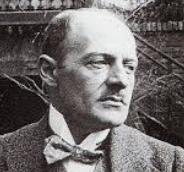
Even after his conversion, the true 'apostate' is not primarily committed to the positive contents of his new belief and to the realization of its aims. He is motivated by the struggle against the old belief and lives on for its negation. The apostate does not affirm his new convictions for their own sake; he is engaged in a continuous chain of acts of revenge against his own spiritual past. In reality he remains a captive of this past, and the new faith is merely a handy frame of reference for negating and rejecting the old. As a religious type, the apostate is therefore at the opposite pole from the 'resurrected,' whose life is transformed by a new faith which is full of intrinsic meaning and value.
▼
Source
source
L. Coser, trans. (1973), pp. 66-67
2 weeks 1 day ago
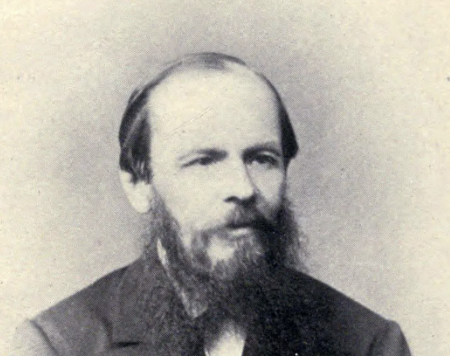
There is no sin, and there can be no sin on all the earth, which the Lord will not forgive to the truly repentant! Man cannot commit a sin so great as to exhaust the infinite love of God. Can there be a sin which could exceed the love of God?
▼
Source
source
Book II, ch. 3 (trans. Constance Garnett) The Elder Zossima, speaking to a devout widow afraid of death
6 days ago
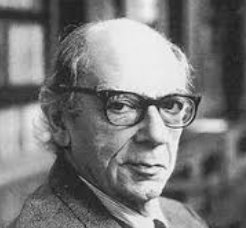
Those, no doubt, are in some way fortunate who have brought themselves, or have been brought by others, to obey some ultimate principle before the bar of which all problems can be brought. Single-minded monists, ruthless fanatics, men possessed by an all-embracing coherent vision do not know the doubts and agonies of those who cannot wholly blind themselves to reality.
1 month 2 weeks ago
We used to think that Hitler was wicked when he wanted to kill all the Jews, but what Kennedy and Macmillan and others both in the East and in the West pursue policies which will probably lead to killing not only all the Jews but all the rest of us too. They are much more wicked than Hitler and this idea of weapons of mass extermination is utterly and absolutely horrible and it is a thing which no man with one spark of humanity can tolerate and I will not pretend to obey a government which is organising the massacre of the whole of mankind. I will do anything I can to oppose such Governments in any non-violent way that seems likely to be fruitful, and I should exhort all of you to feel the same way. We cannot obey these murderers. They are wicked and abominable. They are the wickedest people that ever lived in the history of man and it is our duty to do what we can.
▼
Source
source
On Civil Disobedience, April 15th, 1961
1 week 4 days ago
Every father is given the opportunity to corrupt his daughter's nature, and the educator, husband, or psychiatrist then has to face the music. For what has been spoiled by the father can only be made good by a father, just as what has been spoiled by the mother can only be repaired by a mother. The disastrous repetition of the family pattern could be described as the psychological original sin, or as the curse of the Atrides running through the generations.
▼
Source
source
Mysterium Coniunctionis (1955) CW 14: P. 232

1 month 2 weeks ago
The science of religion is one science within philosophy; indeed it is the final one. In that respect it presupposes the other philosophical disciplines and is therefore a result.
1 month 1 week ago
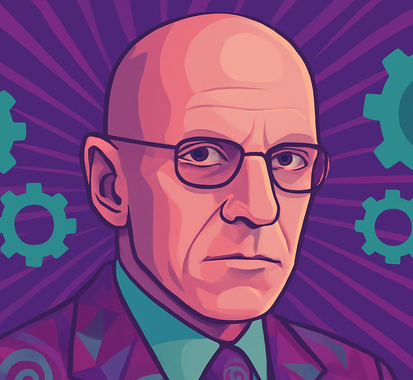
Sometimes, because my position has not been made clear enough, people think I'm a sort of radical anarchist who has an absolute hatred of power. No! What I am trying to do is to approach this extremely important and tangled phenomenon in our society, the exercise of power, with the most reflective, and I would say prudent attitude. Prudent in my analysis, in the moral and theoretical postulates I use: I try to figure out what's at stake. But to question the relations of power in the most scrupulous and attentive manner possible, looking into all the domains of its exercise, that's not the same thing as constructing a mythology of power as the beast of the apocalypse.
▼
Source
source
"Power, Moral Values, and the Intellectual", interview in History of the Present 4
1 month 2 weeks ago
Every time a man is begotten and born, the clock of human life is wound up anew to repeat once more its same old tune that has already been played innumerable times, movement by movement and measure by measure, with insignificant variations.
▼
Source
source
Vol. I, Ch. 4, The World As Will: Second Aspect, as translated by Eric F. J. Payne (1958) p. 322
CivilSimian.com created by AxiomaticPanic, CivilSimian, Kalokagathia