

5 days ago
When we rise out of [the night] into the new life and there begin to receive the signs, what can we know of that which - of him who gives them to us? Only what we experience from time to time from the signs themselves. If we name the speaker of this speech God, then it is always the God of a moment, a moment God.
▼
Source
source
Between Man and Man (1965), p. 15
1 month 2 weeks ago
Democracy is still upon its trial. The civic genius of our people is its only bulwark.
▼
Source
source
Robert Gould Shaw: Oration upon the Unveiling of the Shaw Monument

1 month 2 weeks ago
I trust a good deal to common fame, as we all must. If a man has good corn, or wood, or boards, or pigs, to sell, or can make better chairs or knives, crucibles or church organs, than anybody else, you will find a broad hard-beaten road to his house, though it be in the woods.
▼
Source
source
February 1855
1 month 2 weeks ago
Conformity to nature has no connection whatever with right and wrong. The idea can never be fitly introduced into ethical discussions at all, except, occasionally and partially, into the question of degrees of culpability. To illustrate this point, let us consider the phrase by which the greatest intensity of condemnatory feeling is conveyed in connection with the idea of nature - the word "unnatural." That a thing is unnatural, in any precise meaning which can be attached to the word, is no argument for its being blamable; since the most criminal actions are to a being like man not more unnatural than most of the virtues.
▼
Source
source
page 62; Broadview Press, page 102
2 months 4 days ago
The end of living, or the ultimate good, which is to be sought for its own sake, according to the universal opinion of mankind, is happiness; yet men, for the most part, fail in the pursuit of this end, either because they do not form a right idea of the nature of happiness, or because they do not make use of proper means to attain it.

2 months 1 week ago
The slave begins by demanding justice and ends by wanting to wear a crown. He must dominate in his turn.
1 month 2 weeks ago
Yet a man may love a paradox, without losing either his wit or his honesty.
▼
Source
source
"Walter Savage Landor", from The Dial, xii, 1841

1 month 1 week ago
I wrote the books I should have liked to read. That's always been my reason for writing. People won't write the books I want, so I have to do it for myself.
▼
Source
source
As quoted in C.S. Lewis (1963), by Roger Lancelyn Green, p. 9
1 week 3 days ago
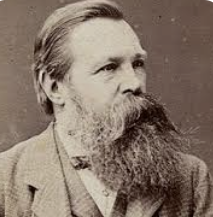
Wherever big industries displaced manufacture, the bourgeoisie developed in wealth and power to the utmost and made itself the first class of the country. The result was that wherever this happened, the bourgeoisie took political power into its own hands and displaced the hitherto ruling classes, the aristocracy, the guildmasters, and their representative, the absolute monarchy. The bourgeoisie annihilated the power of the aristocracy, the nobility, by abolishing the entailment of estates - in other words, by making landed property subject to purchase and sale, and by doing away with the special privileges of the nobility. It destroyed the power of the guildmasters by abolishing guilds and handicraft privileges. In their place, it put competition - that is, a state of society in which everyone has the right to enter into any branch of industry, the only obstacle being a lack of the necessary capital.
2 weeks 1 day ago
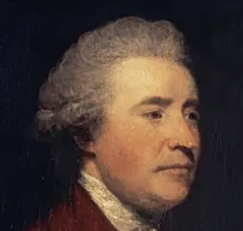
Neither the few nor the many have a right to act merely by their will, in any matter connected with duty, trust, engagement, or obligation.
▼
Source
source
p. 440

1 month 3 weeks ago
The human understanding is unquiet; it cannot stop or rest, and still presses onward, but in vain. Therefore it is that we cannot conceive of any end or limit to the world, but always as of necessity it occurs to us that there is something beyond... But he is no less an unskilled and shallow philosopher who seeks causes of that which is most general, than he who in things subordinate and subaltern omits to do so.
▼
Source
source
Aphorism 48
2 weeks ago
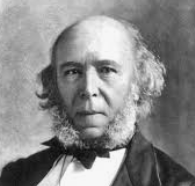
It cannot but happen that those individuals whose functions are most out of equilibrium with the modified aggregate of external forces, will be those to die; and that those will survive whose functions happen to be most nearly in equilibrium with the modified aggregate of external forces. But this survival of the fittest, implies multiplication of the fittest. Out of the fittest thus multiplied, there will, as before, be an overthrowing of the moving equilibrium wherever it presents the least opposing force to the new incident force.
▼
Source
source
The Principles of Biology, Vol. I (1864), Part III: The Evolution of Life, Ch. 7: Indirect Equilibration
1 month 2 weeks ago
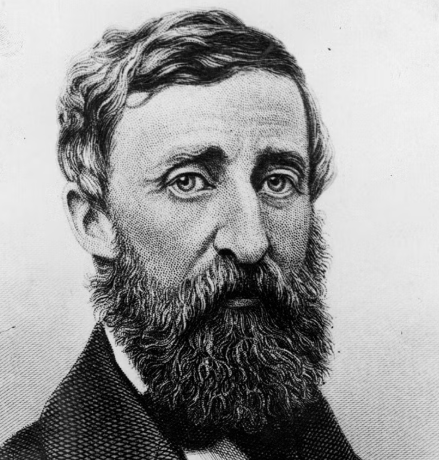
The Indian...stands free and unconstrained in Nature, is her inhabitant and not her guest, and wears her easily and gracefully. But the civilized man has the habits of the house. His house is a prison.
▼
Source
source
April 26, 1841
1 month 2 weeks ago
The merits of democracy are negative: it does not insure good government, but it prevents certain evils.
▼
Source
source
Ch. 18: The Taming of Power PT311 books.google

1 month 4 days ago
Now drown care in wine.
▼
Source
source
Book I, ode vii, line 32
1 month 4 weeks ago
In theory there is nothing to hinder our following what we are taught; but in life there are many things to draw us aside.
▼
Source
source
Book I, ch. 26, 3.
1 month 3 weeks ago
...it is the peculiar and perpetual error of the human understanding to be more moved and excited by affirmatives than by negatives...
▼
Source
source
Aphorism 46
2 months 4 days ago
Against the diseases of the mind, philosophy provides sufficient antidotes. The instruments which it employs for this purpose are the virtues; the root of which, whence all the rest proceed, is prudence. This virtue comprehends the whole art of living discreetly, justly, and honorably, and is, in fact, the same thing with wisdom. It instructs men to free their understandings from the clouds of prejudice; to exercise temperance and fortitude in the government of themselves: and to practice justice towards others. Although pleasure, or happiness, which is the end of living, be superior to virtue, which is only the means, it is every one's interest to practice all the virtues; for in a happy life, pleasure can never be separated from virtue.
5 days ago
Whoever desires to live among men has to obey their laws-this is what the secular morality of Western civilization comes down to. ... Rationality in the form of such obedience swallows up everything, even the freedom to think.
▼
Source
source
p. 29.
Just now
Wyman's overpopulated universe is in many ways unlovely. It offends the aesthetic sense of us who have a taste for desert landscapes.
▼
Source
source
"On What There Is", p. 4. a humorous comment on the idea "unactualized possible".
1 month 2 weeks ago
Why did it occur to anyone to believe in only one God? And conversely why did it ever occur to anyone to believe in many gods? To both these questions we must return the same answer: Because that is how the human mind happens to work. For the human mind is both diverse and simple, simultaneously many and one. We have an immediate perception of our own diversity and of that of the outside world. And at the same time we have immediate perceptions of our own oneness.
▼
Source
source
"One and Many," p. 12
5 days ago
What, by a word lacking even in grammar, is called amorality, is a thing that does not exist. If you are unwilling to submit to any norm, you have, nolens volens, to submit to the norm of denying all morality, and this is not amoral, but immoral. It is a negative morality which preserves the empty form of the other.
▼
Source
source
Chapter XV: We Arrive At The Real Question
2 weeks 1 day ago
Justice was in all countries originally administered by the priesthood; nor indeed could laws in their first feeble state have either authority or sanction, so as to compel men to relinquish their natural independence, had they not appeared to come down to them enforced by beings of more than human power. The first openings of civility have been everywhere made by religion. Amongst the Romans, the custody and interpretation of the laws continued solely in the college of the pontiffs for above a century.
▼
Source
source
An Essay towards an Abridgment of English History (1757-c. 1763), quoted in The Works of the Right Honourable Edmund Burke, Vol. VI (1856), p. 196
1 week ago
Friendship is almost always the union of a part of one mind with the part of another; people are friends in spots.
▼
Source
source
"Friendships"
2 months 1 week ago
I get a certain pleasure in knowing that I live not merely in a city but in Manhattan, the center of New York City, a region so unique in many ways that I honestly believe that Earth is divided into halves: Manhattan and non-Manhattan.
1 month 2 weeks ago
No man with a genius for legislation has appeared in America. They are rare in the history of the world. There are orators, politicians, and eloquent men, by the thousand; but the speaker has not yet opened his mouth to speak who is capable of settling the much-vexed questions of the day.


Just now
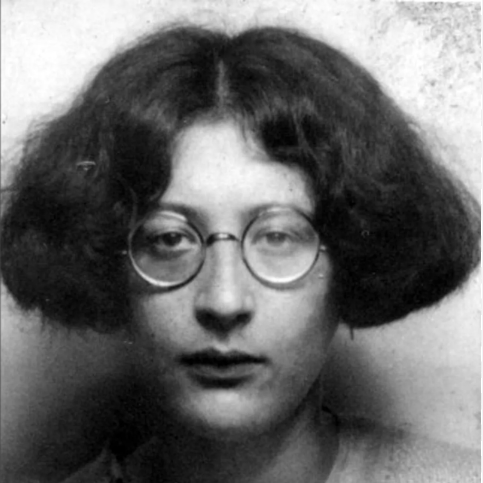
We believe we are rising because while keeping the same base inclinations (for instance: the desire to triumph over others) we have given them a noble object. We should, on the contrary, rise by attaching noble inclinations to lowly objects.
▼
Source
source
La pesanteur et la grâce (1948), p. 61

1 week 4 days ago
Far from diminishing the appetite for power, suffering exasperates it; hence the mind feels more comfortable in the society of a braggart than in that of a martyr; and nothing is more repugnant to it than the spectacle of dying for an idea.
1 month 2 weeks ago
It is not enough to be industrious; so are the ants. What are you industrious about?
▼
Source
source
Letter to Harrison Blake, November 16, 1857
1 month 3 weeks ago
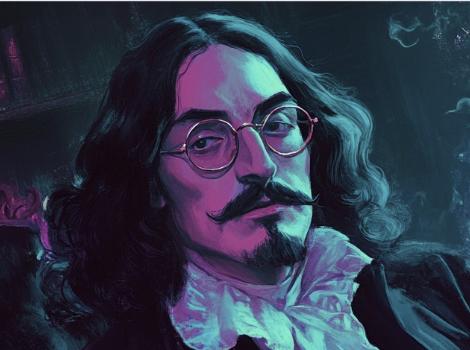
What I have given in the second book on the nature and properties of curved lines, and the method of examining them, is, it seems to me, as far beyond the treatment in the ordinary geometry, as the rhetoric of Cicero is beyond the a, b, c of children.
▼
Source
source
Letter to Marin Mersenne (1637) as quoted by D. E. Smith & M. L. Latham Tr. The Geometry of René Descartes
1 month 1 week ago
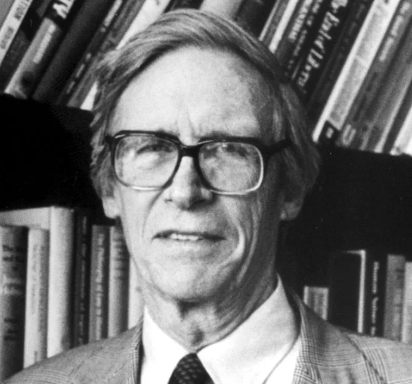
Ideal legislators do not vote their interests.
▼
Source
source
Chapter V, Section 43, p. 284
2 months 1 week ago
The actor's realm is that of the fleeting.
5 days ago
My path was not the normal one of professors of philosophy. I did not intend to become a doctor of philosophy by studying philosophy (I am in fact a doctor of medicine) nor did I by any means, intend originally to qualify for a professorship by a dissertation on philosophy. To decide to become a philosopher seemed as foolish to me as to decide to become a poet. Since my schooldays, however, I was guided by philosophical questions. Philosophy seemed to me the supreme, even the sole, concern of man. Yet a certain awe kept me from making it my profession.

1 month 3 weeks ago
Whatever you see in the more material part of yourself, learn to refer to God and to the invisible part of yourself. In that way, whatever offers itself to the senses will become for you an occasion for the practice of piety.
▼
Source
source
The Erasmus Reader (1990), p. 141.
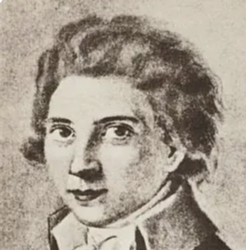
2 weeks 1 day ago
All those countless battles-those endless, and... for the greater part, useless wars, of which... fills up for so many thousand years... are but little atoms compared with the great whole of human destiny.
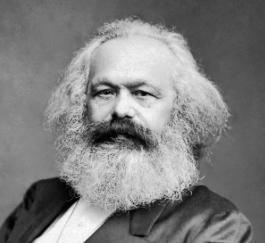
1 month 2 weeks ago
In short, competition has to shoulder the responsibility of explaining all the meaningless ideas of the economists, whereas it should rather be the economists who explain competition.
▼
Source
source
Vol. III, Ch. L, Illusions Created by Competition, p. 866.
1 month 3 weeks ago
This return of Republics back to their principles also results from the simple virtue of one man, without depending on any law that excites him to any execution: none the less, they are of such influence and example that good men desire to imitate him, and the wicked are ashamed to lead a life contrary to those examples.
▼
Source
source
Book 3, Ch. 1
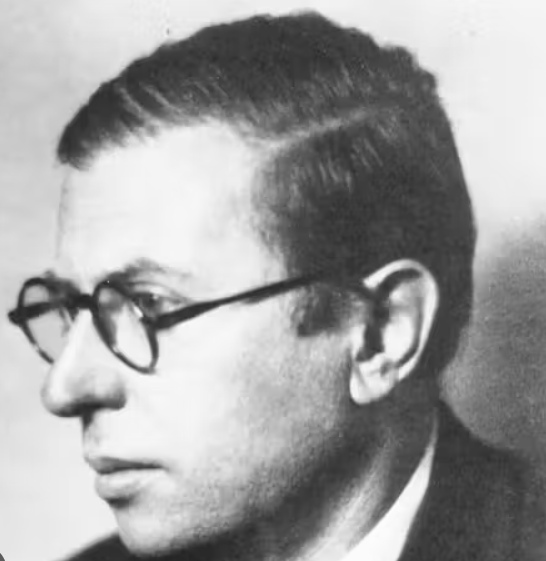
1 month 1 week ago
They made me take cod liver oil: that is the height of luxury: a medicine to make you hungry while the others, in the street, would have sold themselves for a beefsteak. I saw them passing my window with their signs: "Give me bread".
▼
Source
source
Act 3, sc. 3
1 month 2 weeks ago
Instead of deciding once in three or six years which member of the ruling class was to misrepresent the people in Parliament, universal suffrage was to serve the people, constituted in Communes, as individual suffrage serves every other employer in the search for the workmen and managers in his business.
▼
Source
source
The Civil War in France : "The Third Address", May 1871
2 weeks 1 day ago
A people who are still, as it were, but in the gristle, and not yet hardened into the bone of manhood.
1 month 5 days ago
The idealist tradition, including contemporary phenomenology, has of course admitted subjective points of view as basic and has gone to the opposite length of denying an irreducible objective reality. ... I find the idealist solution unacceptable ...: objective reality cannot be analyzed or shut out of existence any more than subjective reality can. Even if not everything is something from no point of view, some things are.The deep source of both idealism and its objectifying opposite is the same: a conviction that a single world cannot contain both irreducible points of view and irreducible objective reality - that one of them must be what there really is and the other somehow reducible or dependent on it. This is a very powerful idea. To deny it is in a sense to deny that there is a single world.
▼
Source
source
"Subjective and Objective" (1979), p. 212.

1 month 3 weeks ago
We are beggars: this is true.
▼
Source
source
"The Last Written Words of Luther," Table Talk No. 5468, (16 February 1546), in Dr. Martin Luthers Werke (1909) as translated by James A. Kellerman, Band 85 (TR 5) 317-318
1 month 1 week ago
I do not believe in what is often called... 'exact terminology'... [or] in definitions... [they] do not... add to exactness... I especially dislike pretentious terminology and... pseudo-exactness concerned with it.
2 weeks 1 day ago
A very great part of the mischiefs that vex the world arises from words.
▼
Source
source
Letter to Richard Burke post 19 February 1792 (1792), in R. B. McDowell and William B. Todd (eds), The Writings and Speeches of Edmund Burke, Vol. 9: I: The Revolutionary War, 1794-1797; II: Ireland. p. 647
1 month 4 weeks ago
These reasonings are unconnected: "I am richer than you, therefore I am better"; "I am more eloquent than you, therefore I am better." The connection is rather this: "I am richer than you, therefore my property is greater than yours;" "I am more eloquent than you, therefore my style is better than yours." But you, after all, are neither property nor style.
▼
Source
source
(44).
2 months ago
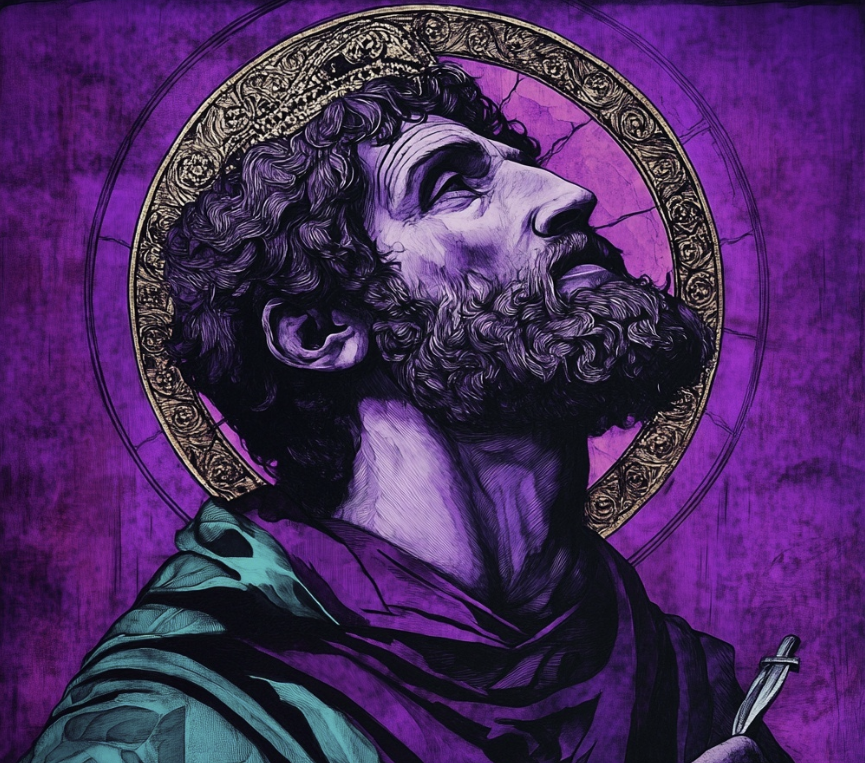
Venerate the martyrs, praise, love, proclaim, honor them. But worship the God of the martyrs.
▼
Source
source
273:9; translation from: The works of Saint Augustine, John E. Rotelle, New City Press, ISBN 1565480600 ISBN 9781565480605 p. 21

2 months 2 weeks ago
If one prefers to have little with blessing, to have truth with concern, to suffer instead of exulting over imagined victories, then one presumably will not be disposed to praise the knowledge, as if what it bestows were at all proportionate to the trouble it causes, although one would not therefore deny that through its pain it educates a person, if he is honest enough to want to be educated rather than to be deceived, out of the multiplicity to seek the one, out of abundance to seek the one thing needful, as this is plainly and simply offered precisely according to the need for it.
1 month 2 weeks ago
There is no art which one government sooner learns of another than that of draining money from the pockets of the people.
▼
Source
source
Chapter II, Part II, Appendix to Articles I and II.
1 month 4 days ago
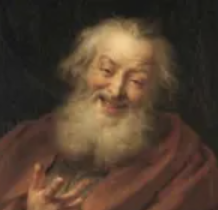
Sweet exists by convention, bitter by convention, colour by convention; atoms and Void [alone] exist in reality.
▼
Source
source
(trans. Freeman 1948), p. 92.
CivilSimian.com created by AxiomaticPanic, CivilSimian, Kalokagathia