


1 month 2 weeks ago
Encourage therefore his inquisitiveness all you can, by satisfying his demands, and informing his judgement, as far as it is capable. When his reasons are any way tolerable, let him find the credit and commendation of it, without being laugh'd at for his mistake be gently put into the right; and if he shew a forwardness to be reasoning about things that come in his way, take care, as much as you can, that no body check this inclination in him, or mislead it by captious or fallacious ways of talking with him. For when all is done, this is the highest and most important faculty of our minds, deserves the greatest care and attention in cultivating it: the right improvement, and exercise of our reason being the highest perfection that a man can attain to in his life.
▼
Source
source
Sec. 122

1 week 4 days ago
I am enraptured by Hindu philosophy, whose essential endeavor is to surmount the self; and everything I do, everything I think is only myself and the selfs humiliations.
1 month 2 weeks ago
A sound mind in a sound body, is a short but full description of a happy state in this world.
▼
Source
source
Sec. 1

1 week ago
A new commandment I give unto you, That ye love one another; as I have loved you, that ye also love one another. By this shall all men know that ye are my disciples, if ye have love one to another.
▼
Source
source
13:34-35 KJV
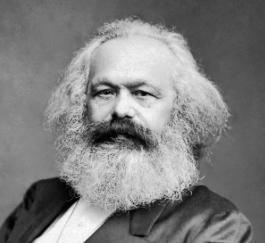
1 month 2 weeks ago
Titles of property, for instance railway shares, may change hands every day, and their owner may make a profit by their sale even in foreign countries, so that titles to property are exportable, although the railway itself is not.
▼
Source
source
Vol. II, Ch. X, p. 215.
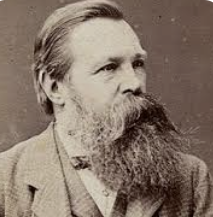
1 week 3 days ago
The abolition of private property has become not only possible but absolutely necessary. ... The outcome can only be the victory of the proletariat.
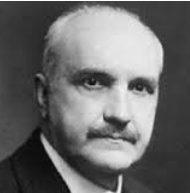
1 week ago
Beauty as we feel it is something indescribable: what it is or what it means can never be said.
▼
Source
source
Pt. IV, Expression; § 67: "Conclusion.", p. 267
1 week 4 days ago
To hope is to contradict the future.
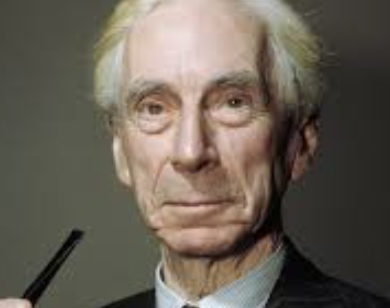
1 month 2 weeks ago
He asked my religion and I replied 'agnostic'. He asked how to spell it, and remarked with a sigh: 'Well, there are many religions, but I suppose they all worship the same God. This remark kept me cheerful for about a week.
1 month 5 days ago
I will begin to speak when I am not going to say what were better left unsaid.
▼
Source
source
Quoted by Plutarch, Life of Cato the Younger, 4 Bernadotte Perrin, ed. Plutarch's Lives, Vol. 8, LCL 100 (1919), pp. 247, 361
1 month 3 weeks ago
In judging policies we should consider the results that have been achieved through them rather than the means by which they have been executed.
▼
Source
source
From an undated letter to Piero Soderini (translated here by Dr. Arthur Livingston), in The Living Thoughts of Machiavelli, by Count Carlo Sforza, published by Cassell, London (1942), p. 85

2 months 2 weeks ago
It is mere illusion and pretty sentiment to expect much from mankind if he forgets how to make war. And yet no means are known which call so much into action as a great war, that rough energy born of the camp, that deep impersonality born of hatred, that conscience born of murder and cold-bloodedness, that fervor born of effort of the annihilation of the enemy, that proud indifference to loss, to one's own existence, to that of one's fellows, to that earthquake-like soul-shaking that a people needs when it is losing its vitality.
2 weeks ago
Idea or Vision, in its sensuous meaning, would be something that could be perceived only by the bodily eye and not by any other sense such as taste, hearing, etc.; it would be such a thing as a rainbow, or the forms which pass before us in dreams. Idea or Vision, in its supersensuous meaning, would denote, first of all, in conformity with the sphere in which the word is to be valid, something that cannot be perceived by the body at all, but only by the mind; and then, something that cannot, as many other things can, be perceived by the dim feeling of the mind, but only by the eye of the mind, by clear perception.
▼
Source
source
The Chief Difference Between The Germans And The Other Peoples Of Teutonic Descent p. 59
1 week 5 days ago
Women becoming, consequently weaker, in mind and body, than they ought to be...have not sufficient strength to discharge the first duty of a mother; and sacrificing to lasciviousness the parental affection...either destroy the embryo in the womb, or cast if off when born. Nature in every thing demands respect, and those who violate her laws seldom violate them with impunity.
▼
Source
source
Ch. 8
6 days ago
Everyone knows what made Berkeley notorious. He said that there were no material objects. He said the external world was in some sense immaterial, that nothing existed save ideas - ideas and their authors. His contemporaries thought him very ingenious and a little mad.
1 week 4 days ago
Third, consider the insistency of an idea. The insistency of a past idea with reference to the present is a quantity which is less, the further back that past idea is, and rises to infinity as the past idea is brought up into coincidence with the present.
1 month 2 weeks ago
Conformity to nature has no connection whatever with right and wrong. The idea can never be fitly introduced into ethical discussions at all, except, occasionally and partially, into the question of degrees of culpability. To illustrate this point, let us consider the phrase by which the greatest intensity of condemnatory feeling is conveyed in connection with the idea of nature - the word "unnatural." That a thing is unnatural, in any precise meaning which can be attached to the word, is no argument for its being blamable; since the most criminal actions are to a being like man not more unnatural than most of the virtues.
▼
Source
source
page 62; Broadview Press, page 102

2 months 3 days ago
Music is associated not only with speculation but with morality. When rhythms and modes reach an intellect through the ear, they doubtless affect and reshape that mind according to their particular character.

1 month 2 weeks ago
He who is in love is wise and is becoming wiser, sees newly every time he looks at the object beloved, drawing from it with his eyes and his mind those virtues which it possesses.
▼
Source
source
The Method of Nature, 1841
5 days ago
That Marxism should triumph in Russia, where there is no industry, would be the greatest contradiction that Marxism could undergo. But there is no such contradiction, for there is no such triumph. Russia is Marxist more or less as the Germans of the Holy Roman Empire were Romans.
▼
Source
source
Chapter XIV: Who Rules The World?
1 month 2 weeks ago
As geological time goes, it is but a moment since the human race began and only the twinkling of an eye since the arts of civilization were first invented. In spite of some alarmists, it is hardly likely that our species will completely exterminate itself. And so long as man continues to exist, we may be pretty sure that, whatever he may suffer for a time, and whatever brightness may be eclipsed, he will emerge sooner or later, perhaps strengthened and reinvigorated by a period of mental sleep. The universe is vast and men are but tiny specks on an insignificant planet. But the more we realize our minuteness and our impotence in the face of cosmic forces, the more astonishing becomes what human beings have achieved.
▼
Source
source
"If We are to Survive this Dark Time", The New York Times Magazine, 9/3/1950
2 months 4 days ago
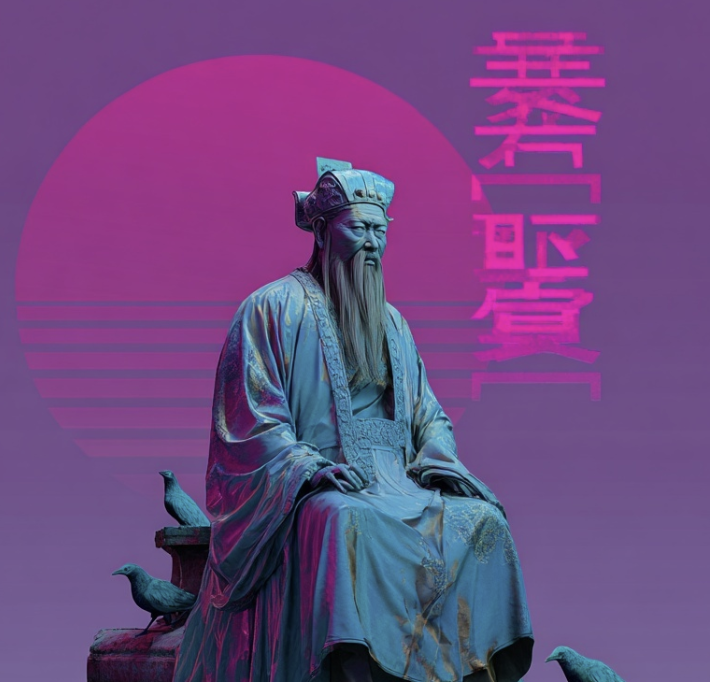
Perfect is the virtue which is according to the Mean! Rare have they long been among the people, who could practice it!
1 month 2 weeks ago
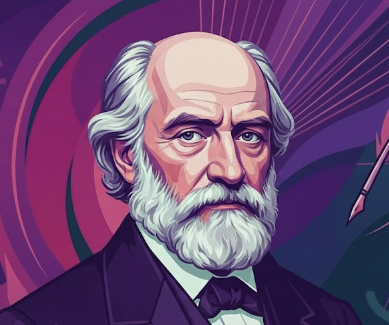
If a big diamond is cut up into pieces, it immediately loses its value as a whole; or if an army is scattered or divided into small bodies, it loses all its power; and in the same way a great intellect has no more power than an ordinary one as soon as it is interrupted, disturbed, distracted, or diverted; for its superiority entails that it concentrates all its strength on one point and object, just as a concave mirror concentrates all the rays of light thrown upon it. Noisy interruption prevents this concentration. This is why the most eminent intellects have always been strongly averse to any kind of disturbance, interruption and distraction, and above everything to that violent interruption which is caused by noise; other people do not take any particular notice of this sort of thing.
▼
Source
source
On Noise
1 month 2 weeks ago
I had always heard it maintained by my father, and was myself convinced, that the object of education should be to form the strongest possible associations of the salutary class; associations of pleasure with all things beneficial to the great whole, and of pain with all things hurtful to it.
▼
Source
source
(p. 136)
1 week 4 days ago
"What is truth?" is a fundamental question. But what is it compared to "How to endure life?" And even this one pales beside the next: "How to endure oneself?" - That is the crucial question in which no one is in a position to give us an answer.
1 month 2 weeks ago
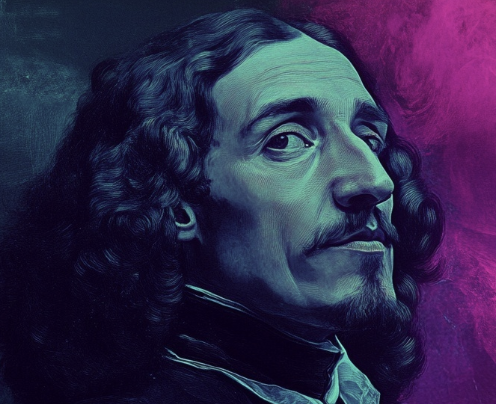
Truth is a standard both of itself and of falsity.
▼
Source
source
Part II, Prop. XLIII, Scholium

2 months ago
What has the Church done to thee, that thou shouldst wish to decapitate her? Thou wouldst take away her Head, and believe in the Head alone, despising the body. Vain is thy service, and false thy devotion to the Head. For to sever it from the body is an injury to both Head and body.
▼
Source
source
p.420

1 month 1 week ago
At the end of the Middle Ages, leprosy disappeared from the Western world. In the margins of the community, at the gates of cities, there stretched wastelands which sickness had ceased to haunt but had left sterile and long uninhabitable. For centuries, these reaches would belong to the non-human. From the fourteenth to the seventeenth century, they would wait, soliciting with strange incantations a new incarnation of disease, another grimace of terror, renewed rites of purification and exclusion.
▼
Source
source
Part One: 1. Stultifera Navis
1 week ago
I am the resurrection and the life. The one who exercises faith in me, even though he dies, will come to life; and everyone who is living and exercises faith in me will never die at all.
▼
Source
source
11:25-26, NWT
1 month 2 weeks ago
There are always two parties, the party of the Past and the party of the Future: the Establishment and the Movement. At times the resistance is reanimated, the schism runs under the world and appears in Literature, Philosophy, Church, State and social customs.
▼
Source
source
p. 529, col. 1

1 month 1 week ago
A teacher who can show good, or indeed astounding results while he is teaching, is still not on that account a good teacher, for it may be that, while his pupils are under his immediate influence, he raises them to a level which is not natural to them, without developing their own capacities for work at this level, so that they immediately decline again once the teacher leaves the schoolroom.
▼
Source
source
p. 43e
1 month 2 weeks ago
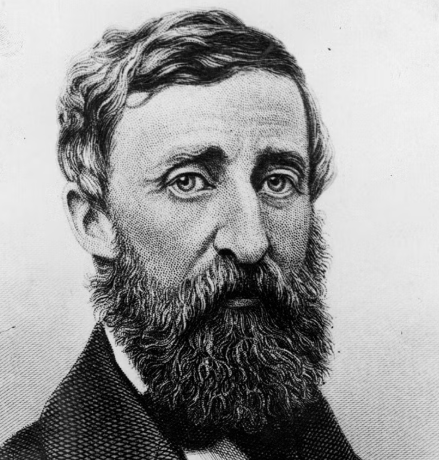
Where there is a lull of truth, an institution springs up. But the truth blows right on over it, nevertheless, and at length blows it down.
▼
Source
source
p. 494

1 month 4 days ago
To have a great man for an intimate friend seems pleasant to those who have never tried it; those who have, fear it.
▼
Source
source
Book I, epistle xviii, line 86
1 month 2 days ago
After the battle in Pharsalia, when Pompey was fled, one Nonius said they had seven eagles left still, and advised to try what they would do. "Your advice," said Cicero, "were good if we were to fight jackdaws."
▼
Source
source
Cicero

2 weeks 5 days ago
He was as great as a man can be without morality.
▼
Source
source
Said of Napoleon (1842)
1 month 2 weeks ago
In this consists the difference between the character of a miser and that of a person of exact economy and assiduity. The one is anxious about small matters for their own sake; the other attends to them only in consequence of the scheme of life which he has laid down to himself.
▼
Source
source
Chap. VI.
1 month 2 weeks ago
The ornament of a house is the friends who frequent it.
▼
Source
source
Domestic Life
2 weeks 1 day ago
Neither a person nor a nation can exist without some higher idea. And there is only one higher idea on earth, and it is the idea of the immortality of the human soul, for all other "higher" ideas of life by which humans might live derive from that idea alone.
▼
Source
source
A Writer's Diary, Vol. 1: 1873-1876, ed. Kenneth Lantz (1994), p. 734

1 month 2 weeks ago
Let us read, and let us dance; these two amusements will never do any harm to the world.

2 months 2 weeks ago
It will be easy for us once we receive the ball of yarn from Ariadne (love) and then go through all the mazes of the labyrinth (life) and kill the monster. But how many are there who plunge into life (the labyrinth) without taking that precaution?
2 months 2 weeks ago
I may live for thirty years, or perhaps forty, or maybe just one day: therefore I have resolved to use this day, or whatever I have to say in these thirty years or whatever I have to say this one day I may have to live - I have resolved to use it in such a way that if not one day in my whole past life has been used well, this one by the help of God will be.
1 week 4 days ago
Consciousness is nature's nightmare.
2 months 2 weeks ago
The least initial deviation from the truth is multiplied later a thousandfold.
1 month 2 weeks ago
Stop Traveller! Near this place lieth John Locke. If you ask what kind of a man he was, he answers that he lived content with his own small fortune. Bred a scholar he made his learning subservient only to the cause of truth. This thou will learn from his writings, which will show thee everything else concerning him, with greater truth, than the suspect praises of an epitaph. His virtues, indeed, if he had any, were too little for him to propose as matter of praise to himself, or as an example to thee. Let his vices be buried together. As to an example of manners, if you seek that, you have it in the Gospels; of vices, to wish you have one nowhere; if mortality, certainly, (and may it profit thee), thou hast one here and everywhere.
▼
Source
source
Epitaph, as translated from the Latin.
1 month 5 days ago
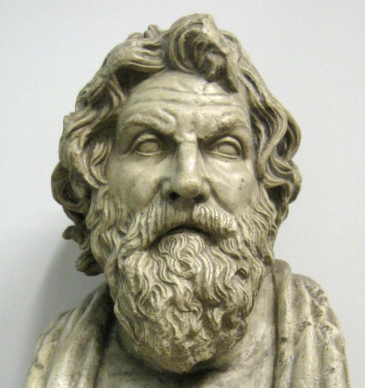
One should attend to one's enemies, for they are the first persons to detect one's errors.
▼
Source
source
§ 5

2 months 1 week ago
Predicting the future is a hopeless, thankless task, with ridicule to begin with and, all too often, scorn to end with.

1 month 3 weeks ago
Whatever can be done another day can be done today.
▼
Source
source
Ch. 20. Of the Force of Imagination (tr. Donald M. Frame)
1 month 2 weeks ago
The difference between the most dissimilar characters, between a philosopher and a common street porter, for example, seems to arise not so much from nature, as from habit, custom, and education.
▼
Source
source
Chapter II, p. 17.
6 days ago
The notion that one can discover large patterns or regularities in the procession of historical events is naturally attractive to those who are impressed by the success of the natural sciences in classifying, correlating, and above all predicting.
CivilSimian.com created by AxiomaticPanic, CivilSimian, Kalokagathia