

2 weeks 1 day ago
Man has many wishes that he does not really wish to fulfil, and it would be a misunderstanding to suppose the contrary. He wants them to remain wishes, they have value only in his imagination; their fulfilment would be a bitter disappointment to him. Such a desire is the desire for eternal life. If it were fulfilled, man would become thoroughly sick of living eternally, and yearn for death. In reality man wishes merely to avoid a premature, violent or gruesome death. Everything has its measure, says a pagan philosopher; in the end we weary of everything, even of life; a time comes when man desires death. Consequently there is nothing frightening about a normal, natural death, the death of a man who has fulfilled himself and lived out his life.
▼
Source
source
Lecture XXX, Atheism alone a Positive View

2 months 2 weeks ago
Those who assert that the mathematical sciences say nothing of the beautiful or the good are in error. For these sciences say and prove a great deal about them; if they do not expressly mention them, but prove attributes which are their results or definitions, it is not true that they tell us nothing about them. The chief forms of beauty are order and symmetry and definiteness, which the mathematical sciences demonstrate in a special degree.
2 weeks 1 day ago
The plea of anger or of drunkenness - as having placed the criminal for the moment beyond the control of his reason - relieves him from the charge of premeditated and malicious intent; but a rational legislation will rather provide more severe than milder punishment for such cases, particularly if such a state of mind is habitual with the accused; for a single unlawful act may well constitute an exception from an otherwise blameless life. But a person who pleads, "I habitually get so angry or so drunk as not to be any longer master of my senses!" confesses thereby that he changes himself into a beast on a fixed principle, and that he is, therefore, not fit to live among rational beings.
▼
Source
source
P. 351

1 month 3 weeks ago
How many valiant men we have seen to survive their own reputation!
▼
Source
source
Ch. 16
5 days ago
When we are told, in the same tone, that these people will be rewarded in "heaven" for their distress, and that "heaven" is the exact reverse of the earthly order ("the first shall be last"), we distinctly feel how the ressentiment-laden man transfers to God the vengeance he himself cannot wreak on the great. In this way, he can satisfy his revenge at least in imagination, with the aid of an other-worldly mechanism of rewards and punishments.
▼
Source
source
L. Coser, trans. (1961), p. 97
1 day ago
The simultaneous existence of opposite virtues in the soul - like pincers to catch hold of God.
▼
Source
source
p. 92
1 month 2 weeks ago
Fear? If I have gained anything by damning myself, it is that I no longer have anything to fear.
▼
Source
source
Act 1
1 month 2 weeks ago
To free a man from error is to give, not to take away. Knowledge that a thing is false is a truth. Error always does harm; sooner or later it will bring mischief to the man who harbors it. Then give up deceiving people; confess ignorance of what you don't know, and leave everyone to form his own articles of faith for himself. Perhaps they won't turn out so bad, especially as they'll rub one another's corners down, and mutually rectify mistakes. The existence of many views will at any rate lay a foundation of tolerance. Those who possess knowledge and capacity may betake themselves to the study of philosophy, or even in their own persons carry the history of philosophy a step further.
▼
Source
source
"Religion: A Dialogue." Variant translation: To free a man from error does not mean to take something from him, but to give him something.

1 month 2 weeks ago
Much more naturally than you do: because flight is a much more natural consequence of fear than of hate. He doesn't flee men because he hates them, but because he is afraid of them. He doesn't flee them in order to harm them, but to try o escape the harm they wish to do to him. They, on the contrary, don't seek him through friendship, but through hate. They seek him and he flees from them just as in the wilderness of Africa, where there are few men and many tigers, the men flee the tigers, the men flee the tigers, and the tigers seek the men.
▼
Source
source
Second Dialogue; translated by Judith R. Bush, Christopher Kelly, Roger D. Masters
2 weeks 5 days ago
The most dangerous madmen are those created by religion, and ... people whose aim is to disrupt society always know how to make good use of them on occasion.

1 month 2 weeks ago
The atheist who affects to reason, and the fanatic who rejects reason, plunge themselves alike into inextricable difficulties. The one perverts the sublime and enlightening study of natural philosophy into a deformity of absurdities by not reasoning to the end. The other loses himself in the obscurity of metaphysical theories, and dishonours the Creator, by treating the study of his works with contempt. The one is a half-rational of whom there is some hope, the other a visionary to whom we must be charitable.
▼
Source
source
A Discourse, &c. &c.

1 month 3 weeks ago
Again, we should notice the force, effect, and consequences of inventions, which are nowhere more conspicuous than in those three which were unknown to the ancients; namely, printing, gunpowder, and the compass. For these three have changed the appearance and state of the whole world; first in literature, then in warfare, and lastly in navigation: and innumerable changes have been thence derived, so that no empire, sect, or star, appears to have exercised a greater power and influence on human affairs than these mechanical discoveries.
▼
Source
source
Aphorism 129
2 months ago
Don't hold yourselves cheap, seeing that the creator of all things and of you estimates your value so high, so dear, that he pours out for you every day the most precious blood of his only-begotten Son.
▼
Source
source
216:3:1
1 week 4 days ago
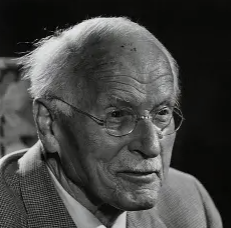
Our studies of sexual life, originating in Vienna and in England, are matched or surpassed by Hindu teachings on this subject... Psychoanalysis itself and the lines of thought to which it gives rise-surely a distinctly Western development-are only a beginner's attempt compared to what is an immemorial art in the East.
▼
Source
source
quoted in Georg Feuerstein, Subhash Kak, and David Frawley. - In search of the cradle of civilization _ new light on ancient India-Quest Books
1 month 2 weeks ago
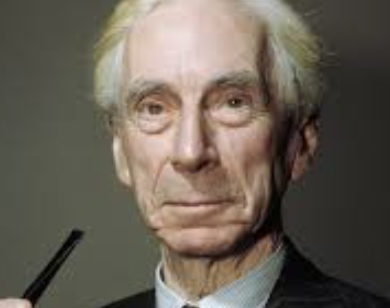
The "social contract," in the only sense in which it is not completely mythical, is a contract among conquerors, which loses its raison d'être if they are deprived of the benefits of conquest.
▼
Source
source
Ch. 12: Powers and forms of governments

2 months 4 days ago
This is the ideal world, a perfect world of equality, fraternity, harmony, welfare, and justice.

1 month 1 week ago
The world and life are one.
▼
Source
source
(5.621) Original German: Die Welt und das Leben sind Eins.
1 month 2 weeks ago
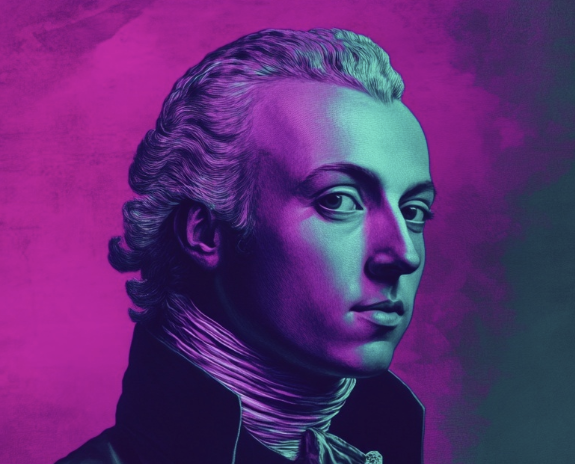
The sensuous may be exceedingly distinct, while intellectual concepts are extremely confused. The former we observe in the prototype of sensuous knowledge geometry; the latter, in the organon of all intellectual concepts, metaphysics. It is evident how much toil the latter is expending to dispel the fogs of confusion darkening the common intellect, though not always with the happy success of the former science.

1 month 5 days ago
Teach him what has been said in the past; then he will set a good example to the children of the magistrates, and judgement and all exactitude shall enter into him. Speak to him, for there is none born wise.
▼
Source
source
Introduction.
5 days ago
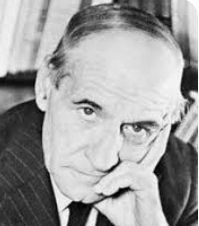
Even to-day, in spite of some signs which are making a tiny breach in that sturdy faith, even to-day, there are few men who doubt that motorcars will in five years' time be more comfortable and cheaper than to-day. They believe in this as they believe that the sun will rise in the morning. The metaphor is an exact one. For, in fact, the common man, finding himself in a world so excellent, technically and socially, believes that it has been produced by nature, and never thinks of the personal efforts of highly-endowed individuals which the creation of this new world presupposed. Still less will he admit the notion that all these facilities still require the support of certain difficult human virtues, the least failure of which would cause the rapid disappearance of the whole magnificent edifice.... These traits together make up the well-known psychology of the spoilt child. Chap.
▼
Source
source
VI: The Dissection Of The Mass-Man Begins
1 week ago
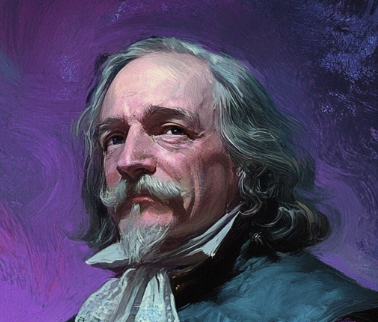
For Prudence, is but Experience; which equal time, equally bestows on all men, in those things they equally apply themselves unto.
▼
Source
source
The First Part, Chapter 13, p. 60
1 month 2 weeks ago
If a victory is told in detail, one can no longer distinguish it from a defeat.
▼
Source
source
Act 1
1 month 3 weeks ago
The human understanding is unquiet; it cannot stop or rest, and still presses onward, but in vain. Therefore it is that we cannot conceive of any end or limit to the world, but always as of necessity it occurs to us that there is something beyond... But he is no less an unskilled and shallow philosopher who seeks causes of that which is most general, than he who in things subordinate and subaltern omits to do so.
▼
Source
source
Aphorism 48
2 weeks 5 days ago
Jacques said that his master said that everything good or evil we encounter here below was written on high.
▼
Source
source
Prologue

1 month 2 weeks ago
In our reasonings concerning matter of fact, there are all imaginable degrees of assurance, from the highest certainty to the lowest species of moral evidence. A wise man, therefore, proportions his belief to the evidence.
▼
Source
source
Section X: Of Miracles; Part I. 87
2 weeks 1 day ago
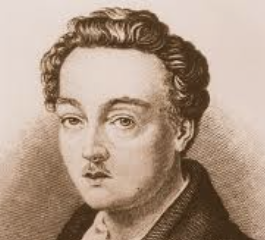
Supreme power rests in the will of all or of the majority.
1 month 3 weeks ago
Lastly, there are Idols which have immigrated into men's minds from the various dogmas of philosophies, and also from wrong laws of demonstration. These I call Idols of the Theater, because in my judgment all the received systems are but so many stage plays, representing worlds of their own creation after an unreal and scenic fashion.
▼
Source
source
Aphorism 44
1 month 1 week ago
I am sitting with a philosopher in the garden; he says again and again "I know that that's a tree", pointing to a tree that is near us. Someone else arrives and hears this, and I tell them: "This fellow isn't insane. We are only doing philosophy."
1 month 1 week ago
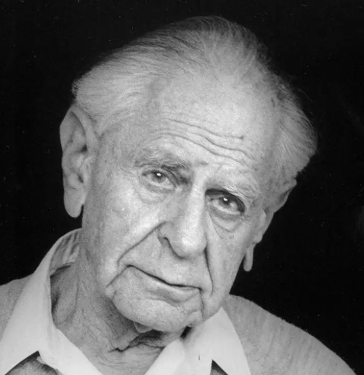
Whenever a theory appears to you as the only possible one, take this as a sign that you have neither understood the theory nor the problem which it was intended to solve.
▼
Source
source
Objective Knowledge: An Evolutionary Approach
1 month 2 weeks ago
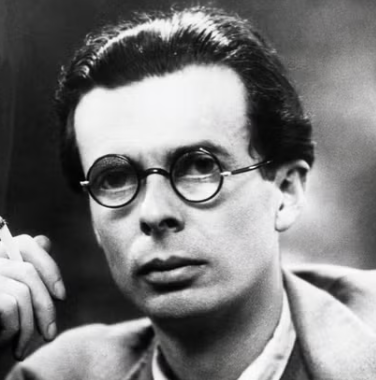
In regard to man's final end, all the higher religions are in complete agreement. The purpose of human life is the discovery of Truth, the unitive knowledge of the Godhead. The degree to which this unitive knowledge is achieved here on earth determines the degree to which it will be enjoyed in the posthumous state. Contemplation of truth is the end, action the means.
1 month 3 weeks ago
There are hardly any truths upon which we always remain agreed, and still fewer objects of pleasure which we do not change every hour, I do not know whether there is a means of giving fixed rules for adapting discourse to the inconstancy of our caprices.
1 month 2 days ago
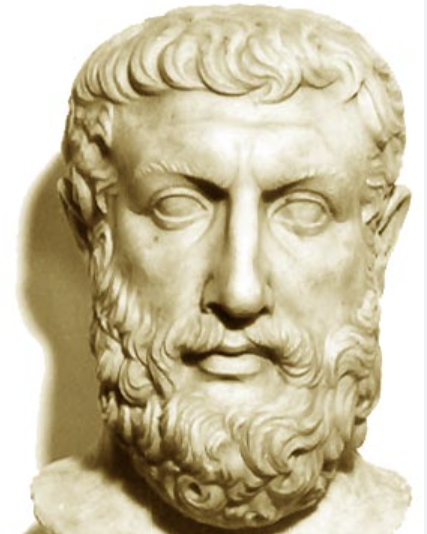
It is indifferent to me where I am to begin, for there shall I return again.
▼
Source
source
Frag. B 5, quoted by Proclus, Commentary on the Parmenides, 708
2 weeks 1 day ago
I call on Fate to give me back my soul.
2 months 4 days ago
When you have faults, do not fear to abandon them.

2 months 2 days ago
I have always been of the opinion that infamy earned by doing what is right is not infamy at all, but glory.
▼
Source
source
Speech I
1 month 2 weeks ago
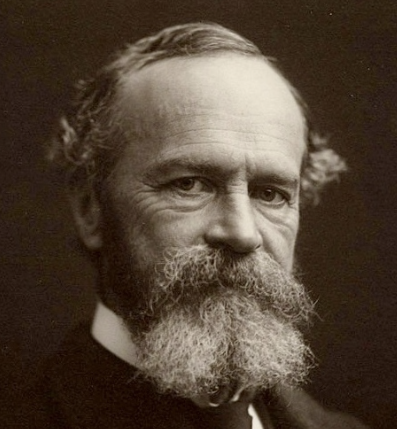
The world of our experience consists at all times of two parts, an objective and a subjective part, of which the former may be incalculably more extensive than the latter, and yet the latter can never be omitted or suppressed. The objective part is the sum total of whatsoever at any given time we may be thinking of, the subjective part is the inner "state" in which the thinking comes to pass.
▼
Source
source
Lecture XX, "Conclusions"

2 months 2 weeks ago
Haste is universal because everyone is in flight from himself.
1 week 4 days ago
To think we could have spared ourselves from living all that we have lived!

1 month 2 weeks ago
You could send your soul after the good you had expected, instead of turning it to the good you had got. You could refuse the real good; you could make the real fruit taste insipid by thinking of the other.
2 weeks 1 day ago
Granted I am a babbler, a harmless vexatious babbler, like all of us. But what is to be done if the direct and sole vocation of every intelligent man is babble, that is, the intentional pouring of water through a sieve?
▼
Source
source
Part 1, Chapter 5
1 month 2 weeks ago
The first intellectual operation in which I arrived at any proficiency, was dissecting a bad argument, and finding in what part the fallacy lay: and though whatever capacity of this sort I attained was due to the fact that it was an intellectual exercise in which I was most perseveringly drilled by my father, yet it is also true that the school logic, and the mental habits acquired in studying it, were among the principal instruments of this drilling. I am persuaded that nothing, in modern education, tends so much, when properly used, to form exact thinkers, who attach a precise meaning to words and propositions, and are not imposed on by vague, loose, or ambiguous terms. The boasted influence of mathematical studies is nothing to it; for in mathematical processes, none of the real difficulties of correct ratiocination occur.
▼
Source
source
(p. 19)

2 weeks 1 day ago
If there is to be any philosophy at all, this contradiction must be resolved - and the solution of this problem, or answer to the question: how can we think both of Presentations as conforming to objects, and objects as conforming to presentations? is, not the first, but the highest task of transcendental philosophy.
2 months 4 days ago
It is not truth that makes man great, but man that makes truth great.
1 week 4 days ago
You can take away a man's gods, but only to give him others in return.
▼
Source
source
p 63

1 month 1 week ago
The Geschick of being: a child that plays... Why does it play, the great child of the world-play Heraclitus brought into view in the aiôn? It plays, because it plays. The "because" withers away in the play. The play is without "why." It plays since it plays. It simply remains a play: the most elevated and the most profound. But this "simply" is everything, the one, the only... The question remains whether and how we, hearing the movements of this play, play along and accommodate ourselves to the play.
▼
Source
source
The Principle of Reason (1955-1956) as translated by Reginald Lilly
1 month 2 weeks ago
Our condition is like that of the poor wolves: if one of the flock wound himself, or so much as limp, the rest eat him up incontinently. That serene Power interposes the check upon the caprices and officiousness of our wills.
1 month 2 weeks ago
To choose one sock from each of infinitely many pairs of socks requires the Axiom of Choice, but for shoes the Axiom is not needed.
▼
Source
source
As quoted in Williams' Weighing the Odds: A Course in Probability and Statistics (2001), p. 498
1 month 3 weeks ago
The beginning is from God: for the business which is in hand, having the character of good so strongly impressed upon it, appears manifestly to proceed from God, who is the author of good, and the Father of Lights. Now in divine operations even the smallest beginnings lead of a certainty to their end. And as it was said of spiritual things, "The kingdom of God cometh not with observation," so is it in all the greater works of Divine Providence; everything glides on smoothly and noiselessly, and the work is fairly going on "before men are aware that it has begun. Nor should the prophecy of Daniel be forgotten, touching the last ages of the world: -"Many shall go to and fro, and knowledge shall be increased;" clearly intimating that the thorough passage of the world (which now by so many distant voyages seems to be accomplished, or in course of accomplishment), and the advancement of the sciences, are destined by fate, that is, by Divine Providence, to meet in the same age.
▼
Source
source
Aphorism 93

3 weeks 1 day ago
Knowledge that is not Infallible is not certain knowledge.
▼
Source
source
I. Introduction, p. 7.
1 month 2 weeks ago
We rarely hear, it has been said, of the combinations of masters, though frequently of those of the workman. But whoever imagines, upon this account, that masters rarely combine, is as ignorant of the world as of the subject.
▼
Source
source
Chapter VIII, p. 80.
CivilSimian.com created by AxiomaticPanic, CivilSimian, Kalokagathia