
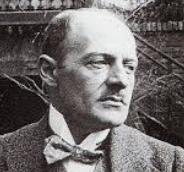
Max Scheler — Values, Emotion, and the Spiritual Structure of the Human Person (1874–1928)
Max Scheler was the great rebel within phenomenology — a philosopher who insisted that feeling is not the enemy of reason, but one of its deepest sources. Against traditions that reduced ethics to rules or calculations, Scheler argued that we grasp values directly through emotional insight. The human being, for Scheler, is not merely a thinking animal, but a spiritual person oriented toward meaning, love, and moral depth.
From Husserl’s Student to Philosophical Dissenter
Scheler studied under Edmund Husserl and initially worked within the phenomenological movement. Like Husserl, he sought to describe experience as it is given, without reducing it to psychology or natural science.
But Scheler quickly broke from Husserl’s strict focus on cognition. He believed that consciousness is not primarily theoretical, but practical and emotional. Our deepest contact with the world occurs through care, attraction, and aversion.
“The heart has its reasons which reason does not know.”
Value as a Dimension of Reality
Scheler rejected both moral relativism and abstract moral law. Values, he argued, are not invented by cultures nor deduced from formal principles. They are objective features of the world that we encounter through emotional intuition.
Just as the eye perceives color, the heart perceives worth. Love discloses higher values; resentment distorts perception.
Ethics, therefore, is not primarily about obedience, but about the refinement of moral vision.
“Values are given in feeling, not constructed by thought.”
The Hierarchy of Values
Scheler proposed that values form an objective hierarchy. Sensory pleasures rank below vital values such as health and strength. Above these stand spiritual values — truth, beauty, and justice. At the summit are religious values, oriented toward the holy.
Moral failure often occurs not from ignorance of rules, but from disordered priorities — preferring lower values over higher ones.
Character is revealed by what one loves most.
“Tell me what you love, and I will tell you who you are.”
Ressentiment and Moral Distortion
One of Scheler’s most influential analyses concerned ressentiment — a chronic emotional attitude born from powerlessness and suppressed hostility.
Ressentiment does not merely produce anger; it reshapes value perception. What one cannot attain is reinterpreted as unworthy. Excellence becomes arrogance. Strength becomes cruelty.
Moral systems can thus arise not from insight, but from wounded pride seeking justification.
“Ressentiment poisons the sources of moral judgment.”
Person, Spirit, and the Break with Biological Reduction
Scheler sharply distinguished between organism and person. Biological drives explain survival, but they do not explain sacrifice, devotion, or truth-seeking.
The person belongs to the realm of spirit — capable of transcending immediate impulses and orienting life around meaning.
Human dignity lies in this capacity for value-response, not in cognitive skill or social utility.
Influence on Existentialism and Personalism
Scheler’s work deeply influenced later existential and personalist thinkers, including Martin Buber, Edith Stein, and Karol Wojtyła (later Pope John Paul II).
His emphasis on embodied emotion, moral perception, and interpersonal relations helped redirect philosophy toward lived experience and ethical depth.
Even critics acknowledged that he reopened moral philosophy to dimensions long neglected.
Legacy — The Moral Intelligence of the Heart
Scheler’s philosophy resists reduction in every direction. Against scientism, he defended spirit. Against formalism, he defended concrete value. Against cynicism, he defended moral perception.
His lasting claim is unsettling and demanding: that ethics begins not with what we think, but with what we are able to love.
To cultivate moral life is to educate feeling, not merely to memorize rules.
“The human being is not first of all a knowing being, but a loving being.”
CivilSimian.com created by AxiomaticPanic, CivilSimian, Kalokagathia