


3 weeks ago
If someone incessantly drops the word "life," you know he's a sick man.

1 week 1 day ago
Sex also concentrates the mind wonderfully, and that is why civilised man is so obsessed by it. It enables him to "savour every fraction of an inch," not merely of the act of sexual intercourse, but of living itself. But that, of course, only underlines the basic problem: after coitus, "man becomes sad," because he quickly returns to his unconcentrated and defocused state. In sexual excitement, it is the spirit itself that becomes erect, and becomes capable of penetrating the meaning of life. Normal consciousness is limp and flaccid; its attitude towards reality is defensive. This is what Sartre called contingency, that feeling of being at the mercy of chance.
▼
Source
source
pp. 45-46
1 month 3 weeks ago
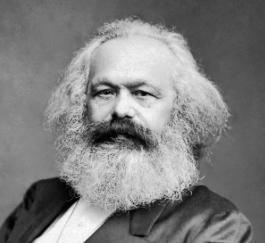
A circuit performed by a capital and meant to be a periodical process, not an individual act, is called its turnover. The duration of this turnover is determined by the sum of its time of production and its time of circulation.
▼
Source
source
Volume II, Ch. VII, p. 158.
1 month 3 weeks ago
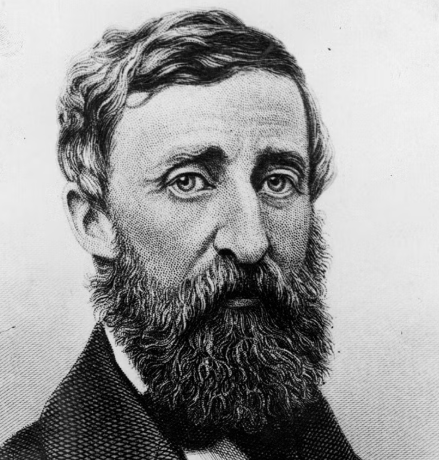
If a thousand [citizens] were not to pay their tax-bills this year, that would not be a violent and bloody measure, as it would be to pay them, and enable the State to commit violence and shed innocent blood. This is, in fact, the definition of a peaceable revolution, if any such is possible.
3 weeks 5 days ago
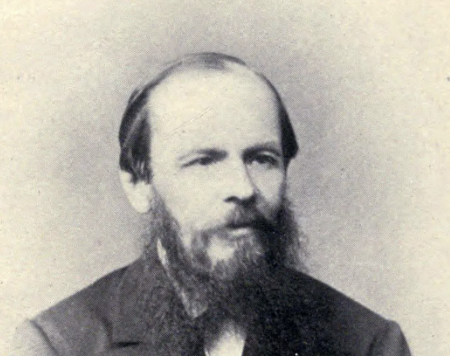
Is it really not possible to touch the gaming table without being instantly infected by superstition?
1 month 4 weeks ago
I. The subjects of every state ought to contribute towards the support of the government, as nearly as possible, in proportion to their respective abilities, that is, in proportion to the revenue which they respectively enjoy under the protection of the state.
▼
Source
source
Chapter II, Part II, p. 892.
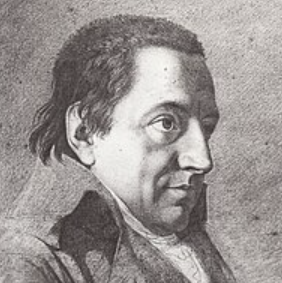
3 weeks 4 days ago
Education to true religion is the final task of the new education.
▼
Source
source
General Nature of New Eduction p. 38
3 weeks 4 days ago
The determination to print them (his lectures), and to communicate them to the General Public, must also speak for itself; and should it not do so, any other recommendation of them would be thrown away. Thus, with respect to the appearance of this work, I have nothing further to say to the Public, than that I have nothing to say.
▼
Source
source
Preface

1 month 3 weeks ago
It is the magician's bargain: give up our soul, get power in return. But once our souls, that is, ourselves, have been given up, the power thus conferred will not belong to us. We shall in fact be the slaves and puppets of that to which we have given our souls.
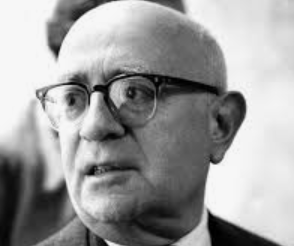
1 week 4 days ago
Advancing bourgeois society liquidates memory, time, recollection as irrational leftovers of the past.
▼
Source
source
"Was bedeutet Aufarbeitung der Vergangenheit"

1 week 1 day ago
It is characteristic of theistic "tolerance" that no one really cares what the people believe in, just so they believe or pretend to believe.

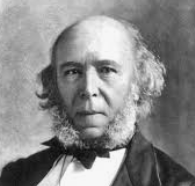
3 weeks 4 days ago
People ... become so preoccupied with the means by which an end is achieved, as eventually to mistake it for the end. Just as money, which is a means of satisfying wants, comes to be regarded by a miser as the sole thing to be worked for, leaving the wants unsatisfied; so the conduct men have found preferable because most conducive to happiness, has come to be thought of as intrinsically preferable: not only to be made a proximate end (which it should be), but to be made an ultimate end, to the exclusion of the true ultimate end.
▼
Source
source
Ethics (New York:1915), § 14, pp. 38-39

1 month 2 weeks ago
The public execution is to be understood not only as a judicial, but also as a political ritual. It belongs, even in minor cases, to the ceremonies by which power is manifested.
▼
Source
source
Chapter One, The body of the condemned

1 week 1 day ago
...I pray to God to make me free of God.
3 weeks 5 days ago
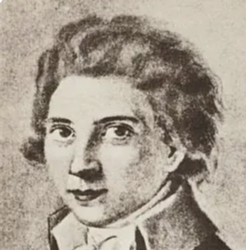
Life is writing. The sole purpose of mankind is to engrave the thoughts of divinity onto the tablets of nature.
▼
Source
source
"On Philosophy: To Dorothea," in Theory as Practice (1997), p. 420

2 months 4 days ago
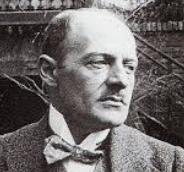
Let the public good overcome all private and selfish regards of every kind and degree; though in truth, even private and selfish regards, and every man's own interest, will be best promoted by the preservation of peace.
2 weeks 2 days ago
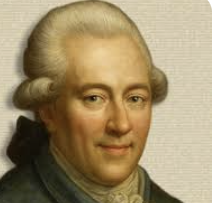
The "kingdom of God" has become the "other world," which stands mechanically beside "this world"-an opposition unknown to the strongest periods of Christianity.
▼
Source
source
L. Coser, trans. (1961), p. 97
5 days ago
The most successful tempters and thus the most dangerous are the deluded deluders.
▼
Source
source
F 120
1 week 4 days ago
Marriage as a community of interests unfailingly means the degradation of the interested parties, and it is the perfidy of the world's arrangements that no one, even if aware of it, can escape such degradation. The idea might therefore be entertained that marriage without ignominy is a possibility reserved for those spared the pursuit of interests, for the rich. But the possibility is purely formal, for the privileged are precisely those in whom the pursuit of interests has become second-nature-they would not otherwise uphold privilege.
▼
Source
source
E. Jephcott, trans. (1974), § 10
1 month 3 weeks ago
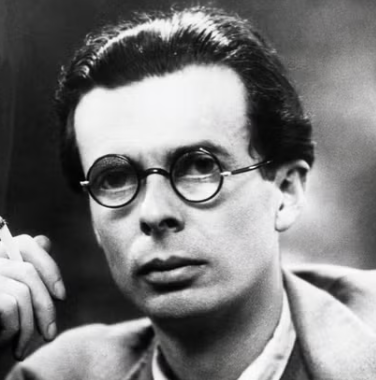
...this Jewish doctrine of the primacy of economic values has found the widest acceptance and been most whole-heartedly acted upon. From America it has begun to infect the rest of the world. We may be pardoned for wishing that the Jews had remained not forty, but four thousand years in their repulsive wilderness.
▼
Source
source
"One and Many," pp. 18
3 weeks 5 days ago
Corrupt influence, which is itself the perennial spring of all prodigality, and of all disorder; which loads us, more than millions of debt; which takes away vigor from our arms, wisdom from our councils, and every shadow of authority and credit from the most venerable parts of our constitution.

1 month 4 weeks ago
Beauty is no quality in things themselves: It exists merely in the mind which contemplates them; and each mind perceives a different beauty. One person may even perceive deformity, where another is sensible of beauty; and every individual ought to acquiesce in his own sentiment, without pretending to regulate those of others.
▼
Source
source
Part I, Essay 23: Of The Standard of Taste

1 month 3 weeks ago
Apart from autograph hunters, I get... many letters from Hindus, beseeching me to adopt some form of mysticism, from young Americans, asking me where I think the line should be drawn in petting, and from Poles, urging me to admit that while all other nationalism may be bad that of Poland is wholly noble. I get letters from engineers who cannot understand Einstein, and from parsons who think that I cannot understand Genesis, from husbands whose wives have deserted them - not (they say) that that would matter, but the wives have taken the furniture with them, and what in these circumstances should an enlightened male do? ...I get letters (concerning whose genuineness I am suspicious) trying to get me to advocate abortion, and I get letters from young mothers asking my opinion of bottle-feeding.
▼
Source
source
Letter to Mr C. L. Aiken, March 19, 1930
1 month 2 weeks ago
The hopes of the right-minded may be realized, those of fools are impossible.
1 month 3 weeks ago
"I don't want to! Why should I?" "Because more people will be happier if you do than if you don't." "So what? I don't care about other people." "You should." "But why?" "Because more people will be happier if you do than if you don't."
▼
Source
source
Dialogue between Russell and his daughter Katharine, as quoted in My Father - Bertrand Russell, 1975
3 weeks ago
The source of our actions resides in an unconscious propensity to regard ourselves as the center, the cause, and the conclusion of time. Our reflexes and our pride transform into a planet the parcel of flesh and consciousness we are. If we had the right sense of our position in the world, if to compare were inseparable from to live, the revelation of our infinitesimal presence would crush us. But to live is to blind ourselves to our own dimensions. . . .
1 month 3 weeks ago
The beauty or uncomeliness of many things, in good and ill breeding, will be better learnt, and make deeper impressions on them, in the examples of others, than from any rules or instructions can be given about them.
▼
Source
source
Sec. 82
1 month 3 weeks ago
Their worship was not paid to the demon which such a being as they imagined would really be, but to their own idea of excellence. The evil is, that such a belief keeps the ideal wretchedly low; and opposes the most obstinate resistance to all thought which has a tendency to raise it higher. Believers shrink from every train of ideas which would lead the mind to a clear conception and an elevated standard of excellence, because they feel (even when they do not distinctly see) that such a standard would conflict with many of the dispensations of nature, and with much of what they are accustomed to consider as the Christian creed.
▼
Source
source
(p. 42)

1 month 2 weeks ago
Science can only be comprehended epistemologically, which means as one category of possible knowledge, as long as knowledge is not equated either effusively with the absolute knowledge of a great philosophy or blindly with scientistic self-understanding of the actual business of research.
▼
Source
source
p. 4
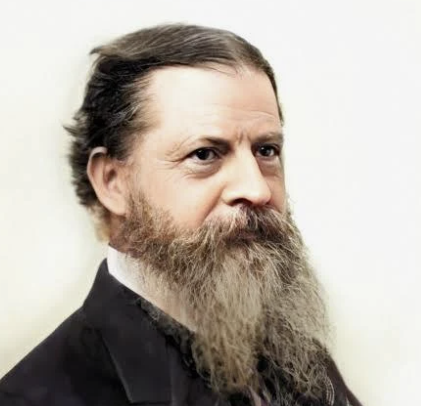
3 weeks ago
The next simplest feature that is common to all that comes before the mind, and consequently, the second category, is the element of Struggle.
▼
Source
source
Lecture II : The Universal Categories, § 2 : Struggle, CP 5.45
1 week 5 days ago
Use harms and even destroys beauty. The noblest function of an object is to be contemplated.
▼
Source
source
Niebla [Mist]

2 months 4 weeks ago
Life is, after all, not a product of morality.
1 month 3 weeks ago
I wish to suggest that a man may be very industrious, and yet not spend his time well. There is no more fatal blunderer than he who consumes the greater part of his life getting his living. All great enterprises are self-supporting. The poet, for instance, must sustain his body by his poetry, as a steam planing-mill feeds its boilers with the shavings it makes. You must get your living by loving.
▼
Source
source
pp. 486-7
1 month 3 weeks ago
It is one thing to show a man that he is in error, and another to put him in possession of the truth.
▼
Source
source
Book IV, Ch. 7, sec. 11

1 month 3 weeks ago
You can take better care of your secret than another can.
▼
Source
source
1863

1 month 4 weeks ago
The greatest problem for the human race, to the solution of which Nature drives man, is the achievement of a universal civic society which administers law among men.
▼
Source
source
Fifth Thesis
1 month 2 weeks ago
The different pieces of evidence did not constitute so many neutral elements, until such time as they could be gathered together into a single body of evidence that would bring the final certainty of guilt. Each piece of evidence aroused a particular degree of abomination. Guilt did not begin when all the evidence was gathered together; piece by piece, it was constituted by each of the elements that made it possible to recognize a guilty person. Thus a semi-proof did not leave the suspect innocent until such time as it was completed; it made him semi-guilty; slight evidence of a serious crime marked someone as slightly criminal. In short, penal demonstration did not obey a dualistic system: true or false; but a principle of continuous gradation; a degree reached in the demonstration already formed a degree of guilt and consequently involved a degree of punishment.
▼
Source
source
Chapter One, The body of the condemned, pp.23

2 months 3 days ago
For Christ is Joy and Sweetness to a broken heart. Christ is a Lover of poor sinners, and such a Lover that He gave Himself for us. Now if this is true, and it is true, then are we never justified by our own righteousness.
▼
Source
source
Chapter 3, verse 20

2 months 1 week ago
Thus the sum of things is ever being renewed, and mortal creatures live dependent one upon another. Some species increase, others diminish, and in a short space the generations of living creatures are changed and, like runners, pass on the torch of life.
▼
Source
source
Book II, line 75 (tr. Rouse)
3 weeks 5 days ago
You may have made a Revolution, but not a Reformation. You may have subverted Monarchy, but not recover'd freedom.
▼
Source
source
Letter to Charles-Jean-François Depont (November 1789), quoted in Alfred Cobban and Robert A. Smith (eds.), The Correspondence of Edmund Burke, Volume VI: July 1789-December 1791 (1967), p. 46
1 week 1 day ago
When we subordinate rest to work, we ignore the divine.
1 month 3 weeks ago
Can anybody remember when the times were not hard and money not scarce?
▼
Source
source
Works and Days
1 month 3 weeks ago
Only the great generalizations survive. The sharp words of the Declaration of Independence, lampooned then and since as 'glittering generalities,' have turned out blazing ubiquities that will burn forever and ever.
▼
Source
source
From a lecture on Books given in the Fraternity Course in Boston in 1864
1 week 1 day ago
I found Randi likable and plausible; the only thing that bothered me was the sweeping and intense nature of his skepticism. He was obviously working from the premise that all paranormal phenomena, without exception, are fakes or delusions. He seemed to take to take it for granted that all of us - there were also two women present - shared his opinions, and he made jovial, disparaging remarks about psychics and other such weirdos. I began to get the uncomfortable feeling of a Jew who has accidentally walked into a Nazi meeting, or a Jehovah's Witness at a convention of militant atheists. As a supposedly scientific psychic investigator, Randi struck me as being oddly fixed in his opinions.
▼
Source
source
pp. 39-40

1 month 1 day ago
I am not so much afraid of death, as ashamed thereof; 'tis the very disgrace and ignominy of our natures, that in a moment can so disfigure us that our nearest friends, Wife, and Children stand afraid and start at us.
▼
Source
source
Section 40

1 month ago
In countries where associations are free, secret societies are unknown. In America there are factions, but no conspiracies.
▼
Source
source
Chapter XII.
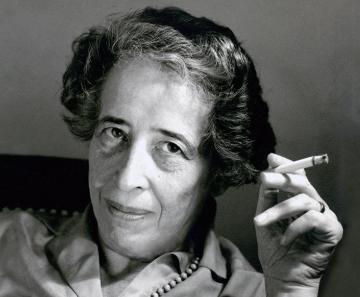
1 month 3 weeks ago
It was mathematics, the non-empirical science par excellence, wherein the mind appears to play only with itself, that turned out to be the science of sciences, delivering the key to those laws of nature and the universe that are concealed by appearances.
▼
Source
source
p. 7
1 month 3 weeks ago
The best effect of fine persons is felt after we have left their presence.
▼
Source
source
1839
CivilSimian.com created by AxiomaticPanic, CivilSimian, Kalokagathia