


1 week 2 days ago
The first act of violence that patriarchy demands of males is not violence toward women. Instead patriarchy demands of all males that they engage in acts of psychic self-mutilation, that they kill off the emotional parts of themselves. If an individual is not successful in emotionally crippling himself, he can count on patriarchal men to enact rituals of power that will assault his self-esteem.
▼
Source
source
The Will To Change: Men, Masculinity, and Love (2004), p. 66
1 month 4 weeks ago
The government of an exclusive company of merchants is, perhaps, the worst of all governments for any country whatever.
▼
Source
source
Chapter VII, Part Second, p. 619.
2 months 3 days ago
Great abuses in the world are begotten, or, to speak more boldly, all the abuses of the world are begotten, by our being taught to be afraid of professing our ignorance, and that we are bound to accept all things we are not able to refute: we speak of all things by precepts and decisions. The style at Rome was that even that which a witness deposed to having seen with his own eyes, and what a judge determined with his most certain knowledge, was couched in this form of speaking: "it seems to me." They make me hate things that are likely, when they would impose them upon me as infallible.
▼
Source
source
Ch. 12, tr. Cotton, rev. W. Carew Hazlitt, 1877
1 month 3 weeks ago
The deadliest enemies of nations are not their foreign foes; they always dwell within their borders. And from these internal enemies civilization is always in need of being saved. The nation blest above all nations is she in whom the civic genius of the people does the saving day by day, by acts without external picturesqueness; by speaking, writing, voting reasonably; by smiting corruption swiftly; by good temper between parties; by the people knowing true men when they see them, and preferring them as leaders to rabid partisans or empty quacks.
▼
Source
source
Robert Gould Shaw: Oration upon the Unveiling of the Shaw Monument
1 month ago
Only a very bad theologian would confuse the certainty that follows revelation with the truths that are revealed. They are entirely different things.
▼
Source
source
Apology for the Abbé de Prades
2 months 3 weeks ago
Scientific writing is abhorrently stylized and places a premium on poor quality.
2 weeks 2 days ago
The possibility of peace, on whose behalf many are working, might perhaps become actual because the technical advances in offensive weapons make the prospect of a European war so disastrous, and because, if the nations were at grips again, even the victorious aggressor would be ruined. But there still remains open the possibility of a new war which, more dreadful than any that have preceded it would make an end of contemporary Europeans.
2 months 3 weeks ago
The Autarch maintained his indifferent calm, but a certain lack of certainty was gathering, and he did not like to experience a lack of certainty. He liked nothing which made him aware of limitations. An Autarch should have no limitations, and on Lingane he had none that natural law did not impose.
3 weeks 2 days ago
Nothing, in fact, is as universal or as ancient as the iniquitous and absurd; truth and justice, on the contrary, are the least universal, the youngest features in the development of human society.
1 month 3 weeks ago
I conceive that the description so often given of a Benthamite, as a mere reasoning machine, though extremely inapplicable to most of those who have been designated by that title, was during two or three years of my life not altogether untrue of me. ...There is nothing very extraordinary in this fact: no youth of the age I then was, can be expected to be more than one thing, and this was the thing I happened to be. Ambition and desire of distinction, I had in abundance; and zeal for what I thought the good of mankind was my strongest sentiment, mixing with and colouring all others. But my zeal was as yet little else, at that period of my life, than zeal for speculative opinions. It had not its root in genuine benevolence, or sympathy with mankind; though these qualities held their due place in my ethical standard. Nor was it connected with any high enthusiasm for ideal nobleness.
▼
Source
source
(pp. 109-110)
2 months 2 weeks ago
I am not bothered by the fact that I am not understood. I am bothered when I do not know others.
1 month 3 weeks ago
Immortality. I notice that as soon as writers broach this question they begin to quote. I hate quotation. Tell me what you know.
▼
Source
source
May 1849
2 months 3 days ago
We are no nearer heaven on the top of Mount Cenis than at the bottom of the sea; take the distance with your astrolabe. They debase God even to the carnal knowledge of women, to so many times, and so many generations.
▼
Source
source
Ch. 12

1 month 3 weeks ago
It requires twenty years for a man to rise from the vegetable state in which he is within his mother's womb, and from the pure animal state which is the lot of his early childhood, to the state when the maturity of reason begins to appear. It has required thirty centuries to learn a little about his structure. It would need eternity to learn something about his soul. It takes an instant to kill him.
▼
Source
source
"Man: General Reflection on Man", 1771
1 month 4 weeks ago
Abbot Terrasson tells us that if the size of a book were measured not by the number of its pages but by the time required to understand it, then we could say about many books that they would be much shorter were they not so short.
▼
Source
source
A xix
1 month 3 weeks ago
There can be no difference anywhere that doesn't make a difference elsewhere - no difference in abstract truth that doesn't express itself in a difference in concrete fact and in conduct consequent upon that fact, imposed on somebody, somehow, somewhere and somewhen.
▼
Source
source
Lecture II, What Pragmatism Means
2 months 3 weeks ago
476 ... is usually taken as the date of the "fall of the Roman Empire." The date, however, is a false one. No one at this period of time considered that the Roman Empire had "fallen." Indeed, it still existed and was the most powerful realm in Europe. Its capital was at Constantinople and the Emperor was Zeno. It is only because we ourselves are culturally descended from the Roman west, that we tend to ignore the continued existence of the Roman Empire in the east.
2 months 2 weeks ago
There is no city that is truly one other than this city that we are involved in bringing forth.
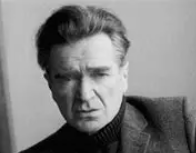
3 weeks ago
What every man who loves his country hopes for in his inmost heart: the suppression of half his compatriots.
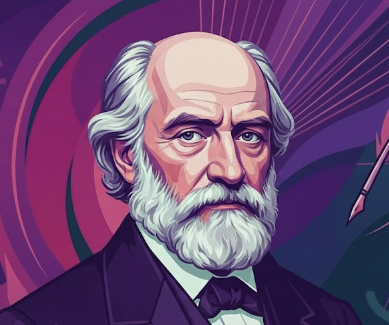
1 month 3 weeks ago
Do not shorten the morning by getting up late, or waste it in unworthy occupations or in talk; look upon it as the quintessence of life, as to a certain extent sacred. Evening is like old age: we are languid, talkative, silly. Each day is a little life: every waking and rising a little birth, every fresh morning a little youth, every going to rest and sleep a little death.
▼
Source
source
Vol. 2, Ch. 2: Our Relation To Ourselves
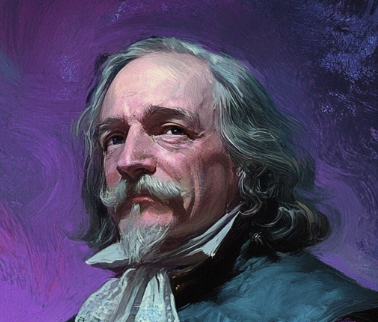
2 weeks 4 days ago
... and where men build on false grounds, the more they build, the greater is the ruine.
▼
Source
source
The Second Part, Chapter 26, p. 140
1 month 3 weeks ago
Language is a city to the building of which every human being brought a stone; yet he is no more to be credited with the grand result than the acaleph which adds a cell to the coral reef which is the basis of the continent.
▼
Source
source
Quotation and Originality
1 month 3 weeks ago
Every natural fact is a symbol of some spiritual fact.
▼
Source
source
Language
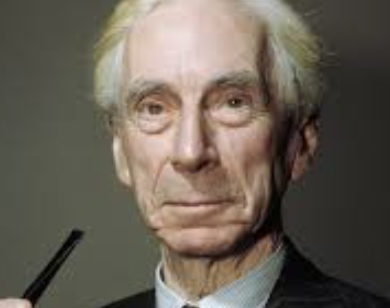
1 month 3 weeks ago
I knew a parson who frightened his congregation terribly by telling them that the second coming was very imminent indeed, but they were much consoled when they found that he was planting trees in his garden.
▼
Source
source
"Defects in Christ's Teaching"

1 month 1 week ago
True and perfect Friendship is, to make one heart and mind of many hearts and bodies.

1 month 3 weeks ago
One of the most difficult of the philosopher's tasks is to find out where the shoe pinches.
▼
Source
source
p. 61


1 month 3 weeks ago
It is not by recognizing the want of courage in someone else that you acquire courage yourself.
▼
Source
source
p. 44e
2 months 3 days ago
We must remove the Decalogue out of sight and heart.
▼
Source
source
Wilhelm Martin Leberecht De Wette, 4, 188. As cited by Jonathan Ramachandran (January 1, 2019), Lake of Fire - Hope for the Wicked One Day? - Essays in First Christianity, 5 Loaf 2 Fish Publications, p. 1264.
2 months 4 days ago
The world's a bubble, and the life of man Less than a span.
1 week 1 day ago
It repudiates, as something vile and sinful, our deepest feelings; but being absolutely ignorant as to the real functions of human emotions, Puritanism is itself the creator of the most unspeakable vices.
1 month 2 weeks ago
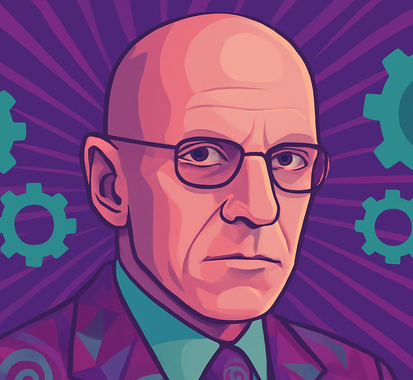
The problem... Democracy is founded by a politeia, a constitution, where the demos, the people, exercise power, and... everyone is equal in front of the law. Such a constitution... is condemned to give equal place to all forms of parrhesia, even the worst. Because parrhesia is given even to the worst citizens, the overwhelming influence of bad, immoral, or ignorant speakers may lead... into tyranny, or... otherwise endanger the city. Hence parrhesia may be dangerous for democracy itself.
1 month 3 weeks ago
A mother gave her children Aesop's fables to read, in the hope of educating and improving their minds; but they very soon brought the book back, and the eldest, wise beyond his years, delivered himself as follows: This is no book for us; it's much too childish and stupid. You can't make us believe that foxes and wolves and ravens are able to talk; we've got beyond stories of that kind! In these young hopefuls you have the enlightened Rationalists of the future.
▼
Source
source
"Similes, Parables and Fables" Parerga and Paralipomena
1 week ago
Mysticism: to dwell on the unseen, to withdraw ourselves from the things of sense into communion with God - to endeavour to partake of the Divine nature; that is, of Holiness. When we ask ourselves only what is right, or what is the will of God (the same question), then we may truly be said to live in His light.
2 months 3 weeks ago
So when the universe was quickened with soul, God was well pleased; and he bethought him to make it yet more like its type. And whereas the type is eternal and nought that is created can be eternal, he devised for it a moving image of abiding eternity, which we call time. And he made days and months and years, which are portions of time; and past and future are forms of time, though we wrongly attribute them also to eternity. For of eternal Being we ought not to say 'it was', 'it shall be', but 'it is' alone: and in like manner we are wrong in saying 'it is' of sensible things which become and perish; for these are ever fleeting and changing, having their existence in time.
2 weeks 2 days ago
The most immediate result of this unbalanced specialisation has been that to-day, when there are more "scientists" than ever, there are much less "cultured" men than, for example, about 1750. And the worst is that with these turnspits of science not even the real progress of science itself is assured. For science needs from time to time, as a necessary regulator of its own advance, a labour of reconstitution, and, as I have said, this demands an effort towards unification, which grows more and more difficult, involving, as it does, ever-vaster regions of the world of knowledge. Newton was able to found his system of physics without knowing much philosophy, but Einstein needed to saturate himself with Kant and Mach before he could reach his own keen synthesis. Kant and Mach - the names are mere symbols of the enormous mass of philosophic and psychological thought which has influenced Einstein.
▼
Source
source
Chapter XII: The Barbarism Of "Specialisation"
5 days ago
What is called an acute knowledge of human nature is mostly nothing but the observer's own weaknesses reflected back from others.
▼
Source
source
G 7
1 month 4 weeks ago
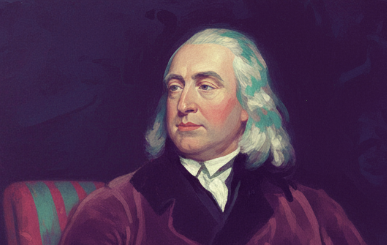
In principle and in practice, in a right track and in a wrong one, the rarest of all human qualities is consistency.
▼
Source
source
Ch. 1: Of the Principle of Utility
1 month 3 weeks ago
I am convinced that everything has come down to us from the banks of the Ganges, - astronomy, astrology, metempsychosis, etc.
▼
Source
source
M. de Voltaire par M. Bailly et précédées de quelques lettres de M. de Voltaire a l'auteur, Paris 1777, quoted in E. F. Bryant, The Quest for the Origins of Vedic Culture (2001), Ch. 1
2 months 3 days ago
Every other knowledge is harmful to him who does not have knowledge of goodness.
▼
Source
source
Ch. 25
3 weeks 2 days ago
It is impossible for any man, when the most favourable circumstances concur, to acquire sufficient knowledge and strength of mind to discharge the duties of a king, entrusted with uncontrolled power; how then must they be violated when his very elevation is an insuperable bar to the attainment of either wisdom or virtue; when all the feelings of a man are stifled by flattery, and reflection shut out by pleasure! Surely it is madness to make the fate of thousands depend on the caprice of a weak fellow creature, whose very station sinks him NECESSARILY below the meanest of his subjects! But one power should not be thrown down to exalt another--for all power intoxicates weak man; and its abuse proves, that the more equality there is established among men, the more virtue and happiness will reign in society.
▼
Source
source
Ch. 1
1 week 5 days ago
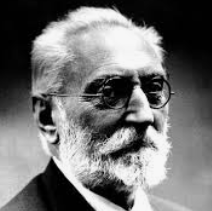
Once the needs of hunger are satisfied - and they are soon satisfied - the vanity, the necessity - for it is a necessity - arises of imposing ourselves upon and surviving in others. Man habitually sacrifices his life to his purse, but he sacrifices his purse to his vanity. He boasts even of his weakness and his misfortunes, for want of anything better to boast of, and is like a child who, in order to attract attention, struts about with a bandaged finger.
2 months 3 weeks ago
No matter how outrageous a lie may be, it will be accepted if stated loudly enough and often enough.

2 months 3 weeks ago
If God stops a man on the road, and calls him with a revelation and sends him armed with divine authority among men, they say to him; from whom dost thou come? He answers: from God. But now God cannot help his messenger physically like a king, who gives him soldiers or policemen, or his ring or his signature, which is known to all; in short, God cannot help men by providing them with physical certainty that an Apostle is an Apostle-which would, moreover, be nonsense. Even miracles, if the Apostle has that gift, give no physical certainty; for the miracle is the object of faith.
1 month 2 weeks ago
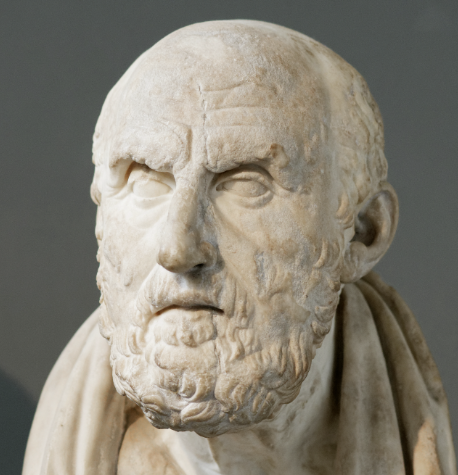
Living virtuously is equal to living in accordance with one's experience of the actual course of nature.
▼
Source
source
As quoted by Diogenes Laërtius, vii. 182.

1 month 2 days ago
For those endowed with insight there is in reality no object of love but God, nor does anyone but He deserve love Love, Longing, Intimacy and Contentment.
▼
Source
source
Islamic Texts Society. 2011. p. 23. ISBN 978-1-903682-27-2. Translated with an introduction and notes by Eric Ormsby.
2 weeks 2 days ago
The characteristic of the hour is that the commonplace mind, knowing itself to be commonplace, has the assurance to proclaim the rights of the commonplace and to impose them wherever it will. As they say in the United States: "to be different is to be indecent." The mass crushes beneath it everything that is different, everything that is excellent, individual, qualified and select. Anybody who is not like everybody, who does not think like everybody, runs the risk of being eliminated. And it is clear, of course, that this "everybody" is not "everybody." "Everybody" was normally the complex unity of the mass and the divergent, specialised minorities. Nowadays, "everybody" is the mass alone.
▼
Source
source
Chap.I: The Coming Of The Masses
2 weeks 4 days ago
Take heed lest any man deceive you: For many shall come in my name, saying, I am Christ; and shall deceive many. And when ye shall hear of wars and rumours of wars, be ye not troubled: for such things must needs be; but the end shall not be yet. For nation shall rise against nation, and kingdom against kingdom: and there shall be earthquakes in divers places, and there shall be famines and troubles: these are the beginnings of sorrows. But take heed to yourselves: for they shall deliver you up to councils; and in the synagogues ye shall be beaten: and ye shall be brought before rulers and kings for my sake, for a testimony against them. And the gospel must first be published among all nations. But when they shall lead you, and deliver you up, take no thought beforehand what ye shall speak, neither do ye premeditate: but whatsoever shall be given you in that hour, that speak ye: for it is not ye that speak, but the Holy Ghost.
▼
Source
source
13:5b-11 (KJV)
1 month 2 weeks ago
Neither our distance from a preventable evil nor the number of other people who, in respect to that evil, are in the same situation as we are, lessens our obligation to mitigate or prevent that evil.
2 months 3 weeks ago
The infinite... happens to subsist in a way contrary to what is asserted by others: for the infinite is not that beyond which there is nothing, but it is that of which there is always something beyond. ...But that pertaining to which there is nothing beyond is perfect and whole. ...that of which nothing is absent pertaining to the parts ...the whole is that pertaining to which there is nothing beyond. But that pertaining to which something external is absent, that is not all ...But nothing is perfect which has not an end; and the end is a bound. On this account... Parmenides spoke better than Melissus: for the latter says that the infinite is a whole; but the former, that the whole is finite, and equally balanced from the middle: for to conjoin the infinite with the universe and the whole, is not to connect line with line.
CivilSimian.com created by AxiomaticPanic, CivilSimian, Kalokagathia