


3 weeks ago
When you know quite absolutely that everything is unreal, you then cannot see why you should take the trouble to prove it.

1 month ago
It is almost never when a state of things is the most detestable that it is smashed, but when, beginning to improve, it permits men to breathe, to reflect, to communicate their thoughts with each other, and to gauge by what they already have the extent of their rights and their grievances. The weight, although less heavy, seems then all the more unbearable.
▼
Source
source
Letter to Pierre Freslon, 23 September 1853 Selected Letters, p. 296 as cited in Toqueville's Road Map p. 103

1 month 3 weeks ago
A habit of basing convictions upon evidence, and of giving to them only that degree of certainty which the evidence warrants, would, if it became general, cure most of the ills from which the world is suffering. But at present, in most countries, education aims at preventing the growth of such a habit, and men who refuse to profess belief in some system of unfounded dogmas are not considered suitable as teachers of the young.
▼
Source
source
preface xxiii-xxiv

1 month 3 weeks ago
People are deeply imbedded in philosophical, i.e., grammatical confusions. And to free them presupposes pulling them out of the immensely manifold connections they are caught up in.
▼
Source
source
Ch. 9 : Philosophy, p. 185
4 days ago
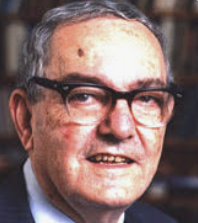
By public administration is meant, in common usage, the activities of the executive branches of national, state, and local governments; independent boards and commissions set up by the congress and state legislatures; government corporations, and certain agencies of a specialized character. Specifically excluded are judicial and legislative agencies within the government and nongovernmental administration.
▼
Source
source
p. 7
3 weeks 4 days ago
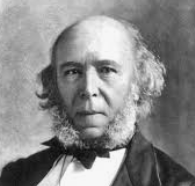
It cannot but happen that those individuals whose functions are most out of equilibrium with the modified aggregate of external forces, will be those to die; and that those will survive whose functions happen to be most nearly in equilibrium with the modified aggregate of external forces. But this survival of the fittest, implies multiplication of the fittest. Out of the fittest thus multiplied, there will, as before, be an overthrowing of the moving equilibrium wherever it presents the least opposing force to the new incident force.
▼
Source
source
The Principles of Biology, Vol. I (1864), Part III: The Evolution of Life, Ch. 7: Indirect Equilibration

1 month 3 weeks ago
Alcohol, hashish, prussic acid, strychnine are weak dilutions. The surest poison is time.
▼
Source
source
Poetry and Imagination

2 weeks 4 days ago
If you have money, don't lend it at interest. Rather, give it to someone from whom you won't get it back.

1 month 4 weeks ago
Human reason is by nature architectonic.
▼
Source
source
B 502
1 month 3 weeks ago
We boil at different degrees.
▼
Source
source
Eloquence
1 month 3 weeks ago
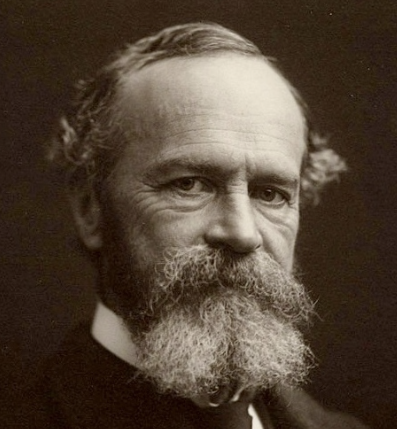
Who does not see that we are likely to ascertain the distinctive significance of religious melancholy and happiness, or of religious trances, far better by comparing them as conscientiously as we can with other varieties of melancholy, happiness, and trance, than by refusing to consider their place in any more general series, and treating them as if they were outside of nature's order altogether?
▼
Source
source
Lecture I, "Religion and Neurology"

3 weeks 5 days ago
It was the case of common soldiers deserting from their officers, to join a furious, licentious populace. It was a desertion to a cause, the real object of which was to level all those institutions, and to break all those connexions, natural and civil, that regulate and hold together the community by a chain of subordination; to raise soldiers against their officers; servants against their masters; tradesmen against their customers; artificers against their employers; tenants against their landlords; curates against their bishops; and children against their parents. That this cause of theirs was not an enemy to servitude, but to society.
▼
Source
source
Speech in the House of Commons (9 February 1790), quoted in The Parliamentary History of England, From the Earliest Period to the Year 1803, Vol. XXVIII (1816), column 359
1 month 4 weeks ago
When national debts have once been accumulated to a certain degree, there is scarce, I believe, a single instance of their having been fairly and completely paid. The liberation of the public revenue, if it has ever been brought about at all, has always been brought about by bankruptcy; sometimes by an avowed one, but always by a real one, though frequently by a pretend payment.
▼
Source
source
Chapter III, Part V, p. 1012.
1 month ago
The French are ... the most brilliant and the most dangerous nation of Europe, and the one that is surest to inspire admiration, hatred, terror, or pity, but never indifference.
▼
Source
source
p. 245

1 month 1 week ago
The most difficult thing in life is to know yourself.
▼
Source
source
Know thyself. As quoted in Diogenes Laërtius, The Lives and Opinions of Eminent Philosophers, I, 40 Variant
3 weeks 5 days ago
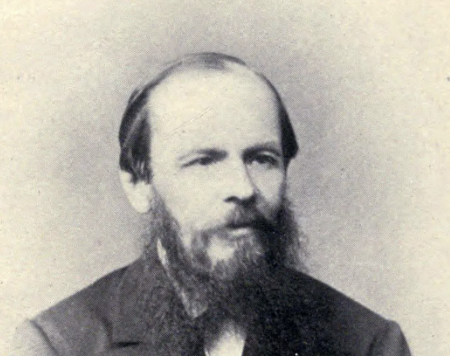
Pass by us, and forgive us our happiness.
▼
Source
source
Part 4, Chapter 5
3 weeks 5 days ago
Who consciously throws himself into the water or onto the knife?
▼
Source
source
Part 2, Chapter ?
1 week 4 days ago
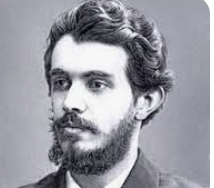
There is absolute truth in anarchism and it is to be seen in its attitude to the sovereignty of the state and to every form of state absolutism. ... The religious truth of anarchism consists in this, that power over man is bound up with sin and evil, that a state of perfection is a state where there is no power of man over man, that is to say, anarchy. The Kingdom of God is freedom and the absence of such power... the Kingdom of God is anarchy.
▼
Source
source
Slavery and Freedom (1939), p. 147

1 month 2 weeks ago
Many who have not learned wisdom live wisely, and many who do the basest deeds can make most learned speeches.
1 month 3 weeks ago
The hopes which inspire communism are, in the main, as admirable as those instilled by the Sermon on the Mount, but they are held as fanatically and are as likely to do as much harm.
▼
Source
source
Part I, The Present Condition of Russia, Ch. 1: What Is Hoped From Bolshevism
1 week 3 days ago
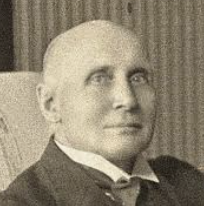
The new tinge to modern minds is a vehement and passionate interest in the relation of general principles to irreducible and stubborn facts. All the world over and at all times there have been practical men, absorbed in 'irreducible and stubborn facts'; all the world over and at all times there have been men of philosophic temperament, who have been absorbed in the weaving of general principles. It is this union of passionate interest in the detailed facts with equal devotion to abstract generalisation which forms the novelty of our present society.
▼
Source
source
Ch. 1: "The Origins of Modern Science", pp. 3-4
1 month 3 weeks ago
People say law but they mean wealth.
▼
Source
source
1841

2 months 4 days ago
The beginning is from God: for the business which is in hand, having the character of good so strongly impressed upon it, appears manifestly to proceed from God, who is the author of good, and the Father of Lights. Now in divine operations even the smallest beginnings lead of a certainty to their end. And as it was said of spiritual things, "The kingdom of God cometh not with observation," so is it in all the greater works of Divine Providence; everything glides on smoothly and noiselessly, and the work is fairly going on "before men are aware that it has begun. Nor should the prophecy of Daniel be forgotten, touching the last ages of the world: -"Many shall go to and fro, and knowledge shall be increased;" clearly intimating that the thorough passage of the world (which now by so many distant voyages seems to be accomplished, or in course of accomplishment), and the advancement of the sciences, are destined by fate, that is, by Divine Providence, to meet in the same age.
▼
Source
source
Aphorism 93
1 month 4 weeks ago
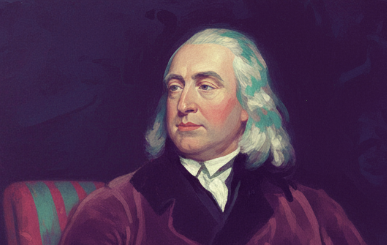
I am at heart more of a United-States-man than an Englishman.
▼
Source
source
Letter to Andrew Jackson (14 June 1830), quoted in Correspondence of Andrew Jackson, Volume 4, ed. David Maydole Matteson (1929), p. 146
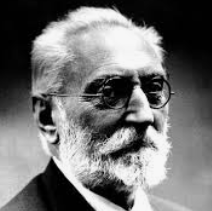
1 week 5 days ago
One of those leaders of what they call the social revolution has said that religion is the opiate of the people. Opium...opium...opium, yes. Let us give them opium so that they can sleep and dream.

1 week 1 day ago
I do not regard the late Carl Sagan as any kind of authority. On the contrary, as this book will show, I regard him in many ways as a dubious publicity seeker and careerist, more concerned to maintain his reputation as the brilliant and sceptical representative of hard-headed science than to look squarely and honestly at the facts.
▼
Source
source
In short, a bit of a crook. pp. xix-xx

1 month 3 weeks ago
A criminal who, having renounced reason ... hath, by the unjust violence and slaughter he hath committed upon one, declared war against all mankind, and therefore may be destroyed as a lion or tyger, one of those wild savage beasts with whom men can have no society nor security. And upon this is grounded the great law of Nature, "Whoso sheddeth man's blood, by man shall his blood be shed."
▼
Source
source
Second Treatise of Civil Government, Ch. II, sec. 11
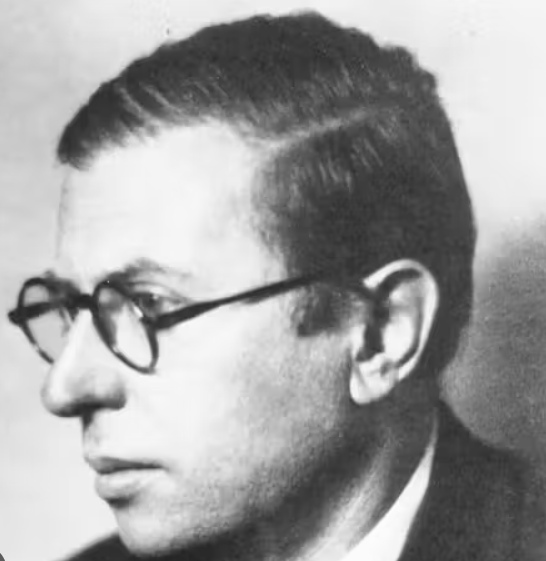
1 month 3 weeks ago
...the impossible must be supposed in order to explain the superdetermination of the event
▼
Source
source
p. 301

1 month 3 weeks ago
Friendship arises out of mere companionship when two or more of the companions discover that they have in common some insight or interest or even taste which the others do not share and which, till that moment, each believed to be his own unique treasure (or burden). The typical expression of opening Friendship would be something like, "What? You too? I thought I was the only one."

2 months 3 days ago
When you see a person squirming in the clutches of the Law, say to him: "Brother, get things straight. You let the Law talk to your conscience. Make it talk to your flesh.
▼
Source
source
Chapter 2, Verse 19
3 weeks ago
His power to adore is responsible for all his crimes: a man who loves a god unduly forces other men to love his god, eager to exterminate them if they refuse.
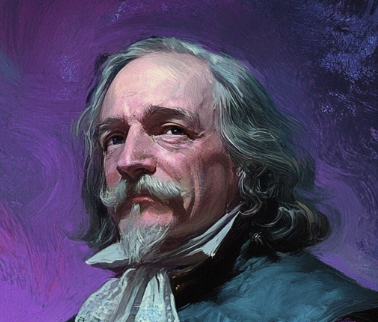
2 weeks 4 days ago
As in the presence of the Master, the Servants are equall, and without any honour at all; So are the Subjects, in the presence of the Soveraign. And though they shine some more, some lesse, when they are out of his sight; yet in his presence, they shine no more than the Starres in presence of the Sun.
▼
Source
source
The Second Part, Chapter 18, p. 93

1 month 4 weeks ago
There is no method of reasoning more common, and yet none more blameable, than, in philosophical disputes, to endeavour the refutation of any hypothesis, by a pretence of its dangerous consequences to religion and morality. When any opinion leads to absurdities, it is certainly false; but it is not certain that an opinion is false, because it is of dangerous consequence. Such topics, therefore, ought entirely to be forborne; as serving nothing to the discovery of truth, but only to make the person of an antagonist odious.
▼
Source
source
Of Liberty and Necessity, Part II
1 week 1 day ago
The history of the Romanovs is an Elizabethan tragedy that lasts for three centuries. Its keynote is cruelty, a barbaric, pointless kind of cruelty that has always been common in the East, but that came to Europe only recently, in the time of Hitler.
▼
Source
source
pp. 61-62
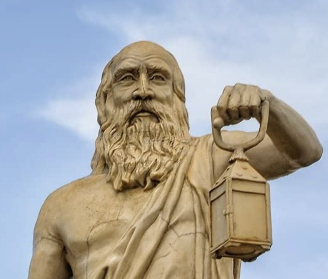
1 month 2 weeks ago
When the slave auctioneer asked in what he was proficient, he replied, "In ruling people."
▼
Source
source
Diogenes Laërtius, vi. 74

1 month 1 week ago
Those alone are dear to Divinity who are hostile to injustice.
▼
Source
source
Pythagorean Ethical Sentences From Stobæus
3 weeks 1 day ago
I suddenly stopped and looked out at the sea and thought, my God, how beautiful this is ... for 26 years I had never really looked at it before.
▼
Source
source
On his greater appreciation of the scenery of the world, after his near-death experience, as quoted in "Did atheist philosopher see God when he 'died'?" by William Cash, in National Post (3 March 2001).
1 month ago
Every man has his dignity. I'm willing to forget mine, but at my own discretion and not when someone else tells me to.
1 month 2 weeks ago
The hopes of the right-minded may be realized, those of fools are impossible.

1 month 3 weeks ago
There are Plebes in all classes.
▼
Source
source
As quoted by Julien Coupat in Interview with Julien Coupat, 2009
3 weeks ago
Everyone is mistaken, everyone lives in illusion. At best, we can admit a scale of fictions, a hierarchy of unrealities, giving preference to one rather than to another; but to choose, no, definitely not that...
2 months 3 days ago
Furthermore, how will you endure [the Romanists'] terrible idolatries? It was not enough that they venerated the saints and praised God in them, but they actually made them into gods. They put that noble child, the mother Mary, right into the place of Christ. They fashioned Christ into a judge and thus devised a tyrant for anguished consciences, so that all comfort and confidence was transferred from Christ to Mary, and then everyone turned from Christ to his particular saint. Can anyone deny this? Is it not true?
▼
Source
source
Luther's Works, 47:45; cf. also Anderson, Stafford & Burgess (1992), p. 29

1 month 1 week ago
Love is a God, who cooperates in securing the safety of the city.
▼
Source
source
As quoted in Deipnosophists by Athenaeus, xiii. 561c.
1 month ago
Every attempt to refer chemical questions to mathematical doctrines must be considered, now and always, profoundly irrational, as being contrary to the nature of the phenomena. . . . but if the employment of mathematical analysis should ever become so preponderant in chemistry (an aberration which is happily almost impossible) it would occasion vast and rapid retrogradation....
2 months 2 weeks ago
Where without any change in circumstances the things held to be just by law are seen not to correspond with the concept of justice in actual practice, such laws are not really just; but wherever the laws have ceased to be advantageous because of a change in circumstances, in that case the laws were for that time just when they were advantageous for the mutual dealings of the citizens, and subsequently ceased to be just when they were no longer advantageous.
1 month 3 weeks ago
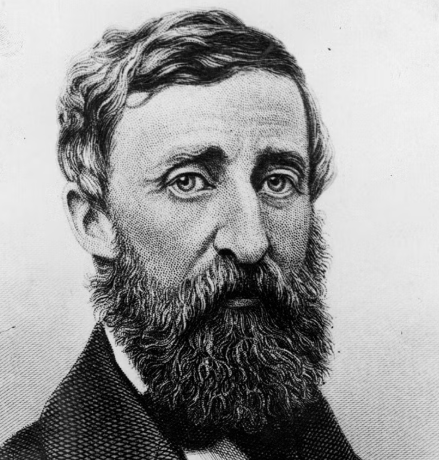
Under a government which imprisons any unjustly, the true place for a just man is also a prison... the only house in a slave State in which a free man can abide with honor.
1 month 3 weeks ago
Pi's face was masked, and it was understood that none could behold it and live. But piercing eyes looked out from the mask, inexorable, cold and enigmatic.
▼
Source
source
"The Mathematician's Nightmare", Nightmares of Eminent Persons and Other Stories, 1954
1 month ago
The blood of Jesus Christ can cover a multitude of sins, it seems to me.
1 week 4 days ago
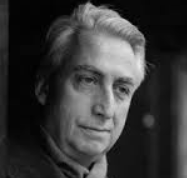
When I was a student I was assigned "Mythologies" and "A Lover's Discourse," by Roland Barthes, and felt at once that something momentous had happened to me, that I had met a writer who had changed my course in life somehow; and looking back now, I think he did.
▼
Source
source
Zadie Smith Interview

1 week ago
To understand God's thoughts we must study statistics, for these are the measure of His purpose.
▼
Source
source
As quoted in Chance Rules : An Informal Guide to Probability, Risk, and Statistics (1999) by Brian Everitt, p. 137
CivilSimian.com created by AxiomaticPanic, CivilSimian, Kalokagathia