
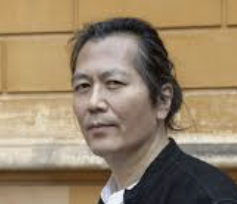
Byung-Chul Han — The Philosopher of Burnout, Transparency, and the Violence of Positivity (1959– )
Byung-Chul Han is the diagnostician of contemporary exhaustion — a philosopher who argues that power in the twenty-first century no longer operates primarily through repression, prohibition, or external domination, but through freedom, self-optimization, and relentless positivity. His work exposes a paradox of modern life: that we increasingly experience ourselves as free, yet feel more depleted, anxious, and isolated than ever before.
From Engineering to Philosophy
Born in South Korea, Han initially trained as a metallurgical engineer before leaving his studies and emigrating to Germany. There he turned to philosophy, literature, and theology, eventually studying in Freiburg and Munich — intellectual terrain shaped by Heidegger and German critical theory.
Writing in German as a second language, Han developed a distinctive style: compressed, aphoristic, and deliberately spare. His books are short, but conceptually dense — closer to philosophical pamphlets than academic treatises. They aim not to argue patiently, but to strike diagnostically.
“Freedom today is a form of coercion.”
The Achievement Society
Han argues that modern society has shifted from a disciplinary society to an achievement society. Where earlier power structures said “you must not,” contemporary power says “you can.”
Individuals are no longer primarily oppressed by external authorities, but by themselves. We become entrepreneurs of our own lives — optimizing productivity, health, happiness, and visibility. Failure is internalized as personal deficiency. Exploitation becomes self-exploitation.
This shift, Han claims, produces not rebellion, but burnout, depression, and anxiety.
“The burnout society is not a society of the oppressed, but of the exhausted.”
Positivity as Violence
One of Han’s most provocative claims is that positivity itself has become violent. Constant affirmation, motivation, transparency, and communication leave no room for negativity — for rest, withdrawal, silence, or genuine otherness.
Negativity, Han argues, is essential to thought and desire. Eros requires distance. Thinking requires interruption. Meaning requires limits. A world without resistance becomes flat and suffocating.
When everything is smooth, visible, and accessible, nothing truly touches us.
“Excessive positivity leads to psychic infarction.”
Transparency, Digital Life, and the Loss of Distance
In works like The Transparency Society, Han criticizes the modern demand that everything be visible, shared, and measurable. Transparency, he argues, destroys trust rather than strengthening it.
Trust presupposes opacity — the willingness to accept what cannot be fully known. When everything must be exposed, relationships collapse into surveillance, and communication becomes performance.
Digital culture accelerates this process. Attention fragments. Time collapses into immediacy. The self becomes a project under constant review.
“Transparency is an ideology.”
The Erosion of Ritual and Community
Han laments the disappearance of rituals — shared forms that once structured time, meaning, and belonging. Rituals slow life down. They create pauses. They bind individuals into something larger than themselves.
In their absence, life becomes a series of isolated moments optimized for efficiency. Time loses narrative shape. Community dissolves into networks. Meaning becomes increasingly difficult to sustain.
What is lost is not tradition as nostalgia, but symbolic depth.
Style, Criticism, and Controversy
Han’s work has drawn both admiration and criticism. Supporters praise his clarity and diagnostic power. Critics argue that his writing is repetitive, overly pessimistic, or insufficiently empirical.
Yet his influence is undeniable. Few contemporary philosophers have captured the mood of late-capitalist life with such resonance. His concepts circulate far beyond academia, shaping discussions of mental health, work, technology, and culture.
Legacy — Thinking Against Acceleration
Byung-Chul Han offers no grand program of reform. His philosophy is diagnostic rather than prescriptive. He aims to make visible the structures that quietly shape contemporary suffering.
His work invites resistance not through protest alone, but through slowness, silence, attention, and refusal. Against a world obsessed with performance, he calls for contemplation.
Han reminds us that freedom without limits can become its own form of domination — and that sometimes, the most radical act is to stop.
“Only the tired are truly contemporary.”
CivilSimian.com created by AxiomaticPanic, CivilSimian, Kalokagathia