


6 days ago
I could see clearly that this problem could only be solved on the individual and personal level; political revolt is irrelevant. Both Camus and Sartre had been neatly hog-tied by their earlier radicalism. Camus came to see that rebellion is a political roundabout that revolves back to the same old tyranny; too ashamed to admit that he had outgrown his leftism, he found himself in an intellectual cul-de-sac. Sartre accused Camus of being a reactionary; but he paid for his own refusal to reexamine his political convictions by congealing into a grotesque attitude of permanent indignation, shaking his fist at some abstract Authority. Where politics is concerned, he seemed determined to be guided by his emotions.
▼
Source
source
p. 101
2 months 1 day ago
The Mass is the greatest blasphemy of God, and the highest idolatry upon earth, an abomination the like of which has never been in Christendom since the time of the Apostles.
▼
Source
source
171
1 month 3 weeks ago
Dissimulation is innate in woman, and almost as much a quality of the stupid as of the clever.
▼
Source
source
"Of Women"
2 weeks 1 day ago
If, as I believe, the ends of men are many, and not all of them are in principle compatible with each other, then the possibility of conflict - and of tragedy - can never wholly be eliminated from human life, either personal or social. The necessity of choosing between absolute claims is then an inescapable characteristic of the human condition. This gives its value to freedom as Acton conceived of it - as an end in itself, and not as a temporary need, arising out of our confused notions and irrational and disordered lives, a predicament which a panacea could one day put right.

2 months 2 weeks ago
You know what charm is: a way of getting the answer 'yes' without having asked any clear question.
1 month 3 weeks ago
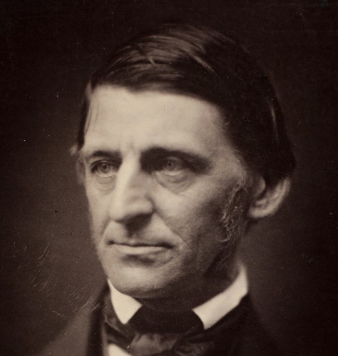
Those who believe that they are exclusively in the right are generally those who achieve something.
▼
Source
source
"Note on Dogma"
1 month 3 weeks ago
I see that sensible men and conscientious men all over the world were of one religion.
▼
Source
source
The Preacher
1 month 1 week ago
Fame and wealth without wisdom are unsafe possessions.
1 month 3 weeks ago
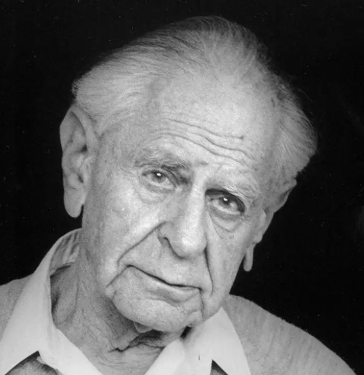
Scientific theories are distinguished from myths... in being criticizable, and... open to modifications... They can be neither verified nor probabilified.

1 month 2 weeks ago
The real discovery is the one which enables me to stop doing philosophy when I want to. The one that gives philosophy peace, so that it is no longer tormented by questions which bring itself into question.
▼
Source
source
§ 133

2 months 1 week ago
Therefore death is nothing to us, it matters not one jot, since the nature of the mind is understood to be mortal.
▼
Source
source
Book III, lines 830-831 (tr. Rouse)

2 months 3 weeks ago
Where there have been powerful governments, societies, religions, public opinions, in short wherever there has been tyranny, there the solitary philosopher has been hated; for philosophy offers an asylum to a man into which no tyranny can force it way, the inward cave, the labyrinth of the heart.
1 month 1 week ago
Strength of body is nobility in beasts of burden, strength of character is nobility in men.

2 weeks 5 days ago
We understand God by everything in ourselves that is fragmentary, incomplete, and inopportune.
1 month 3 weeks ago
The sentiments of men often differ with regard to beauty and deformity of all kinds, even while their general discourse is the same ... In all matters of opinion and science, the case is opposite: The difference among men is there oftener found to lie in generals than in particulars; and to be less in reality than in appearance.
2 months 6 days ago
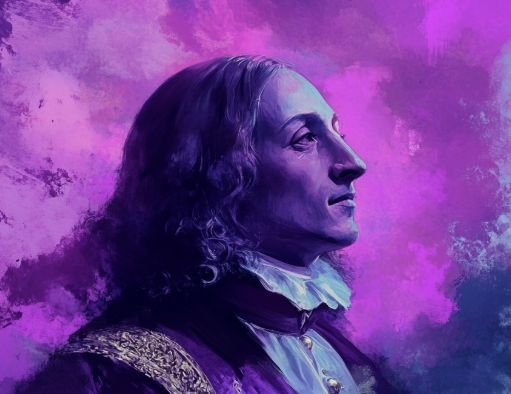
Do not imagine that it is less an accident by which you find yourself master of the wealth which you possess, than that by which this man found himself king.
1 month 3 weeks ago
God may forgive sins, he said, but awkwardness has no forgiveness in heaven or earth.
▼
Source
source
Society and Solitude
1 week 2 days ago
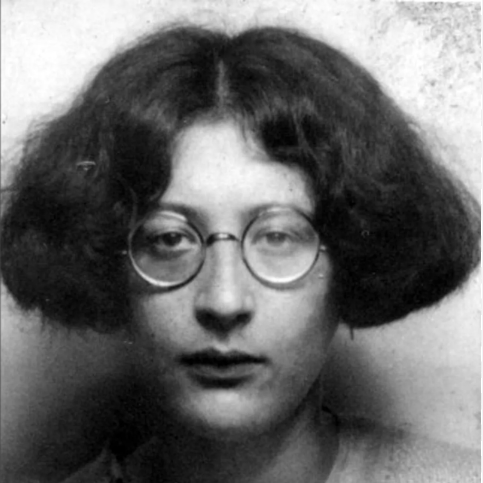
The recognition of human wretchedness is difficult for whoever is rich and powerful because he is almost invincibly led to believe that he is something. It is equally difficult for the man in miserable circumstances because he is almost invincibly led to believe that the rich and powerful man is something.
▼
Source
source
p. 216

4 weeks 1 day ago
Art is the perfection of nature.
▼
Source
source
Section 16
6 days ago
The Outsider cannot accept life as it is, who cannot consider his own existence or anyone else's necessary. He sees 'too deep and too much'. It is still a question of self-expression.
▼
Source
source
Chapter Four The Attempt to Gain Control
2 weeks 2 days ago
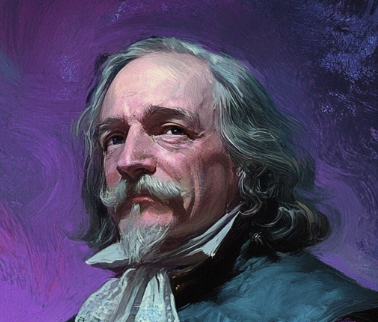
As for [...] Of all passions, that which inclineth men least to break the laws is fear.
▼
Source
source
The Second Part, Chapter 27
2 months 1 day ago
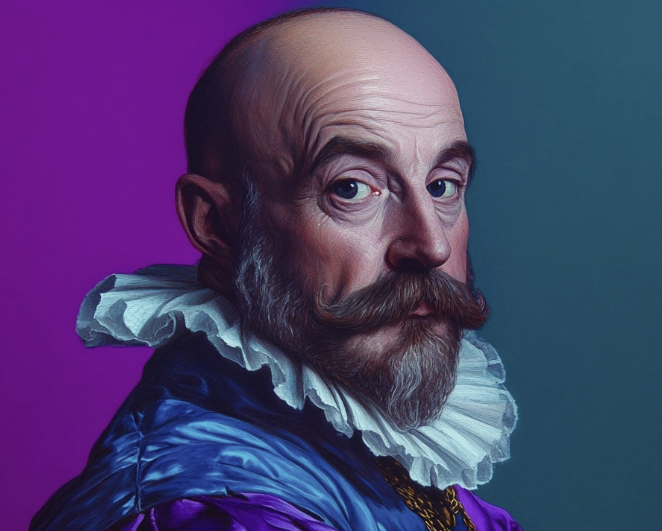
Make your educational laws strict and your criminal ones can be gentle; but if you leave youth its liberty you will have to dig dungeons for ages.
2 weeks 2 days ago
What thinkest thou, Simon? of whom do the kings of the earth take custom or tribute? of their own children, or of strangers?
▼
Source
source
17:25 (KJV)
1 month 3 weeks ago
Fire is the most tolerable third party.
▼
Source
source
January 2, 1853

2 months 2 days ago
I consider as lovers of books not those who keep their books hidden in their store-chests and never handle them, but those who, by nightly as well as daily use thumb them, batter them, wear them out, who fill out all the margins with annotations of many kinds, and who prefer the marks of a fault they have erased to a neat copy full of faults.
▼
Source
source
Letter to an unidentified friend (1489), as translated in Collected Works of Erasmus (1974), p. 58
1 month 3 weeks ago
In regard to man's final end, all the higher religions are in complete agreement. The purpose of human life is the discovery of Truth, the unitive knowledge of the Godhead. The degree to which this unitive knowledge is achieved here on earth determines the degree to which it will be enjoyed in the posthumous state. Contemplation of truth is the end, action the means.

2 months 3 weeks ago
What I will be remembered for are the Foundation Trilogy and the Three Laws of Robotics. What I want to be remembered for is no one book, or no dozen books. Any single thing I have written can be paralleled or even surpassed by something someone else has done. However, my total corpus for quantity, quality and variety can be duplicated by no one else. That is what I want to be remembered for.
1 month 3 weeks ago
Corn is a necessary, silver is only a superfluity.
▼
Source
source
Chapter XI, Part III, (First Period) p. 223.
1 month 3 weeks ago
Poetry teaches the enormous force of a few words, and, in proportion to the inspiration, checks loquacity.
▼
Source
source
Parnassus (1874) Preface
2 months 1 week ago
War is the father and king of all: some he has made gods, and some men; some slaves and some free. War is the father and king of all, and has produced some as gods and some as men, and has made some slaves and some free.
4 weeks 1 day ago
Aristotle whilst he labours to refute the ideas of Plato, falls upon one himself: for his summum bonum, is a Chimera, and there is no such thing as his Felicity.
▼
Source
source
Section 15
1 month 3 weeks ago
Take the question whether other people exist. ...It is plain that it makes for happiness to believe that they exist - for even the greatest misanthropist would not wish to be deprived of the objects of his hate. Hence the belief that other people exist is, pragmatically, a true belief. But if I am troubled by solipsism, the discovery that a belief in the existence of others is 'true' in the pragmatist's sense is not enough to allay my sense of loneliness: the perception that I should profit by rejecting solipsism is not alone sufficient to make me reject it. For what I desire is not that the belief in solipsism should be false in the pragmatic sense, but that other people should in fact exist. And with the pragmatist's meaning of truth, these two do not necessarily go together. The belief in solipsism might be false even if I were the only person or thing in the universe.
▼
Source
source
"William James's Conception of Truth" , published in Philosophical Essays, London, 1910
3 weeks 3 days ago
But as to our country and our race, as long as the well compacted structure of our church and state, the sanctuary, the holy of holies of that ancient law, defended by reverence, defended by power, a fortress at once and a temple, shall stand inviolate on the brow of the British Sion-as long as the British Monarchy, not more limited than fenced by the orders of the State, shall, like the proud Keep of Windsor, rising in the majesty of proportion, and girt with the double belt of its kindred and coeval towers, as long as this awful structure shall oversee and guard the subjected land-so long as the mounds and dykes of the low, fat, Bedford level will have nothing to fear from all the pickaxes of all the levellers of France.
▼
Source
source
pp. 52-53
1 week 1 day ago
When you are criticising the philosophy of an epoch, do not chiefly direct your attention to those intellectual positions which its exponents feel it necessary explicitly to defend. There will be some fundamental assumptions which adherents of all the variant systems within the epoch unconsciously presuppose. Such assumptions appear so obvious that people do not know what they are assuming because no other way of putting things has ever occurred to them. With these assumptions a certain limited number of types of philosophic systems are possible, and this group of systems constitutes the philosophy of the epoch.
▼
Source
source
Ch. 3: "The Century of Genius", p. 69

1 month 5 days ago
It is requisite to choose the most excellent life; for custom will make it pleasant. Wealth is an infirm anchor, glory is still more infirm; and in a similar manner, the body, dominion, and honour. For all these are imbecile and powerless. What then are powerful anchors. Prudence, magnanimity, fortitude. These no tempest can shake. This is the Law of God, that virtue is the only thing that is strong; and that every thing else is a trifle.
▼
Source
source
Pythagorean Ethical Sentences From Stobæus
2 weeks 6 days ago
The erotic instinct is something questionable, and will always be so whatever a future set of laws may have to say on the matter. It belongs, on the one hand, to the original animal nature of man, which will exist as long as man has an animal body. On the other hand, it is connected with the highest forms of the spirit. But it blooms only when the spirit and instinct are in true harmony. If one or the other aspect is missing, then an injury occurs, or at least there is a one-sided lack of balance which easily slips into the pathological. Too much of the animal disfigures the civilized human being, too much culture makes a sick animal.
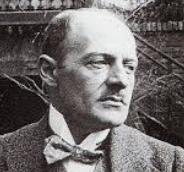
2 weeks ago
In ressentiment morality, love for the "small," the "poor," the "weak," and the "oppressed" is really disguised hatred, repressed envy, an impulse to detract, etc., directed against the opposite phenomena: "wealth," "strength," "power," "largesse." When hatred does not dare to come out into the open, it can be easily expressed in the form of ostensible love-love for something which has features that are the opposite of those of the hated object. This can happen in such a way that the hatred remains secret. When we hear that falsely pious, unctuous tone (it is the tone of a certain "socially-minded" type of priest), sermonizing that love for the "small" is our first duty, love for the "humble" inspirit, since God gives "grace" to them, then it is often only hatred posing as Christian love.
▼
Source
source
L. Coser, trans. (1961), pp. 96-97
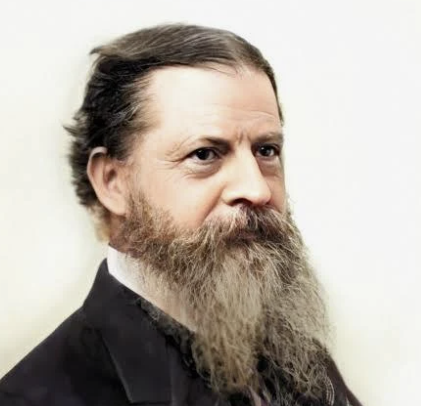
2 weeks 5 days ago
Every man is fully satisfied that there is such a thing as truth, or he would not ask any question.
▼
Source
source
Vol. V, par. 211
1 month 3 weeks ago
I hear beyond the range of sound, I see beyond the range of sight,New earths and skies and seas around, And in my day the sun doth pale his light.
▼
Source
source
"Inspiration", in An American Anthology, 1900

1 month 3 weeks ago
The History of the world is none other than the progress of the consciousness of Freedom; a progress whose development according to the necessity of its nature, it is our business to investigate.
▼
Source
source
Part III. Philosophic History; § 21, as translated by John Sibree; p. 19, (1900 edition) Variant translated by Robert S. Hartman, in Reason In History, A General Introduction to the Philosophy of History (1953) , 3/1/2007
6 days ago
...Zen Buddhism, this religion of immanence.
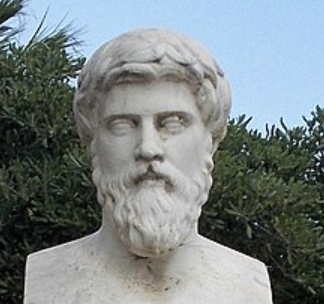
1 month 1 week ago
When Demaratus was asked whether he held his tongue because he was a fool or for want of words, he replied, "A fool cannot hold his tongue."
▼
Source
source
Of Demaratus
1 month 3 weeks ago
Men are what their mothers made them.
▼
Source
source
Fate
2 months 1 day ago
Women . . . have . . . small and narrow chests, and broad hips, to the end they should remain at home, sit still, keep house, and bear and bring up children. . . . A woman is, or at least should be, a friendly, courteous, and a merry companion in life . . . the honor and ornament of the house, and inclined to tenderness, for thereunto are they chiefly created, to bear children, and to be the pleasure, joy and solace of their husbands.
▼
Source
source
-- Table Talk, quoted in Luther On "Woman"

1 month 3 weeks ago
When we reflect on the long and dense night in which France and all Europe have remained plunged by their governments and their priests, we must feel less surprise than grief at the bewilderment caused by the first burst of light that dispels the darkness.
▼
Source
source
Author's Inscription: French Edition
1 month 3 weeks ago
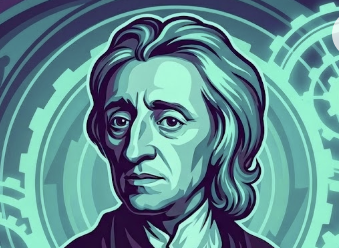
The law of faith, being a covenant of free grace, God alone can appoint what shall be necessarily believed by everyone whom He will justify. What is the faith which He will accept and account for righteousness, depends wholly on his good pleasure. For it is of grace, and not of right, that this faith is accepted. And therefore He alone can set the measures of it: and what he has so appointed and declared is alone necessary. No-body can add to these fundamental articles of faith; nor make any other necessary, but what God himself hath made, and declared to be so. And what these are which God requires of those who will enter into, and receive the benefits of the new covenant, has already been shown. An explicit belief of these is absolutely required of all those to whom the gospel of Jesus Christ is preached, and salvation through his name proposed.
▼
Source
source
§ 156
2 months 1 week ago
When you have faults, do not fear to abandon them.
2 weeks 5 days ago
Bach: a scale of tears upon which our desires for God ascend.
2 weeks 5 days ago
All that is Life in me urges me to give up God.
2 weeks 5 days ago
From these two immediate perceptions, we gain a mediate, or inferential perception of the relation of all four instants. This mediate perception is objectively, or as to the object being represented, spread over the four instants; but subjectively, or as itself the subject of duration, it is completely embraced in the second moment. (The reader will observe that I use the word instant to mean a point in time, and moment to mean an infinitesimal duration.
CivilSimian.com created by AxiomaticPanic, CivilSimian, Kalokagathia