


2 weeks 5 days ago
The reasons for persisting in Being seem less and less well founded, and our successors will find it easier than we to be rid of such obstinacy.
1 month 1 week ago
Living virtuously is equal to living in accordance with one's experience of the actual course of nature.
▼
Source
source
As quoted by Diogenes Laërtius, vii. 182.
1 month 1 week ago
There were two brothers called Both and Either; perceiving Either was a good, understanding, busy fellow, and Both a silly fellow and good for little, Philip said, "Either is both, and Both is neither."
▼
Source
source
35 Philip

1 month 1 week ago
From such honor and such a height of fortune am I, thus fallen to earth, cast down amongst mortals.
▼
Source
source
fr. 119

2 months 1 day ago
Covetousness is both the beginning and the end of the devil's alphabet- the first vice in corrupt nature that moves, and the last which dies.
2 months 1 day ago
My trade and my art is living.
▼
Source
source
Ch. 6 (tr. Donald M. Frame)

1 month 2 weeks ago
At the point at which the concept of différance, and the chain attached to it, intervenes, all the conceptual oppositions of metaphysics (signifier/signified; sensible/intelligible; writing/speech; passivity/activity; etc.)- to the extent that they ultimately refer to the presence of something present (for example, in the form of the identity of the subject who is present for all his operations, present beneath every accident or event, self-present in its "living speech," in its enunciations, in the present objects and acts of its language, etc.)- become non pertinent. They all amount, at one moment or another, to a subordination of the movement of différance in favor of the presence of a value or a meaning supposedly antecedent to différance, more original than it, exceeding and governing it in the last analysis. This is still the presence of what we called above the "transcendental signified.
▼
Source
source
p. 29

2 months 2 weeks ago
What must be remembered in any case is that secret complicity that joins the logical and the everyday to the tragic.
3 weeks 2 days ago
Time: That which man is always trying to kill, but which ends in killing him.
▼
Source
source
Definitions, as quoted in The Dictionary of Essential Quotations (1983) by Kevin Goldstein-Jackson, p. 154
2 weeks 5 days ago
Only optimists commit suicide, the optimists who can no longer be . . . optimists. The others, having no reason to live, why should they have any to die?
1 week 1 day ago
The aim of science is to seek the simplest explanations of complex facts. We are apt to fall into the error of thinking that the facts are simple because simplicity is the goal of our quest. The guiding motto in the life of every natural philosopher should be, "Seek simplicity and distrust it."
▼
Source
source
The Concept of Nature (1919), Chapter VII, p.143.

1 month 3 weeks ago
Everything is a subject on which there is not much to be said.
▼
Source
source
Studies in Words (1960), ch. 2

5 days ago
I have had a larger responsibility of human lives than ever man or woman had before. And I attribute my success to this - I never gave or took an excuse. Yes, I do see the difference now between me and other men. When a disaster happens, I act and they make excuses.
▼
Source
source
Letter to Miss H. Bonham Carter, 1861. As quoted in The Gigantic Book of Teachers' Wisdom (2007) by Frank McCourt and Erin Gruwell, p. 410
1 month 3 weeks ago
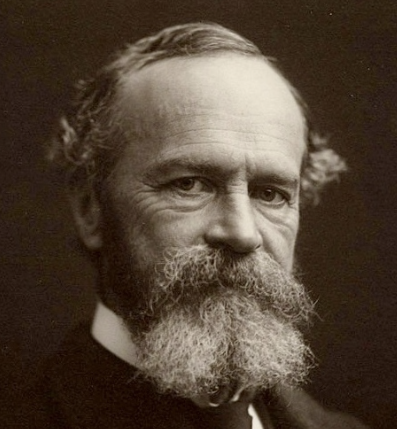
The total possible consciousness may be split into parts which co-exist but mutually ignore each other.
▼
Source
source
Ch. 8

4 weeks 1 day ago
We carry with us the wonders, we seek without us: There is all Africa, and her prodigies in us; we are that bold and adventurous piece of nature, which he that studies, wisely learns in a compendium, what others labour at in a divided piece and endless volume.
▼
Source
source
Section 15
2 months 2 weeks ago
A man is more a man through the things he keeps to himself than through those he says.
1 month 1 week ago
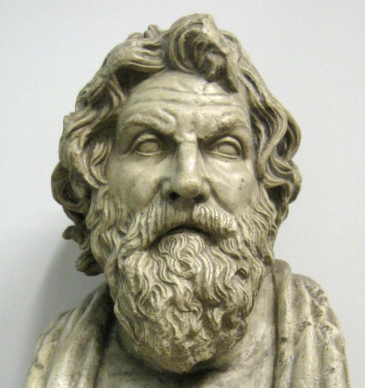
Being asked what learning is the most necessary, he replied, "How to get rid of having anything to unlearn.
▼
Source
source
" § 7

1 month 3 weeks ago
I believe that Communism is necessary to the world, and I believe that the heroism of Russia has fired men's hopes in a way which was essential to the realization of Communism in the future. Regarded as a splendid attempt, without which ultimate success would have been very improbable, Bolshevism deserves the gratitude and admiration of all the progressive part of mankind.
▼
Source
source
Preface

2 months 1 week ago
Be bold to look towards God and say, "Use me henceforward for whatever you want; I am of one mind with you; I am yours; I refuse nothing that seems good to you; lead me where you will; wrap me in what clothes you will."
▼
Source
source
Book II, ch. 16, 42
1 month 3 weeks ago
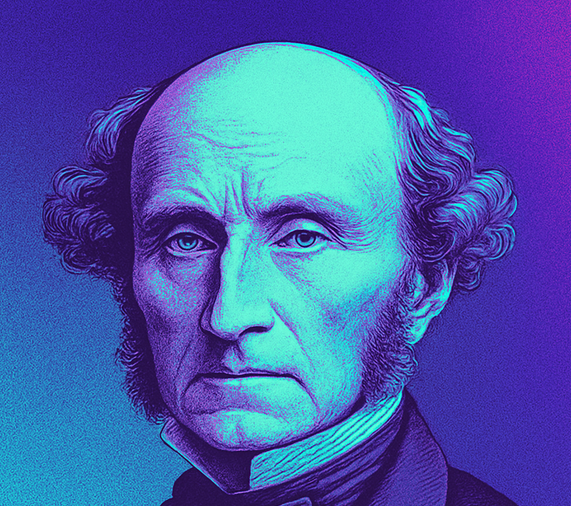
Granted that any practice causes more pain to animals than it gives pleasure to man; is that practice moral or immoral? And if, exactly in proportion as human beings raise their heads out of the slough of selfishness, they do not with one voice answer 'immoral,' let the morality of the principle of utility be for ever condemned.
▼
Source
source
Dr. Whewell on Moral Philosophy (1852), in Dissertations and Discussions: Political, Philosophical, and Historical, vol. 2, London: John W. Parker and son, 1859, p. 485

4 weeks ago
There's a bit of testicle at the bottom of our most sublime feelings and our purest tenderness.
▼
Source
source
Letter to Étienne Noël Damilaville

1 month 2 weeks ago
Neither our distance from a preventable evil nor the number of other people who, in respect to that evil, are in the same situation as we are, lessens our obligation to mitigate or prevent that evil.

1 month 3 weeks ago
Even serious students are misled by the myth of the subject.

1 month 3 weeks ago
Every faculty in one man is the measure by which he judges of the like faculty in another. I judge of your sight by my sight, of your ear by my ear, of your reason by my reason, of your resentment by my resentment, of your love by my love. I neither have, nor can have, any other way of judging about them.
▼
Source
source
Section I, Chap. III.
2 weeks 2 days ago
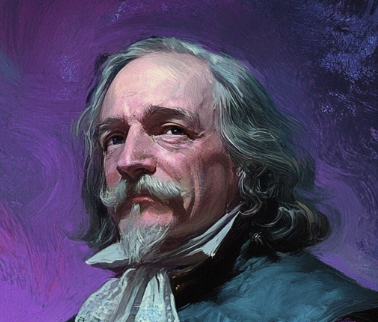
Desire, to know why, and how, CURIOSITY; such as is in no living creature but Man; so that Man is distinguished, not only by his Reason; but also by this singular Passion from other Animals; in whom the appetite of food, and other pleasures of Sense, by predominance, take away the care of knowing causes; which is a Lust of the mind, that by a perseverance of delight in the continual and indefatigable generation of Knowledge, exceedeth the short vehemence of any carnal Pleasure.
▼
Source
source
The First Part, Chapter 6, p. 26

2 months 3 weeks ago
It is only afterward that a new idea seems reasonable. To begin with, it usually seems unreasonable.
4 weeks ago
In order to shake a hypothesis, it is sometimes not necessary to do anything more than push it as far as it will go.
▼
Source
source
No. 50
2 weeks 2 days ago
If this superstitious fear of Spirits were taken away, and with it, Prognostiques from Dreams, false Prophecies, and many other things depending thereon, by which, crafty ambitious persons abuse the simple people, men would be much more fitted then they are for civill Obedience.
▼
Source
source
The First Part, Chapter 2, p. 8
1 month 3 weeks ago
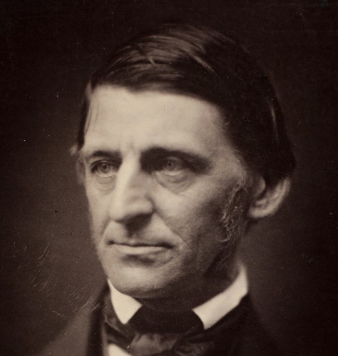
Let me never fall into the vulgar mistake of dreaming that I am persecuted whenever I am contradicted.
▼
Source
source
November 8, 1838
2 months 1 day ago
To which we may add this other Aristotelian consideration, that he who confers a benefit on any one loves him better than he is beloved by him again.
▼
Source
source
Book II, Ch. 8. Of the Affections of Fathers
2 months 1 day ago
A little folly is desirable in him that will not be guilty of stupidity.
▼
Source
source
Book III, Ch. 9. Of Vanity

2 months 6 days ago
Nothing is more common than good things: the point in question is only to discriminate them; and it is certain that they are all natural and within our reach and even known to all mankind.
1 week 1 day ago
The Reformation was a popular uprising, and for a century and a half drenched Europe in blood. The beginnings of the Scientific movement were confined to a minority among the intellectual elite.... The worst that happened to men of science was that Galileo suffered an honorable detention and a mild reproof, before dying peacefully in his bed. The way in which the persecution of Galileo has been remembered is a tribute to the quiet commencement of the most intimate change in outlook which the human race had yet encountered. Since a babe was born in a manger, it may be doubted whether so great a thing has happened with so little stir.
▼
Source
source
Ch. 1: "The Origins of Modern Science", pp. 2-3

3 weeks 3 days ago
I am attached to Christianity at large; much from conviction; more from affection.
▼
Source
source
Letter to an unknown correspondent (26 January 1791), quoted in Alfred Cobban and Robert A. Smith (eds.), The Correspondence of Edmund Burke, Volume VI: July 1789-December 1791 (1967), p. 215

6 days ago
In reading Jung's account of his cases, it is impossible not to be aware that his success was due partly to an element of ruthlessness; he was dominated by curiosity rather than compassion.
▼
Source
source
p. 36

2 months 3 weeks ago
A white spot is on the horizon. There it is. A terrible storm is brewing. But no one sees the white spot or has any inkling of what it might mean. But no (this would not be the most terrible situation either), no, there is one person who sees it and knows what it means-but he is a passenger. He has no authority on the ship, can take no action. ... The fact that in Christendom there is visible on the horizon a white speck which means that a storm is threatening-this I knew; but, alas, I was an am only a passenger.
1 month 3 weeks ago
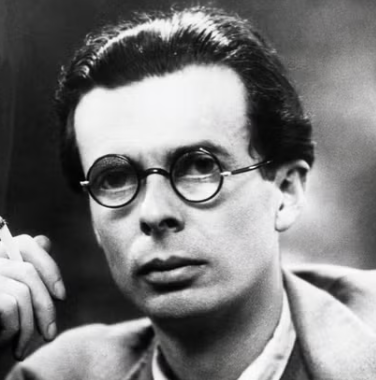
At least two thirds of our miseries spring from human stupidity, human malice, and those great motivators and justifiers of malice and stupidity, idealism, dogmatism and proselytizing zeal on behalf of religious or political idols.
▼
Source
source
Tomorrow and Tomorrow and Tomorrow, 1952
2 weeks 5 days ago
Losing love is so rich a philosophical ordeal that it makes a hairdresser into a rival of Socrates.
2 weeks 1 day ago
Even the eye that is artificially trained to see color as color, apart from things that colors qualify, cannot shut out the resonances and transfers of value.
▼
Source
source
p. 126
1 month 3 weeks ago
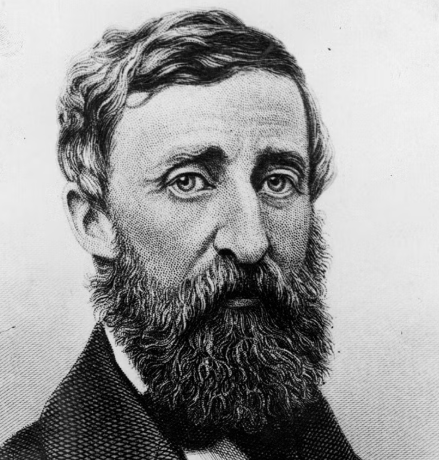
I do not wish to kill nor to be killed, but I can foresee circumstances in which both these things would be by me unavoidable. We preserve the so-called peace of our community by deeds of petty violence every day. Look at the policeman's billy and handcuffs! Look at the jail! Look at the gallows! Look at the chaplain of the regiment! We are hoping only to live safely on the outskirts of this provisional army. So we defend ourselves and our hen-roosts, and maintain slavery. I know that the mass of my countrymen think that the only righteous use that can be made of Sharp's rifles and revolvers is to fight duels with them, when we are insulted by other nations, or to hunt Indians, or shoot fugitive slaves with them, or the like. I think that for once the Sharp's rifles and the revolvers were employed in a righteous cause. The tools were in the hands of one who could use them.
5 days ago
In spite of the universalistic spirit of the monotheistic Western religions and of the progressive political concepts that are expressed in the idea "that all men are created equal," love for mankind has not become a common experience. Love for mankind is looked upon as an achievement which, at best, follows love for an individual or as an abstract concept to be realized only in the future. But love for man cannot be separated from love for one individual. To love one person productively means to be related to his human core, to him as representing mankind. Love for one individual, in so far as it is divorced from love for man, can refer only to the superficial and to the accidental; of necessity it remains shallow.
▼
Source
source
Ch. 2

1 month 3 weeks ago
Whatever you do, crush the infamous thing, and love those who love you.
▼
Source
source
Letter to Jean le Rond d'Alembert (28 November 1762);
6 days ago
During his lifetime Gurdjieff did not publish any books on the techniques of his teaching, and his pupils were bound to secrecy on the subject. Since his death in Paris in 1949, however, many of his works have been published, and there has been a flood of memoirs by disciples and admirers. Gurdjieff was in almost ever respect the antithesis of Aleister Crowley. Whereas Crowley craved publicity, Gurdjieff shunned it. Crowley was forgotten for two decades after his death; Gurdjieff on the contrary, has become steadily better known, and his influence continues to grow. One of the main reasons for this is that there was so little of the charlatan about him. He is no cult figure with hordes of gullible disciples. What he has to teach makes an appeal to the intelligence, and can be fully understood only by those who are prepared to make a serious effort.

2 months 1 week ago
And what can be more divine than the exhalations of the earth, which affect the human soul so as to enable her to predict the future ? And could the hand of time evaporate such a virtue? Do you suppose you are talking of some kind of wine or salted meat ?
▼
Source
source
Book I, Chapter III
2 months 3 weeks ago
Civilizations have always been pyramidal in structure. As one climbs toward the apex of the social edifice, there is increased leisure and increasing opportunity to pursue happiness. As one climbs, one finds also fewer and fewer people to enjoy this more and more. Invariably, there is a preponderance of the dispossessed. And remember this, no matter how well off the bottom layers of the pyramid might be on an absolute scale, they are always dispossessed in comparison with the apex.So there is always social friction in ordinary human societies. The action of social revolution and the reaction of guarding against such revolution or combating it once it has begun are the causes of a great deal of the human misery with which history is permeated.
2 weeks 5 days ago
There is always someone above you: beyond God Himself rises Nothingness.
1 month 1 week ago
When Eudæmonidas heard a philosopher arguing that only a wise man can be a good general, "This is a wonderful speech," said he; "but he that saith it never heard the sound of trumpets."
▼
Source
source
62 Eudæmonidas

1 month 2 weeks ago
Most of the texts... preserved from this period come from writers... either... affiliated with the aristocratic party, or... distrustful of democratic or radically democratic institutions.
1 month 3 weeks ago
We forfeit three-fourths of ourselves in order to be like other people.
▼
Source
source
As attributed in Dictionary of Quotations from Ancient and Modern English and Foreign Sources (1899) by James Wood, p. 624
1 month 3 weeks ago
Don't say things. What you are stands over you the while, and thunders so that I cannot hear what you say to the contrary.
▼
Source
source
Social Aims; sometimes condensed to "What you do speaks so loud that I cannot hear what you say."
CivilSimian.com created by AxiomaticPanic, CivilSimian, Kalokagathia