

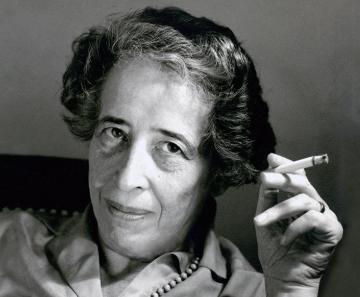
2 months 3 weeks ago
The emotions I feel are no more meant to be shown in their unadulterated state than the inner organs by which we live.
▼
Source
source
pp. 31-32
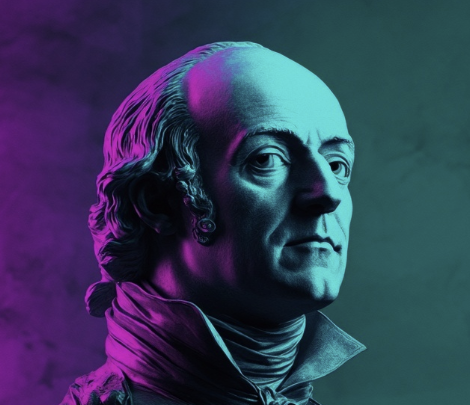
2 months 4 weeks ago
Labour was the first price, the original purchase-money that was paid for all things. It was not by gold or by silver, but by labour, that all the wealth of the world was originally purchased; and its value, to those who possess it, and who want to exchange it for some new productions, is precisely equal to the quantity of labour which it can enable them to purchase or command.
▼
Source
source
Chapter V, p. 38.
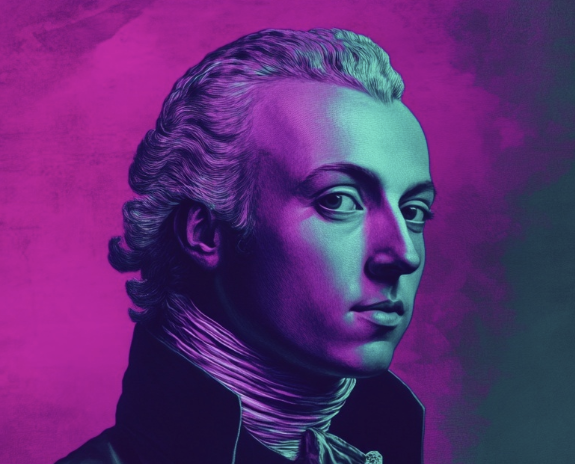
2 months 3 weeks ago
The greatest problem for the human race, to the solution of which Nature drives man, is the achievement of a universal civic society which administers law among men.
▼
Source
source
Fifth Thesis
1 month 1 week ago
I do not understand these men who tell me that the prospect of the yonder side of death has never tormented them, that the thought of their own annihilation never disquiets them. For my part I do not wish to make peace between my heart and my head, between my faith and my reason - I wish rather that there should be war between them.
2 months 3 weeks ago
Moral Teleology supplies the deficiency in physical Teleology, and first establishes a Theology; because the latter, if it did not borrow from the former without being observed, but were to proceed consistently, could only found a Demonology, which is incapable of any definite concept.
▼
Source
source
Immanuel Kant, Kant's Critique of Judgment (1892) Tr. J.H. Bernard
3 months 3 weeks ago
The most exciting phrase to hear in science, the one that heralds new discoveries, is not 'Eureka!', but 'That's funny ...'
2 months 3 weeks ago
Who lives longer? the man who takes heroin for two years and dies, or a man who lives on roast beef, water and potatoes 'till 95? One passes his 24 months in eternity. All the years of the beefeater are lived only in time.
▼
Source
source
The Shortcut: 20 Stories To Get You From Here To There (2006) by Kevin A Fabiano, p. 179
1 month 2 weeks ago
There is another significant involution of time and movement in space. It is constituted not only by directional tendencies-up and down for example-but by mutual approaches and retreatings. Near and far, close and distant, are qualities of pregnant, often tragic, import-that is, as they are experienced, not just stated by measurement of science. They signify loosening and tightening, expanding and contracting, separating and compacting, soaring and drooping, rising and falling; the dispersive, scattering, and the hovering and brooding, unsubstantial lightness and massive blow. Such actions and reaction are the very stuff out if which the objects and events we experience are made.
▼
Source
source
p. 215
1 month 4 days ago
The most perfect ape cannot draw an ape; only man can do that; but, likewise, only man regards the ability to do this as a sign of superiority.
▼
Source
source
J 115

2 months 3 weeks ago
I live in the Managerial Age, in a world of "Admin." The greatest evil is not now done in those sordid "dens of crime" that Dickens loved to paint. It is not done even in concentration camps and labour camps. In those we see its final result. But it is conceived and ordered (moved, seconded, carried, and minuted) in clean, carpeted, warmed, and well-lighted offices, by quiet men with white collars and cut fingernails and smooth-shaven cheeks who do not need to raise their voice. Hence, naturally enough, my symbol for Hell is something like the bureaucracy of a police state or the offices of a thoroughly nasty business concern.
▼
Source
source
1961 Preface

2 months 3 weeks ago
Keep cool: it will be all one a hundred years hence.
▼
Source
source
Montaigne; or, The Skeptic
1 month 1 week ago
The purpose of consciousness is to illuminate the world. If we try to run consciousness at half its proper voltage, the result will be a "devalued" world. But that is not the fault of the world; it is our fault. Low-voltage consciousness shows us less of the world than high-voltage consciousness, just as we would see an art gallery less clearly by candlelight than by sunlight.
2 months 3 weeks ago
The first step to get this noble and manly steadiness, is... carefully keep children from frights of all kinds, when they are young. ...Instances of such who in a weak timorous mind, have borne, all their whole lives through, the effects of a fright when they were young, are every where to be seen, and therefore as much as may be to be prevented.
▼
Source
source
Sec. 115
1 month 2 weeks ago
The ultimate goal of the arriviste's aspirations is not to acquire a thing of value, but to be more highly esteemed than others. He merely uses the "thing" as an indifferent occasion for overcoming the oppressive feeling of inferiority which results from his constant comparisons.
▼
Source
source
L. Coser, trans. (1973), pp. 55-56

3 months 3 weeks ago
The aim of art, the aim of a life can only be to increase the sum of freedom and responsibility to be found in every man and in the world. It cannot, under any circumstances, be to reduce or suppress that freedom, even temporarily.

1 day ago
With new technologies of surveillance, economies of scale overcome problems of cost. Since all their electronic communications can be accessed, it is no longer necessary to segregate the inmates from one another. As there is no outside world, escape becomes unimaginable. Technological progress has brought into being a system of surveillance more far-reaching than any Bentham could have conceived. Enclosing the entire population in a virtual Panopticon might seem the ultimate invasion of freedom. But universal confinement need not be experienced as a privation. If they know nothing else, most are likely to accept it as normal. If the technology through which surveillance operates also provides continuous entertainment, they may soon find any other way of living intolerable.
▼
Source
source
In the Puppet Theatre: A Universal Panopticon (p. 125)
2 months 3 weeks ago
Society is undergoing a silent revolution, which must be submitted to, and which takes no more notice of the human existences it breaks down than an earthquake regards the houses it subverts. The classes and the races, too weak to master the new conditions of life, must give way. But can there be anything more puerile, more short-sighted, than the views of those Economists who believe in all earnest that this woeful transitory state means nothing but adapting society to the acquisitive propensities of capitalists, both landlords and money-lords?
▼
Source
source
"Forced Emigration," New York Daily Tribune, 22 March 1853.
7 months ago
The source of totalitarianism is a dogmatic attachment to the official word: the lack of laughter, of ironic detachment. An excessive commitment to Good may in itself become the greatest Evil: real Evil is any kind of fanatical dogmatism, especially exerted in the name of supreme Good... Consider only Mozart's Don Giovanni at the end of the opera, when he is confronted with the following choice: if he confesses his sins, he can still achieve salvation; if he persists, he will be damned forever. From this viewpoint of the pleasure principle, the proper thing to do would be to renounce his past, but he does not, he persists in his Evil, although he knows that by persisting he will be damned forever. Paradoxically, with his final choice of Evil, he acquires the status of an ethical hero - that is, of someone who is guided by fundamental principles beyond the pleasure principle and not just by the search for pleasure or material gain.
1 month 2 weeks ago
Why callest thou me good? there is none good but one, that is, God: but if thou wilt enter into life, keep the commandments.
▼
Source
source
19:17 (KJV)
2 months 1 week ago
Perseverance is more prevailing than violence; and many things which cannot be overcome when they are together, yield themselves up when taken little by little.
▼
Source
source
Sertorius 16 (Tr. Dryden and Clough)

2 months 2 weeks ago
Force without wisdom falls of its own weight.
2 months 3 weeks ago
The devil...the prowde spirit...cannot endure to be mocked.
▼
Source
source
Thomas More, quoted at the beginning of The Screwtape Letters
1 month 1 week ago
Catastrophic fatality abruptly switches over into salvation.
3 months 3 weeks ago
I am not a visual person. I have spent so many bounded years in my childhood that I have grown used to having books as my window on reality.
1 month 3 weeks ago
We do not know whether Hitler is going to found a new Islam. (He is already on the way; he is like Mohammed. The emotion in Germany is Islamic; warlike and Islamic. They are all drunk with a wild god.)
▼
Source
source
The Symbolic Life - in The Collected Works: The Symbolic Life. Miscellaneous Writings (1977), p. 281
3 months 3 weeks ago
I don't believe in flying saucers... The energy requirements of interstellar travel are so great that it is inconceivable to me that any creatures piloting their ships across the vast depths of space would do so only in order to play games with us over a period of decades.
1 month 1 week ago
Stories on digital platforms like Facebook or Instagram are not genuine stories. They have no narrative duration. Rather, they are just sequences of momentary impressions that do not tell us anything.
3 days ago
Taking the abolitionist project to the rest of the galaxy and beyond sounds crazy today; but it's the application of technology to a very homely moral precept writ large, not the outgrowth of a revolutionary new ethical theory. So long as sentient beings suffer extraordinary unpleasantness - whether on Earth or perhaps elsewhere - there is a presumptive case to eradicate such suffering wherever it is found.
▼
Source
source
4. Objections, No 32
1 month 2 weeks ago
Take, eat; this is my body. And he took the cup, and gave thanks, and gave it to them, saying, Drink ye all of it; For this is my blood of the new testament, which is shed for many for the remission of sins. But I say unto you, I will not drink henceforth of this fruit of the vine, until that day when I drink it new with you in my Father's kingdom.
▼
Source
source
26:26-29 (KJV)

2 months 2 weeks ago
Most of the texts... preserved from this period come from writers... either... affiliated with the aristocratic party, or... distrustful of democratic or radically democratic institutions.
1 month 1 week ago
Use harms and even destroys beauty. The noblest function of an object is to be contemplated.
▼
Source
source
Niebla [Mist]
2 months 2 weeks ago
Absurdity is one of the most human things about us: a manifestation of our most advanced and interesting characteristics. ... It is possible only because we possess a certain kind of insight - the capacity to transcend ourselves in thought.If a sense of the absurd is a way of perceiving our true situation (even though the situation is not absurd until the perception arises), then what reason can we have to resent or escape it? ... It results from the ability to understand our human limitations. It need not be a matter of agony unless we make it so. Nor need it evoke a defiant contempt of fate that allows us to feel brave or proud. Such dramatics even if carried on in private, betray a failure to appreciate the cosmic unimportance of the situation. If sub specie aeternitatis there is no reason to believe that anything matters, then that does not matter either, and we can approach our absurd lives with irony instead of heroism or despair.
▼
Source
source
"The Absurd" (1971), p. 23.
1 month 1 week ago
The exploration of oneself is usually also an exploration of the world at large, of other writers, a process of comparison with oneself with others, discoveries of kinships, gradual illumination of one's own potentialities.
▼
Source
source
p. 231
1 month 1 week ago
The problem is that sex is the most dangerous way of trying to achieve personal growth, because the life force has mixed it so liberally with a string sense of "magic", which, in the attempt at possession turns out to be an illusion. The attempt to possess a woman through an act of sex is as frustrating as trying to possess the scent of a rose by cooking and eating it.
▼
Source
source
p. 250
2 months 3 weeks ago
Freedom of Men under Government is, to have a standing Rule to live by, common to every one of that Society, and made by the Legislative Power erected in it; a Liberty to follow my own Will in all things, where the Rule prescribes not; and not to be subject to the inconstant, uncertain, unknown, Arbitrary Will of another Man: as Freedom of Nature is, to be under no other restraint but the Law of Nature.
▼
Source
source
Second Treatise of Civil Government, Ch. IV, sec. 21
2 months 3 weeks ago
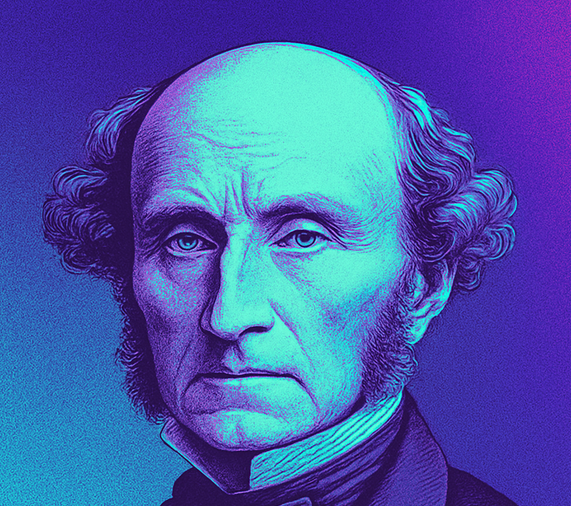
What we principally thought of, was to alter people's opinions; to make them believe according to evidence, and know what was their real interest, which when they once knew, they would, we thought, by the instrument of opinion, enforce a regard to it upon one another. While fully recognizing the superior excellence of unselfish benevolence and love of justice, we did not expect the regeneration of mankind from any direct action on those sentiments, but from the effect of educated intellect, enlightening the selfish feelings. Although this last is prodigiously important as a means of improvement in the hands of those who are themselves impelled by nobler principles of action, I do not believe that any one of the survivors of the Benthamites or Utilitarians of that day, now relies mainly upon it for the general amendment of human conduct.
▼
Source
source
(pp. 111-112)
3 months 1 week ago
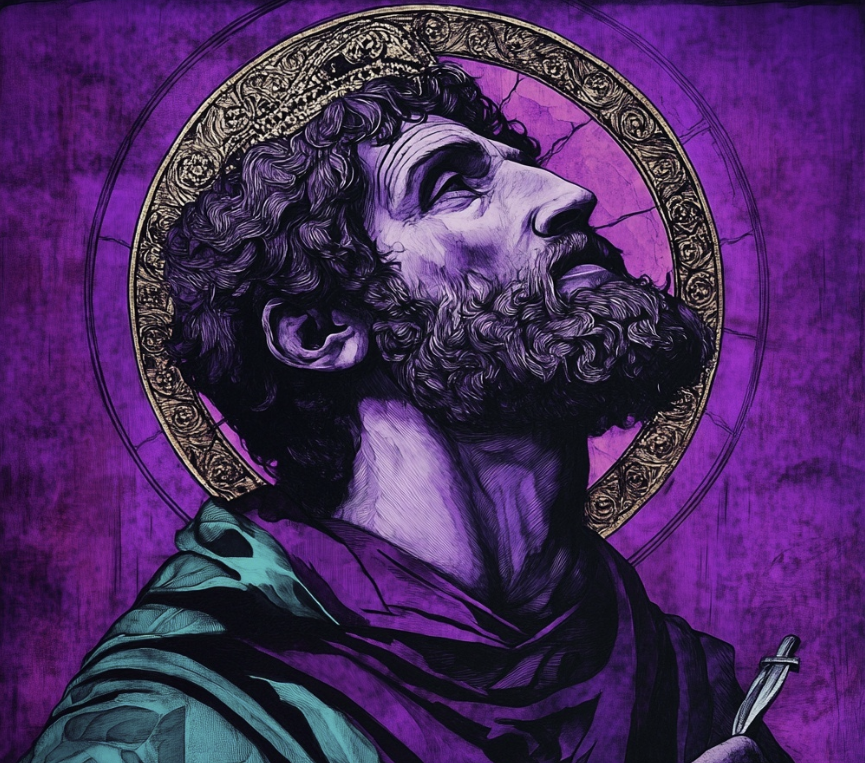
Once for all, then, a short precept is given thee: Love, and do what thou wilt: whether thou hold thy peace, through love hold thy peace; whether thou cry out, through love cry out; whether thou correct, through love correct; whether thou spare, through love do thou spare: let the root of love be within, of this root can nothing spring but what is good.
▼
Source
source
Tractatus VII, 8 Latin: "dilige et quod vis fac."; falsely often: "ama et fac quod vis." Translation by Professor Joseph Fletcher: Love and then what you will, do.

1 month 2 weeks ago
Each time I fail to think about death, I have the impression of cheating, of deceiving someone in me.
1 month 3 weeks ago
The subject must distinguish itself through opposition from the rational being, which it has assumed outside of itself. The subject has posited itself as one, which contains in itself the last ground of something that is in it, (for this is the condition of Egohood, or of Rationality generally;) but it has also posited a being outside of itself, as the last ground of this something in it. It is to have the power of distinguishing itself from this other being; and this is, under our presupposition, possible only, if the subject can distinguish in that given something how far the ground of this something lies in itself and how far it lies outside of itself.
▼
Source
source
P. 63
2 months 3 weeks ago
As for large landed property, its defenders have always, sophistically, identified the economic advantages offered by large-scale agriculture with large-scale landed property, as if it were not precisely as a result of the abolition of property that this advantage, for one thing, would receive its greatest possible extension, and, for another, only then would be of social benefit.
▼
Source
source
Rent of Land, p. 66.

1 month 1 day ago
Pure justice emerges from symmetry applied human life, and human beings as ends in themselves.
3 weeks ago
We no longer have to resort to superstition when faced with the deep problems: Is there a meaning to life? What are we for? What is man?
▼
Source
source
Ch. 1. Why Are People?

1 month 2 weeks ago
The neo-conservative critics of leftist critics of mass culture ridicule the protest against Bach as background music in the kitchen, against Plato and Hegel, Shelley and Baudelaire, Marx and Freud in the drugstore. Instead, they insist on recognition of the fact that the classics have left the mausoleum and come to life again, that people are just so much more educated. True, but coming to life as classics, they come to life as other than themselves; they are deprived of their antagonistic force, of the estrangement which was the very dimension of their truth.
▼
Source
source
p. 64

2 months 2 weeks ago
It is said that "being" is the most universal and the emptiest concept. As such it resists every attempt at definition. Nor does this most universal and thus indefinable concept need any definition. Everybody uses it constantly and also already understands what is meant by it.
▼
Source
source
Introduction: The Exposition of the Question of the Meaning of Being (Stambaugh translation)
1 week ago
A city that outdistances Man's walking powers is a trap for Man. It threatens to become a prison from which he cannot escape unless he has mechanical means of transport, the thoroughfares for carrying these, and the purchasing power for commanding the use of artificial means of communication.
▼
Source
source
"Has Man's Metropolitan Environment Any Precedents?", Ekistics, vol. 22, no. 133 (December 1966) pp. 385-7
1 month 1 week ago
The characteristic of the really great writer is the ability of his mind to to suddenly leap beyond his ordinary human values, into sudden perception of universal values.
▼
Source
source
p. 33
7 months ago
If we merely wait for the appropriate moment we will never live to see it, because this [appropriate moment] cannot arrive without the subjective conditions of the maturity of the revolutionary force being fulfilled - it can only arrive after a series of failed attempts.
2 months 3 weeks ago
The writers by whom, more than by any others, a new mode of political thinking was brought home to me, were those of the St. Simonian school in France. In 1829 and 1830 I became acquainted with some of their writings. They were then only in the earlier stages of their speculations. They had not yet dressed out their philosophy as a religion, nor had they organized their scheme of Socialism. They were just beginning to question the principle of hereditary property. I was by no means prepared to go with them even this length; but I was greatly struck with the connected view which they for the first time presented to me, of the natural order of human progress; and especially with their division of all history into organic periods and critical periods.
▼
Source
source
(p. 163)
CivilSimian.com created by AxiomaticPanic, CivilSimian, Kalokagathia