

1 month 3 weeks ago
He who carries self-regard far enough to keep himself in good health and high spirits, in the first place thereby becomes an immediate source of happiness to those around, and in the second place maintains the ability to increase their happiness by altruistic actions. But one whose bodily vigour and mental health are undermined by self-sacrifice carried too far, in the first place becomes to those around a cause of depression, and in the second place renders himself incapable, or less capable, of actively furthering their welfare. In estimating conduct we must remember that there are those who by their joyousness beget joy in others, and that there are those who by their melancholy cast a gloom on every circle they enter.
▼
Source
source
Ethics (New York:1915), § 72, pp. 193-194
3 weeks 1 day ago
At the very high speed of living, everybody needs a new career and a new job and a totally new personality every ten years.

1 month 2 weeks ago
Only the idiot is equipped to breathe.

3 months 2 days ago
Peace is more important than all justice; and peace was not made for the sake of justice, but justice for the sake of peace.
▼
Source
source
On Marriage
2 months 3 weeks ago
Even the death of Friends will inspire us as much as their lives. They will leave consolation to the mourners, as the rich leave money to defray the expenses of their funerals, and their memories will be incrusted over with sublime and pleasing thoughts, as monuments of other men are overgrown with moss; for our Friends have no place in the graveyard.
1 month 2 weeks ago
As incompetent in life as in death, I loathe myself and in this loathing I dream of another life, another death. And for having sought to be a sage such as never was, I am only a madman among the mad.

2 months 3 weeks ago
Political independence, as the right to owe his existence and continuance in society not to the arbitrary will of another, but to his own rights and powers as a member of the commonwealth.
1 month 2 weeks ago
Life, in that it is life, necessarily entails justice.
▼
Source
source
"Politics and Morality" in Be'ayot (April 1945), as published in A Land of Two Peoples : Martin Buber on Jews and Arabs (1983) edited by Paul Mendes-Flohr, p. 169
2 months 3 weeks ago
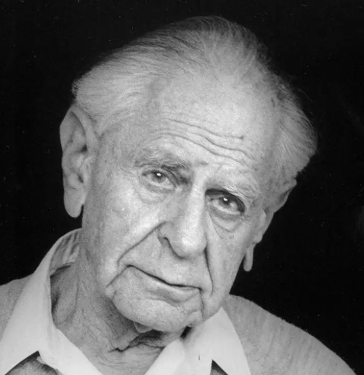
There are all kinds of sources of our knowledge; but none has authority ... The fundamental mistake made by the philosophical theory of the ultimate sources of our knowledge is that it does not distinguish clearly enough between questions of origin and questions of validity.
1 week 6 days ago
Many politicians of our time are in the habit of laying it down as a self-evident proposition, that no people ought to be free till they are fit to use their freedom. The maxim is worthy of the fool in the old story, who resolved not to go into the water till he had learned to swim. If men are to wait for liberty till they become wise and good in slavery, they may indeed have to wait forever.
▼
Source
source
p. 42

2 months 4 weeks ago
If the material world rests upon a similar ideal world, this ideal world must rest upon some other; and so on, without end. It were better, therefore, never to look beyond the present material world. By supposing it to contain the principle of its order within itself, we really assert it to be God; and the sooner we arrive at that Divine Being, so much the better. When you go one step beyond the mundane system, you only excite an inquisitive humour which it is impossible ever to satisfy.
▼
Source
source
Philo to Cleanthes, Part IV

1 month 2 weeks ago
Kierkegaard's individualistic interpretation of 'the negation of philosophy' inevitably developed a fierce opposition to Western rationalism. .... According to Kierkegaard, the individual is not the knowing but only the 'ethically existing subjectivity.' The sole reality that matters to him is his own 'ethical existence'.
▼
Source
source
P. 263-264
2 months 3 weeks ago
All natural philosophers, who wished to proceed mathematically in their work, have hence invariably (although unknown to themselves) made use of metaphysical principles, and must make use of such, it matters not how energetically they may otherwise repudiate any claim of metaphysics on their science.
▼
Source
source
Preface, Tr. Bax, 1883
1 month 2 weeks ago
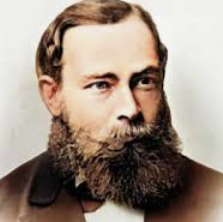
Every good mathematician is at least half a philosopher, and every good philosopher is at least half a mathematician.
▼
Source
source
Attributed to Frege in: A. A. B. Aspeitia (2000), Mathematics as grammar: 'Grammar' in Wittgenstein's philosophy of mathematics during the Middle Period, Indiana University, p. 25
1 month 1 week ago
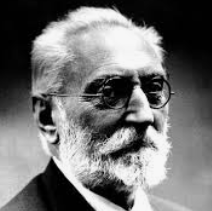
But the truth is that my work - I was going to say my mission - is to shatter the faith of men here, there, and everywhere, faith in affirmation, faith in negation, and faith in abstention in faith, and this for the sake of faith in faith itself; it is to war against all those who submit, whether it be to Catholicism, or to rationalism, or to agnosticism; it is to make all men live the life of inquietude and passionate desire.

2 weeks 1 day ago
What concerns me most here are the ways in which contemporary voices considered to be leftist have abandoned the philosophical ideas that are central to any left-wing standpoint: a commitment to universalism over tribalism, a firm distinction between justice and power, and a belief in the possibility of progress.
▼
Source
source
Polity (2023), p. 5
1 month 2 days ago
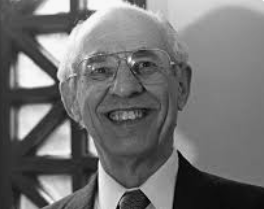
The similarity between Marxism and neoconservativism might be expressed in the following way: both perspectives say that certain injustices can't be cured under our present system of political democracy and mixed economy. The Marxist concludes that we have to overthrow the present system and the neoconservative concludes that we have to live with the injustices. But they are both wrong.
▼
Source
source
How Not to Solve Ethical Problems
1 month 3 days ago
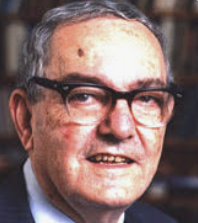
Organizations are systems of coordinated action among individuals and groups whose preferences, information, interests, or knowledge differ. Organization theories describe the delicate conversion of conflict into cooperation, the mobilization of resources, and the coordination of effort that facilitate the joint survival of an organization and its members.
▼
Source
source
Simon (1993. p. 2); Cited in Mario Catalani, Giuseppe F. Clerico (1996) Decision making structures. p. 1.
2 months 3 weeks ago
Bold ideas, unjustified anticipations, and speculative thought, are our only means for interpreting nature: our only organon, our only instrument, for grasping her. And we must hazard them to win our prize. Those among us who are unwilling to expose their ideas to the hazard of refutation do not take part in the scientific game.
▼
Source
source
Ch. 10 "Corroboration, or How a Theory Stands up to Tests", section 85: The Path of Science, p. 280.
2 months 3 weeks ago
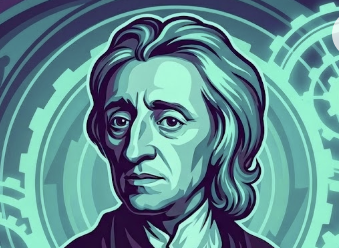
Freedom of Men under Government is, to have a standing Rule to live by, common to every one of that Society, and made by the Legislative Power erected in it; a Liberty to follow my own Will in all things, where the Rule prescribes not; and not to be subject to the inconstant, uncertain, unknown, Arbitrary Will of another Man: as Freedom of Nature is, to be under no other restraint but the Law of Nature.
▼
Source
source
Second Treatise of Civil Government, Ch. IV, sec. 21

2 months ago
To ruminate upon evils, to make critical notes upon injuries, and be too acute in their apprehensions, is to add unto our own tortures, to feather the arrows of our enemies, to lash ourselves with the scorpions of our foes, and to resolve to sleep no more.
▼
Source
source
Part III, Section XII

2 months 3 weeks ago
Where we find a difficulty we may always expect that a discovery awaits us. Where there is cover we hope for game.
▼
Source
source
Reflections on the Psalms (1958), ch. III: Cursings

2 months 3 weeks ago
I don't care for the applause one gets by saying what others are thinking; I want actually to change people's thoughts. Power over people's minds is the main personal desire of my life; and this sort of power is not acquired by saying popular things.
▼
Source
source
Letter to Lucy Martin Donnelly, February 10, 1916

3 months 1 week ago
The perfection of the effect demonstrates the perfection of the cause, for a greater power brings about a more perfect effect. But God is the most perfect agent. Therefore, things created by Him obtain perfection from Him. So, to detract from the perfection of creatures is to detract from the perfection of divine power.
▼
Source
source
III, 69, 15
3 months 2 days ago
Furthermore, how will you endure [the Romanists'] terrible idolatries? It was not enough that they venerated the saints and praised God in them, but they actually made them into gods. They put that noble child, the mother Mary, right into the place of Christ. They fashioned Christ into a judge and thus devised a tyrant for anguished consciences, so that all comfort and confidence was transferred from Christ to Mary, and then everyone turned from Christ to his particular saint. Can anyone deny this? Is it not true?
▼
Source
source
Luther's Works, 47:45; cf. also Anderson, Stafford & Burgess (1992), p. 29
2 months 3 weeks ago
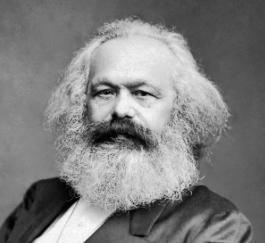
In place of the bourgeois society, with its classes and class antagonisms, shall we have an association, in which the free development of each is the condition for the free development of all.
▼
Source
source
Section 2, paragraph 72 (last paragraph).
2 months 3 weeks ago
Men who are unhappy, like men who sleep badly, are always proud of the fact.
1 month 1 week ago
And neither ought we to be surprised by the affirmation that the consciousness of the Universe is composed and integrated by the consciousnesses of the beings which form the Universe, by the consciousnesses of all the beings that exist, and that nevertheless it remains a personal consciousness distinct from those which compose it. Only thus is it possible to understand how in God we live, move, and have our being.
3 months 2 weeks ago
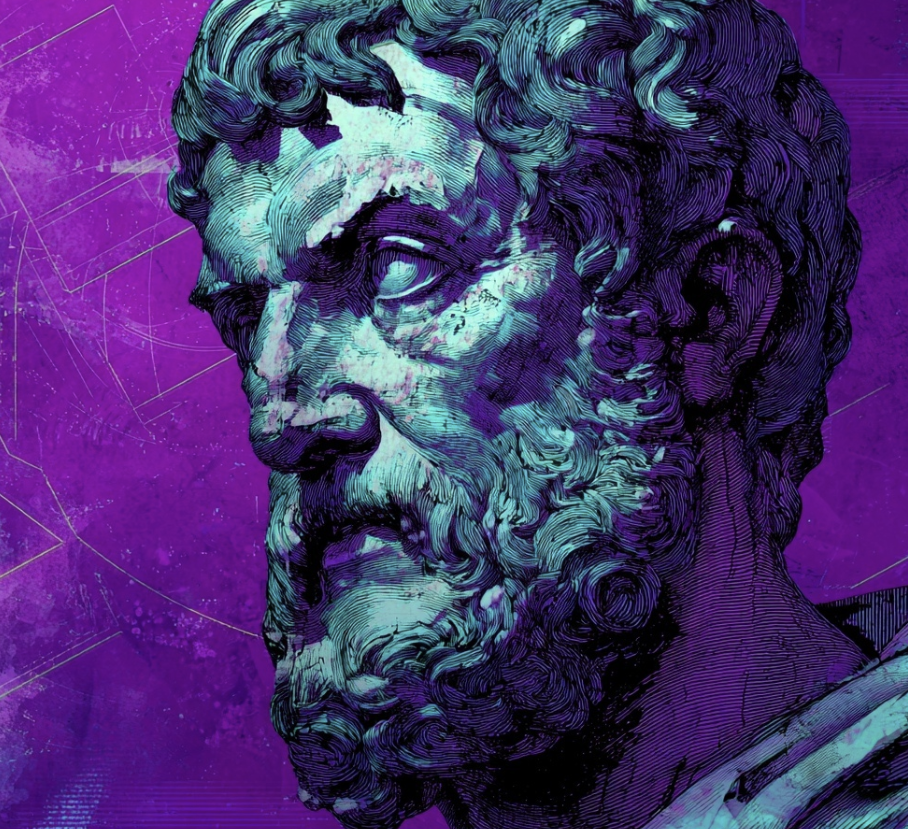
It is impossible for someone to dispel his fears about the most important matters if he doesn't know the nature of the universe but still gives some credence to myths. So without the study of nature there is no enjoyment of pure pleasure.

2 months 2 weeks ago
I don't really know what they mean by "intellectuals," all the people who describe, denounce, or scold them. I do know, on the other hand, what I have committed myself to, as an intellectual, which is to say, after all, a cerebro-spinal individual: to having a brain as supple as possible and a spinal column that's as straight as necessary.
1 month 3 weeks ago
He was not merely a chip of the old Block, but the old Block itself.
▼
Source
source
On Pitt's First Speech (26 February 1781), from Wraxall's Memoirs, First Series, vol. i. p. 342
3 weeks 1 day ago
It is the medium that shapes and controls the scale and form of human association and action.
▼
Source
source
(p. 9)

1 month 6 days ago
Can the "word" be pinned down to either one period or one church? All churches are, of course, only more or less unsuccessful attempts to represent the unseen to the mind.
▼
Source
source
Letter quoted in Florence Nightingale in Rome : Letters Written by Florence Nightingale in Rome in the Winter of 1847-1848 (1981)

1 month 1 week ago
The evolutionary urge drives man to seek for intenser forms of fulfillment, since his basic urge is for more life, more consciousness, and this contentment has an air of stagnation that the healthy mind rejects. (This recognition lies at the centre of my own 'outsider theory': that there are human beings to whom comfort means nothing, but whose happiness consists in following an obscure inner-drive, an 'appetite for reality'.)
▼
Source
source
p. 32
2 months 4 weeks ago
II. The tax which each individual is bound to pay ought to be certain, and not arbitrary.
▼
Source
source
Chapter II, Part II, p. 892.

3 months 2 weeks ago
Benevolence is the characteristic element of humanity.
1 month 1 week ago
I am dreaming ...? Let me dream, if this dream is my life. Do not awaken me from it. I believe in the immortal origin of this yearning for immortality, which is the very substance of my soul. But do I really believe in it ...? And wherefore do you want to be immortal? you ask me, wherefore? Frankly, I do not understand the question, for it is to ask the reason of the reason, the end of the end, the principle of the principle.
2 months 3 weeks ago
That I, a funny little gesticulating animal on two legs, should stand beneath the stars and declaim in a passion about my rights - it seems so laughable, so out of all proportion. Much better, like Archimedes, to be killed because of absorption in eternal things... There is a possibility in human minds of something mysterious as the night-wind, deep as the sea, calm as the stars, and strong as Death, a mystic contemplation, the "intellectual love of God." Those who have known it cannot believe in wars any longer, or in any kind of hot struggle. If I could give to others what has come to me in this way, I could make them too feel the futility of fighting. But I do not know how to communicate it: when I speak, they stare, applaud, or smile, but do not understand.
▼
Source
source
Letter to Miss Rinder, July 30, 1918
2 months 2 weeks ago
When the individual finds in her conscience beliefs that are relevant to public policy but incapable of the defense on the basis of beliefs common to her fellow citizens, she must sacrifice her conscience on the altar of public expediency.
1 week ago
I do not believe that sheer suffering teaches. If suffering alone taught, all the world would be wise, since everyone suffers. To suffering must be added mourning, understanding, patience, love, openness and the willingness to remain vulnerable. All these and other factors combined, if the circumstances are right, can teach and can lead to rebirth.
▼
Source
source
Hour of Gold, Hour of Lead: Diaries and Letters of Anne Morrow Lindbergh, 1929-1932 (1973), p. 3
3 months 1 week ago
What is the first business of one who practices philosophy? To get rid of self-conceit. For it is impossible for anyone to begin to learn that which he thinks he already knows.
▼
Source
source
Book II, ch. 17, 1.
1 month 1 week ago
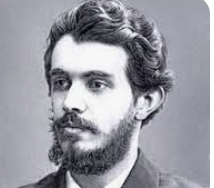
It must be recognized that man in his limited and relative earthly life is capable of bringing about the beautiful and the valuable only when he believes in another life, unlimited, absolute, eternal. That is a law of his being. A contact with this mortal life exclusive of any other ends in the wearing-away of effective energy and a self-satisfaction that makes one useless and superficial. Only the spiritual man, striking his roots deep in infinite and eternal life, can be a true creator. But Humanism denied the spiritual man, handed over the eternal to the temporal, and took its stand by the natural man within the limited confines of the earth.
▼
Source
source
p. 34
1 month 2 weeks ago
In the human reality, all existence that spends itself in procuring the prerequisites of existence is thus an "untrue" and unfree existence. Obviously this reflects the not at all ontological condition of a society based on the proposition that freedom is incompatible with the activity of procuring the necessities of life, that this activity is the "natural" function of a specific class, and that cognition of the truth and true existence imply freedom from the entire dimension of such activity. ... Society still is organized in such a way that procuring the necessities of life constitutes the full-time and life-long occupation of specific social classes, which are therefore unfree and prevented from a human existence. In this sense, the classical proposition according to which truth is incompatible with enslavement by socially necessary labor is still valid.
▼
Source
source
pp. 127-128
2 months 3 weeks ago
In the metaphysical elements of aesthetics the various nonmoral feelings are to be made use of; in the elements of moral metaphysics the various moral feelings of men, according to the differences in sex, age, education, and government, of races and climates, are to be employed.
▼
Source
source
Part III : Selection on Education from Kant's other Writings, Ch. I Pedagogical Fragments, # 58
1 month 3 weeks ago
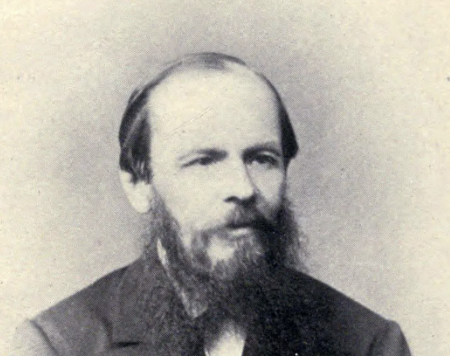
All became so jealous of the rights of their own personality that they did their very utmost to curtail and destroy them in others, and made that the chief thing in their lives. Slavery followed, even voluntary slavery; the weak eagerly submitted to the strong, on condition that the latter aided them to subdue the still weaker. Then there were saints who came to these people, weeping, and talked to them of their pride, of their loss of harmony and due proportion, of their loss of shame. They were laughed at or pelted with stones.
3 weeks 3 days ago
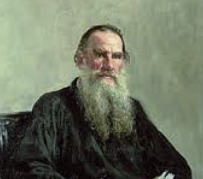
If Mormonism is able to endure, unmodified, until it reaches the third and fourth generation, it is destined to become the greatest power the world has ever known.
▼
Source
source
This quote originates in Thomas J. Yates, "Count Tolstoi and the 'American Religion' ", Improvement Era (February 1939)
3 weeks 6 days ago
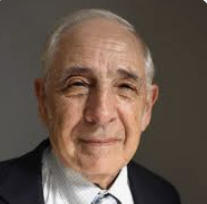
I want to block some common misunderstandings about "understanding": In many of these discussions one finds a lot of fancy footwork about the word "understanding."
2 months 4 weeks ago
It is a great mortification to the vanity of man, that his utmost art and industry can never equal the meanest of nature's productions, either for beauty or value. Art is only the under-workman, and is employed to give a few strokes of embellishment to those pieces, which come from the hand of the master.
▼
Source
source
Part I, Essay 15: The Epicurean
1 month 2 weeks ago
Who Rebels? Who rises in arms? Rarely the slave, but almost always the oppressor turned slave.
CivilSimian.com created by AxiomaticPanic, CivilSimian, Kalokagathia