

6 months 4 days ago
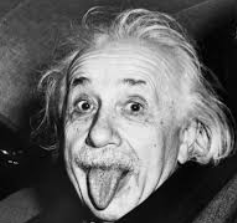
The most simple picture one can form about the creation of an empirical science is along the lines of an inductive method. Individual facts are selected and grouped together such that their lawful connection becomes clearly apparent. ... The truly great advances in our understanding of nature originated in a manner almost diametrically opposed to induction. The intuitive grasp of the essentials or a large complex of facts leads the scientist to the postulation of a hypothetical basic law, or several such basic laws. From the basic laws (system of axioms) he derives his conclusions as completely as possible in a purely logically deductive manner. These conclusions, derived from the basic laws (and often only after time-consuming developments and calculations), can then be compared to experience, and in this manner provide criteria for the justification of the assumed basic law.


7 months ago
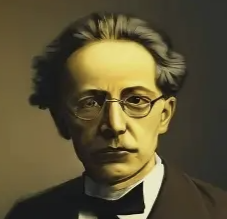
"Freedom" awakens your rage against everything that is not you; "egoism" calls you to joy over yourselves, to self-enjoyment.
▼
Source
source
Dover 2005, p. 163
6 months 4 weeks ago
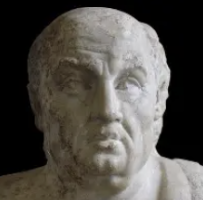
To no creature besides man has been given wisdom, foresight, industry, and reflection.

6 months 1 week ago
The Constitution of 1795, like its predecessors, was made for man. But there is no such thing as man in the world. In my lifetime I have seen Frenchmen, Italians, Russians, etc.; thanks to Montesquieu, I even know that one can be Persian. But as for man, I declare that I have never in my life met him; if he exists, he is unknown to me.

9 months 1 week ago
The present stage redefines the possibilities of man and nature in accordance with the new means available for their realization.
▼
Source
source
p. 65

7 months 5 days ago
Civil government does by its nature include much that is mechanical, and must be treated accordingly. We term it indeed, in ordinary language, the Machine of Society, and talk of it as the grand working wheel from which all private machines must derive, or to which they must adapt, their movements.
8 months 3 weeks ago
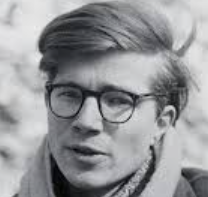
What excited me was the recognition that this was simply another version of the problem that had obsessed me all of my life -- the problem of those moments when life seems entirely delightful, when we experience a sensation of what G.K. Chesterton called "absurd good news." Life normally strikes most of us as hard, dull and unsatisfying; but in these moments, consciousness seems to glow and expand, and all the contradictions seem to be resolved. Which of the two visions is true? My own reflections had led me to conclude that the vision of "absurd good news" is somehow broader and more comprehensive than the feeling that life is dull, boring and meaningless. Boredom is basically a feeling of narrowness, and surely a narrow vision is bound to be less true than a broad one?
▼
Source
source
p. 16

10 months 1 week ago
I can be twenty women, one hundred, if that's what you want, all women. Ride with me behind you, I weigh nothing, your horse will not feel me. I want to be your whorehouse!
▼
Source
source
Act 3, sc. 4
6 months 4 days ago
As an eminent pioneer in the realm of high frequency currents... I congratulate you on the great successes of your life's work.
▼
Source
source
[http://www.teslasociety.com/einsteinletter.jpg Einstein's letter] to Nikola Tesla for Tesla's 75th birthday (1931)
8 months 3 weeks ago
You believe that I run after the strange because I do not know the beautiful; no, it is because you do not know the beautiful that I seek the strange.
▼
Source
source
F160

9 months 1 week ago
What distinct meaning can attach to saying that an idea in the past in any way affects an idea in the future, from which it is completely detached?

6 months 1 week ago
Among animals, some learn to speak and sing; they remember tunes, and strike the notes as exactly as a musician. Others, for instance the ape, show more intelligence... would it be absolutely impossible to teach the ape a language? I do not think so.
9 months 1 week ago
Most men's conscience, habits, and opinions are borrowed from convention and gather continual comforting assurances from the same social consensus that originally suggested them.
▼
Source
source
Ch. VIII: Ideal Society


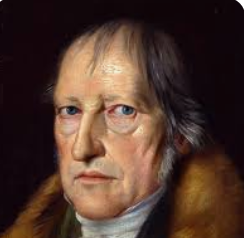
10 months 2 weeks ago
The beginning of religion, more precisely its content, is the concept of religion itself, that God is the absolute truth, the truth of all things, and subjectively that religion alone is the absolutely true knowledge.
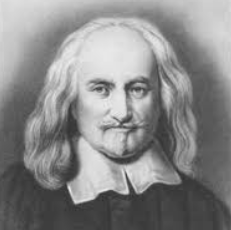
9 months 1 week ago
But Aversion wee have for things, not only which we know have hurt us; but also that we do not know whether they will hurt us, or not.
▼
Source
source
The First Part, Chapter 6, p. 24
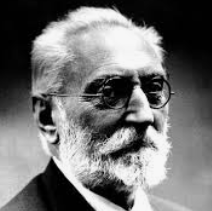
9 months 1 day ago
And what is its moral proof? We may formulate it thus: Act so that in your own judgment and in the judgment of others you may merit eternity, act so that you may become irreplaceable, act so that you may not merit death. Or perhaps thus: Act as if you were to die tomorrow, but to die in order to survive and be eternalized. The end of morality is to give personal, human finality to the Universe; to discover the finality that belongs to it - if indeed it has any finality - and to discover it by acting.
6 months 1 week ago
If one's organism is... the preeminent advantage, and the source of all others, education is the second. The best made brain would be a total loss without it...
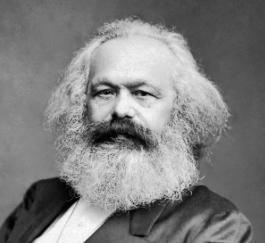
10 months 2 weeks ago
Every one knows that there are no real forests in England. The deer in the parks of the great are demurely domestic cattle, fat as London alderman.
▼
Source
source
Vol. I, Ch. 27, pg. 803.

10 months 4 days ago
As for me, when you want a good laugh, you will find me in fine state... fat and sleek, a true hog of Epicurus' herd.
▼
Source
source
Book I, epistle iv, lines 15-16
10 months 3 weeks ago
For Christ is Joy and Sweetness to a broken heart. Christ is a Lover of poor sinners, and such a Lover that He gave Himself for us. Now if this is true, and it is true, then are we never justified by our own righteousness.
▼
Source
source
Chapter 3, verse 20
10 months 2 weeks ago
The Indians, whom we call barbarous, observe much more decency and civility in their discourses and conversation, giving one another a fair silent hearing till they have quite done; and then answering them calmly, and without noise or passion. And if it be not so in this civiliz'd part of the world, we must impute it to a neglect in education, which has not yet reform'd this antient piece of barbarity amongst us.
▼
Source
source
Sec. 145
11 months 4 days ago
The superior man accords with the course of the Mean. Though he may be all unknown, unregarded by the world, he feels no regret. It is only the sage who is able for this.
8 months 4 weeks ago
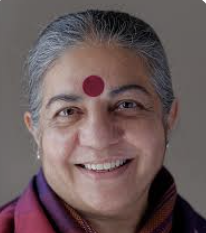
If one assumes, as I do, that battery is caused by the belief permeating this culture that hierarchical rule and coercive authority are natural, then all our relationships tend to be based on power and domination, and thus all forms of battery are linked.
7 months 4 weeks ago
Simplicity and nonviolence are the basis of an economy of wellbeing, and such an economy must be localised.

9 months 3 weeks ago
Those alone are dear to Divinity who are hostile to injustice.
▼
Source
source
Pythagorean Ethical Sentences From Stobæus
10 months 1 week ago
And we feel that the hero has lived all the details of this night like annunciations, promises, or even that he lived only those that were promises, blind and deaf to all that did not herald adventure. We forget that the future was not yet there; the man was walking in the night without forethought, a night which offered him a choice of dull rich prizes, and he did not make his choice.
▼
Source
source
Diary entry of Saturday noon (10 February?)
10 months 2 weeks ago
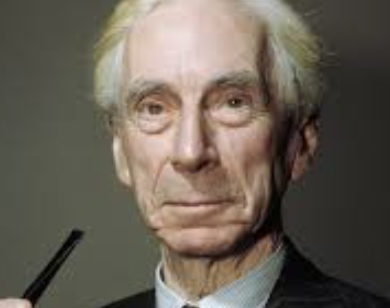
Whatever happens, I cannot be a silent witness to murder or torture. Anyone who is a partner in this is a despicable individual. I am sorry I cannot be moderate about it...
▼
Source
source
Quoted in The New York Times Biographical Service, Vol. I (1970), p. 294, said by Russell "in the spring of 1967"
8 months 1 week ago
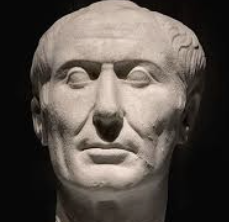
A good reputation is more valuable than money.
▼
Source
source
Maxim 108

9 months 2 weeks ago
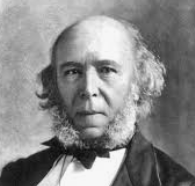
Architecture, sculpture, painting, music, and poetry, may truly be called the efflorescence of civilised life.
▼
Source
source
Education: What Knowledge Is of Most Worth?

9 months 1 week ago
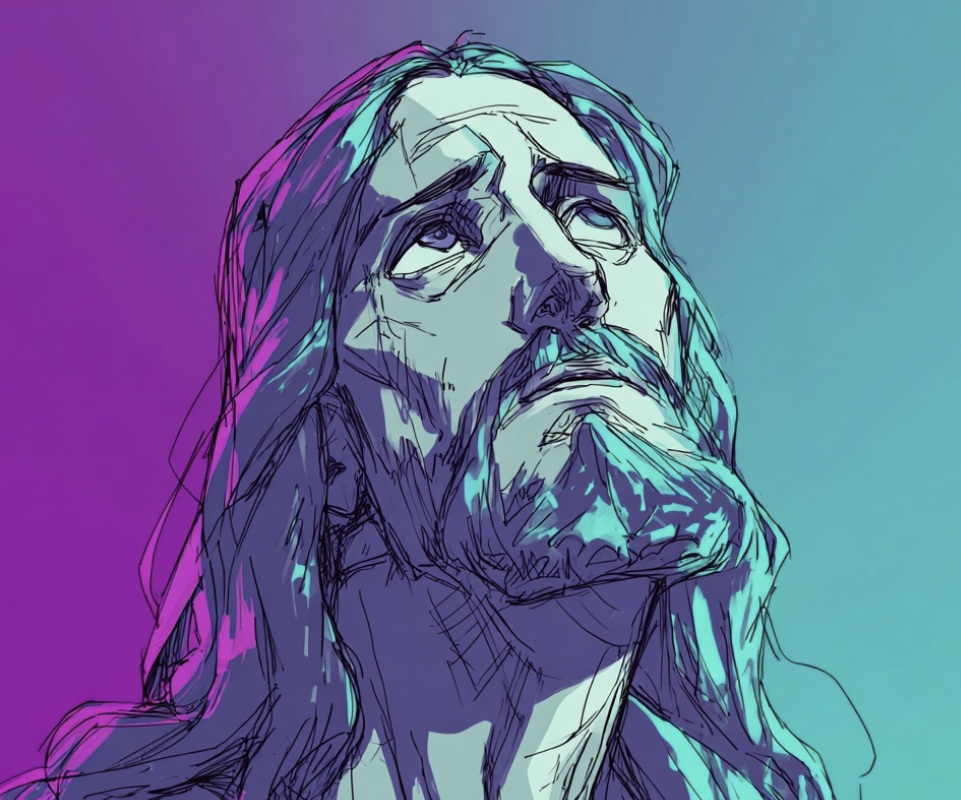
Woe unto thee, Chorazin! woe unto thee, Bethsaida! for if the mighty works, which were done in you, had been done in Tyre and Sidon, they would have repented long ago in sackcloth and ashes. But I say unto you, It shall be more tolerable for Tyre and Sidon at the day of judgment, than for you. And thou, Capernaum, which art exalted unto heaven, shalt be brought down to hell: for if the mighty works, which have been done in thee, had been done in Sodom, it would have remained until this day. But I say unto you, That it shall be more tolerable for the land of Sodom in the day of judgment, than for thee.
▼
Source
source
11:21-24 (KJV)
6 months 1 week ago
In the Koran as in the Bible, politics is divinized, and human reason, crushed by the religious ascendancy, cannot insinuate its isolating and corrosive poison into the mechanisms of government, so that citizens are believers whose loyalty is exalted to faith, and obedience to enthusiasm and fanaticism.
▼
Source
source
p. 78
10 months 2 weeks ago
If I could put my hand on the north star, would it be as beautiful? The sea is lovely, but when we bathe in it, the beauty forsakes all the near water. For the imagination and senses cannot be gratified at the same time.
▼
Source
source
Beauty
10 months 2 weeks ago
We are and irrefutable arbiters of value, and in the world of value Nature is only a part. Thus in this world we are greater than Nature. In the world of values, Nature in itself is neutral, neither good nor bad deserving of neither admiration nor censure. It is we who create value and our desires which confer value. In this realm we are kings, and we debase our kingship if we bow down to Nature. It is for us to determine our good life, not for Nature - not even for Nature personified as God.
8 months 2 weeks ago
The sense in which an automatic door "understands instructions" from its photoelectric cell is not at all the sense in which I understand English.
9 months 1 week ago
The Superego, in censoring the unconscious and in implanting conscience, also censors the censor.
▼
Source
source
p. 76

7 months 1 week ago
The idea of universal human dignity ultimately comes out of Christianity... the view that all human beings are equal in the sight of God because they have the capacity for moral choice. As Western thought developed in the 17th-18th centuries, this took on a secular form under thinkers like Jean-Jacques Rousseau or Immanuel Kant or Georg Hegel, who argued that human equality is... based on human autonomy.
▼
Source
source
11:12
8 months 1 week ago
If wine is to withdraw its most poetic countenance, the sun of the white dinner-cloth, a deity to be invoked by two or three, all fervent, hushing their talk, degusting tenderly, and storing reminiscences-for a bottle of good wine, like a good act, shines ever in the retrospect-if wine is to desert us, go thy ways, old Jack!
▼
Source
source
Pt. I, ch. III
11 months 4 days ago
The Superior Man has nothing to compete for. But if he must compete, he does it in an archery match, wherein he ascends to his position, bowing in deference. Descending, he drinks (or has [the winner] drink) the ritual cup. Note: Bowing is a courtesy for the host who invites him as well drinking a cup.
9 months 2 weeks ago
The essential trait in the moral consciousness, is the control of some feeling or feelings by some other feeling or feelings.
▼
Source
source
Ch. 7, The Psychological View
7 months 1 week ago
The right wing version really sees community represented either by... religion, or by nation, that these are units that... get dissolved under a liberal world order, through globalization, through the movement of people, goods, ideas and trade between nations, national identity becomes diluted and that sense of national community that held people together in democratic societies appears to be lost. ...Secularism ...is perceived as a loss by people that have religious faith. They believe that there is a form of militant secularism that is not allowing them to practice their religion, and for that reason a lot of religious conservatives in places like the United States, have turned against that liberal order.
▼
Source
source
16:18

9 months 2 weeks ago
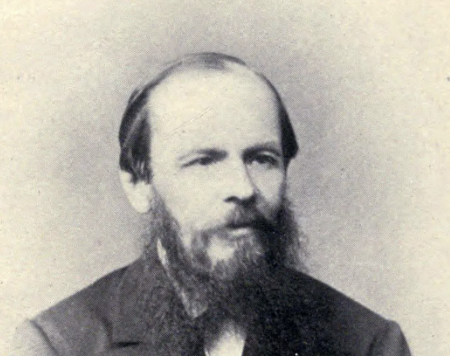
If not reason, then the devil.
10 months 2 weeks ago
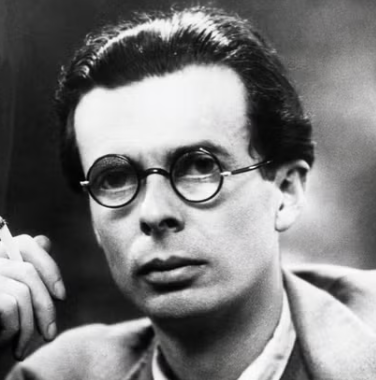
The man who comes back through the Door in the Wall will never be quite the same as the man who went out. He will be wiser but less sure, happier but less self-satisfied, humbler in acknowledging his ignorance yet better equipped to understand the relationship of words to things, of systematic reasoning to the unfathomable mystery which it tries, forever vainly, to comprehend.
CivilSimian.com created by AxiomaticPanic, CivilSimian, Kalokagathia