

11 months 1 week ago
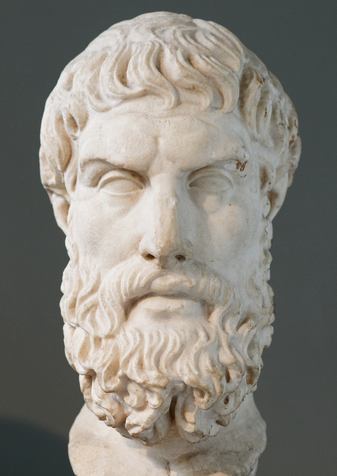
Against the diseases of the mind, philosophy provides sufficient antidotes. The instruments which it employs for this purpose are the virtues; the root of which, whence all the rest proceed, is prudence. This virtue comprehends the whole art of living discreetly, justly, and honorably, and is, in fact, the same thing with wisdom. It instructs men to free their understandings from the clouds of prejudice; to exercise temperance and fortitude in the government of themselves: and to practice justice towards others. Although pleasure, or happiness, which is the end of living, be superior to virtue, which is only the means, it is every one's interest to practice all the virtues; for in a happy life, pleasure can never be separated from virtue.

10 months 3 weeks ago
What would we really know the meaning of? The meal in the firkin; the milk in the pan; the ballad in the street; the news of the boat; the glance of the eye; the form and the gait of the body; - show me the ultimate reason of these matters; show me the sublime presence of the highest spiritual cause lurking, as always it does lurk, in these suburbs and extremities of nature; let me see every trifle bristling with the polarity that ranges it instantly on an eternal law; and the shop, the plough, and the ledger, referred to the like cause by which light undulates and poets sing; - and the world lies no longer a dull miscellany and lumber-room, but has form and order; there is no trifle; there is no puzzle; but one design unites and animates the farthest pinnacle and the lowest trench.
▼
Source
source
par. 40
10 months 3 weeks ago
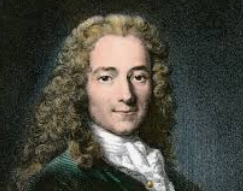
Superstition is to religion what astrology is to astronomy, the mad daughter of a wise mother. These daughters have too long dominated the earth.
▼
Source
source
"Whether it is useful to maintain the people in superstition," Treatise on Toleration, 1763

7 months 2 weeks ago
Marxism has been the greatest fantasy of our century. It was a dream offering the prospect of a society of perfect unity, in which all human aspirations would be fulfilled and all values reconciled.
▼
Source
source
Epilogue, p. 1206
9 months 3 weeks ago
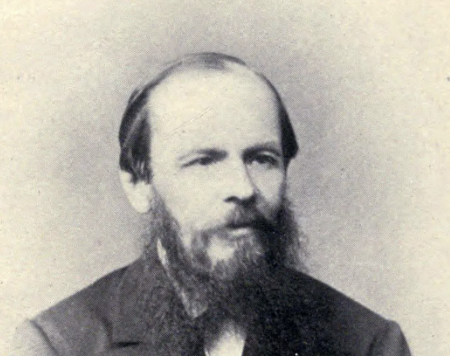
I have seen the truth; I have seen and I know that people can be beautiful and happy without losing the power of living on earth. I will not and cannot believe that evil is the normal condition of mankind. And it is just this faith of mine that they laugh at. But how can I help believing it? I have seen the truth - it is not as though I had invented it with my mind, I have seen it, seen it, and the living image of it has filled my soul for ever. I have seen it in such full perfection that I cannot believe that it is impossible for people to have it.
10 months 2 weeks ago
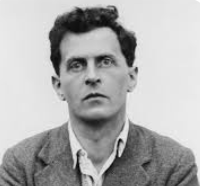
Philosophy is a battle against the bewitchment of our intelligence by means of our language.
▼
Source
source
§ 109
9 months 3 weeks ago
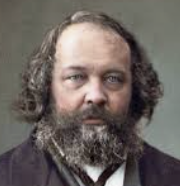
Not official revolutionary commissars in any sort of sashes, but rather revolutionary propagandists are to be dispatched into all the provinces and communes and particularly among the peasants who cannot be revolutionised by principles, nor by the decrees of any dictatorship, but only by the act of revolution itself, that is to say, by the consequences that will inevitably ensure in every commune from complete cessation of the legal and official existence of the state.


7 months 1 week ago
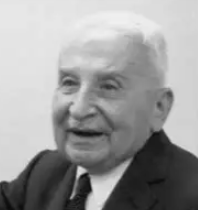
Inflation is an increase in the quantity of money without a corresponding increase in the demand for money, i.e., for cash holdings.
▼
Source
source
The Free Market and Its Enemies, speech to the Foundation for Economic Education
10 months 3 weeks ago
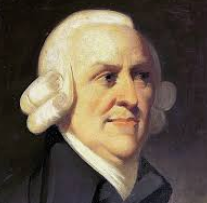
Oatmeal indeed supplies the common people of Scotland with the greatest and best part of their food, which is in general much inferior to that of their neighbours of the same rank in England.
▼
Source
source
Chapter VIII, p. 91 (Oatmeal in England makes for great horses, in Scotland Great Men).

9 months 2 weeks ago
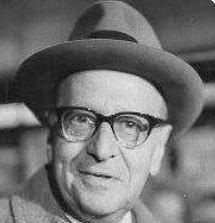
With the abolition of otium and of the ego no aloof thinking is left. ... Without otium philosophical thought is impossible, cannot be conceived or understood.
▼
Source
source
p. 39.

9 months 1 week ago
Radical black feminists have never confined their vision to just the emancipation of black women or women in general, or all black people for that matter. Rather, they are the theorists and proponents of a radical humanism committed to liberating humanity and reconstructing social relations across the board. When bell hooks says "Feminism is for everybody," she is echoing what has always been a basic assumption of black feminists. We are not talking about identity politics but a constantly developing often contested, revolutionary conversation about how all of us might envision and remake the world.
▼
Source
source
Robin Kelley Freedom Dreams
10 months 2 weeks ago
As long as we try to project from the relative and conditioned to the absolute and unconditioned, we shall keep the pendulum swinging between dogmatism and skepticism. The only way to stop this increasingly tiresome pendulum swing is to change our conception of what philosophy is good for. But that is not something which will be accomplished by a few neat arguments. It will be accomplished, if it ever is, by a long, slow process of cultural change - that is to say, of change in common sense, changes in the intuitions available for being pumped up by philosophical arguments.
▼
Source
source
Introduction to Truth and Progress: Philosophical Papers, Volume 3 (1998).
7 months 1 week ago
If you could be alarmed into the semblance of modesty, you would charm everybody; but remember my joke against you about the Moon and the Solar System;-"Damn the solar system! bad light - planets too distant - pestered with comets - feeble contriviance; - could make a better with great ease."
▼
Source
source
Vol. II, letter to Lord Jeffrey (1806), p. 23 Discussed in David A. Kent, D. R. Ewen, "Romantic Parodies, 1797-1831", The Review of English Studies, New Series, Vol. 44, No. 175, (1993), pp. 430-432

7 months 2 weeks ago
A Muslim who knows French will never be a dangerous Muslim.
▼
Source
source
quoted in Arvidsson, Stefan (2006), Aryan Idols: Indo-European Mythology as Ideology and Science, translated by Sonia Wichmann, Chicago and London: The University of Chicago Press.'(107)

9 months 3 weeks ago
Because half-a-dozen grasshoppers under a fern make the field ring with their importunate chink, whilst thousands of great cattle, reposed beneath the shadow of the British oak, chew the cud and are silent, pray do not imagine that those who make the noise are the only inhabitants of the field; that of course they are many in number; or that, after all, they are other than the little shrivelled, meagre, hopping, though loud and troublesome insects of the hour.
▼
Source
source
Volume iii, p. 344
10 months 3 weeks ago
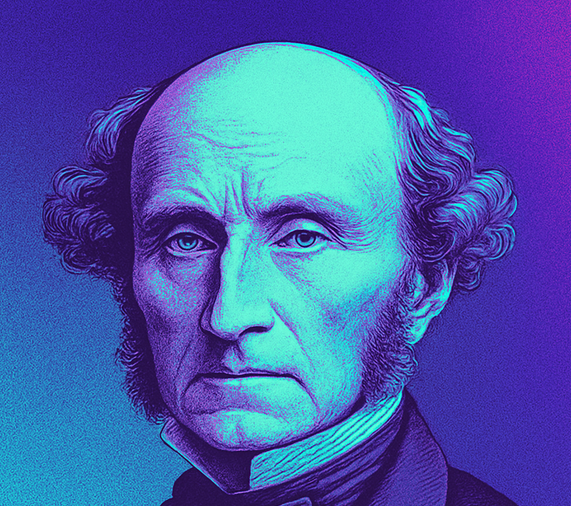
Again, defenders of utility often find themselves called upon to reply to such objections as this-that there is not time, previous to action, for calculating and weighing the effects of any line of conduct on the general happiness. This is exactly as if any one were to say that it is impossible to guide our conduct by Christianity, because there is not time, on every occasion on which anything has to be done, to read through the Old and New Testaments. The answer to the objection is, that there has been ample time, namely, the whole past duration of the human species. During all that time mankind have been learning by experience the tendencies of actions.
▼
Source
source
Ch. 2
10 months 3 weeks ago
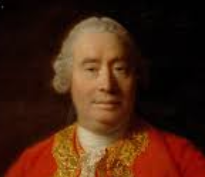
You need only look around you, replied PHILO, to satisfy yourself with regard to this question. A tree bestows order and organisation on that tree which springs from it, without knowing the order; an animal in the same manner on its offspring; a bird on its nest; and instances of this kind are even more frequent in the world than those of order, which arise from reason and contrivance. To say, that all this order in animals and vegetables proceeds ultimately from design, is begging the question; nor can that great point be ascertained otherwise than by proving, a priori, both that order is, from its nature, inseparably attached to thought; and that it can never of itself, or from original unknown principles, belong to matter.
▼
Source
source
Philo to Demea, Part VII
10 months 3 weeks ago
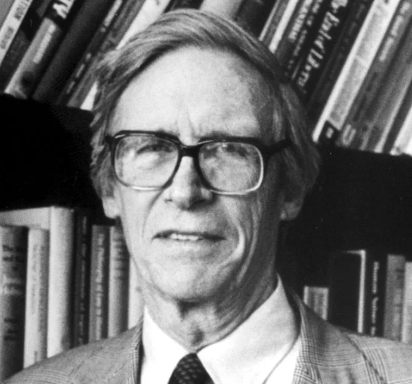
To each according to his threat advantage does not count as a principle of justice.
▼
Source
source
Chapter III, Section 24, pg. 141

9 months 2 weeks ago
If anyone comes to Me and does not hate his father and mother, wife and children, brothers and sisters, yes, and his own life also, he cannot be My disciple.
▼
Source
source
14:26
9 months 1 day ago
Pascal is called the founder of modern probability theory. He earns this title not only for the familiar correspondence with Fermat on games of chance, but also for his conception of decision theory, and because he was an instrument in the demolition of probabilism, a doctrine which would have precluded rational probability theory.
▼
Source
source
Chapter 3, Opinion, p. 23.
9 months 3 weeks ago
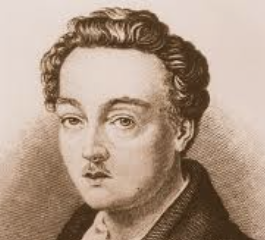
Freedom and whores are the most cosmopolitan items under the sun. .
▼
Source
source
Act IV


10 months 3 weeks ago
Music is a hidden arithmetic exercise of the soul, which does not know that it is counting.
▼
Source
source
Letter to Christian Goldbach, April 17, 1712.
11 months 1 week ago
Justice respects man as living in society, and is the common bond without which no society can subsist.
9 months 1 week ago
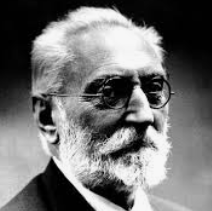
Faith which does not doubt is dead faith.
▼
Source
source
La Agonía del Cristianismo (The Agony of Christianity)

10 months 1 week ago
'Tis a grievous thing to be subject to an inferior.


9 months 6 days ago
It seemed perfectly possible that, in spite of my certainty of my own genius, I might die of some illness, or perhaps even in a street accident, before I had ever glimpsed the meaning of life. My moods of happiness and self-confidence convinced me that I had a "destiny" to become a famous writer, and to be remembered as one of the most important thinkers of the century.
▼
Source
source
p. 67
9 months 2 weeks ago
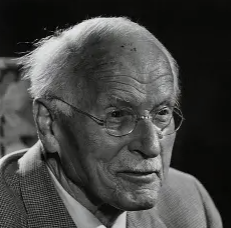
Great and enduring civilizations like those of the Hindus and the Chinese were built upon this foundation and developed from it a discipline of self-knowledge which they brought to a high pitch of refinement both in philosophy and practice.
▼
Source
source
Carl Jung, Modern Man in Search of a Soul. quoted in Hindu Culture, K. Guru Dutt, and quoted in Gewali, Salil (2013). Great Minds on India. New Delhi: Penguin Random House.

9 months 4 weeks ago
The heart of man is the place the devil dwells in; I feel sometimes a hell within myself.
▼
Source
source
Section 51

9 months 4 weeks ago
The New Englander is attached to his township because it is strong and independent; he has an interest in it because he shares in its management; he loves it because he has no reason to complain of his lot; he invests his ambition and his future in it; in the restricted sphere within his scope, he learns to rule society; he gets to know those formalities without which freedom can advance only through revolutions, and becoming imbued with their spirit, develops a taste for order, understands the harmony of powers, and in the end accumulates clear, practical ideas about the nature of his duties and the extent of his rights.
▼
Source
source
Chapter V.
10 months 3 weeks ago
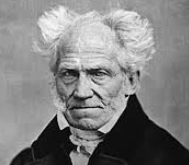
How every line is of such strong, determined, and consistent meaning! And on every page we encounter deep, original, lofty thoughts, while the whole world is suffused with a high and holy seriousness.
▼
Source
source
About Indian sacred scriptures. quoted in Londhe, S. (2008).
7 months 1 week ago
He was a one-book man. Some men have only one book in them; others, a library.
▼
Source
source
Vol. I, ch. 11, p. 402
6 months 3 weeks ago
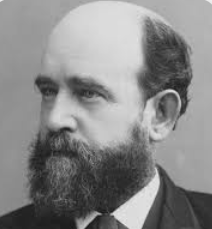
Men must have rights before they can have equal rights. Each man has a right to use the world because he is here and wants to use the world. The equality of this right is merely a limitation arising from the presence of others with like rights. Society, in other words, does not grant, and cannot equitably withhold from any individual, the right to the use of land. That right exists before society and independently of society, belonging at birth to each individual, and ceasing only with his death. Society itself has no original right to the use of land. What right it has with regard to the use of land is simply that which is derived from and is necessary to the determination of the rights of the individuals who compose it. That is to say, the function of society with regard to the use of land only begins where individual rights clash, and is to secure equality between these clashing rights of individuals.
▼
Source
source
Part I : Declaration, Ch. IV : Mr. Spencer's Confusion as to Rights

6 months 2 weeks ago
If one's organism is... the preeminent advantage, and the source of all others, education is the second. The best made brain would be a total loss without it...
10 months 3 weeks ago
Lands for the purposes of pleasure and magnificence, parks, gardens, public walks, &c. possessions which are every where considered as causes of expence, not as sources of revenue, seem to be the only lands which, in a great and civilized monarchy, ought to belong the crown.
▼
Source
source
Chapter II, Part I, p. 891.
10 months 3 weeks ago
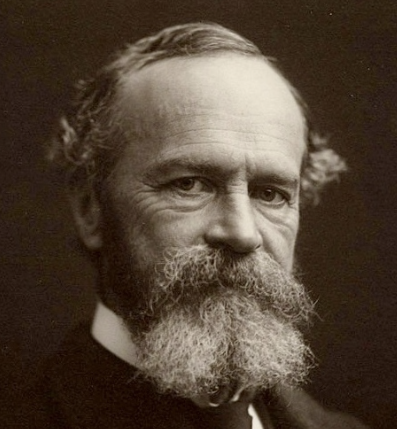
The "through-and-through" universe seems to suffocate me with its infallible impeccable all-pervasiveness. Its necessity, with no possibilities; its relations, with no subjects, make me feel as if I had entered into a contract with no reserved rights ... It seems too buttoned-up and white-chokered and clean-shaven a thing to speak for the vast slow-breathing unconscious Kosmos with its dread abysses and its unknown tides.
▼
Source
source
Essays in Radical Empiricism (1912), Ch. 12 : Absolutism and Empiricism
10 months 2 weeks ago
This market way of life promotes addictions to stimulation and obsessions with comfort and convenience.
▼
Source
source
(p29)


8 months 6 days ago
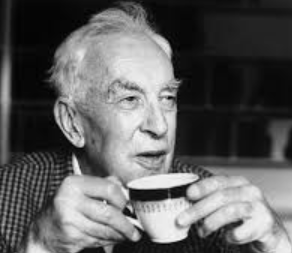
Our western science is a child of moral virtues; and it must now become the father of further moral virtues if its extraordinary material triumphs in our time are not to bring human history to an abrupt, unpleasant and discreditable end.
▼
Source
source
"A Turning Point in Man's Destiny", The New York Times Magazine (26 December 1954) p. 5
7 months 2 weeks ago
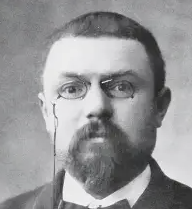
One need only open the eyes to see that the conquests of industry which have enriched so many practical men would never have seen the light, if these practical men alone had existed and if they had not been preceded by unselfish devotees who died poor, who never thought of utility, and yet had a guide far other than caprice.As Mach says, these devotees have spared their successors the trouble of thinking.
▼
Source
source
Author's Essay Prefatory to the Translation: "The Choice of Facts," p.4
11 months 3 weeks ago
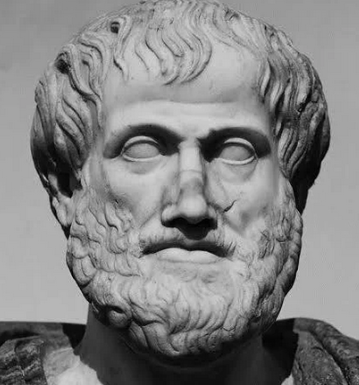
The single harmony produced by all the heavenly bodies singing and dancing together springs from one source and ends by achieving one purpose, and has rightly bestowed the name not of "disordered" but of "ordered universe" upon the whole.
6 months 2 weeks ago
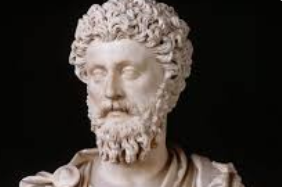
As surgeons keep their instruments and knives always at hand for cases requiring immediate treatment, so shouldst thou have thy thoughts ready to understand things divine and human, remembering in thy every act, even the smallest, how close is the bond that unites the two.
▼
Source
source
III, 13

10 months 2 weeks ago
This book, admirable in so many respects, power in its break and style, is even more intimidating for me in that, having formely had the good fortune to study under Michel Foucault, I retain the consciousness of an admiring and grateful disciple. Now, the disciple's consciousness, when he starts, I would not say to dispute, but to engage in dialogue with the master or, better, to articulate the interminable and silent dialogue which made him into a disciple-this disciple's consciousness is an unhappy consciousness.
▼
Source
source
Cogito and The History of Madness (Routledge classics edition)

11 months 1 day ago
I prefer the company of peasants because they have not been educated sufficiently to reason incorrectly.
CivilSimian.com created by AxiomaticPanic, CivilSimian, Kalokagathia