

8 months 3 weeks ago
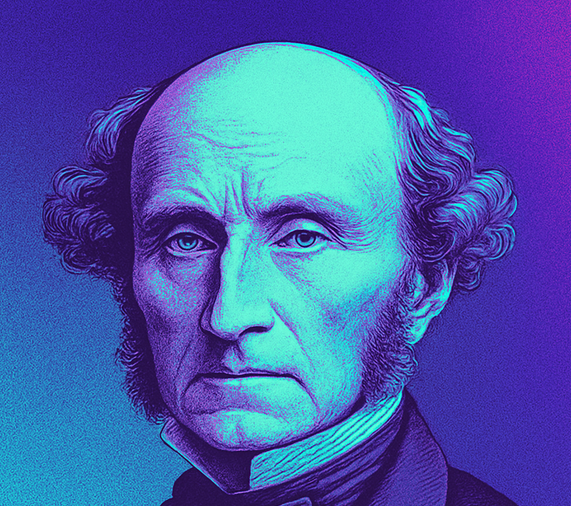
A general State education is a mere contrivance for molding people to be exactly like one another; and as the mold in which it casts them is that which pleases the dominant power in the government, whether this be a monarch, an aristocracy, or a majority of the existing generation; in proportion as it is efficient and successful, it establishes a despotism over the mind, leading by a natural tendency to one over the body.
▼
Source
source
Ch. V: Applications
7 months 2 weeks ago
Now, apparently, many men are again feeling homesick for the herd. They devote themselves passionately to whatever there is left in them of the sheep. They want to march through life together, along the collective path, shoulder to shoulder, wool rubbing wool, and the head down. This is the reason why so many European peoples are looking for a shepherd and a sheep dog.
▼
Source
source
p. 170
6 months 3 weeks ago
This is still the strangest thing in all man's travelling, that he should carry about with him incongruous memories.
▼
Source
source
Pt. II, ch. III.
8 months 3 weeks ago
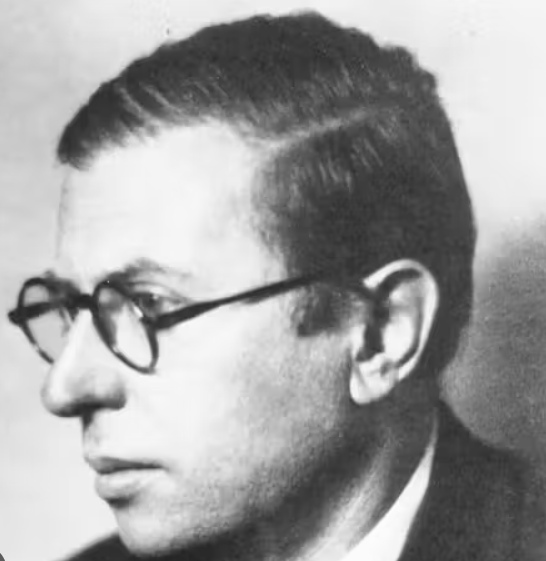
Lord, you have cursed Cain and Cain's children: thy will be done. You have allowed men's hearts to be corrupted, that their intentions be rotten, that their actions putrefy and stink: thy will be done.
▼
Source
source
Act 1
4 months 3 weeks ago
No body wishes more than I do to see such proofs as you exhibit, that nature has given to our black brethren, talents equal to those of the other colors of men, and that the appearance of a want of them is owing merely to the degraded condition of their existence, both in Africa & America. I can add with truth, that no body wishes more ardently to see a good system commenced for raising the condition both of their body & mind to what it ought to be, as fast as the imbecility of their present existence, and other circumstances which cannot be neglected, will admit.
▼
Source
source
Letter to Benjamin Banneker (30 August 1791), quoted in The Writings of Thomas Jefferson (1853), p. 291
8 months 3 weeks ago
The life of man is a long march through the night, surrounded by invisible foes, tortured by weariness and pain, towards a goal that few can hope to reach, and where none may tarry long.

9 months 1 week ago
Thou hast made us for Thyself, and the heart never resteth till it findeth rest in Thee.
▼
Source
source
p. 515

7 months 3 weeks ago
The lover who kills himself for a girl has an experience which is more complete and much more profound than the hero who overturns the world.
8 months 3 weeks ago
Man is a credulous animal, and must believe something; in the absence of good grounds for belief, he will be satisfied with bad ones.

9 months 4 days ago
Our preaching does not stop with the law. That would lead to wounding without binding up, striking down and not healing, killing and not making alive, driving down to hell and not bringing back up, humbling and not exalting. Therefore, we must also preach grace and the promise of forgiveness - this is the means by which faith is awakened and properly taught. Without this word of grace, the law, contrition, penitence, and everything else are done and taught in vain.
▼
Source
source
pp. 78-79
9 months ago
We must therefore glean up our experiments in this science from a cautious observation of human life, and take them as they appear in the common course of the world, by men's behaviour in company, in affairs, and in their pleasures. Where experiments of this kind are judiciously collected and compared, we may hope to establish on them a science, which will not be inferior in certainty, and will be much superior in utility to any other of human comprehension.
▼
Source
source
Introduction
7 months 3 weeks ago
Nothing proves that we are more than nothing.
8 months 3 weeks ago
One always dies too soon - or too late. And yet, life is there, finished: the line is drawn, and it must all be added up. You are nothing other than your life.
▼
Source
source
Inès, Act 1, sc. 5
4 months 3 weeks ago
Gather together in your heart all terrors, recompose all details. Salvation is a circle; close it!
4 months 3 weeks ago
Mechanical, chemical, and vital Forces form an ascending progression, each including the preceding. Chemical Affinity includes in its nature Mechanical Force, and may often be practically resolved into Mechanical Force. (Thus the ingredients of gunpowder, liberated from their chemical union, exert great mechanical Force : a galvanic battery acting by chemical process does the like.) Vital Forces include in their nature both chemical Affinities and mechanical Forces: for Vital Powers produce both chemical changes, (digestion,) and motions which imply considerable mechanical force, (as the motion of the sap and of the blood.)

7 months 1 week ago
The jingoes and war speculators are filling the air with the sentimental slogan of hypocritical nationalism, "America for Americans," "America first, last, and all the time."
9 months 4 weeks ago
The modern scientific counterpart to belief in God is the belief in the universe as an organism: this disgusts me. This is to make what is quite rare and extremely derivative, the organic, which we perceive only on the surface of the earth, into something essential, universal, and eternal! This is still an anthropomorphizing of nature!
4 months 3 weeks ago
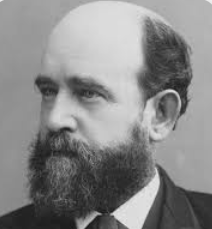
The primary error of the advocates of land nationalization is in their confusion of equal rights with joint rights, and in their consequent failure to realize the nature and meaning of economic rent... In truth the right to the use of land is not a joint or common right, but an equal right; the joint or common right is to rent, in the economic sense of the term. Therefore it is not necessary for the state to take land, it is only necessary for it to take rent. This taking by the commonalty of what is of common right, would of itself secure equality in what is of equal right - for since the holding of land could be profitable only to the user, there would be no inducement for any one to hold land that he could not adequately use, and monopolization being ended no one who wanted to use land would have any difficulty in finding it.
▼
Source
source
Part III : Recantation, Ch. XI Compensation

8 months 4 weeks ago
Many of these were not prisoners of war, and redeemed from savage conquerors, as some plead; and they who were such prisoners, the English, who promote the war for that very end, are the guilty authors of their being so; and if they were redeemed, as is alleged, they would owe nothing to the redeemer but what he paid for them.
8 months 3 weeks ago
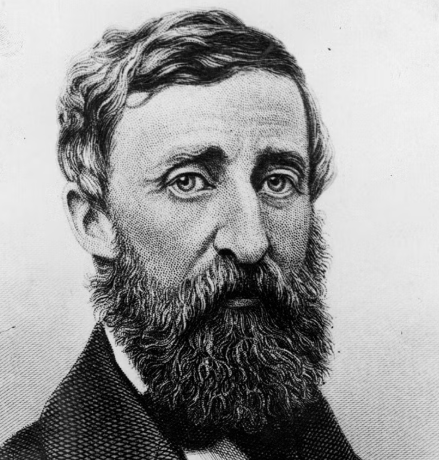
Dreams are the touchstones of our characters.
5 months 2 weeks ago
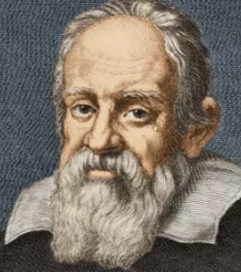
Nature ... is inexorable and immutable; she never transgresses the laws imposed upon her, or cares a whit whether her abstruse reasons and methods of operation are understandable to men. For that reason it appears that nothing physical which sense-experience sets before our eyes, or which necessary demonstrations prove to us, ought to be called in question (much less condemned) upon the testimony of biblical passages which may have some different meaning beneath their words. For the Bible is not chained in every expression to conditions as strict as those which govern all physical effects; nor is God any less excellently revealed in Nature's actions than in the sacred statements of the Bible.
4 months 3 weeks ago
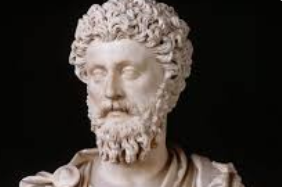
Whenever you suffer pain, keep in mind that it's nothing to be ashamed of and that it can't degrade your guiding intelligence, nor keep it from acting rationally and for the common good. And in most cases you should be helped by the saying of Epicurus, that pain is never unbearable or unending, so you can remember these limits and not add to them in your imagination. Remember too that many common annoyances are pain in disguise, such as sleepiness, fever and loss of appetite. When they start to get you down, tell yourself you are giving in to pain.
▼
Source
source
VII. 64:280

7 months 1 week ago
We believe we are rising because while keeping the same base inclinations (for instance: the desire to triumph over others) we have given them a noble object. We should, on the contrary, rise by attaching noble inclinations to lowly objects.
▼
Source
source
La pesanteur et la grâce (1948), p. 61
7 months ago
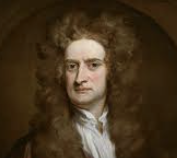
Idolatry is a more dangerous crime because it is apt by the authority of Kings & under very specious pretenses to insinuate it self into mankind. Kings being apt to enjoyn the honour of their dead ancestors: & it seeming very plausible to honour the souls of Heroes & Saints & to believe that they can heare us & help us & are mediators between God & man & reside & act principally in the temples & statues dedicated to their honour & memory? And yet this being against the principal part of religion is in scripture condemned & detested above all other crimes. The sin consists first in omitting the service of the true God.
▼
Source
source
Of Idolatry
4 months 3 weeks ago
The moral sense, or conscience, is as much a part of man as his leg or arm. It is given to all human beings in a stronger or weaker degree, as force of members is given them in a greater or less degree. It may be strengthened by exercise, as may any particular limb of the body. This sense is submitted, indeed, in some degree, to the guidance of reason; but it is a small stock which is required for this: even a less one than what we call common sense. State a moral case to a ploughman and a professor. The former will decide it as well, and often better than the latter, because he has not been led astray by artificial rules.
9 months 3 weeks ago
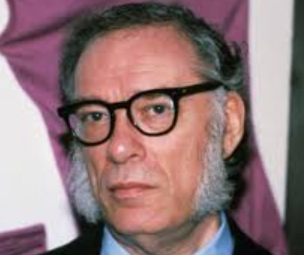
Self-education is, I firmly believe, the only kind of education there is.
7 months 6 days ago
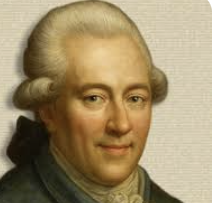
If it is permissible to write plays that are not intended to be seen, I should like to see who can prevent me from writing a book no one can read.
▼
Source
source
F 1
6 months 1 week ago
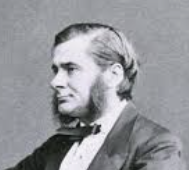
The consciousness of brutes would appear to be related to the mechanism of their body simply as a collateral product of its working, and to be as completely without any power of modifying that working as the steam-whistle which accompanies the work of a locomotive engine is without influence upon its machinery. Their volition, if they have any, is an emotion indicative of physical changes, not a cause of such changes.
6 months 4 weeks ago
To subdue destruction is one of the most important affirmations of which we are capable in this world. It is the affirmation of this life, bound up with yours, and with the realm of the living: an affirmation caught up with a potential for destruction and its countervailing force.
▼
Source
source
p. 65
8 months 3 weeks ago
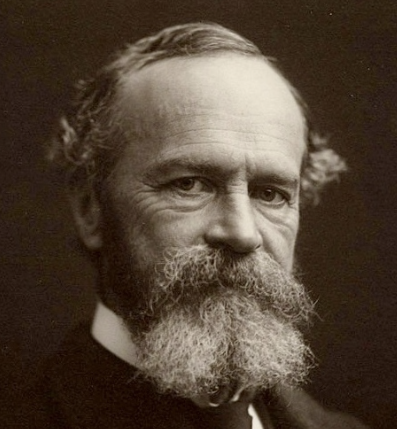
The "through-and-through" universe seems to suffocate me with its infallible impeccable all-pervasiveness. Its necessity, with no possibilities; its relations, with no subjects, make me feel as if I had entered into a contract with no reserved rights ... It seems too buttoned-up and white-chokered and clean-shaven a thing to speak for the vast slow-breathing unconscious Kosmos with its dread abysses and its unknown tides.
▼
Source
source
Essays in Radical Empiricism (1912), Ch. 12 : Absolutism and Empiricism
4 months 3 weeks ago
Small farms make economic sense. They also produce more happiness, more beauty, more health-those things that aren't so quantifiable...

7 months 2 weeks ago
All they that take the sword shall perish with the sword.
▼
Source
source
Matthew 26:52 (KJV)
6 months 3 weeks ago
At no period of human culture have men understood the psychic mechanism involved in invention and technology.
▼
Source
source
(p. 300)

7 months 1 week ago
...Zen Buddhism, this religion of immanence.
7 months 1 week ago
A young delicate tree, that is being clipped and cut by the gardener in order to give it an artificial form, will never reach the majestic height and the beauty as when allowed to grow in nature and freedom.

8 months 1 week ago
Having departed from your house, turn not back; for the furies will be your attendants.
▼
Source
source
Symbol 15
4 months 3 weeks ago
He who made us would have been a pitiful bungler, if he had made the rules of our moral conduct a matter of science. For one man of science, there are thousands who are not. What would have become of them? Man was destined for society. His morality, therefore, was to be formed to this object. He was endowed with a sense of right and wrong, merely relative to this.
8 months 4 weeks ago
Life is just a notebook with blank pages. Every time we make a mistake, the pages get stained and living in it becomes impossible.


7 months 1 week ago
Attention is the rarest and purest form of generosity.
▼
Source
source
From an April 13, 1942 letter to poet Joë Bousquet, published in their collected correspondence
7 months 2 weeks ago
Simon Peter said to Him, "Let Mary leave us, for women are not worthy of Life." Jesus said, "I myself shall lead her in order to make her male, so that she too may become a living spirit resembling you males. For every woman who will make herself male will enter the Kingdom of Heaven."
7 months 3 weeks ago
The acts of France were acts of hostility to this country; her whole system, every speech, every decree, every act, bespoke an intention preclusive of accommodation. No man, he would venture to say, had a more lively sense of the importance of the question before the House, or of the evils of war, than himself. A war with France, under such circumstances as now governed her conduct, must be terrible, but peace much more so. A nation that had abandoned all its valuable distinctions, arts, sciences, religion, law order, every thing but the sword, was most formidable and dreadful to all nations composed of citizens who only used soldiers as a defence; as such, France should be resisted with spirit and temper, without fear or scruple.
▼
Source
source
Speech in the House of Commons upon the outbreak of war with France (12 February 1793)
8 months 3 weeks ago
Who can exhaust a man? Who knows a man's resources?

9 months 5 days ago
Most Christians are superstitious rather than pious, and except for the name of Christ differ hardly at all from superstitious pagans.
▼
Source
source
The Erasmus Reader (1990), pp. 140-141.
8 months 2 weeks ago
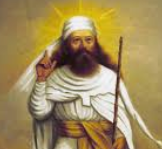
Make thyself pure, 0 righteous man! Anyone in the world here below can win purity for himself, namely, when he cleanses himself with Good Thoughts, Good Words, and Good Deeds.
8 months 3 weeks ago
Power, like vanity, is insatiable. Nothing short of omnipotence could satisfy it completely. And as it is especially the vice of energetic men, the causal efficacy of love of power is out of all proportion to its frequency. It is, indeed, by far the strongest motive in the lives of important men. Love of power is greatly increased by the experience of power, and this applies to petty power as well as to that of potentates.
CivilSimian.com created by AxiomaticPanic, CivilSimian, Kalokagathia