

9 months 1 week ago
Man does not exercise his thought because he finds it amusing, but because, obliged as he is to live immersed in the world and to force his way among things, he finds himself under the necessity of organizing his psychic activities, which are not very different from those of the anthropoid, in the form of thought - which is what the animal does not do.
▼
Source
source
p. 28
10 months 3 weeks ago
We may well be ashamed to tell what things we have read or heard in our day. I do not know why my news should be so trivial, - considering what one's dreams and expectations are, why the developments should be so paltry. The news we hear, for the most part, is not news to our genius. It is the stalest repetition.
▼
Source
source
p. 491


9 months 2 days ago
To do the opposite of something is also a form of imitation, namely an imitation of its opposite.
▼
Source
source
D 96 Variant translation: To do just the opposite is also a form of imitation.
11 months 1 week ago
This is the ideal world, a perfect world of equality, fraternity, harmony, welfare, and justice.
7 months 1 week ago
Socrates is reported to have replied, when a certain person complained of having received no benefit from his travels: "It serves you right! You travelled in your own company!"
8 months 3 weeks ago
Idolatry is a more dangerous crime because it is apt by the authority of Kings & under very specious pretenses to insinuate it self into mankind. Kings being apt to enjoyn the honour of their dead ancestors: & it seeming very plausible to honour the souls of Heroes & Saints & to believe that they can heare us & help us & are mediators between God & man & reside & act principally in the temples & statues dedicated to their honour & memory? And yet this being against the principal part of religion is in scripture condemned & detested above all other crimes. The sin consists first in omitting the service of the true God.
▼
Source
source
Of Idolatry
8 months 3 weeks ago
In historical events great men - so-called - are but labels serving to give a name to the event, and like labels they have the least possible connection with the event itself. Every action of theirs, that seems to them an act of their own free will, is in an historical sense not free at all, but in bondage to the whole course of previous history, and predestined from all eternity.
▼
Source
source
Bk. IX, ch. 1
10 months 3 weeks ago
So much of our time is spent in preparation, so much in routine and so much in retrospect, that the amount of each person's genius is confined to a very few hours.
▼
Source
source
Quoted in Simon Brown (ed.) The New England Farmer, vol. 9 (January 1857) p. 18
10 months 3 weeks ago
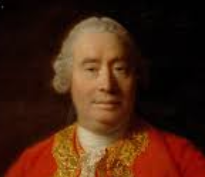
There is nothing in any object, consider'd in itself, which can afford us a reason for drawing a conclusion beyond it; even after the observation of the frequent or constant conjunction of objects, we have no reason to draw any inference concerning any object beyond those of which we have had experience.
▼
Source
source
Part 3, Section 12
10 months 1 week ago
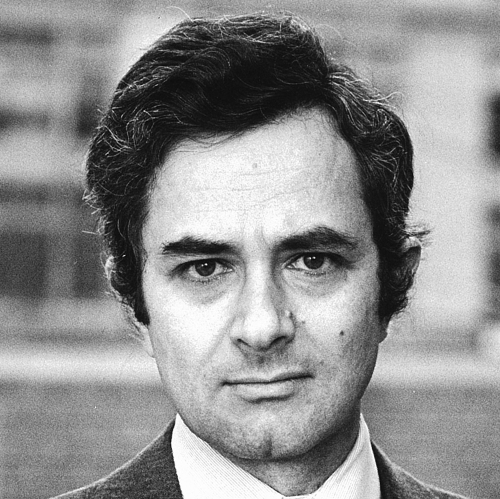
That is what is meant, I think by the allegation that it is good simply to be alive, even if one is undergoing terrible experiences. The situation is roughly this: There are elements which, if added to one's experience, make life better; there are other elements which, if added to one's experience, make life worse. But what remains when these are set aside is not merely neutral: it is emphatically positive. Therefore life is worth living even when the bad elements of experience are plentiful, and the good ones too meager to outweigh the bad ones on their own. The additional positive weight is supplied by experience itself, rather than by any of its contents.
▼
Source
source
"Death", p. 2. This passage not present in the 1970 version (Nous, IV, no. 1), but present in the 1979 version.
11 months ago
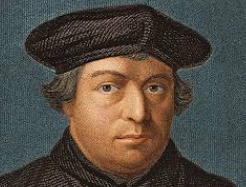
...God commanded in the law [Deut. 22:22-24] that adulterers be stoned . . . The temporal sword and government should therefore still put adulterers to death . . . Where the government is negligent and lax, however, and fails to inflict the death penalty, the adulterer may betake himself to a far country and there remarry if he is unable to remain continent. But it would be better to put him to death, lest a bad example be set . . .
10 months 3 weeks ago
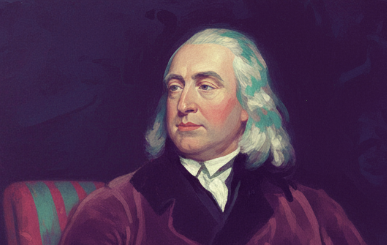
Rights are, then, the fruits of the law, and of the law alone. There are no rights without law-no rights contrary to the law-no rights anterior to the law. Before the existence of laws there may be reasons for wishing that there were laws-and doubtless such reasons cannot be wanting, and those of the strongest kind;-but a reason for wishing that we possessed a right, does not constitute a right. To confound the existence of a reason for wishing that we possessed a right, with the existence of the right itself, is to confound the existence of a want with the means of relieving it. It is the same as if one should say, everybody is subject to hunger, therefore everybody has something to eat.
▼
Source
source
Pannomial Fragments (c. 1831), quoted in The Works of Jeremy Bentham, Vol. III (1838), p. 221
11 months 2 weeks ago
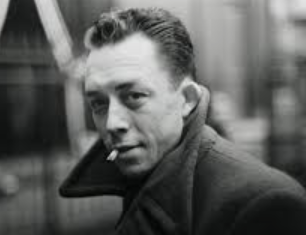
The direction of the world overwhelms me at this time. In the long run, all the continents (yellow, black and brown) will spill over onto Old Europe. They are hundreds and hundreds of millions. They are hungry and they are not afraid to die. We no longer know how to die or how to kill. We could preach, but Europe believes in nothing. So, we must wait for the year 1000 or a miracle. For my part, I find it harder and harder to live before a wall.

10 months 3 weeks ago
Even atheists rebel and express, like Hardy and Housman, their rage against God although (or because) He does not, on their view, exist...
9 months 2 days ago
I have remarked very clearly that I am often of one opinion when I am lying down and of another when I am standing up.
▼
Source
source
F 73
10 months 3 weeks ago
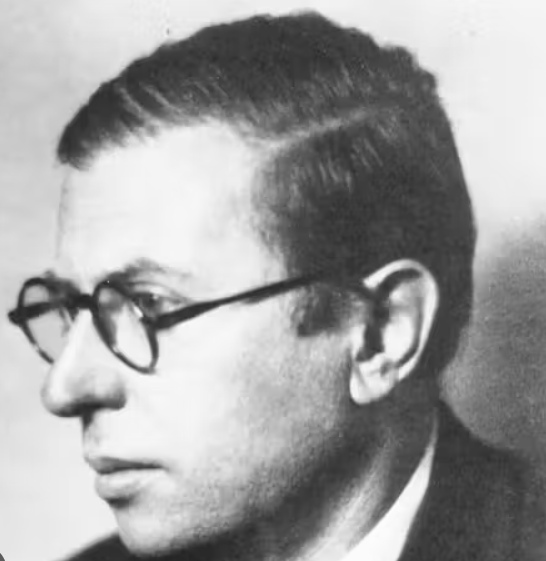
They made me take cod liver oil: that is the height of luxury: a medicine to make you hungry while the others, in the street, would have sold themselves for a beefsteak. I saw them passing my window with their signs: "Give me bread".
▼
Source
source
Act 3, sc. 3
10 months 3 weeks ago
Everyone feels benevolent if nothing happens to be annoying him at the moment.
8 months 2 weeks ago
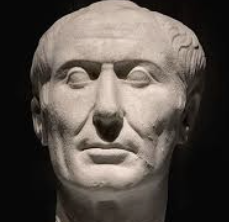
Success makes some crimes honorable.
▼
Source
source
Maxim 326
10 months 2 weeks ago
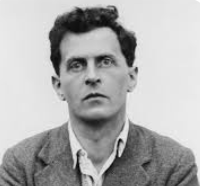
But more correctly: The fact that I use the word "hand" and all the other words in my sentence without a second thought, indeed that I should stand before the abyss if I wanted so much as to try doubting their meanings - shows that absence of doubt belongs to the essence of the language-game, that the question "How do I know..." drags out the language-game, or else does away with it.
11 months 2 weeks ago
When the imagination sleeps, words are emptied of their meaning: a deaf population absent-mindedly registers the condemnation of a man. ... there is no other solution but to speak out and show the obscenity hidden under the verbal cloak.

10 months 4 days ago
Tell not abroad what thou intendest to do; for if thou speed not, thou shalt be mocked!
8 months 2 weeks ago
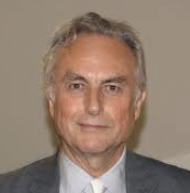
If you have a faith, it is statistically overwhelmingly likely that it is the same faith as your parents and grandparents had. No doubt soaring cathedrals, stirring music, moving stories and parables, help a bit. But by far the most important variable determining your religion is the accident of birth. The convictions that you so passionately believe would have been a completely different, and largely contradictory, set of convictions, if only you had happened to be born in a different place. Epidemiology, not evidence.

10 months 3 weeks ago
When nature removes a great man, people explore the horizon for a successor; but none comes, and none will. His class is extinguished with him. In some other and quite different field the next man will appear.
▼
Source
source
Uses of Great Men
8 months 1 week ago
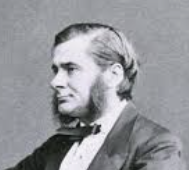
Scientific men get an awkward habit - no, I won't call it that, for it is a valuable habit - of believing nothing unless there is evidence for it; and they have a way of looking upon belief which is not based upon evidence, not only as illogical, but as immoral.
▼
Source
source
Thomas Henry Huxley. "Lectures on Evolution Title: This is Essay# 3 from" Science and Hebrew Tradition." (1882); as cited in: William Trufant Foster, (1908) Argumentation and debating, p. 55
9 months 3 weeks ago
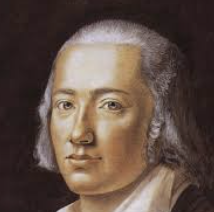
What is the wisdom of a book compared with the wisdom of an angel?

9 months 3 weeks ago
The hatred that men bear to privilege increases in proportion as privileges become fewer and less considerable, so that democratic passions would seem to burn most fiercely just when they have least fuel. I have already given the reason for this phenomenon. [all conditions are unequal, no inequality is so great as to offend the eye, whereas the slightest dissimilarity is odious in the midst of general uniformity; the more complete this uniformity is, the more insupportable the sight of such a difference becomes.] Hence it is natural that the love of equality should constantly increase together with equality itself, and that it should grow by what it feeds on.
▼
Source
source
Chapter III.
9 months 2 weeks ago
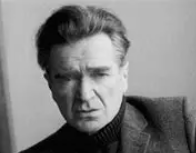
Since the only things we remember are humiliations and defeats, what is the use of all the rest?
9 months 3 weeks ago
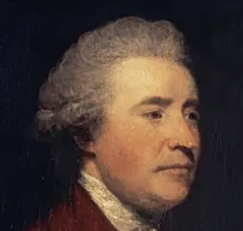
Men must be governed by those laws which they love. Where thirty millions are to be governed by a few thousand men, the government must be established by consent, and must be congenial to the feelings and to the habits of the people. That which creates tyranny is the imposition of a form of government contrary to the will of the governed: and even a free and equal plan of government, would be considered as despotic by those who desired to have their old laws and their ancient system.
▼
Source
source
Speech in the House of Commons on India (27 June 1781), quoted in The Parliamentary Register: Or, History of the Proceedings and Debates of the House of Commons, Volume III (1782), pp. 666-667
8 months 2 weeks ago
Receive an injury rather than do one.
▼
Source
source
Maxim 5
7 months 1 day ago
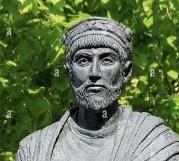
One indeed is the Creator of all things, but many are the creative powers revolving in the heavens; we must, therefore, place the influence of the Sun as intermediate with respect to each single operation affecting the earth. Moreover, the principle productive of Life is vastly superabundant in the Intelligible World; our world, also, is evidently full of generative life. It is therefore clear that the life-producing power of the sovereign Sun is intermediate between these two, since the phenomena of Nature bear testimony to the fact; for some kinds of things the Sun brings to perfection, others of them he brings to pass, others he regulates, others he excites, and there exists nothing that, without the creative influence of the Sun, comes to light and is born.

8 months 2 days ago
We should always speak what would please the man of whom we expect a favour, like the hunter who sings sweetly when he desires to shoot a deer.
9 months 1 week ago
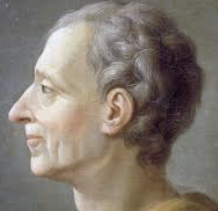
Christians are beginning to lose the spirit of intolerance which animated them: experience has shown the error of the expulsion of the Jews from Spain, and of the persecution of those Christians in France whose belief differed a little from that of the king. They have realized that zeal for the advancement of religion is different from a due attachment to it; and that in order to love it and fulfill its behests, it is not necessary to hate and persecute those who are opposed to it.
▼
Source
source
No. 60. (Usbek writing to Ibben)
8 months 3 weeks ago
What is now happening to the people of the East as of the West is like what happens to every individual when he passes from childhood to adolescence and from youth to manhood. He loses what had hitherto guided his life and lives without direction, not having found a new standard suitable to his age, and so he invents all sorts of occupations, cares, distractions, and stupefactions to divert his attention from the misery and senselessness of his life. Such a condition may last a long time.
▼
Source
source
VI


8 months 1 week ago
I'm delighted to hear someone make the claim that there is moral progress because it can be such a incendiary thing to say, and its something that I say and deeply believe in.
10 months 3 weeks ago
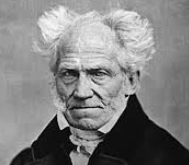
Suicide may also be regarded as an experiment - a question which man puts to Nature, trying to force her to answer. The question is this: What change will death produce in a man's existence and in his insight into the nature of things? It is a clumsy experiment to make; for it involves the destruction of the very consciousness which puts the question and awaits the answer.
▼
Source
source
Vol. 2, Ch. 13, § 160
9 months 4 weeks ago
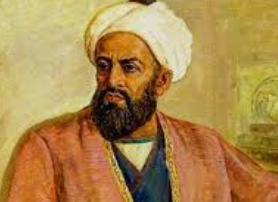
The proximity between the counterfeit and the good coin does not make the good coin counterfeit nor the counterfeit good. In the same way the proximity between truth and falsehood does not make truth falsehood nor falsehood truth.
▼
Source
source
III. The Classes of Seekers, p. 33.
10 months 3 weeks ago
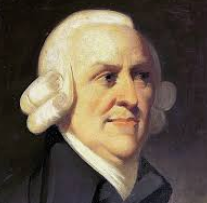
Lands for the purposes of pleasure and magnificence, parks, gardens, public walks, &c. possessions which are every where considered as causes of expence, not as sources of revenue, seem to be the only lands which, in a great and civilized monarchy, ought to belong the crown.
▼
Source
source
Chapter II, Part I, p. 891.
9 months 5 days ago
Station, power, wealth-how inadequate they have proved! How useless and insecure!
10 months 3 weeks ago
I have always - at least, ever since I can remember - had a kind of longing for death. Psyche
8 months 2 weeks ago
The TV camera has no shutter. It does not deal with aspects or facets of objects in high resolution. It is a means of direct pick-up by the electrical groping over surfaces.
▼
Source
source
Arts in society, Volume 3, 1964, p. 242
10 months 2 weeks ago
It seems to me as good as certain that we cannot get the upper hand against England. The English - the best race in the world - cannot lose! We, however, can lose and shall lose, if not this year then next year. The thought that our race is going to be beaten depresses me terribly, because I am completely German.
▼
Source
source
Writing about the eventual outcome of World War I, in which he was a volunteer in the Austro-Hungarian army (25 October 1914), as quoted in The First World War (2004) by Martin Gilbert, p. 104
7 months 3 weeks ago
Whatever arises from a just situation by just steps is itself just.
▼
Source
source
Ch. 7 : Distributive Justice, Section I, The Entitlement Theory, p. 151
7 months 2 weeks ago
Marriage and dependent children are a trap for the people! Morality carefully hides this distressing truth from us because it knows no remedy for the evil. But I , who bring a remedy must not dissimulate the woes from fathers, and I must not dissimulate from society its radical vice of pushing seven-eighths of all families into evil practices through poverty.
11 months 3 weeks ago
The least initial deviation from the truth is multiplied later a thousandfold.
9 months 5 days ago
If space in infinite, how about the space inside man? Blake said that eternity opens from the center of an atom. My former terror vanished. Now I saw that I was mistaken in thinking of myself as an object in a dead landscape. I had been assuming that man is limited because his brain is limited, that only so much can be packed into the portmanteau. But the spaces of the mind are a new dimension. The body is a mere wall between two infinities. Space extends to infinity outwards; the mind stretches to infinity inwards.
▼
Source
source
p. 38
10 months 3 weeks ago
The best lightning-rod for your protection is your own spine.
▼
Source
source
p. 236
CivilSimian.com created by AxiomaticPanic, CivilSimian, Kalokagathia