
1 week 2 days ago
One of Spinoza's more famous, influential and incendiary doctrines concerns the origin and status of Scripture. The Bible, Spinoza argues in the Theological-Political Treatise, was not literally authored by God. God or Nature is metaphysically incapable of proclaiming or dictating, much less writing, anything. Scripture is not ‘a message for mankind sent down by God from heaven’. Rather, it is a very mundane document. Texts from a number of authors of various socio-economic backgrounds, writing at different points over a long stretch of time and in differing historical and political circumstances, were passed down through generations in copies after copies after copies. [...] Spinoza supplements his theory of the human origins of Scripture with an equally deflationary account of its authors. The prophets were not especially learned individuals. They did not enjoy a high level of education or intellectual sophistication. They certainly were not philosophers or physicists or astronomers. There are no truths about nature or the cosmos to be found in their writings (Joshua believed that the Sun revolved around the Earth). Neither are they a source of metaphysical or even theological truths. The prophets often had naïve, even philosophically false beliefs about God.
0
0
Source
source
Steven Nadler, in his article [https://aeon.co/essays/at-a-time-of-zealotry-spinoza-matters-more-than-ever Why Spinoza still matters] (Aeon.co, 28 April 2016)
1 week 2 days ago
What Spinoza regards as ‘true religion’ and ‘true piety’ requires no belief in any historical events, supernatural incidents or metaphysical doctrines, and it prescribes no devotional rites. It does not demand accepting any particular theology of God's nature or philosophical claims about the cosmos and its origins. The divine law directs us only on how to behave with justice and charity toward other human beings. ‘[We are] to uphold justice, help the helpless, do no murder, covet no man's goods, and so on’. All the other rituals or ceremonies of the Bible's commandments are empty practices that ‘do not contribute to blessedness and virtue’. True religion is nothing more than moral behaviour. It is not what you believe, but what you do that matters. Writing to the Englishman and secretary to the Royal Society Henry Oldenburg in 1675, Spinoza says that ‘the chief distinction I make between religion and superstition is that the latter is founded on ignorance, the former on wisdom’.
0
0
Source
source
Steven Nadler, in his article [https://aeon.co/essays/at-a-time-of-zealotry-spinoza-matters-more-than-ever Why Spinoza still matters] (Aeon.co, 28 April 2016)
1 week 2 days ago
Spinoza did not envision secular Judaism. To be a secular or assimilated Jew is, in his view, nonsense. It is to be a nonsectarian sectarian. For him, Judaism without an observance of its textually and historically defined tenets, laws, and ceremonies would be a masquerade. [...] Of course, Spinoza had great contempt for traditional sectarian religions, and Judaism in particular. And he did argue that Jewish law is no longer binding on contemporary Jews. Perhaps in this sense he unwittingly opened the door for a secular or even Reform Judaism. But he also had a very strict understanding of what was to count as Judaism. Spinoza may have been a religious reformer, but what he envisioned was not reform within Judaism. Rather, what he had in mind was a universal rational religion that eschewed meaningless, superstitious rituals and focused instead on a few simple moral principles, above all, to love one's neighbor as oneself.
0
0
Source
source
Steven Nadler, A Book Forged in Hell: Spinoza's Scandalous Treatise and the Birth of the Secular Age (Princeton: Princeton University Press, 2011)
1 week 2 days ago
Without a doubt, the Theologico-Politicus Theological-Political Treatise is one of the most important and influential books in the history of philosophy, in religious and political thought, and even in Bible studies. More than any other work, it laid the foundation for modern critical and historical approaches to the Bible. And while often overlooked in books on the history of political thought, the Treatise also has a proud and well-deserved place in the rise of democratic theory, civil liberties, and politcal liberalism.
0
0
Source
source
Steven Nadler, A Book Forged in Hell: Spinoza's Scandalous Treatise and the Birth of the Secular Age (Princeton: Princeton University Press, 2011)
1 week 2 days ago
There is no place in Spinoza's system for a sense of mystery in the face of nature. Such an attitude is to be dispelled by the intelligibility of things. Religious wonder is bred by ignorance, he believes. Spinoza contrasts the person who "is eager, like an educated man, to understand natural things" with the person who "wonders at them, like a fool". For Spinoza, anyone who would approach nature with the kind of worshipful awe usually demanded by the religious attitude represents the latter. By definition, and in substance, pantheism is not atheism. And Spinoza is an atheist.
0
0
Source
source
Steven Nadler, [https://newhumanist.org.uk/articles/964/spinoza-the-atheist Spinoza the atheist (New Humanist, 31 May 2007)]
1 week 2 days ago
Modern philosophy begins with a conscious return to the rational style of the Greeks, with a religious critique of all irrational interpretations of the Bible and a political critique of all forms of despotism. These are the three main elements of Spinoza's thought.
0
0
1 week 2 days ago
Woe to him who in passing should hurl an insult at this gentle and pensive head. He would be punished, as all vulgar souls are punished, by his very vulgarity, and by his incapacity to conceive what is divine. This man, from his granite pedestal, will point out to all men the way of blessedness which he found; and ages hence, the cultivated traveler, passing by this spot, will say in his heart, "The truest vision ever had of God came, perhaps, here."
0
0
Source
source
Ernest Renan, at the dedication of a statue to Spinoza in 1882, as quoted in [http://caute.net.ru/spinoza/aln/durant.htm The Story of Philosophy (1962)] by Will Durant
1 week 2 days ago
I will never forget that, in the hurricane of my adolescence, I found refuge in the deep nest of the Ethics. [Original in French: Je n'oublierai jamais que, dans le cyclone de mon adolescence, j'ai trouvé refuge au nid profond de l'Éthique.]
0
0
Source
source
Romain Rolland, in his autobiography
1 week 2 days ago
[We] will discuss Soul and Body, the doctrine of God, and Ethics. ...We shall find that Leibniz no longer shows great originality, but tends, with slight alterations of phraseology, to adopt (without acknowledgment) the views of the decried Spinoza. We shall find also many more minor inconsistencies than in the earlier part of [Leibniz's] system, these being due chiefly to the desire to avoid the impieties of the Jewish Atheist, and the still greater impieties to which Leibniz's own logic should have led him.
0
0
Source
source
Bertrand Russell, [https://archive.org/details/cu31924052172271 A Critical Exposition of the Philosophy of Leibniz] (1900) Ch. 1, Leibniz's Premisses, p, 5.
1 week 2 days ago
Of all the great modern philosophers, Spinoza is probably the most interesting in relation to human life, and is certainly the most lovable and high-minded. Unfortunately, the difficulty and crabbedness of his writing make it very hard for people who are not serious students of philosophy to understand even what is not inherently difficult in his doctrines. He therefore requires commentaries to translate him into easier language, if his main ideas are to be appreciated as widely as possible. [...] Spinoza's philosophy, however, whether we agree with it or not, remains one of the noblest monuments of human genius, and whoever makes it more widely accessible is doing a useful work. To readers unacquainted with philosophy, Mr. Picton's book may therefore be confidently recommended.
0
0
Source
source
Bertrand Russell, “Spinoza's Moral Code,” (1907), review of Spinoza: A Handbook to the Ethics. By James Allanson Picton. (London: Archibald Constable, 1907)
1 week 2 days ago
The work of the popularizer, though sometimes depreciated by professional students, is a very useful and necessary work, and in few cases more useful or more necessary than in the case of Spinoza. For, although Spinoza is often so difficult that even the best philosophers cannot be sure of having understood him, the essence of his doctrine is capable of being interesting and profitable to many who cannot devote themselves to metaphysics. Although the task of interpretation has been admirably performed for the technical reader by Mr. Joachim, and for a wider class by Sir Frederick Pollock, there must be many who will be grateful for the chance of reading the Ethics itself, without having to work their way through Spinoza's Latin.
0
0
Source
source
Bertrand Russell, review of Ethic, Demonstrated in Geometrical Order. By Benedictus de Spinoza. Translated by W. Hale White and Amelia Hutchison Stirling [4th ed.]. (London: Oxford University Press, 1910)
1 week 2 days ago
“He who loves God,” Spinoza says, “cannot strive that God should love him in return.” Goethe, in a passage of characteristic sentimentality, misquotes this proposition in singling it out for special praise; he quotes it as, “Who loves God truly must not expect God to love him in return,” and regards it as an example of “Entsagen sollst du, sollst entsagen.” If Goethe had understood Spinoza's religion, he would not have made this mistake. Spinoza, here and elsewhere, is not inculcating resignation; he himself loved what he judged to be best, and lived, so far as one can discover, without effort in the way which he held to be conformable to reason. There seems to have been in him, what his philosophy was intended to produce in others, an absence of bad desires; hence, his nature is harmonious and gentle, free from the cruelty of asceticism, or the monkishness of the cloister, or the moralistic priggery of Goethe's praises.
0
0
Source
source
Bertrand Russell, review of Ethic, Demonstrated in Geometrical Order. By Benedictus de Spinoza. Translated by W. Hale White and Amelia Hutchison Stirling [4th ed.]. (London: Oxford University Press, 1910)
1 week 2 days ago
Spinoza's ethical views are inextricably intertwined with his metaphysics, and it may be doubted whether his metaphysics is as good as is supposed by followers of Hegel. But the general attitude towards life and the world which he inculcates does not depend for its validity upon a system of metaphysics. He believes that all human ills are to be cured by knowledge and understanding; that only ignorance of what is best makes men think their interests conflicting, since the highest good is knowledge, which can be shared by all. But knowledge, as he conceives it, is not mere knowledge as it comes to most people; it is “intellectual love,” something coloured by emotion through and through. This conception is the key to all his valuations.
0
0
Source
source
Bertrand Russell, review of Ethic, Demonstrated in Geometrical Order. By Benedictus de Spinoza. Translated by W. Hale White and Amelia Hutchison Stirling [4th ed.]. (London: Oxford University Press, 1910)
1 week 2 days ago
Spinoza (1634-77) is the noblest and most lovable of the great philosophers. Intellectually, some others have surpassed him, but ethically he is supreme.
0
0
Source
source
Bertrand Russell, in The History of Western Philosophy (1945) Ch. X.
1 week 2 days ago
Speaking of Spinoza he [Nietzsche] says: "How much of personal timidity and vulnerability does this masquerade of a sickly recluse betray!" Exactly the same may be said of him, with the less reluctance since he has not hesitated to say it of Spinoza. It is obvious that in his day-dreams he is a warrior, not a professor; all the men he admires were military.
0
0
Source
source
Bertrand Russell, A History of Western Philosophy (1945), Book Three, Part II, Chapter XXV, "Nietzsche," p. 767
1 week 2 days ago
Of all the philosophers of the seventeenth century, perhaps none have more relevance today than Spinoza.
0
0
Source
source
Steven Nadler, in article Baruch Spinoza, Stanford Encyclopedia of Philosophy (First published Jun 29, 2001; substantive revision Jul 4, 2016)
1 week 2 days ago
Few philosophers have been so mythologised as the 17th century Jew, Baruch Spinoza. Legends abound regarding his life, thought and character. He has been claimed as hero and as villain by both secular and ecclesiastical authorities. During his life he was widely attacked for his 'blasphemous' and 'heretical' opinions on God, the bible, and religion, even suffering one of the most vitriolic cherem (excommunication) ever issued by the Amsterdam Portuguese-Jewish community. But after his death he was appropriated by others who believed that within his complex writings could be found a deeply religious instinct. To German Romantics like the poet Novalis, he was "a God intoxicated man", while Goethe called him simply theissimus, 'most theistic'. So what was Spinoza's attitude to God? Certainly no one who read his work thoroughly could argue that he held a traditional theistic conception of a divine being, the providential God of Abraham, Isaac and Jacob. In the Ethics, his philosophical masterpiece, Spinoza says that God is 'immanent' in nature, not some supernatural entity beyond the world. But does this mean that we can describe him as a pantheist, as someone who believes that God is revealed in every aspect of the natural world that lies around us? This was certainly a popular interpretation.
0
0
Source
source
Steven Nadler, [https://newhumanist.org.uk/articles/964/spinoza-the-atheist Spinoza the atheist (New Humanist, 31 May 2007)]
1 week 2 days ago
The philosopher John Toland, in the early 18th century, insisted that the terms 'Spinozism' and 'pantheism' are synonymous. Toland says that "Moses was, to be sure, a Pantheist, or, if you please, in more current terms, a Spinosist", while Spinoza's pantheism was taken for granted by Moses Mendelssohn, Gotthold Lessing and Friedrich Jacobi, in their famous Pantheismusstreit of 1785. More recently, this interpretation also appears in both the scholarly literature and popular representations of Spinoza's thought. In the recently published Cambridge Dictionary of Philosophy we read that "Spinoza is the most distinguished pantheist in Western philosophy". But the problem with calling Spinoza a 'pantheist' is that pantheism is still a kind of theism.
0
0
Source
source
Steven Nadler, [https://newhumanist.org.uk/articles/964/spinoza-the-atheist Spinoza the atheist (New Humanist, 31 May 2007)]
1 week 2 days ago
Spinoza does not believe that worshipful awe is an appropriate attitude to take before God or nature. There is nothing holy or sacred about nature, and it is certainly not the object of a religious experience. Instead, one should strive to understand God or nature, with the kind of adequate or clear and distinct intellectual knowledge that reveals nature's most important truths and shows how everything depends essentially and existentially on higher natural causes. The key to discovering and experiencing God/nature, for Spinoza, is philosophy and science, not religious awe and worshipful submission. The latter give rise only to superstitious behaviour and subservience to ecclesiastic authorities; the former leads to enlightenment, freedom and true blessedness (i.e. peace of mind).
0
0
Source
source
Steven Nadler, [https://newhumanist.org.uk/articles/964/spinoza-the-atheist Spinoza the atheist (New Humanist, 31 May 2007)]
1 week 2 days ago
Spinoza's naturalist and rationalist project demands that we provide these notions with a proper intellectualist interpretation. Thus, the love of God is simply an awareness of the ultimate natural cause of the joy that accompanies the improvement in one's condition that the highest knowledge brings; to love God is nothing but to understand nature. And the eternity in which one participates is represented solely by the knowledge of eternal truths that makes up a part of the rational person's mind.
0
0
Source
source
Steven Nadler, [https://newhumanist.org.uk/articles/964/spinoza-the-atheist Spinoza the atheist (New Humanist, 31 May 2007)]
1 week 2 days ago
The political ideal that Spinoza promotes in the Theological-Political Treatise is a secular, democratic commonwealth, one that is free from meddling by ecclesiastics. Spinoza is one of history's most eloquent advocates for freedom and toleration. The ultimate goal of the Treatise is enshrined in both the book's subtitle and in the argument of its final chapter: to show that ‘freedom to philosophise may not only be allowed without danger to piety and the stability of the republic, but that it cannot be refused without destroying the peace of the republic and piety itself’.
0
0
Source
source
Steven Nadler, in his article [https://aeon.co/essays/at-a-time-of-zealotry-spinoza-matters-more-than-ever Why Spinoza still matters] (Aeon.co, 28 April 2016)
1 week 2 days ago
Through the seventeenth and eighteenth centuries, Bruno's ideas were widely imparted, borrowed, sounded ; almost never, though, with the name Giordano Bruno attached to them. Kepler once chided Galileo for omitting his debt to Bruno ; yet, we can discern Kepler's own indifference … Later generations would evoke Bruno's writings to the phrase, without quoting or acknowledging him. Recent scholarship on Spinoza, for example, cites Bruno's powerful exertion on his thought about infinity and on his style. Never does Spinoza cite Bruno by name.
0
0
Source
source
Bill Kuhns, on the dangers to Spinoza and others, of citing Giordano Bruno as an influence, after his execution as a heretic, in [http://www.chass.utoronto.ca/mcluhan-studies/v1_iss2/1_2art5.htm "Giordano Bruno and Marshall McLuhan" in McLuhan Studies Iss
1 week 2 days ago
Last night, I was diligently reluctant to read last in our saint [i.e. Spinoza] and thought of you. [Original in German: Gestern Abend war ich nur wider Willen fleisig und las noch zuletzt in unserm Heiligen und dachte an dich.]
0
0
Source
source
Johann Wolfgang von Goethe, in one of his letters to Charlotte von Stein, 1784
1 week 2 days ago
I practice Spinoza, I read and read it again, and wait with longing for the fight over his corpse. I abstain from all judgment, but I confess that I am very much in agreement with Herder in these matters. [Original in German: Ich übe mich an Spinoza, ich lese und lese ihn wieder, und erwarte mit Verlangen biß der Streit über seinen Leichnam losbrechen wird. Ich enthalte mich alles Urtheils doch bekenne ich, daß ich mit Herdern in diesen Materien sehr einverstanden bin.]
0
0
Source
source
Johann Wolfgang von Goethe, in one of his letters to Friedrich Heinrich Jacobi, 1785
1 week 2 days ago
He [Spinoza] does not prove the existence of God, existence is God. And if for this reason others would brand him Atheum then I would praise him and call him theissimum and christianissimum. [Original in German: Du erkennst die höchste Realität an, welche der Grund des ganzen Spinozismus ist, worauf alles übrige ruht, woraus alles übrigefliest. Er [Spinoza] beweist nicht das Daseyn Gottes, das Daseyn ist Gott. Und wenn ihn andre deshalb Atheum schelten, so mögte ich ihn theissimum ja christianissimum nennen und preisen.]
0
0
Source
source
Johann Wolfgang von Goethe, in one of his letters to Friedrich Heinrich Jacobi, 1785
1 week 2 days ago
You know that I do not share your opinion in this matter. That Spinozism and Atheism are to me two different things. That when I read Spinoza I can only explain him by reference to himself and that if it came to naming a book which, of all that I know, most agrees with my way of seeing things, then I would have to name the Ethics—even though by nature I do not share his way of seeing things. [Original in German: Du weißt daß ich über die Sache selbst nicht deiner Meinung bin. Daß mir Spinozismus und Atheismus zweyerlei ist. Daß ich den Spinoza wenn ich ihn lese mir nur aus sich selbst erklären kann, und daß ich, ohne seine Vorstellungsart von Natur selbst zu haben, doch wenn die Rede wäre ein Buch anzugeben, das unter allen die ich kenne, am meisten mit der meinigen übereinkommt, die Ethik nennen müsste.]
0
0
Source
source
Johann Wolfgang von Goethe, in one of his letters to Friedrich Heinrich Jacobi, 1785
1 week 2 days ago
For many years I did not dare look into a Latin author or at anything which evoked an image of Italy. If this happened by chance, I suffered agonies. Herder often used to say mockingly that I had learned all my Latin from Spinoza, for that was the only Latin book he had ever seen me reading. He did not realize how carefully I had to guard myself against the classics, and that it was sheer anxiety which drove me to take refuge in the abstractions of Spinoza. [Original in German: Schon einige Jahre her durft' ich keinen lateinischen Autor ansehen, nichts betrachten, was mir ein Bild Italiens erneute. Geschah es zufällig, so erduldete ich die entsetzlichsten Schmerzen. Herder spottete oft über mich, daß ich all mein Latein aus dem Spinoza lerne, denn er hatte bemerkt, daß dies das einzige lateinische Buch war, das ich las; er wußte aber nicht, wie sehr ich mich vor den Alten hüten mußte, wie ich mich in jene abstrusen Allgemeinheiten nur ängstlich flüchtete.]
0
0
Source
source
Johann Wolfgang von Goethe, Letters from Italy, 1786–88. Translated from the German by W. H. Auden and Elizabeth Mayer (New York: Penguin Books, 1995)
1 week 2 days ago
Jacobi's book On Divine Things does me no good. How could I welcome the book of a dearly beloved friend in which I found the proposition that 'nature conceals God'. Is it not natural that according to my pure, and deep, and inborn, and expert conception which has taught me unfalteringly to see God in nature and nature in God, so that this conception constitutes the foundation of my entire existence, is it not natural that such a strange and onesided and limited exposition must alienate me from the noble man whose heart I dearly love? However, I did not indulge my painful disappointment, but sought refuge in my old asylum, making Spinoza's Ethics for several weeks my daily entertainment. [Original in German: Jacobi »Von den göttlichen Dingen«, machte mir nicht wohl; wie konnte mir das Buch eines so herzlich geliebten Freundes willkommen sein, worin ich die These durchgeführt sehen sollte: die Natur verberge Gott. Müßte, bei meiner reinen, tiefen, angebornen und geübten Anschauungsweise, die mich Gott in der Natur, die Natur in Gott zu sehen unverbrüchlich gelehrt hatte, so daß diese Vorstellungsart den Grund meiner ganzen Existenz machte, mußte nicht ein so seltsamer, einseitigbeschränkter Ausspruch mich dem Geiste nach von dem edelsten Manne, dessen Herz ich verehrend liebte, für ewig entfernen? Doch ich hing meinem schmerzlichen Verdrusse nicht nach, ich rettete mich vielmehr zu meinem alten Asyl und fand in Spinozas »Ethik« auf mehrere Wochen meine tägliche Unterhaltung, und da sich indes meine Bildung gesteigert hatte, ward ich im schon Bekannten gar manches, das sich neu und anders hervortat, auch ganz eigen frisch auf mich einwirkte, zu meiner Verwunderung gewahr.]
0
0
Source
source
Johann Wolfgang von Goethe, in his diary of 1812
1 week 2 days ago
I always carry the Ethics of Spinoza with me. [Original in German: Ich führe, die Ethik von Spinoza immer bei mir; er hat die Mathematik in die Ethik gebracht, so ich in die Farbenlehre, das heißt: da steht nichts im Hintersatz, was nicht im Vordersatz schon begründet ist.]
0
0
Source
source
Johann Wolfgang von Goethe, in a conversation with Sulpiz Boisserée, 3 August 1815. As quoted in Julie D. Prandi's “Dare To Be Happy!”: A Study of Goethe's Ethics (Lanham, MD: University Press of America, 1993)
1 week 2 days ago
Today I have been reading Linné again and am quite unnerved by this extraordinary man. I have learned an infinite amount from him, not just in botany. Outside of Shakespeare and Spinoza, I know of no one who has had such a wrenching effect on me. [Original in German: Dieser Tage habe ich wieder Linné gelesen und bin über diesen außerordentlichen Mann erschrocken. Ich habe unendlich viel von ihm gelernt, nur nicht Botanik. Außer Shakespeare und Spinoza wüßte ich nicht, daß irgend ein Abgeschiedener eine solche Wirkung auf mich getan.]
0
0
Source
source
Johann Wolfgang von Goethe, in a letter to his friend Carl Friedrich Zelter on November 7, 1816
1 week 2 days ago
If he [Friedrich Wilhelm Schelling] had consulted me as an old friend in this matter, I would have answered: haven't you learned that much from our old master Benedict Spinoza that we and people like us can only thrive in private life? Even if the Elector of the Palatine had guaranteed this intelligent Jew total freedom to teach his convictions, the author of the Tractatus Theologico-Politicus would have answered: Honorable majesty, you cannot do that because freedom to teach, directed against the established powers, can only lead to the following: either I would overthrow the sanctioned order of things or I would be driven out in shame and disgrace. [Original in German: Hätte er mich, als alter Freund, in diesem Falle gefragt, ich würde geantwortet haben: hast du von unserm alten Herrn und Meister Benedict Spinoza nicht soviel gelernt, daß wir unseres Gleichen blos in Stillen gedeihen? Hätte der Kurfürst von der Platz diesem klugen Juden auch völlige Lehrfreiheit in Heidelberg zugesagt, so hätte der Verfasser des Tractatus theologico-politicus geantwortet: Ew. Durchlaucht, das können Sie nicht, denn Lehrfreiheit gegen das Bestehende kann nur dazu führen, daß ich entweder ihren sanctionirten Zustand umwerfe, oder daß ich daraus mit Schimpf und Schande vertrieben werde.]
0
0
Source
source
Johann Wolfgang von Goethe, in a letter to Johann Karl Wilhelm Voigt, 27 February 1816. As quoted in Julie D. Prandi's “Dare To Be Happy!”: A Study of Goethe's Ethics (Lanham, MD: University Press of America, 1993)
1 week 2 days ago
...From so amazing a combination of mental wants, passion, and ideas, I could only gather presentiments of what might, perhaps, afterwards grow more clear to me. Happily, I had already prepared if not fully cultivated myself on this side, having in some degree appropriated the thoughts and mind of an extraordinary man, and though my study of him had been incomplete and hasty, I was yet already conscious of important influences derived from this source. This mind, which had worked upon me thus decisively, and which was destined to affect so deeply my whole mode of thinking, was Spinoza. After looking through the world in vain, to find a means of development for my strange nature, I at last fell upon the Ethics of this philosopher. Of what I read out of the work, and of what I read into it, I can give no account. Enough that I found in it a sedative for my passions, and that a free, wide view over the sensible and moral world, seemed to open before me. But what especially riveted me to him, was the utter disinterestedness which shone forth in his every sentence. That wonderful sentiment, "He who truly loves God must not desire God to love him in return," together with all the preliminary propositions on which it rests, and all the consequences that follow from it, filled my whole mind. To be disinterested in everything, but the most of all in love and friendship, was my highest desire, my maxim, my practice, so that that subsequent hasty saying of mine, "If I love thee what is that to thee?" was spoken right out of my heart. Moreover, it must not be forgotten here that the closest unions are those of opposites. The all-composing calmness of Spinoza was in striking contrast with my all-disturbing activity; his mathematical method was the direct opposite of my poetic humour and my way of writing, and that very precision which was thought ill-adapted to moral subjects, made me his enthusiastic disciple, his most decided worshipper. Mind and heart, understanding and sense, sought each other with an eager affinity, binding together the most different natures. [Original in German: ...Aus einer so wundersamen Vereinigung von Bedürfnis, Leidenschaft und Ideen konnten auch für mich nur Vorahndungen entspringen dessen, was mir vielleicht künftig deutlicher werden sollte. Glücklicherweise hatte ich mich auch schon von dieser Seite, wo nicht gebildet, doch bearbeitet und in mich das Dasein und die Denkweise eines außerordentlichen Mannes aufgenommen, zwar nur unvollständig und wie auf den Raub, aber ich empfand davon doch schon bedeutende Wirkungen. Dieser Geist, der so entschieden auf mich wirkte und der auf meine ganze Denkweise so großen Einfluß haben sollte, war Spinoza. Nachdem ich mich nämlich in aller Welt um ein Bildungsmittel meines wunderlichen Wesens vergebens umgesehn hatte, geriet ich endlich an die »Ethik« dieses Mannes. Was ich mir aus dem Werke mag herausgelesen, was ich in dasselbe mag hineingelesen haben, davon wüßte ich keine Rechenschaft zu geben; genug, ich fand hier eine Beruhigung meiner Leidenschaften, es schien sich mir eine große und freie Aussicht über die sinnliche und sittliche Welt aufzutun. Was mich aber besonders an ihn fesselte, war die grenzenlose Uneigennützigkeit, die aus jedem Satze hervorleuchtete, jenes wunderliche Wort »Wer Gott recht liebt, muß nicht verlangen, daß Gott ihn wieder liebe,« mit allen den Vordersätzen, worauf es ruht, mit allen den Folgen, die daraus entspringen, erfüllte mein ganzes Nachdenken. Uneigennützig zu sein in allem, am uneigennützigsten in Liebe und Freundschaft, war meine höchste Lust, meine Maxime, meine Ausübung, so daß jenes freche spätere Wort »Wenn ich dich liebe, was geht's dich an?« mir recht aus dem Herzen gesprochen ist. Übrigens möge auch hier nicht verkannt werden, daß eigentlich die innigsten Verbindungen nur aus dem Entgegengesetzten folgen. Die alles ausgleichende Ruhe Spinozas kontrastierte mit meinem alles aufregenden Streben, seine mathematische Methode war das Widerspiel meiner poetischen Sinnes- und Darstellungsweise, und eben jene geregelte Behandlungsart, die man sittlichen Gegenständen nicht angemessen finden wollte, machte mich zu seinem leidenschaftlichen Schüler, zu seinem entschiedensten Verehrer. Geist und Herz, Verstand und Sinn suchten sich mit notwendiger Wahlverwandtschaft, und durch diese kam die Vereinigung der verschiedensten Wesen zu stande.
0
0
Source
source
Johann Wolfgang von Goethe, The Autobiography of Goethe: Truth and Poetry: From My Own Life (1848). Translated from the German by John Oxenford (London: George Bell and Sons, 1897)
1 week 2 days ago
...I had not thought of Spinoza for a long time, and now I was driven to him by an attack upon him. In our library I found a little book, the author of which railed violently against that original thinker; and to go the more effectually to work, had inserted for a frontispiece a picture of Spinoza himself, with the inscription: "Signum reprobationis in vultu gerens" bearing on his face the stamp of reprobation. This there was no gainsaying, indeed, so long as one looked at the picture; for the engraving was wretchedly bad, a perfect caricature; so that I could not help thinking of those adversaries who, when they conceive a dislike to any one, first of all misrepresent him, and then assail the monster of their own creation. This little book, however, made no impression upon me, since generally I did not like controversial works, but preferred always to learn from the author himself how he did think, than to hear from another how he ought to have thought. Still, curiosity led me to the article "Spinoza," in Bayle's Dictionary, a work as valuable for its learning and acuteness as it is ridiculous and pernicious by its gossiping and scandal. The article "Spinoza" excited in me displeasure and mistrust. In the first place, the philosopher is represented as an atheist, and his opinions as most abominable; but immediately afterwards it is confessed that he was a calmly reflecting man, devoted to his studies, a good citizen, a sympathizing neighbour, and a peaceable individual. The writer seemed to me to have quite forgotten the words of the gospel: "By their fruits ye shall know them," for how could a life pleasing in the sight of God and man spring from corrupt principles? I well remembered what peace of mind and clearness of ideas came over me when I first turned over the posthumous works of that remarkable man. The effect itself was still quite distinct to my mind, though I could not recall the particulars; I therefore speedily had recourse again to the work? to which I had owed so much, and again the same calm air breathed over me. I gave myself up to this reading, and believed, while I looked into myself, that I had never before so clearly seen through the world. [Original in German: ...Ich hatte lange nicht an Spinoza gedacht, und nun ward ich durch Widerrede zu ihm getrieben. In unsrer Bibliothek fand ich ein Büchlein, dessen Autor gegen jenen eigenen Denker heftig kämpfte und, um dabei recht wirksam zu Werke zu gehen, Spinozas Bildnis dem Titel gegenübergesetzt hatte mit der Unterschrift: »Signum reprobationis in vultu gerens«, daß er nämlich das Zeichen der Verwerfung und Verworfenheit im Angesicht trage. Dieses konnte man freilich bei Erblickung des Bildes nicht leugnen, denn der Kupferstich war erbärmlich schlecht und eine vollkommne Fratze; wobei mir denn jene Gegner einfallen mußten, die irgend jemand, dem sie mißwollen, zuvörderst entstellen und dann als ein Ungeheuer bekämpfen. Dieses Büchlein jedoch machte keinen Eindruck auf mich, weil ich überhaupt Kontroversen nicht liebte, indem ich immer vorzog, von dem Menschen zu erfahren, wie er dachte, als von einem andern zu hören, wie er hätte denken sollen. Doch führte mich die Neugierde auf den Artikel »Spinoza« in Bayles Wörterbuch, einem Werke, das wegen Gelehrsamkeit und Scharfsinn eben so schätzbar und nützlich als wegen Klätscherei und Salbaderei lächerlich und schädlich ist. Der Artikel Spinoza erregte in mir Unbehagen und Mißtrauen. Zuerst wird der Mann als Atheist, und seine Meinungen als höchst verwerflich angegeben; sodann aber zugestanden, daß er ein ruhig nachdenkender und seinen Studien obliegender Mann, ein guter Staatsbürger, ein mitteilender Mensch, ein ruhiger Particulier gewesen; und so schien man ganz das evangelische Wort vergessen zu haben: an ihren Früchten sollt ihr sie erkennen! – denn wie will doch ein Menschen und Gott gefälliges Leben aus verderblichen Grundsätzen entspringen? Ich erinnerte mich noch gar wohl, welche Beruhigung und Klarheit über mich gekommen, als ich einst die nachgelassenen Werke jenes merkwürdigen Mannes durchblättert. Diese Wirkung war mir noch ganz deutlich, ohne daß ich mich des Einzelnen hätte erinnern können; ich eilte daher abermals zu den Werken, denen ich so viel schuldig geworden, und dieselbe Friedensluft wehte mich wieder an. Ich ergab mich dieser Lektüre und glaubte, indem ich in mich selbst schaute, die Welt niemals so deutlich erblickt zu haben.]
0
0
Source
source
Johann Wolfgang von Goethe, The Autobiography of Goethe: Truth and Poetry: From My Own Life (1848). Translated from the German by John Oxenford (London: George Bell and Sons, 1897)
1 week 2 days ago
My confidence in Spinoza rested on the serene effect he wrought in me, and it only increased when I found my worthy mystics were accused of Spinozism, and learned that even Leibnitz himself could not escape the charge; nay, that Boerhaave, being suspected of similar sentiments, had to abandon Theology for Medicine. But let no one think that I would have subscribed to his writings, and assented to them verbatim et literatim. For, that no one really understands another; that no one attaches the same idea to the same word which another does; that a dialogue, a book, excites in different persons different trains of thought:—this I had long seen all too plainly; and the reader will trust the assertion of the author of Faust and Werther, that deeply experienced in such misunderstandings, he was never so presumptuous as to think that he understood perfectly a man, who, as the scholar of Descartes, raised himself, through mathematical and rabbinical studies, to the highest reach of thought; and whose name even at this day seems to mark the limit of all speculative efforts. How much I appropriated from Spinoza, would be seen distinctly enough, if the visit of the "Wandering Jew," to Spinoza, which I had devised as a worthy ingredient for that poem, existed in writing. But it pleased me so much in the conception, and I found so much delight in meditating on it in silence, that I never could bring myself to the point of writing it out. Thus the notion, which would have been well enough as a passing joke, expanded itself until it lost its charm, and I banished it from my mind as something troublesome. The chief points, however, of what I owed to my study of Spinoza, so far as they have remained indelibly impressed on my mind, and have exercised a great influence on the subsequent course of my life, I will now unfold as briefly and succinctly as possible. [Original in German: Mein Zutrauen auf Spinoza ruhte auf der friedlichen Wirkung, die er in mir hervorbrachte, und es vermehrte sich nur, als man meine werten Mystiker des Spinozismus anklagte, als ich erfuhr, daß Leibniz selbst diesem Vorwurf nicht entgehen können, ja daß Boerhave, wegen gleicher Gesinnungen verdächtig, von der Theologie zur Medizin übergehen müssen. Denke man aber nicht, daß ich seine Schriften hätte unterschreiben und mich dazu buchstäblich bekennen mögen. Denn daß niemand den andern versteht; daß keiner bei denselben Worten dasselbe, was der andere, denkt; daß ein Gespräch, eine Lektüre bei verschiedenen Personen verschiedene Gedankenfolgen aufregt, hatte ich schon allzu deutlich eingesehen, und man wird dem Verfasser von »Werther« und »Faust« wohl zutrauen, daß er, von solchen Mißverständnissen tief durchdrungen, nicht selbst den Dünkel gehegt, einen Mann vollkommen zu verstehen, der als Schüler von Descartes durch mathematische und rabbinische Kultur sich zu dem Gipfel des Denkens hervorgehoben; der bis auf den heutigen Tag noch das Ziel aller spekulativen Bemühungen zu sein scheint. Was ich mir aber aus ihm zugeeignet, würde sich deutlich genug darstellen, wenn der Besuch, den der ewige Jude bei Spinoza abgelegt und den ich als ein wertes Ingrediens zu jenem Gedichte mir ausgedacht hatte, niedergeschrieben übrig geblieben wäre. Ich gefiel mir aber in dem Gedanken so wohl und beschäftigte mich im stillen so gern damit, daß ich nicht dazu gelangte, etwas aufzuschreiben; dadurch erweiterte sich aber der Einfall, der als vorübergehender Scherz nicht ohne Verdienst gewesen wäre, dergestalt, daß er seine Anmut verlor und ich ihn als lästig aus dem Sinne schlug. Inwiefern mir aber die Hauptpunkte jenes Verhältnisses zu Spinoza unvergeßlich geblieben sind, indem sie eine große Wirkung auf die Folge meines Lebens ausübten, will ich so kurz und bündig als möglich eröffnen und darstellen.]
0
0
Source
source
Johann Wolfgang von Goethe, The Autobiography of Goethe: Truth and Poetry: From My Own Life (1848). Translated from the German by John Oxenford (London: George Bell and Sons, 1897)
1 week 2 days ago
...This contrariety between Reason and Necessity, which Spinoza threw out in so strong a light, I, strangely enough, applied to my own being; and what has been said is, properly speaking, only for the purpose of rendering intelligible what follows. [Original in German: Diesen Gegensatz, welchen Spinoza so kräftig heraushebt, wendete ich aber auf mein eignes Wesen sehr wunderlich an, und das Vorhergesagte soll eigentlich nur dazu dienen, um das, was folgt, begreiflich zu machen.]
0
0
Source
source
Johann Wolfgang von Goethe, The Autobiography of Goethe: Truth and Poetry: From My Own Life (1848). Translated from the German by John Oxenford (London: George Bell and Sons, 1897)
1 week 2 days ago
The philosophy of Descartes underwent a great variety of unspeculative developments, but in Benedict Spinoza a direct successor to this philosopher may be found, and one who carried on the Cartesian principle to its furthest logical conclusions. For him soul and body, thought and Being, cease to have separate independent existence. The dualism of the Cartesian system Spinoza, as a Jew, altogether set aside. For the profound unity of his philosophy as it found expression in Europe, his manifestation of Spirit as the identity of the finite and the infinite in God, instead of God's appearing related to these as a Third — all this is an echo from Eastern lands. The Oriental theory of absolute identity was brought by Spinoza much more directly into line, firstly with the current of European thought, and then with the European and Cartesian philosophy, in which it soon found a place.
0
0
Source
source
Georg Wilhelm Friedrich Hegel, in Lectures on the History of Philosophy
1 week 2 days ago
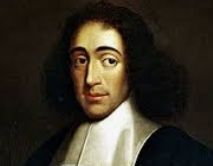
Spinoza died on the 21st of February, 1677, in the forty-fourth year of his age. The cause of his death was consumption, from which he had long been a sufferer; this was in harmony with his system of philosophy, according to which all particularity and individuality pass away in the one substance. A Protestant divine, Colerus by name, who published a biography of Spinoza, inveighs strongly against him, it is true, but gives nevertheless a most minute and kindly description of his circumstances and surroundings — telling how he left only about two hundred thalers, what debts he had, and so on. A bill included in the inventory, in which the barber requests payment due him by M. Spinoza of blessed memory, scandalizes the parson very much, and regarding it he makes the observation: “Had the barber but known what sort of a creature Spinoza was, he certainly would not have spoken of his blessed memory.” The German translator of this biography writes under the portrait of Spinoza: characterem reprobationis in vultu gerens, applying this description to a countenance which doubtless expresses the melancholy of a profound thinker, but is otherwise wild and benevolent. The reprobatio is certainly correct; but it is not a reprobation in the passive sense; it is an active disapprobation on Spinoza's part of the opinions, errors and thoughtless passions of mankind.
0
0
Source
source
Georg Wilhelm Friedrich Hegel, Lectures on the History of Philosophy
1 week 2 days ago
His [Spinoza's] correspondence is the most interesting book one can read in the world of uprightness and of humanity. [Original in German: Sei Briefwechsel sei das interessanteste Buch, das man in der Welt von Aufrichtigkeit, Menschenliebe lesen könne.]
0
0
Source
source
Johann Wolfgang von Goethe, as quoted in A. Wolf, The Correspondence of Spinoza (London: George Allen & Unwin, 1928)
1 week 2 days ago
[Spinoza] — the philosopher whom I trust most,... [Original in German: Der Philosoph, dem ich zumeist vertraue,...]
0
0
Source
source
Johann Wolfgang von Goethe, in his Zahme Xenien. As quoted in Julie D. Prandi's “Dare To Be Happy!”: A Study of Goethe's Ethics (Lanham, MD: University Press of America, 1993)
1 week 2 days ago
...Jews seem to have superiority as actors, chess-players, doctors, merchants (chiefly financiers), in metaphysics, music, poetry, and philology.... Of course, Jews have no Darwin. It took England 180 years after Newton before she could produce a Darwin, and as Britishers are five times the number of Jews, even including those of Russia, it would take, on the same showing, 900 years before they produce another Spinoza, or, even supposing the double superiority to be true, 450 years would be needed.
0
0
Source
source
Cesare Lombroso, The Man of Genius
1 week 2 days ago
For years my mind was divided between Hegel and Spinoza. With youthful ingenuity I defended the dialectics of the former against Zeller, the founder of neo-Kantianism. The writings of Spinoza I knew by heart, and with loving understanding I gave expositions of his theory of affections and passions.
0
0
Source
source
Antonio Labriola, Socialism and Philosophy (1897) [original in Italian]
1 week 2 days ago
Neokantianism represents in the last analysis nothing but a certain academic line of thought, which has supplied us with a better knowledge of Kant and a useful literature of educated people. Agnosticism, on the other hand, on account of its diffusion among the people, is an actual symptom of the present condition of certain social classes. The socialists would have good grounds for believing that this symptom is one of the evidences of the decadence of the bourgeoisie. It certainly stands in marked contrast to the heroic devotion to truth shown by the thought of the precursors of modern history, such as Bruno and Spinoza, or to that conventional assertiveness, which was typical of the thinkers of the 18th century, until the classic German philosophy gradually came upon the scene.
0
0
Source
source
Antonio Labriola, Socialism and Philosophy (1897) [original in Italian]
1 week 2 days ago
The philosophy of a purely theoretical thinker, who contemplates all things from the point of view of things in themselves, belongs in the same class as the attempt to apply abstract thought to the entire field of consciousness without meeting any byways or stops. Look at Baruch Spinoza, that true hero of thought, who studied in his own person the way in which the emotions and passions, as expressions of his internal mechanism, transform themselves for him into objects of geometrical analysis! In the meantime, until the heroism of Baruch Spinoza shall become the matter-of-fact virtue of everyday life in the higher developed humanity of the future, and until myths, poetry, metaphysics and religion shall no longer overshadow the field of consciousness, let us be content that up to now, and for the present, philosophy in its differentiated and its improved sense has served, and serves, as a critical instrument and helps science to keep its formal methods and logical processes clear; that it helps us in our lives to reduce the obstacles, which the fantastic projections of the emotions, passions, fears and hopes pile in the way of free thought; that it helps and serves, as Spinoza himself would say, to vanquish imaginationem et ignorantiam.
0
0
Source
source
Antonio Labriola, Socialism and Philosophy (1897) [original in Italian]
1 week 2 days ago
...For the present it would be a vain undertaking to try to make all these people understand this frank principle of communist ethics, a principle which declares that gratitude and admiration should come as a spontaneous gift from our fellow-beings. Many of them would not care to reach out for progress, were they sure of being told, in the words of Baruch Spinoza, that virtue is its own reward.
0
0
Source
source
Antonio Labriola, Socialism and Philosophy (1897) [original in Italian]
1 week 2 days ago
...It is the eternal meaning of the sacrifice, to which no one can resist, unless animated by that faith, so difficult to sustain, which, perhaps, one man alone has been able to formulate in a plausible way—namely, Spinoza, with his Amor intellectualis Dei. What, quite wrongly, has been thought of in Spinoza as pantheism is simply the reduction of the field of God to the universality of the signifier, which produces a serene, exceptional detachment from human desire. In so far as Spinoza says—desire is the essence of man, and in so far as he institutes this desire in the radical dependence of the universality of the divine attributes, which is possible only through the function of the signifier, in so far as he does this, he obtains that unique position by which the philosopher—and it is no accident that it is a Jew detached from his tradition who embodies it—may be confused with a transcendent love. This position is not tenable for us.
0
0
Source
source
Jacques Lacan, The Four Fundamental Concepts of Psychoanalysis [original in French]
1 week 2 days ago
Regarding Spinoza, whom M. Arnauld has called the most impious and most dangerous man of this century, he was truly an Atheist, [i.e.,] he allowed absolutely no Providence dispensing rewards and punishments according to justice. ...The God he puts on parade is not like ours; he has no intellect or will. ...He fell well short of mastering the art of demonstration; he had only a mediocre knowledge of analysis and geometry; what he knew best was to make lenses for microscopes.
0
0
Source
source
Gottfried Wilhelm Leibniz, letter to Count Ernst von Hessen-Rheinfels (Aug. 14, 1683) in Gottfried Wilhelm Leibniz: Sämtliche Schriften und Briefe (1923-) II.ii. p. 535, as translated by Matthew Stewart, The Courtier and the Heretic (2006) pp. 228-229.
1 week 2 days ago
Vygotsky studied the classical German philosophy on a professional level. In his student years began his acquaintance with the philosophy of Marxism, which he studied mainly using illegal editions. At this time was born Vygotsky's interest in the philosophy of Spinoza, who would remain his favorite thinker for the rest of his life.
0
0
Source
source
A. N. Leontiev, [https://www.marxists.org/archive/leontev/works/1979/vygotsky.htm On Vygotsky's Creative Development (Preface to Volume 3 of Vygotsky’s Collected Works in English)] (1979)
1 week 2 days ago
...I love Spinoza, because he, more than any other philosopher, led me to the complete conviction that certain things cannot be explained, that because of this one need not close one's eyes to them, but rather take them as one finds them.
0
0
Source
source
Gotthold Ephraim Lessing in his Spinoza conversations with Friedrich Heinrich Jacobi (1780). Ref.: Vallée, Gérard (ed.): The Spinoza Conversations between Lessing and Jacobi: Text with Excerpts from the Ensuing Controversy. Translated from the German by G
1 week 2 days ago
If I should name myself after anyone, then I know no one other better.
0
0
Source
source
Gotthold Ephraim Lessing in his Spinoza conversations with Friedrich Heinrich Jacobi (1780). Ref.: Vallée, Gérard (ed.): The Spinoza Conversations between Lessing and Jacobi: Text with Excerpts from the Ensuing Controversy. Translated from the German by G
1 week 2 days ago
There is no other philosophy than that of Spinoza.
0
0
Source
source
Gotthold Ephraim Lessing in his Spinoza conversations with Friedrich Heinrich Jacobi (1780). Ref.: Vallée, Gérard (ed.): The Spinoza Conversations between Lessing and Jacobi: Text with Excerpts from the Ensuing Controversy. Translated from the German by G

CivilSimian.com created by AxiomaticPanic, CivilSimian, Kalokagathia