
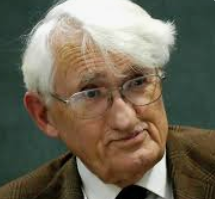
4 months 3 weeks ago
Reaching and understanding is the process of bringing about an agreement on the presupposed basis of validity claims that are mutually recognized.
▼
Source
p. 23
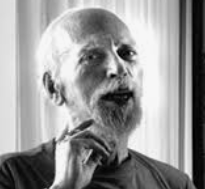
4 months 3 weeks ago
I regard the two major male archetypes in 20th Century literature as Leopold Bloom and Hannibal Lecter. M.D. Bloom, the perpetual victim, the kind and gentle fellow who finishes last, represented an astonishing breakthrough to new levels of realism in the novel, and also symbolized the view of humanity that hardly anybody could deny c. 1900-1950. History, sociology, economics, psychology et al. confirmed Joyce’s view of Everyman as victim. Bloom, exploited and downtrodden by the Brits for being Irish and rejected by many of the Irish for being Jewish, does indeed epiphanize humanity in the first half of the 20th Century. And he remains a nice guy despite everything that happens... Dr Lecter, my candidate for the male archetype of 1951-2000, will never win any Nice Guy awards, I fear, but he symbolizes our age as totally as Bloom symbolized his. Hannibal's wit, erudition, insight into others, artistic sensitivity, scientific knowledge etc. make him almost a walking one man encyclopedia of Western civilization. As for his "hobbies" as he calls them — well, according to the World Game Institute, since the end of World War II, in which 60,000,000 human beings were murdered by other human beings, 193, 000,000 more humans have been murdered by other humans in brush wars, revolutions, insurrections etc. What better symbol of our age than a serial killer? Hell, can you think of any recent U.S. President who doesn't belong in the Serial Killer Hall of Fame? And their motives make no more sense, and no less sense, than Dr Lecter's Darwinian one-man effort to rid the planet of those he finds outstandingly loutish and uncouth.
▼
Source
"Previous Thoughts" at rawilson.com
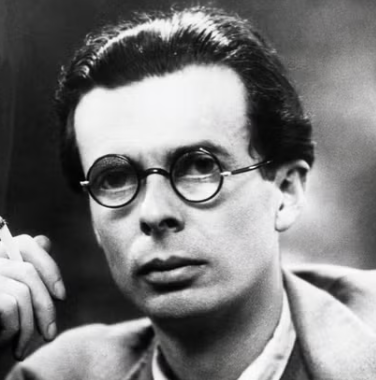
4 months 3 weeks ago
Of course I base my characters partly on the people I know—one can't escape it—but fictional characters are oversimplified; they're much less complex than the people one knows.
▼
Source
[http://www.theparisreview.org/interviews/4698/the-art-of-fiction-no-24-aldous-huxley Interview], The Paris Review (1960)
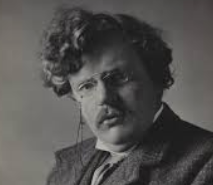
4 months 3 weeks ago
The one stream of poetry which is continually flowing is slang.
▼
Source
"A Defence of Slang"

4 months 3 weeks ago
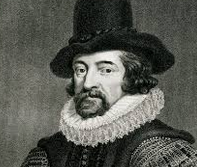
Two things fill the mind with ever-increasing wonder and awe, the more often and the more intensely the mind of thought is drawn to them: the starry heavens above me and the moral law within me.
▼
Source
Variant translations: | Two things fill the mind with ever new and increasing admiration and awe, the oftener and more steadily we reflect on them: the starry heavens above me and the moral law within me. | Translated by Lewis White Beck | Two things fill
4 months 3 weeks ago
Silence is the virtue of a fool.
▼
Source
Book VI, xxxi
4 months 3 weeks ago
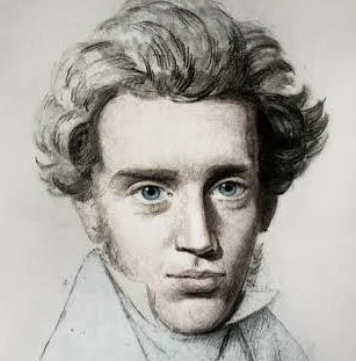
Happy is the one in whom there is true sorrow over his sin, so that the extreme unimportance to him of everything else is only the negative expression of the confirmation that one thing is unconditionally important to him, so that the unconditional unimportance to him of everything else is a deadly sickness that still is very far from being a sickness unto death but is precisely unto life, because the life is in this, that one thing is unconditionally important to him: to find forgiveness. ” P. 152
4 months 3 weeks ago
"Elohim," the name for the creative power in Genesis, is a female plural, a fact that generations of learned rabbis and Christian theologians have all explained as merely grammatical convention. The King James and most other Bibles translate it as "God," but if you take the grammar literally, it seems to mean "goddesses." Al Shaddai, god of battles, appears later, and YHWH, mispronounced Jehovah, later still.
▼
Source
Genesis, p. 197
4 months 3 weeks ago
Several excuses are always less convincing than one.
▼
Source
Ch. 1
4 months 3 weeks ago
Fiction means the common things as seen by the uncommon people. Fairy tales mean the uncommon things as seen by the common people.
▼
Source
Ch 4: "The Pickwick Papers"
4 months 3 weeks ago
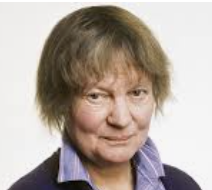
A bad review is even less important than whether it is raining in Patagonia.
▼
Source
Quoted in The Times (6 July 1989).
4 months 3 weeks ago
All... good and useful properties of character have a price in exchange for others which have just as much use. Talent has a market price, since the sovereign or estate-owner can use a talented person in all sorts of ways. Temperament has a fancy price,22 since one can converse well with such a person; he is a pleasant companion. But, character has an inner value[,] and it is above all price.
▼
Source
Kant, Immanuel (1996), page 203
4 months 3 weeks ago
But by far the greatest obstacle to the progress of science and to the undertaking of new tasks and provinces therein is found in this — that men despair and think things impossible.
▼
Source
Aphorism 92
4 months 3 weeks ago
This is the truth of the matter. In every human being there is a capacity, the capacity for knowledge. And every person - the most knowing and the most limited - is in his knowledge far beyond what he is in his life or what his life expresses. Yet this misrelation is of little concern to us. On the contrary, we set a high price on knowledge, and everyone strives for this knowledge more and more. "But," says the sensible person, "one must be careful about the direction one's knowing takes. If my knowing turns inward, against me, if I do not take care to prevent this, then knowing is the most intoxicating thing there is, the way to become completely intoxicated, since there then occurs an intoxicating confusion between the knowledge and the knower, so that the knower himself will resemble, will be, that which is known. If your knowing takes such a turn and you yield to it, it will soon end with your tumbling like a drunk man into actuality, plunging yourself recklessly into drunken action without giving the understanding and sagacity the time to take into proper consideration what is prudent, what is advantageous, what will pay. This is why we, the sober ones, warn you, not against knowing or against expanding your knowledge, but against letting your knowledge take an inward direction, for then it is intoxicating." This is thieves' jargon. It says that it is one's knowledge that, by taking the inward direction in this way, intoxicates, rather than that in precisely this way it makes manifest that one is intoxicated, intoxicated in one's attachment to this earthly life, the temporal, the secular, and the selfish. And this is what one fears, fears that one's knowing, turned inward, toward oneself, will expose the intoxication there, will expose that one prefers to remain in this state, will wrench one out of this state and as a result of such a step will make it impossible for one to slip back into that adored state, into intoxication. p. 118
4 months 3 weeks ago
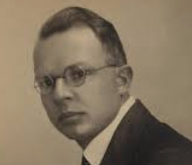
To be sure, we have to face at this point an important question; but it is a practical, not a theoretical question; it is the question of whether or not to accept the new linguistic forms. The acceptance cannot be judged as being either true or false because it is not an assertion. It can only be judged as being more or less expedient, fruitful, conducive to the aim for which the language is intended. Judgments of this kind supply the motivation for the decision of accepting or rejecting the kind of entities.
▼
Source
Ch. 3. What does acceptance of a kind of entities mean?
4 months 3 weeks ago
The original scriptures of most religions are poetical and unsystematic. Theology, which generally takes the form of a reasoned commentary on the parables and aphorisms of the scriptures, tends to make its appearance at a later stage of religious history. The Bhagavad-Gita occupies an intermediate position between scripture and theology; for it combines the poetical qualities of the first with the clear-cut methodicalness of the second... one of the clearest and most comprehensive summaries of the Perennial Philosophy ever to have been made. Hence its enduring value, not only for Indians, but for all mankind.
4 months 3 weeks ago
It is the one great weakness of journalism as a picture of our modern existence, that it must be a picture made up entirely of exceptions. We announce on flaring posters that a man has fallen off a scaffolding. We do not announce on flaring posters that a man has not fallen off a scaffolding. Yet this latter fact is fundamentally more exciting, as indicating that that moving tower of terror and mystery, a man, is still abroad upon the earth. That the man has not fallen off a scaffolding is really more sensational; and it is also some thousand times more common. But journalism cannot reasonably be expected thus to insist upon the permanent miracles. Busy editors cannot be expected to put on their posters, "Mr. Wilkinson Still Safe," or "Mr. Jones, of Worthing, Not Dead Yet." They cannot announce the happiness of mankind at all. They cannot describe all the forks that are not stolen, or all the marriages that are not judiciously dissolved. Hence the complex picture they give of life is of necessity fallacious; they can only represent what is unusual. However democratic they may be, they are only concerned with the minority.
▼
Source
Part IV: "A Discussion at Dawn", 2nd paragraph
4 months 3 weeks ago
Individualism, united with altruism, has become the basis of our western civilization. It is the central doctrine of Christianity ('love your neighbor,' say the Scriptures, not 'love your tribe'); and it is the core of all ethical doctrines which have grown from our civilization and stimulated it. It is also, for instance, Kant's central practical doctrine ("always recognize that human individuals are ends, and do not use them as mere means to your end.")
▼
Source
Karl Popper, summarizing some of Kant's philosophy, in The Open Society and Its Enemies (1945, p. 102; part of this has sometimes been treated as if it were a direct quote of Kant: Always recognize that human individuals are ends, and do not use them as m
4 months 3 weeks ago
Imagination was given to man to compensate for what he is not, and a sense of humor to console him for what he is.
▼
Source
Attributed to Bacon without citation of work in Geary's Guide to the World's Great Aphorists (2007) by James Geary, p. 112; this is sometimes attributed to others, also without citation of works, but is most often quoted as an anonymous aphorism, with no
4 months 3 weeks ago
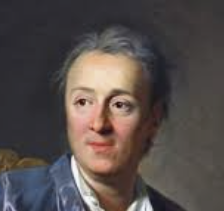
Man was born to live with his fellow human beings. Separate him, isolate him, his character will go bad, a thousand ridiculous affects will invade his heart, extravagant thoughts will germinate in his brain, like thorns in an uncultivated land.
▼
Source
The character Suzanne Simon, in La Religieuse [The Nun] (1796)
4 months 3 weeks ago
A student once interrupted him and said, "I just don't understand." He responded, "Why should you have the advantage over me?"
▼
Source
[https://web.archive.org/web/20040821091507/http://daily.nysun.com/Repository/getmailfiles.asp?Style=OliveXLib:ArticleToMail&Type=text/html&Path=NYS/2004/08/03&ID=Ar01400 Remembering Sidney Morgenbesser,] by Gary Shapiro in 'The New York Sun' 3 August 200
4 months 3 weeks ago
“What about spatial relationships?” the investigator inquired, as I was looking at the books. It was difficult to answer. True, the perspective looked rather odd, and the walls of the room no longer seemed to meet in right angles. But these were not the really important facts. The really important facts were that spatial relationships had ceased to matter very much and that my mind was perceiving the world in terms of other than spatial categories. At ordinary times the eye concerns itself with such problems as Where?—How far?—How situated in relation to what? In the mescalin experience the implied questions to which the eye responds are of another order. Place and distance cease to be of much interest. The mind does its Perceiving in terms of intensity of existence, profundity of significance, relationships within a pattern. I saw the books, but was not at all concerned with their positions in space. What I noticed, what impressed itself upon my mind was the fact that all of them glowed with living light and that in some the glory was more manifest than in others. In this context position and the three dimensions were beside the point. Not, of course, that the category of space had been abolished. When I got up and walked about, I could do so quite normally, without misjudging the whereabouts of objects. Space was still there; but it had lost its predominance. The mind was primarily concerned, not with measures and locations, but with being and meaning.
▼
Source
describing his experiment with mescaline, pp. 19-20
4 months 3 weeks ago
Heaven shall forgive you Bridge at dawn, The clothes you wear — or do not wear — And Ladies’ Leap-frog on the lawn And dyes and drugs, and petits verres.
▼
Source
Ballade d'une Grande Dame
4 months 3 weeks ago
Go further, and require each of them to make a contribution: you will see how many things are still missing, and you will be obliged to get the assistance of a large number of men who belong to different classes, priceless men, but to whom the gates of the academies are nonetheless closed because of their social station. All the members of these learned societies are more than is needed for a single object of human science; all the societies together are not sufficient for a science of man in general.
▼
Source
Article on Encyclopedia

4 months 3 weeks ago
In the history of madness, two events signal this change with singular clarity: in 1657, the founding of the Hôpital Général, and the Great Confinement of the poor; and in 1794, the liberation of the mad in chains at Bicêtre. Between these two singular and symmetrical events, something happened, whose ambiguity has perplexed historians of medicine: blind repression in an absolutist regime, according to some, and, according to others, the progressive discovery, by science and philanthropy, of madness in its positive truth. In fact, beneath these reversible meanings, a structure was taking shape, which did not undo that ambiguity but was decisive for it. This structure explains the passage from the medieval and humanist experience of madness to the experience that is our own, which confines madness in mental illness.
▼
Source
Preface to 1961 edition

4 months 3 weeks ago
Dare to believe me. Dare!
▼
Source
Raimon to Regina. p. 31
4 months 3 weeks ago
Most kings and priests have been despotic, and all religions have been riddled with superstition.
▼
Source
Chapter 6 (pp. 52-53)
4 months 3 weeks ago
A foreigner is a man who laughs at everything except jokes. He is perfectly entitled to laugh at anything, so long as he realises, in a reverent and religious spirit, that he himself is laughable. I was a foreigner in America; and I can truly claim that the sense of my own laughable position never left me. But when the native and the foreigner have finished with seeing the fun of each other in things that are meant to be serious, they both approach the far more delicate and dangerous ground of things that are meant to be funny. The sense of humour is generally very national; perhaps that is why the internationalists are so careful to purge themselves of it. I had occasion during the war to consider the rights and wrongs of certain differences alleged to have arisen between the English and American soldiers at the front. And, rightly or wrongly, I came to the conclusion that they arose from the failure to understand when a foreigner is serious and when he is humorous. And it is in the very nature of the best sort of joke to be the worst sort of insult if it is not taken as a joke.
▼
Source
[http://www.online-literature.com/chesterton/what-i-saw-in-america/10/ "Fads and Public Opinion"]
4 months 3 weeks ago
There is not a Musselman alive who would not imagine that he was performing an action pleasing to God and his Holy Prophet by exterminating every Christian on earth, while the Christians are scarcely more tolerant on their side.
4 months 3 weeks ago
The public execution, then, has a juridico-political function. It is a ceremonial by which a momentarily injured sovereignty is reconstituted. It restores that sovereignty by manifesting it at its most spectacular. The public execution, however hasty and everyday, belongs to a whole series of great rituals in which power is eclipsed and restored (coronation, entry of the king into a conquered city, the submission of rebellious subjects); over and above the crime that has placed the sovereign in contempt, it deploys before all eyes an invincible force. Its aim is not so much to re-establish a balance as to bring into play, as its extreme point, the dissymmetry between the subject who has dared to violate the law and the all-powerful sovereign who displays his strength.
▼
Source
Chapter One, The Spectacle of the Scaffold
4 months 3 weeks ago
It is nonsense to assert that revelry, vice, ecstasy, passion, would become impossible if man and woman were equal in concrete matters; the contradictions that put the flesh in opposition to the spirit, the instant to time, the swoon of immanence to the challenge of transcendence, the absolute of pleasure to the nothingness of forgetting, will never be resolved; in sexuality will always be materialised the tension, the anguish, the joy, the frustration, and the triumph of existence. To emancipate woman is to refuse to confine her to the relations she bears to man, not to deny them to her; let her have her independent existence and she will continue none the less to exist for him also: mutually recognising each other as subject, each will yet remain for the other an other. The reciprocity of their relations will not do away with the miracles — desire, possession, love, dream, adventure — worked by the division of human beings into two separate categories; and the words that move us — giving, conquering, uniting — will not lose their meaning. On the contrary, when we abolish the slavery of half of humanity, together with the whole system of hypocrisy that it implies, then the 'division' of humanity will reveal its genuine significance and the human couple will find its true form.
4 months 3 weeks ago
A weak mind is like a microscope, which magnifies trifling things but cannot receive great ones.
▼
Source
Though sometimes misattributed to Chesterton, this is generally attributed to Philip Stanhope, 4th Earl of Chesterfield, with the first publication of this yet located is in a section of proverbs called "Diamond Dust" in Eliza Cook's Journal, No. 98 (15 M
4 months 3 weeks ago
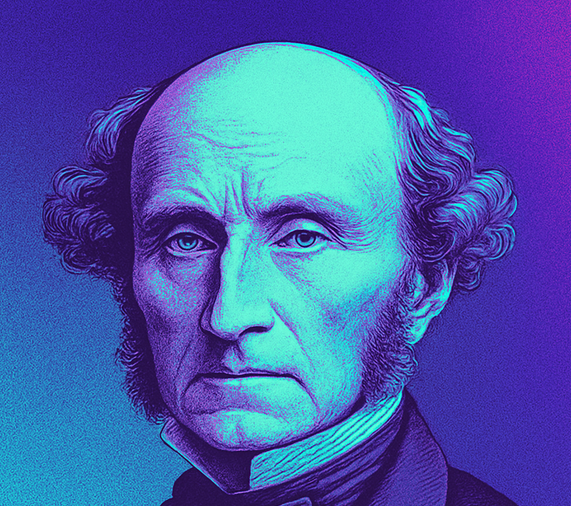
The only purpose for which power can be rightfully exercised over any member of a civilized community, against his will, is to prevent harm to others. His own good, either physical or moral, is not a sufficient warrant.
▼
Source
Ch. 1: Introductory
4 months 3 weeks ago
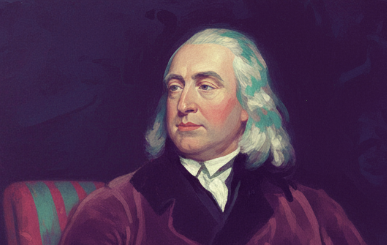
Intense, long, certain, speedy, fruitful, pure—Such marks in pleasures and in pains endure.Such pleasures seek if private be thy end:If it be public, wide let them extend.Such pains avoid, whichever be thy view:If pains must come, let them extend to few.
▼
Source
Ch. 4: Value of a Lot of Pleasure or Pain, How to be Measured
4 months 3 weeks ago
The most defenseless tenderness and the bloodiest of powers have a similar need of confession. Western man has become a confessing animal.
▼
Source
Vol. I, p. 59

4 months 3 weeks ago
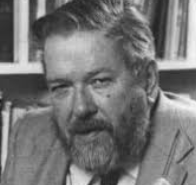
Either knowledge is not to be attained at all, or if at all, after death. For then, and not til then, the soul will be in herself alone and without the body.
4 months 3 weeks ago
Modern technology is not simply an extension of human making through the power of a perfected science, but is a new account of what it is to know and to make in which both activities are changed by their co-penetration.
▼
Source
p. 13
4 months 3 weeks ago
The entire history of social improvement has been a series of transitions, by which one custom or institution after another, from being a supposed primary necessity of social existence, has passed into the rank of an universally stigmatized injustice and tyranny. So it has been with the distinctions of slaves and freemen, nobles and serfs, patricians and plebeians; and so it will be, and in part already is, with the aristocracies of colour, race, and sex.
▼
Source
Ch. 5
4 months 3 weeks ago
We see..., a connection between the lack of parrhesia and slavery. For if you cannot speak freely... then you are enslaved.
4 months 3 weeks ago
And I rejoiced to think that I has found in Anaxagoras a teacher of the causes of existence such as I desired, and I imagined that he would tell me first whether the earth is flat or round; and then he would further explain that this position was the best, and I should be satisfied... and not want any other sort of cause. And I thought that I would then go and ask him about the sun and moon and stars, and he would explain to me their comparative swiftness, and their returnings and various states, and how their several affections, active and passive, were all for the best. For I could not imagine that when he spoke of mind as the disposer of them, he would give any other account of their being as they are, except that this was best; and I thought when he had explained to me in detail the cause of each and the cause of all, he would go on to explain to me what was best for me and what was best for all. ...I seized the books and read them as fast as I could in my eagerness to know the better and the worse.

4 months 3 weeks ago
I want to be free from freedom. Free.
4 months 3 weeks ago
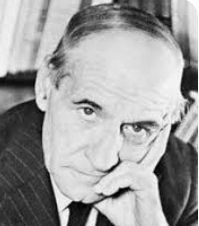
I remember the very place in Hyde Park where, in my fourteenth year, on the eve of leaving my father's house for a long absence, he told me that I should find, as I got acquainted with new people, that I had been taught many things which youths of my age did not commonly know; and that many persons would be disposed to talk to me of this, and to compliment me upon it. What other things he said on this topic I remember very imperfectly; but he wound up by saying, that whatever I knew more than others, could not be ascribed to any merit in me, but to the very unusual advantage which had fallen to my lot.
▼
Source
([https://archive.org/details/autobiography01mill/page/34/mode/1up p. 34])
4 months 3 weeks ago
The primary meaning of the words "modern," "modernity," with which recent times have baptised themselves, brings out very sharply that feeling of "the height of time" which I am at present analysing. "Modern" is what is "in the fashion, "that is to say, the new fashion or modification which has arisen over against the old traditional fashions used in the past. The word "modern" then expresses a consciousness of a new life, superior to the old one, and at the same time an imperative call to be at the height of one's time. For the "modern" man, not to be "modern" means to fall below the historic level.
▼
Source
Chap. III: The Height Of The Times
4 months 3 weeks ago
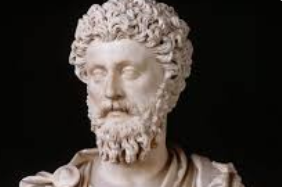
You could leave life right now. Let that determine what you do and say and think.
▼
Source
II, 11 (Hays translation)
4 months 3 weeks ago
It is a great pity that human beings cannot find all of their satisfaction in scientific contemplativeness.
▼
Source
As quoted in Chandra: A Biography of S. Chandrasekhar (1991) by Kameshwar C. Wali, p. 147
4 months 3 weeks ago
It is a disgrace to grow old through sheer carelessness before seeing what manner of man you may become by developing your bodily strength and beauty to their highest limit. But you cannot see that, if you are careless; for it will not come of its own accord.
▼
Source
Memorabilia III.7.8
4 months 3 weeks ago
How many times has Fascism been accused with obtuse malevolence of barbarity? Well yes: once you understand the true significance of this barbarity we will boast of it, as the expression of the healthy energies which shatter false and baleful idols, and restore the health of the nation within the power of a State conscious of its sovereign rights which are its duties.
▼
Source
Che cosa è fascismo? ("What is fascism?"), lecture delivered in Florence (March 8, 1925)
4 months 3 weeks ago
From the winter of 1821, when I first read Bentham, and especially from the commencement of the Westminster Review, I had what might truly be called an object in life; to be a reformer of the world. My conception of my own happiness was entirely identified with this object. The personal sympathies I wished for were those of fellow labourers in this enterprise. I endeavoured to pick up as many flowers as I could by the way; but as a serious and permanent personal satisfaction to rest upon, my whole reliance was placed on this...
▼
Source
([https://archive.org/details/autobiography01mill/page/132/mode/1up p. 132])
4 months 3 weeks ago
Whatever be the substance which takes possession of such a soul, it will produce the same result, and will change into a pretext for not conforming to any concrete purpose. If it appears as reactionary or anti-liberal it will be in order to affirm that the salvation of the State gives a right to level down all other standards, and to manhandle one's neighbour, above all if one's neighbour is an outstanding personality. But the same happens if it decides to act the revolutionary; the apparent enthusiasm for the manual worker, for the afflicted and for social justice, serves as a mask to facilitate the refusal of all obligations, such as courtesy, truthfulness and, above all, respect or esteem for superior individuals. … As regards other kinds of Dictatorship, we have seen only too well how they flatter the mass-man, by trampling on everything that appeared to be above the common level.
▼
Source
Chapter XV: We Arrive At The Real Question
4 months 3 weeks ago
Think on this doctrine,—that reasoning beings were created for one another's sake; that to be patient is a branch of justice, and that men sin without intending it.
▼
Source
IV, 3
CivilSimian.com created by AxiomaticPanic, CivilSimian, Kalokagathia