

4 months 3 weeks ago
Dare to believe me. Dare!
▼
Source
Raimon to Regina. p. 31
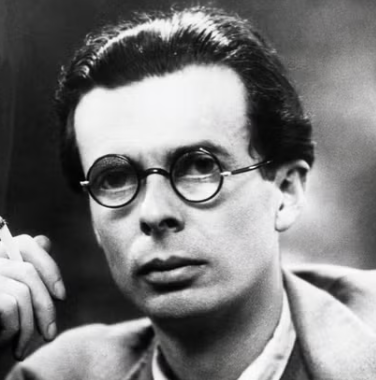
4 months 3 weeks ago
Most kings and priests have been despotic, and all religions have been riddled with superstition.
▼
Source
Chapter 6 (pp. 52-53)
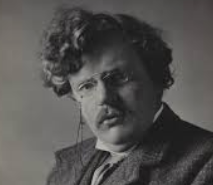
4 months 3 weeks ago
A foreigner is a man who laughs at everything except jokes. He is perfectly entitled to laugh at anything, so long as he realises, in a reverent and religious spirit, that he himself is laughable. I was a foreigner in America; and I can truly claim that the sense of my own laughable position never left me. But when the native and the foreigner have finished with seeing the fun of each other in things that are meant to be serious, they both approach the far more delicate and dangerous ground of things that are meant to be funny. The sense of humour is generally very national; perhaps that is why the internationalists are so careful to purge themselves of it. I had occasion during the war to consider the rights and wrongs of certain differences alleged to have arisen between the English and American soldiers at the front. And, rightly or wrongly, I came to the conclusion that they arose from the failure to understand when a foreigner is serious and when he is humorous. And it is in the very nature of the best sort of joke to be the worst sort of insult if it is not taken as a joke.
▼
Source
[http://www.online-literature.com/chesterton/what-i-saw-in-america/10/ "Fads and Public Opinion"]
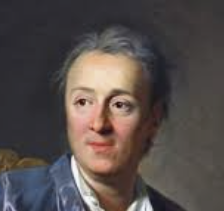
4 months 3 weeks ago
There is not a Musselman alive who would not imagine that he was performing an action pleasing to God and his Holy Prophet by exterminating every Christian on earth, while the Christians are scarcely more tolerant on their side.

4 months 3 weeks ago
The public execution, then, has a juridico-political function. It is a ceremonial by which a momentarily injured sovereignty is reconstituted. It restores that sovereignty by manifesting it at its most spectacular. The public execution, however hasty and everyday, belongs to a whole series of great rituals in which power is eclipsed and restored (coronation, entry of the king into a conquered city, the submission of rebellious subjects); over and above the crime that has placed the sovereign in contempt, it deploys before all eyes an invincible force. Its aim is not so much to re-establish a balance as to bring into play, as its extreme point, the dissymmetry between the subject who has dared to violate the law and the all-powerful sovereign who displays his strength.
▼
Source
Chapter One, The Spectacle of the Scaffold
4 months 3 weeks ago
It is nonsense to assert that revelry, vice, ecstasy, passion, would become impossible if man and woman were equal in concrete matters; the contradictions that put the flesh in opposition to the spirit, the instant to time, the swoon of immanence to the challenge of transcendence, the absolute of pleasure to the nothingness of forgetting, will never be resolved; in sexuality will always be materialised the tension, the anguish, the joy, the frustration, and the triumph of existence. To emancipate woman is to refuse to confine her to the relations she bears to man, not to deny them to her; let her have her independent existence and she will continue none the less to exist for him also: mutually recognising each other as subject, each will yet remain for the other an other. The reciprocity of their relations will not do away with the miracles — desire, possession, love, dream, adventure — worked by the division of human beings into two separate categories; and the words that move us — giving, conquering, uniting — will not lose their meaning. On the contrary, when we abolish the slavery of half of humanity, together with the whole system of hypocrisy that it implies, then the 'division' of humanity will reveal its genuine significance and the human couple will find its true form.
4 months 3 weeks ago
A weak mind is like a microscope, which magnifies trifling things but cannot receive great ones.
▼
Source
Though sometimes misattributed to Chesterton, this is generally attributed to Philip Stanhope, 4th Earl of Chesterfield, with the first publication of this yet located is in a section of proverbs called "Diamond Dust" in Eliza Cook's Journal, No. 98 (15 M
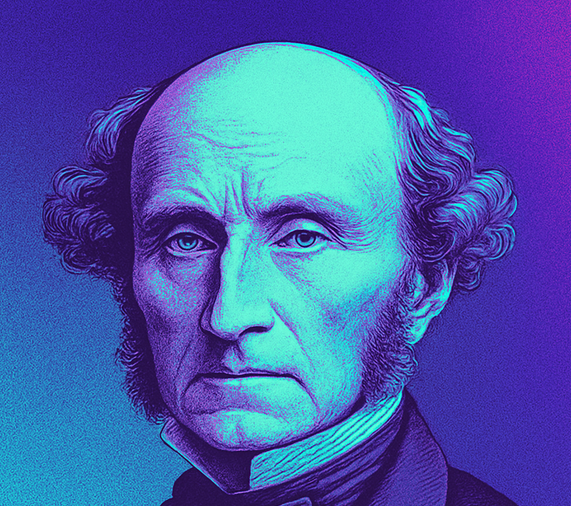
4 months 3 weeks ago
The only purpose for which power can be rightfully exercised over any member of a civilized community, against his will, is to prevent harm to others. His own good, either physical or moral, is not a sufficient warrant.
▼
Source
Ch. 1: Introductory
4 months 3 weeks ago
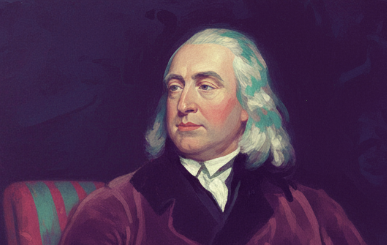
Intense, long, certain, speedy, fruitful, pure—Such marks in pleasures and in pains endure.Such pleasures seek if private be thy end:If it be public, wide let them extend.Such pains avoid, whichever be thy view:If pains must come, let them extend to few.
▼
Source
Ch. 4: Value of a Lot of Pleasure or Pain, How to be Measured
4 months 3 weeks ago
The most defenseless tenderness and the bloodiest of powers have a similar need of confession. Western man has become a confessing animal.
▼
Source
Vol. I, p. 59

4 months 3 weeks ago
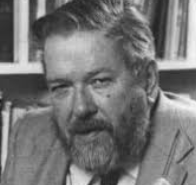
Either knowledge is not to be attained at all, or if at all, after death. For then, and not til then, the soul will be in herself alone and without the body.
4 months 3 weeks ago
Modern technology is not simply an extension of human making through the power of a perfected science, but is a new account of what it is to know and to make in which both activities are changed by their co-penetration.
▼
Source
p. 13
4 months 3 weeks ago
The entire history of social improvement has been a series of transitions, by which one custom or institution after another, from being a supposed primary necessity of social existence, has passed into the rank of an universally stigmatized injustice and tyranny. So it has been with the distinctions of slaves and freemen, nobles and serfs, patricians and plebeians; and so it will be, and in part already is, with the aristocracies of colour, race, and sex.
▼
Source
Ch. 5
4 months 3 weeks ago
We see..., a connection between the lack of parrhesia and slavery. For if you cannot speak freely... then you are enslaved.
4 months 3 weeks ago
And I rejoiced to think that I has found in Anaxagoras a teacher of the causes of existence such as I desired, and I imagined that he would tell me first whether the earth is flat or round; and then he would further explain that this position was the best, and I should be satisfied... and not want any other sort of cause. And I thought that I would then go and ask him about the sun and moon and stars, and he would explain to me their comparative swiftness, and their returnings and various states, and how their several affections, active and passive, were all for the best. For I could not imagine that when he spoke of mind as the disposer of them, he would give any other account of their being as they are, except that this was best; and I thought when he had explained to me in detail the cause of each and the cause of all, he would go on to explain to me what was best for me and what was best for all. ...I seized the books and read them as fast as I could in my eagerness to know the better and the worse.

4 months 3 weeks ago
I want to be free from freedom. Free.
4 months 3 weeks ago
I remember the very place in Hyde Park where, in my fourteenth year, on the eve of leaving my father's house for a long absence, he told me that I should find, as I got acquainted with new people, that I had been taught many things which youths of my age did not commonly know; and that many persons would be disposed to talk to me of this, and to compliment me upon it. What other things he said on this topic I remember very imperfectly; but he wound up by saying, that whatever I knew more than others, could not be ascribed to any merit in me, but to the very unusual advantage which had fallen to my lot.
▼
Source
([https://archive.org/details/autobiography01mill/page/34/mode/1up p. 34])
4 months 3 weeks ago
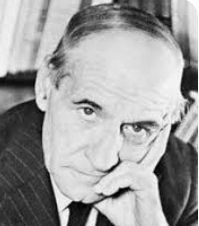
The primary meaning of the words "modern," "modernity," with which recent times have baptised themselves, brings out very sharply that feeling of "the height of time" which I am at present analysing. "Modern" is what is "in the fashion, "that is to say, the new fashion or modification which has arisen over against the old traditional fashions used in the past. The word "modern" then expresses a consciousness of a new life, superior to the old one, and at the same time an imperative call to be at the height of one's time. For the "modern" man, not to be "modern" means to fall below the historic level.
▼
Source
Chap. III: The Height Of The Times
4 months 3 weeks ago
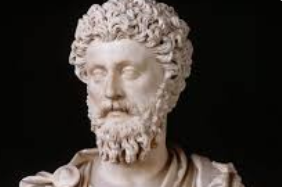
You could leave life right now. Let that determine what you do and say and think.
▼
Source
II, 11 (Hays translation)
4 months 3 weeks ago
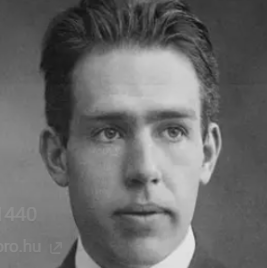
It is a great pity that human beings cannot find all of their satisfaction in scientific contemplativeness.
▼
Source
As quoted in Chandra: A Biography of S. Chandrasekhar (1991) by Kameshwar C. Wali, p. 147
4 months 3 weeks ago
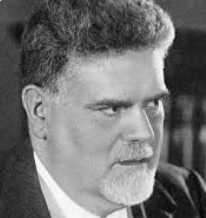
It is a disgrace to grow old through sheer carelessness before seeing what manner of man you may become by developing your bodily strength and beauty to their highest limit. But you cannot see that, if you are careless; for it will not come of its own accord.
▼
Source
Memorabilia III.7.8
4 months 3 weeks ago
How many times has Fascism been accused with obtuse malevolence of barbarity? Well yes: once you understand the true significance of this barbarity we will boast of it, as the expression of the healthy energies which shatter false and baleful idols, and restore the health of the nation within the power of a State conscious of its sovereign rights which are its duties.
▼
Source
Che cosa è fascismo? ("What is fascism?"), lecture delivered in Florence (March 8, 1925)
4 months 3 weeks ago
From the winter of 1821, when I first read Bentham, and especially from the commencement of the Westminster Review, I had what might truly be called an object in life; to be a reformer of the world. My conception of my own happiness was entirely identified with this object. The personal sympathies I wished for were those of fellow labourers in this enterprise. I endeavoured to pick up as many flowers as I could by the way; but as a serious and permanent personal satisfaction to rest upon, my whole reliance was placed on this...
▼
Source
([https://archive.org/details/autobiography01mill/page/132/mode/1up p. 132])
4 months 3 weeks ago
Whatever be the substance which takes possession of such a soul, it will produce the same result, and will change into a pretext for not conforming to any concrete purpose. If it appears as reactionary or anti-liberal it will be in order to affirm that the salvation of the State gives a right to level down all other standards, and to manhandle one's neighbour, above all if one's neighbour is an outstanding personality. But the same happens if it decides to act the revolutionary; the apparent enthusiasm for the manual worker, for the afflicted and for social justice, serves as a mask to facilitate the refusal of all obligations, such as courtesy, truthfulness and, above all, respect or esteem for superior individuals. … As regards other kinds of Dictatorship, we have seen only too well how they flatter the mass-man, by trampling on everything that appeared to be above the common level.
▼
Source
Chapter XV: We Arrive At The Real Question
4 months 3 weeks ago
Think on this doctrine,—that reasoning beings were created for one another's sake; that to be patient is a branch of justice, and that men sin without intending it.
▼
Source
IV, 3
4 months 3 weeks ago
I would trade all of my technology for an afternoon with Socrates.
▼
Source
Steve Jobs in Newsweek (29 October 2001)

4 months 3 weeks ago
I have never felt any inward assurance of genius, or any presentiment of glory or of happiness. I have never seen myself in imagination great or famous, or even a husband, a father, an influential citizen. This indifference to the future, this absolute self-distrust, are, no doubt, to be taken as signs. What dreams I have are all vague and indefinite; I ought not to live, for I am now scarcely capable of living.
▼
Source
3 May 1849
4 months 3 weeks ago
In this third period (as it may be termed) of my mental progress, which now went hand in hand with hers, my opinions gained equally in breadth and depth, I understood more things, and those which I had understood before, I now understood more thoroughly. I had now completely turned back from what there had been of excess in my reaction against Benthamism. I had, at the height of that reaction, certainly become much more indulgent to the common opinions of society and the world, and more willing to be content with seconding the superficial improvement which had begun to take place in those common opinions, than became one whose convictions on so many points, differed fundamentally from them. I was much more inclined, than I can now approve, to put in abeyance the more decidedly heretical part of my opinions, which I now look upon as almost the only ones, the assertion of which tends in any way to regenerate society.
▼
Source
([https://archive.org/details/autobiography01mill/page/230/mode/1up p. 230])
4 months 3 weeks ago
Thou art a little soul bearing about a corpse, as Epictetus used to say.
▼
Source
IV, 41

4 months 3 weeks ago
Ethics is inescapable.
▼
Source
Preface, p. xv

4 months 3 weeks ago
It is no small pity, and should cause us no little shame, that, through our own fault, we do not understand ourselves, or know who we are. Would it not be a sign of great ignorance, my daughters, if a person were asked who he was, and could not say, and had no idea who his father or mother was, or from what country he came? Though that is a great stupidity, our own is incomparably greater if we make no attempt to discover what we are, and only know that we are living in these bodies and have a vague idea, because we have heard it, and because our faith tells us so, that we possess souls. As to what good qualities there may be in our souls, or who dwells within them, or how precious they are — those are things which seldom consider and so we trouble little about carefully preserving the soul's beauty. All our interest is centred in the rough setting of the diamond and in the outer wall of the castle – that is to say in these bodies of ours.
▼
Source
First Mansions, Ch. 1, as translated by E. Allison Peers (1961) p. 18

4 months 3 weeks ago
You may observe yourself...what a difference there is between the true strength of this nation and the fictitious one of the Whigs. How much time, how many lucky incidents, how many strains of power, how much money must go to create a majority of the latter; on the other hand, take but off the opinion that the Crown is another way inclined, the church interest rises with redoubled force, and by its natural genuine strength.
▼
Source
Letter to Mr. Drummond (10 November 1710), quoted in Gilbert Parke, Letters and Correspondence, Public and Private, of The Right Honourable Henry St. John, Lord Visc. Bolingbroke; during the Time he was Secretary of State to Queen Anne; with State Papers,
4 months 3 weeks ago
The dominant model is not a good one for understanding the ultimate basis of moral value, for grounding our present moral beliefs or for pointing the way to radical revisions in them. For these tasks, the older, more philosophical model found in Kant and Mill is far better.
▼
Source
Allen W. Wood, Kantian Ethics (2008), Ch. 3. Ethical Theory
4 months 3 weeks ago
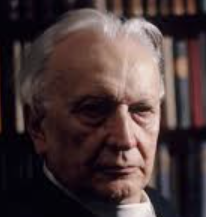
When the titanic apparatus of the mass-order has been consolidated, the individual has to serve it, and must from time to time combine with his fellows in order to renovate it. If he wants to make his livelihood by intellectual activity, he will find it very difficult to do this except by satisfying the needs of the many. He must give currency to something that will please the crowd. They seek satisfaction in the pleasures of the table, eroticism, self-assertion; they find no joy in life if one of these gratifications be curtailed. They also desire some means of self-knowledge. They desire to be led in such as way that they can fancy themselves leaders. Without wishing to be free, they would fain be accounted free. One who would please their taste must produce what is really average and commonplace, though not frankly styled such; must glorify or at least justify something as universally human. Whatever is beyond their understanding is uncongenial to them. One who would influence the masses must have recourse to the art of advertisement. The clamour of puffery is to-day requisite even for an intellectual movement. The days of quiet and unpretentious activity seem over and done with. You must keep yourself in the public eye, give lectures, make speeches, arouse a sensation. Yet the mass-apparatus lacks true greatness of representation, lacks solemnity.
4 months 3 weeks ago
Just that you do the right thing. The rest doesn't matter. Cold or warm. Tired or well-rested. Despised or honored. Dying . . . or busy with other assignments. (Hays translation)
▼
Source
VI, 2
4 months 3 weeks ago
Inaugurated in 1975 by Peter Singer“s famous pamphlet, ”'Animal Liberation“”, philosophical research into our duties towards animals, the moral rights to be ascribed to them, how it is right to treat them, and which practices — economic, scientific, technological—are consistent with the principles of a normative ethic that includes among its “clients” the grandchildren of Bentham and Kant as much as those of Fido or Pluto, is now vast. (p. 7)
4 months 3 weeks ago
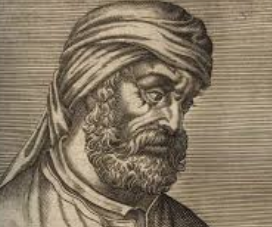
I now inquire into your opinion, (to see) from what source you usurp this right to “the Church.”If, because the Lord has said to Peter, “Upon this rock will I build My Church,” “to thee have I given the keys of the heavenly kingdom;” or, “Whatsoever thou shalt have bound or loosed in earth, shall be bound or loosed in the heavens,” you therefore presume that the power of binding and loosing has derived to you, that is, to every Church akin to Peter, what sort of man are you, subverting and wholly changing the manifest intention of the Lord, conferring (as that intention did) this (gift) personally upon Peter? “On thee,” He says, “will I build My Church;” and, “I will give to thee the keys,” not to the Church; and, “Whatsoever thou shalt have loosed or bound,” not what they shall have loosed or bound.
▼
Source
Chapter XXI.—Of the Difference Between Discipline and Power, and of the Power of the Keys.
4 months 3 weeks ago
There are limitations indeed that would destroy the essential form of monarchy: or, in other words, a monarchical constitution may be changed, under pretence of limiting the monarch. This happened among us in the last century, when the vilest usurpation, and the most infamous tyranny, were established over our nation, by some of the worst and some of the meanest men in it. I will not say, that the essential form of monarchy should be preserved, tho the preservation of it were to cause the loss of liberty. Salus reipsuprema lex esto, is a fundamental law: and sure I am, the safety of a commonwealth is ill provided for, if the liberty be given up. But this I presume to say, and can demonstrate, that all the limitations necessary to preserve liberty, as long as the spirit of it subsists, and longer than that, no limitations of monarchy, nor any other form of government, can preserve it, are compatible with monarchy.
▼
Source
p. 96
4 months 3 weeks ago
Direct thy attention to what is said. Let thy understanding enter into the things that are doing and the things which do them.
▼
Source
VII, 30

4 months 3 weeks ago
A man's honest, earnest opinion is the most precious of all he possesses: let him communicate this, if he is to communicate anything. There is, doubtless a time to speak, and a time to keep silence; yet Fontenelle's celebrated aphorism, I might have my hand full of truth, and would open only my little finger, may be practiced to excess, and the little finger itself kept closed. That reserve, and knowing silence, long so universal among us, is less the fruit of active benevolence, of philosophic tolerance, than of indifference and weak conviction. Honest Scepticism, honest Atheism, is better than that withered lifeless Dilettantism and amateur Eclecticism, which merely toys with all opinions; or than that wicked Machiavelism, which in thought denying every thing, except that Power is Power, in words, for its own wise purposes, loudly believes every thing: of both which miserable habitudes the day, even in England, is wellnigh over.
▼
Source
Review of Historic Survey of German Poetry, interspersed with Various Translations by W. Taylor, in The Edinburgh Review Vol. LIII (1831), p. 178.
4 months 3 weeks ago
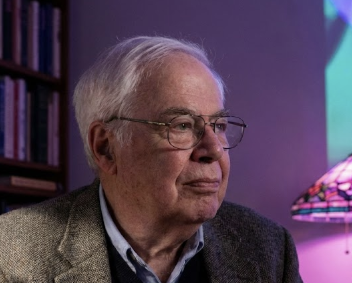
Complaints about the social irresponsibility of the intellectual typically concern the intellectual’s tendency to marginalize herself, to move out from one community by interior identification of herself with some other community—for example, another country or historical period. … It is not clear that those who thus marginalize themselves can be criticized for social irresponsibility. One cannot be irresponsible toward a community of which one does not think of oneself as a member. Otherwise runaway slaves and tunnelers under the Berlin Wall would be irresponsible.
▼
Source
“Postmodernist bourgeois liberalism,” Objectivity, Relativism and Truth (Cambridge: 1991), p. 197
4 months 3 weeks ago
We worship unity in trinity, and trinity in unity; neither confounding the person nor dividing the substance. There is one person of the Father, another of the Son, and another of the Holy Ghost; but the Godhead of the Father, and of the Son, and of the Holy Ghost, is all one; the glory equal, the majesty co-eternal.
▼
Source
As quoted in Dictionary of Burning Words of Brilliant Writers (1895) edited by Josiah Hotchkiss Gilbert, p. 285 | Actually from the Athanasian Creed: Fides autem catholica haec est: ut unum Deum in Trinitate, et Trinitatem in unitate veneremur. Neque conf
4 months 3 weeks ago
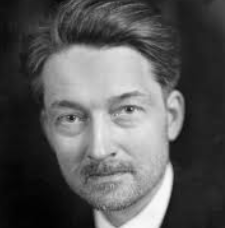
In so far as we are individuals, each of us is a fragment of a species, a part of this universe, a single dot in the immense network of forces and influences, cosmic, ethnic, historic, whose laws we obey. We are subject to the determination of the physical world. But each man is also a person, he is not subject to the stars and atoms; for he subsists entirely with the very subsistence of his spiritual soul, and the latter is in him a principle of creative unity, of independence and of freedom.
▼
Source
Scholasticism and Politics (1940)
4 months 3 weeks ago
Short-lived are both the praiser and the praised, and rememberer and the remembered: and all this in a nook of this part of the world; and not even here do all agree, no, not any one with himself: and the whole earth too is a point.
▼
Source
VIII, 21
4 months 3 weeks ago
Love is ever the beginning of Knowledge as fire is of light.
▼
Source
Essays, Death of Goethe.

4 months 3 weeks ago
Ignorance gave this release the name of death, but properly it is the soul's birth and a charter that makes for her liberty.
4 months 3 weeks ago
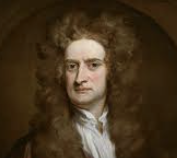
I keep the subject constantly before me, and wait 'till the first dawnings open slowly, by little and little, into a full and clear light.
▼
Source
Reply upon being asked how he made his discoveries, as quoted in "[http://books.google.es/books?id=rYhDAAAAcAAJ&pg=PA3241&dq=I+keep+the+subject+constantly+before+me+and+wait+till+the+first+dawnings+open+little+by+little+into+the+full+light.&hl=es&sa=X&ei=
4 months 3 weeks ago
It has never been recommended to confuse "loving" with "seeking to please"… ...Salome pleased Herod's guests; I can hardly believe she was burning with love for them. As for poor John the Baptist... ...she certainly did not envelop him in her love.
▼
Source
p. 91.
4 months 3 weeks ago
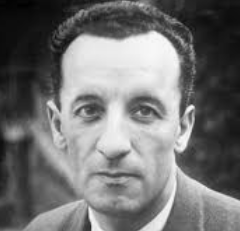
Philosophy is in history, and is never independent of historical discourse. But for the tacit symbolism of life it substitutes, in principle, a conscious symbolism; for a latent meaning, one that is manifest. It is never content to accept its historical situation. It changes this situation by revealing it to itself.
▼
Source
p. 57
4 months 3 weeks ago
And you can also commit injustice by doing nothing. (Hays translation)
▼
Source
IX, 5
CivilSimian.com created by AxiomaticPanic, CivilSimian, Kalokagathia