
4 months 3 weeks ago
In general, we can say that the larger the system becomes, the more the parts interact, the more difficult it is to understand environmental constraints, the more obscure becomes the problem of what resources should be made available, and deepest of all, the more difficult becomes the problem of the legitimate values of the system.
▼
Source
p. 77; cited in John Gall (1978) Systemantics; how systems work... and especially how they fail
4 months 3 weeks ago
To call war the soil of courage and virtue is like calling debauchery the soil of love.
▼
Source
Ch. III: Industry, Government, the peasants
4 months 3 weeks ago
I thought that I was the only historian, that had at once neglected present power, interest, and authority, and the cry of popular prejudices; and as the subject was suited to every capacity, I expected proportional applause. But miserable was my disappointment: I was assailed by one cry of reproach, disapprobation, and even detestation; English, Scotch, and Irish, Whig and Tory, churchman and sectary, freethinker and religionist, patriot and courtier, united in their rage against the man, who had presumed to shed a generous tear for the fate of Charles I and the Earl of Strafford.
▼
Source
'My Own Life' (1776), quoted in David Hume, Essays: Moral, Political, and Literary (1741–1777), ed. Eugene Miller (1985), p. xxxvii
4 months 3 weeks ago
Let not that which in the case of another is contrary to nature become an evil for you; for you are born not to be humiliated along with others, nor to share in their misfortunes, but to share in their good fortune. If, however, someone is unfortunate, remember that his misfortune concerns himself. For God made all mankind to be happy, to be serene.
▼
Source
Book III, ch. 24, §. 1

4 months 3 weeks ago
Ah, Pythagoras' metempsychosis, were that true,This soul should fly from me, and I be changedUnto some brutish beast!All beasts are happy, for when they die,Their souls are soon dissolved in elements;But mine must live still to be plagued in hell.
▼
Source
Christopher Marlowe, spoken by Faust in Marlowe's play Doctor Faustus (c. 1593)
4 months 3 weeks ago
What we do is to bring words back from their metaphysical to their everyday use.
▼
Source
§ 116
4 months 3 weeks ago
Philosophy... is that activity by which the meaning of propositions is established or discovered. Philosophy elucidates propositions, science verifies them. In the latter we are concerned with the truth of statements, but in the former with what they actually mean.
▼
Source
p. 157 ; As cited in: Uebel (2012:78)

4 months 3 weeks ago
Skepticism is slow suicide.
▼
Source
p. 240
4 months 3 weeks ago
General systems theory is considered as a formal theory (Mesarovic, Wymore), a methodology (Ashby, Klir), a way of thinking (Bertalanffy, Churchman), a way of looking at the world (Weinberg), a search for an optimal simplification (Ashby, Weinberg), didactic method (Boulding, Klir, Weinberg), metalanguage (Logren), and profession (Klir).
▼
Source
George Klir cited in: James T. Ziegenfuss (1983) Patients' rights and organizational models: sociotechnical systems research on mental health programs. p. 104
4 months 3 weeks ago
Persons who feel themselves to be exiles in this world—and what noble mind, from Empedocles down, has not had that feeling?—are mightily inclined to believe themselves citizens of another.
▼
Source
pp. 39-40
4 months 3 weeks ago
This avidity alone, of acquiring goods and possessions for ourselves and our nearest friends, is insatiable, perpetual, universal, and directly destructive of society.
▼
Source
Part 2, Section 2
4 months 3 weeks ago
It is difficult to imagine any thing more instructive, and more pregnant with matter for salutary reflection, than the contrast presented to us by the character and system of action of Pythagoras on the one hand, and those of the great enquirers of the last two centuries, for example, Bacon, Newton and Locke, on the other. Pythagoras probably does not yield to any one of these in the evidences of true intellectual greatness. In his school, in the followers he trained resembling himself, and in the salutary effects he produced on the institutions of the various republics of Magna Graecia and Sicily, he must be allowed greatly to have excelled them. His discoveries of various propositions in geometry, of the earth as a planet, and of the solar system as now universally recognised, clearly stamp him a genius of the highest order. Yet this man, thus enlightened and philanthropical, established his system of proceeding upon narrow and exclusive principles, and conducted it by methods of artifice, quackery and delusion. One of his leading maxims was, that the great and fundamental truths to the establishment of which he devoted himself, were studiously to be concealed from the vulgar, and only to be imparted to a select few, and after years of the severest noviciate and trial. He learned his earliest lessons of wisdom in Egypt after this method, and he conformed through life to the example which had thus been delivered to him. The severe examination that he made of the candidates previously to their being admitted into his school, and the years of silence that were then prescribed to them, testify this. He instructed them by symbols, obscure and enigmatical propositions, which they were first to exercise their ingenuity to expound. The authority and dogmatical assertions of the master were to remain unquestioned; and the pupils were to fashion themselves to obsequious and implicit submission, and were the furthest in the world from being encouraged to the independent exercise of their own understandings. There was nothing that Pythagoras was more fixed to discountenance, than the communication of the truths upon which he placed the highest value, to the uninitiated. It is not probable therefore that he wrote any thing: all was communicated orally, by such gradations, and with such discretion, as he might think fit to adopt and to exercise. Such were some of the main causes that have made his efforts perishable, and the lustre which should have attended his genius in a great degree transitory and fugitive. He was probably much under the influence of a contemptible jealousy, and must be considered as desirous that none of his contemporaries or followers should eclipse their master. -->
4 months 3 weeks ago
387. [I believe it might interest a philosopher, one who can think himself, to read my notes. For even if I have hit the mark only rarely, he would recognize what targets I had been ceaselessly aiming at.]
4 months 3 weeks ago
It is not within our power not to desire to be happy.
4 months 3 weeks ago
There is no man living to whom, as a writer, so many of us feel and thankfully acknowledge so great an indebtedness for ennobling impulses.
▼
Source
James Russell Lowell, My Study Windows (1871), "Emerson, the Lecturer"
4 months 3 weeks ago
In the works of the Creator ever open to our examination, we possess a firm basis on which to raise the superstructure of an enlightened creed. The more man inquires into the laws which regulate the material universe, the more he is convinced that all its varied forms arise from the action of a few simple principles. These principles themselves converge, with accelerating force, towards some still more comprehensive law to which all matter seems to be submitted. Simple as that law may possibly be, it must be remembered that it is only one amongst an infinite number of simple laws: that each of these laws has consequences at least as extensive as the existing one, and therefore that the Creator who selected the present law must have foreseen the consequences of all other laws. The works of the Creator, ever present to our senses, give a living and perpetual testimony of his power and goodness far surpassing any evidence transmitted through human testimony. The testimony of man becomes fainter at every stage of transmission, whilst each new inquiry into the works of the Almighty gives to us more exalted views of his wisdom, his goodness, and his power.
▼
Source
"Passages from the life of a philosopher", The Belief In The Creator From His Works, p. 402
4 months 3 weeks ago
I was still “at the church door”. Yet in belief, in the clarification of my philosophy, I had taken an important step. I no longer wavered between alternative views of the world, to be put on or taken off like alternative plays at the theatre. I now saw that there was only one possible play, the actual history of nature and of mankind, although there might well be ghosts among the characters and soliloquies among the speeches. Religions, all religions, and idealistic philosophies, all idealistic philosophies, were the soliloquies and the ghosts. They might be eloquent and profound. Like Hamlet's soliloquy they might be excellent reflective criticisms of the play as a whole. Nevertheless they were only parts of it, and their value as criticisms lay entirely in their fidelity to the facts, and to the sentiments which those facts aroused in the critic.
▼
Source
p. 169
4 months 3 weeks ago
Men gather the clouds, and then they complain of the tempests that follow.
▼
Source
Chapter III, p. 30
4 months 3 weeks ago
The universal propensity to believe in invisible, intelligent power, if not an original instinct, being at least a general attendant of human nature, may be considered as a kind of mark or stamp, which the divine workman has set upon his work; and nothing surely can more dignify mankind, than to be thus selected from all other parts of the creation, and to bear the image or impression of the universal Creator. But consult this image, as it appears in the popular religions of the world. How is the deity disfigured in our representations of him! What caprice, absurdity, and immorality are attributed to him! How much is he degraded even below the character, which we should naturally, in common life, ascribe to a man of sense and virtue!
▼
Source
Part XV - General corollary
4 months 3 weeks ago
[T]he most striking result of the Greeks' faith that the world could be understood in terms of rational principles was the invention of abstract mathematics. The most grandiose ambition they conceived was to explain all the properties of Nature in arithmetical terms alone. This was the aim of the Pythagoreans... [T]hey... knew that the phenomena of the Heavens recurred in a cyclical manner; and... discovered ...that the sound of a vibrating string ...is simply related to the length ...and its 'harmonics' always go with simple fractional lengths. ...[S]ince the Pythagoreans were a religious brotherhood... they thought that this search would lead to more than explanations alone. If one discovered the mathematical harmonies in things, one should... discover how to put oneself in harmony with Nature. ...[T]hey had ...positive grounds for thinking that both astronomy and acoustics were at the bottom arithmetical; and the study of simple fractions was called 'music' right down until the late Middle Ages.
▼
Source
, , The Fabric of the Heavens: The Development of Astronomy and Dynamics (1962) Ch. 2 The Invention of Theory.
4 months 3 weeks ago
The way you use the word "God" does not show whom you mean — but, rather, what you mean.
▼
Source
p. 50e

4 months 3 weeks ago
Lenin is not comparable to any revolutionary figure in history. Revolutionaries have had ideals. Lenin has none. He is a madman, an immolator, wishful of burning, and slaughter, and sacrificing.
▼
Source
As quoted in Peter Kropotkin : From Prince to Rebel (1990) by George Woodcock and Ivan Avakumovic, p. 407
4 months 3 weeks ago
Though the large runt pigeon, with its massive beak and its huge feet, differs from its blue and barred progenitor the rock, it is a pigeon still. Though the slender Italian greyhound has a strange contrast with the short-legged bull-dog, they are both dogs in their teeth and in their skull. The mouse, even, has not been transmuted into the cat, nor the hen into the turkey, nor the duck into the goose, nor the hawk into the eagle, and still less the monkey into the man.
4 months 3 weeks ago
All sciences have their mysteries and at certain points the apparently most obvious theory will be found in contradiction with experience. Politics, for example, offers several proofs of this truth. In theory, is anything more absurd than hereditary monarchy? We judge it by experience, but if government had never been heard of and we had to choose one, whoever would deliberate between hereditary and elective monarchy would be taken for a fool. Yet we know by experience that the first is, all things considered, the best that can be imagined, while the second is the worst. What arguments could not be amassed to establish that sovereignty comes from the people? However they all amount to nothing. Sovereignty is always taken, never given, and a second more profound theory subsequently discovers why this must be so. Who would not say the best political constitution is that which has been debated and drafted by statesmen perfectly acquainted with the national character, and who have foreseen every circumstance? Nevertheless nothing is more false. The best constituted people is the one that has the fewest written constitutional laws, and every written constitution is worthless.
▼
Source
"Ninth Dialogue"
4 months 3 weeks ago
Any question of philosophy ... which is so obscure and uncertain, that human reason can reach no fixed determination with regard to it; if it should be treated at all; seems to lead us naturally into the style of dialogue and conversation.
▼
Source
Pamphilus to Hermippus, Prologue
4 months 3 weeks ago
It seems to me that, in every culture, I come across a chapter headed Wisdom. And then I know exactly what is going to follow: Vanity of vanities, all is vanity.
▼
Source
Conversation of 1934
4 months 3 weeks ago
The whole aspect of the universe changes with this new conception. The idea of force governing the world, of pre-established law, preconceived harmony, disappears to make room for the harmony that Fourier had caught a glimpse of: the one which results from the disorderly and incoherent movements of numberless hosts of matter, each of which goes its own way and all of which hold each other in equilibrium.
▼
Source
Kropotkin here may be referring to the French scientist Joseph Fourier, and not the French social philosopher Charles Fourier

4 months 3 weeks ago
As some say, Solon was the author of the apophthegm, "Nothing in excess."
▼
Source
Solon, 16.
4 months 3 weeks ago
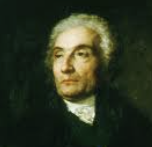
De Maistre has for me the peculiar property of helping me to estimate the philosophie capacity of people, by the repute in which they hold him.
▼
Source
Auguste Comte, quoted by John Morley in Critical Miscellanies (1909), p. 329
4 months 3 weeks ago
Hume, from whose fascinating narrative the great mass of the reading public are still contented to take their opinions, hated religion so much that he hated liberty for having been allied with religion, and has pleaded the cause of tyranny with the dexterity of an advocate, while affecting the impartiality of a judge.
▼
Source
Thomas Babington Macaulay, 'Milton', The Edinburgh Review (August 1825), quoted in Thomas Babington Macaulay, Critical and Historical Essays, Contributed to The Edinburgh Review, Vol. I (1843), p. 31
4 months 3 weeks ago
The State idea means something quite different from the idea of government. It not only includes the existence of a power situated above society, but also of a territorial concentration as well as the concentration in the hands of a few of many functions in the life of societies. It implies some new relationships between members of society which did not exist before the formation of the State. A whole mechanism of legislation and of policing has to be developed in order to subject some classes to the domination of others. This distinction, which at first sight might not be obvious, emerges especially when one studies the origins of the State.
▼
Source
I
4 months 3 weeks ago
Arcesilaus had a peculiar habit while conversing of using the expression, "My opinion is," and "So and so will not agree to this."
▼
Source
Arcesilaus, 12.
4 months 3 weeks ago
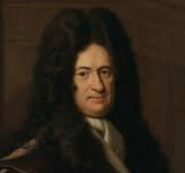
As regards the objection that possibles are independent of the decrees of God I grant it of actual decrees (although the Cartesians do not at all agree to this), but I maintain that the possible individual concepts involve certain possible free decrees; for example, if this world was only possible, the individual concept of a particular body in this world would involve certain movements as possible, it would also involve the laws of motion, which are the free decrees of God; but these, also, only as possibilities. Because, as there are an infinity of possible worlds, there are also an infinity of laws, certain ones appropriate to one; others, to another, and each possible individual of any world involves in its concept the laws of its world.
▼
Source
(May, 1686) as quoted in George R. Montgomery, Tr., "Correspondence between Leibniz and Arnauld," [https://books.google.com/books?id=5-IeAQAAMAAJ Leibniz: Discourse on metaphysics; correspondence with Arnauld, and Monadology] (1916) VIII, p. 108
4 months 3 weeks ago
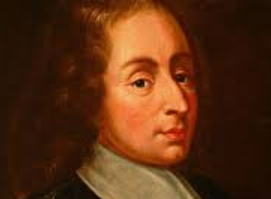
The source of the errors of these two sects, is in not having known that the state of man at the present time differs from that of his creation; so that the one, remarking some traces of his first greatness and being ignorant of his corruption, has treated nature as sound and without need of redemption, which leads him to the height of pride; whilst the other, feeling the present wretchedness and being ignorant of the original dignity, treats nature as necessarily infirm and irreparable, which precipitates it into despair of arriving at real good, and thence into extreme laxity.
4 months 3 weeks ago
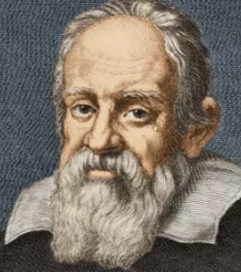
Nature … is inexorable and immutable; she never transgresses the laws imposed upon her, or cares a whit whether her abstruse reasons and methods of operation are understandable to men. For that reason it appears that nothing physical which sense-experience sets before our eyes, or which necessary demonstrations prove to us, ought to be called in question (much less condemned) upon the testimony of biblical passages which may have some different meaning beneath their words. For the Bible is not chained in every expression to conditions as strict as those which govern all physical effects; nor is God any less excellently revealed in Nature's actions than in the sacred statements of the Bible.
4 months 3 weeks ago
A great number of the Paris maraîchères... export the whole of their crop to England.
4 months 3 weeks ago
Once he saw a youth blushing, and addressed him, "Courage, my boy! that is the complexion of virtue."
▼
Source
Diogenes, 6.

4 months 3 weeks ago
One needs only eyes to see the necessary influence of old age on reason.
4 months 3 weeks ago
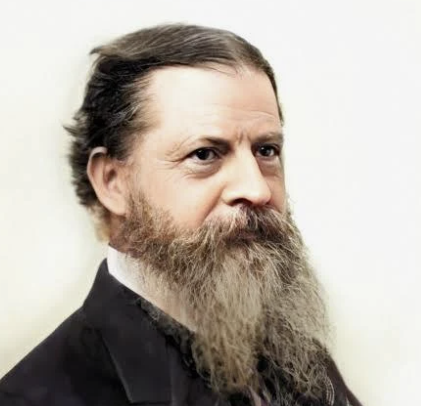
The consciousness of a general idea has a certain "unity of the ego" in it, which is identical when it passes from one mind to another. It is, therefore, quite analogous to a person, and indeed, a person is only a particular kind of general idea.
▼
Source
"Man's Glassy Essence" in The Monist, Vol. III, No. 1 (October 1892)
4 months 3 weeks ago
If they have entered into the spirit if these rules, and if the rules have made sufficient impression on them to become rooted and established in their minds, they will feel how much difference there is between what is said here and what a few logicians may perhaps have written by chance approximating to it in a few passages of their works.
4 months 3 weeks ago
What has philosophy got to do with measuring anything? It's the mathematicians you have to trust, and they measure the skies like we measure a field.
▼
Source
"Matteo" in Concerning the New Star (1606)

4 months 3 weeks ago
Existential analytics [the object of the book] decides nothing about the existence of God, about human freedom and the immortality of the soul.
▼
Source
Emanuele Severino. As quoted in [https://www.raicultura.it/filosofia/articoli/2019/01/Emanuele-Severino-Nietzsche-Leopardi-Gentile-e-il-sottosuolo-filosofico-del-nostro-tempo-0176ac13-3d61-4929-8385-bab Emanuele Severino: il sottosuolo filosofico del nost
4 months 3 weeks ago
Here, we may well distinguish between Extreme Liberationism and Open Liberationism. So, as regards stealing, for example, the Extreme view holds that ... not only is it good to steal, but it's wrong not to do so. By contrast, Open Liberationism holds that it's at least good to steal and, while it's open to the (epistemic) possibility that it's wrong not to do so, it's also open to the possibility that it's not wrong. While I'm inclined to think that, in the end, even the Extreme view is correct, in this book it's enough to argue for Open Liberationism.
▼
Source
p. 13
4 months 3 weeks ago
The methodological advice to interpret in a way that optimizes agreement should not be conceived as resting on a charitable assumption about human intelligence that might turn out to be false. If we cannot find a way to interpret the utterances and other behaviour of a creature as revealing a set of beliefs largely consistent and true by our standards, we have no reason to count that creature as rational, as having beliefs, or as saying anything
▼
Source
Donald Davidson. "Radical interpretation." Dialectica 27.3‐4 (1973): p. 324; as cited in; Herman Parret, Jacques Bouveresse (1981) Meaning and Understanding, p. 186
4 months 3 weeks ago
In very different fashion does the book set to work that already in its very title declares that man is a machine. While the 'Natural History of the Soul' was cautious, cunningly arranged, and only gradually surprising us with its results, here, on the contrary,the final conclusion is expressed at the outset of the work. While the 'Natural History of the Soul' allied itself with the whole Aristotelian metaphysics only in order to prove by degrees that the soul is but an empty form, into which we may pour a materialistic content, here we no longer deal in all those fine distinctions.
4 months 3 weeks ago
We have here a question of difficulty, analogous to the question of nominalism and realism.
4 months 3 weeks ago
Everything functions. That is exactly what is uncanny. Everything functions and the functioning drives us further and further to more functioning, and technology tears people away and uproots them from the Earth more and more. I don't know if you are scared; I was certainly scared when I recently saw the photographs of the Earth taken from the Moon. We don't need an atom bomb at all; the uprooting of human beings is already taking place. We only have purely technological conditions left. It is no longer an earth on which human beings live today.
4 months 3 weeks ago
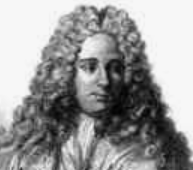
Having discovered the true principle, I then derived all the laws that govern the motion of light, those concerning its direct propagation, its reflection and its refraction. I reserve for particular members of our Assembly the geometrical demonstration of my theory.I know the distaste that many mathematicians have for final causes applied to physics, a distaste that I share up to some point. I admit, it is risky to introduce such elements; their use is dangerous, as shown by the errors made by Fermat and Leibniz in following them. Nevertheless, it is perhaps not the principle that is dangerous, but rather the hastiness in taking as a basic principle that which is merely a consequence of a basic principle.
4 months 3 weeks ago
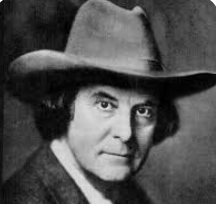
I believe that brutality tends to defeat itself. Prizefighters die young, gourmands get the gout, hate hurts worse the man who nurses it, and all selfishness robs the mind of its divine insight, and cheats the soul that would know. Mind alone is eternal. He, watching over Israel, slumbers not nor sleeps. My faith is great: out of the transient darkness of the present the shadows will flee away, and Day will yet dawn. I am an Anarchist.

4 months 3 weeks ago
The free will, the actual motor of reason in society, necessarily creates wrong. The individual must clash with the social order that claims to represent his own will in its objective form. But the wrong and the ‘avenging justice’ that remedies it not only expresses a ‘higher logical necessity,’ but also prepare the transition to a higher social form of freedom, the transition from abstract right to morality. For, in committing a wrong, and in accepting punishment for his deed, the individual becomes conscious of the ‘infinite subjectivity’ of his freedom. He learns that he is free only as a private person. P. 198
CivilSimian.com created by AxiomaticPanic, CivilSimian, Kalokagathia