
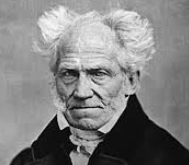
4 months 3 weeks ago
My basis is supported by the authority of the greatest moralist of modern times; for such, undoubtedly, J. J. Rousseau is,—that profound reader of the human heart, who drew his wisdom not from books, but from life, and intended his doctrine not for the professorial chair, but for humanity; he, the foe of all prejudice, the foster-child of nature, whom alone she endowed with the gift of being able to moralise without tediousness, because he hit the truth and stirred the heart.
▼
Source
Part III, Ch. VIII, 9, [https://archive.org/stream/basisofmorality00schoiala#page/230/mode/2up p. 230]

4 months 3 weeks ago
We had nothing to say to one another, and while I was manufacturing my phrases I felt that earth was falling through space and that I was falling with it at a speed that made me dizzy.

4 months 3 weeks ago
In the first place that appalling style, with its repetitiveness, its overemphasis, its perpetual note of adjuration, its shrillness and exaggeration, with no soft tones at all, the trumpets always braying and that rather discordantly: it makes him almost impossible to read... Yet for all his defects Carlyle was unmistakably a man of genius. He was that very unattractive kind of genius, a prophet. All prophets are misfits; and that throws a flood of light on the source and conditioning of their "message".
▼
Source
A. L. Rowse, ‘Carlyle's Past and Present’, The English Spirit: Essays in History and Literature (1944), p. 223
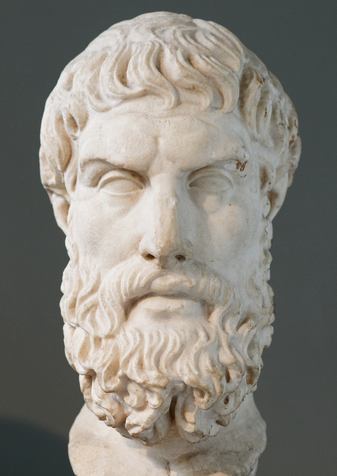
4 months 3 weeks ago
Against the diseases of the mind, philosophy provides sufficient antidotes. The instruments which it employs for this purpose are the virtues; the root of which, whence all the rest proceed, is prudence. This virtue comprehends the whole art of living discreetly, justly, and honorably, and is, in fact, the same thing with wisdom. It instructs men to free their understandings from the clouds of prejudice; to exercise temperance and fortitude in the government of themselves: and to practice justice towards others. Although pleasure, or happiness, which is the end of living, be superior to virtue, which is only the means, it is every one's interest to practice all the virtues; for in a happy life, pleasure can never be separated from virtue.
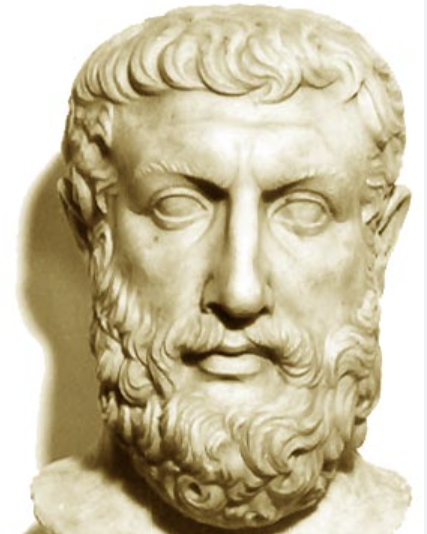
4 months 3 weeks ago
That which is, is ...it cannot be more or less. There is... as much of it in one place as in another... a continuous, indivisible plenum. From this it follows... that it must be immovable... [for] it must move into an empty space, and there is no empty space. ...For the same reason, it must be finite, and can have nothing beyond it. It is complete in itself, and has no need to stretch out indefinitely into an empty space that does not exist. ...It is equally real in every direction ...the ...the only form ...Any other would ...[have distinguishable] direction... [T]his sphere cannot ...move round its ...axis; for there is nothing outside ...[to] reference...
4 months 3 weeks ago
Is God willing to prevent evil, but not able? Then he is not omnipotent. Is he able, but not willing? Then he is malevolent. Is he both able and willing? Then whence cometh evil? Is he neither able nor willing? Then why call him God?
▼
Source
This attribution [http://books.google.com/books?id=rs47AAAAcAAJ&pg=PA494 occurs in chapter 13 (Ioan. Graphei, 1532, p. 494)] of the Christian church father's Lactantius's De Ira Dei (c. 318):
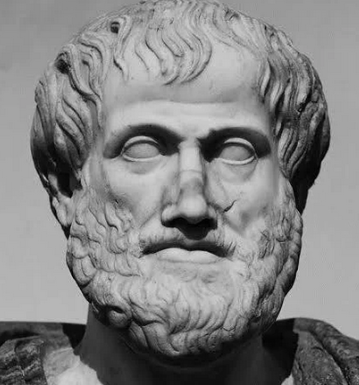
4 months 3 weeks ago
According to one mode... nature is thus denominated, viz. the first subject matter to every thing which contains in itself the principle of motion and mutation. But after another mode it is denominated form, which subsists according to definition: for as art is called that which subsists according to art, and that which is artificial; so likewise nature is both called that which is according to nature, and that which is natural. ...that which is composed from these is not nature, but consists from nature; as, for instance, man. And this is nature in a greater degree than matter: for every thing is then said to be, when it is form in energy... entelecheia, rather than when it is incapacity.
▼
Source
Book II, Ch. I, pp. 93-94.
4 months 3 weeks ago
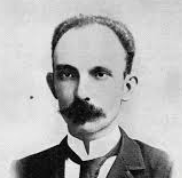
Through a marvelous law of natural compensation, he who gives of himself grows, and he who turns inward and lives from small pleasures, is afraid to share them with others, and only thinks avariciously of cultivating his appetites loses his humanity and becomes loneliness itself. He carries in his breast all the dreariness of winter. He becomes in fact and appearance an insect.
4 months 3 weeks ago
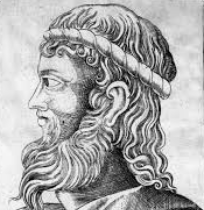
It was not Zeno, the founder of the Stoics, alone, who taught that the Universe evolves, and its primary substance is transformed from the state of fire into that of air, then into that of water, etc. Heraclitus of Ephesus maintained that the one principle that underlies all phenomena in Nature is fire. The intelligence that moves the Universe is fire, and fire is intelligence. And while Anaximenes said the same of air, and Thales of Miletus (600 years b.c.) of water, the Esoteric Doctrine reconciles all these philosophers, by showing that though each was right, the system of none was complete.
▼
Source
H.P. Blavatsky, [http://www.gutenberg.org/ebooks/54824 The Secret Doctrine, Vol. 1 of 4] (1888)
4 months 3 weeks ago
Suicide may also be regarded as an experiment — a question which man puts to Nature, trying to force her to answer. The question is this: What change will death produce in a man’s existence and in his insight into the nature of things? It is a clumsy experiment to make; for it involves the destruction of the very consciousness which puts the question and awaits the answer.
▼
Source
Vol. 2, Ch. 13, § 160
4 months 3 weeks ago
Existence would be a quite impracticable enterprise if we stopped granting importance to what has none.
4 months 3 weeks ago
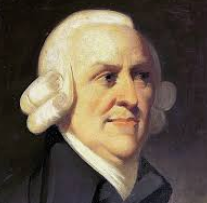
When I endeavour to examine my own conduct, when I endeavour to pass sentence upon it, and either to approve or condemn it, it is evident that, in all such cases, I divide myself, as it were, into two persons; and that I, the examiner and judge, represent a different character from that other I, the person whose conduct is examined into and judged of.
▼
Source
Chap. I.

4 months 3 weeks ago
It is of great importance to observe that the character of every man is, in some degree, formed by his profession. A man of sense may only have a cast of countenance that wears off as you trace his individuality, whist the weak, common man has scarcely ever any character, but what belongs to the body; at least, all his opinions have been so steeped in the vat consecrated by authority, that the faint spirit which the grape of his own vine yields, cannot be distinguished.
▼
Source
Ch. 1
4 months 3 weeks ago
Ever since prehistoric antiquity one field of study after another has crossed the divide between what the historian might call its prehistory as a science and its history proper. These transitions to maturity have seldom been so sudden or so unequivocal as my necessarily schematic discussion may have implied. But neither have they been historically gradual, coextensive, that is to say, with the entire development of the fields within which they occurred.
▼
Source
p. 22 (2012 ed.)

4 months 3 weeks ago
The core of the belief in progress is that human values and goals converge in parallel with our increasing knowledge. The twentieth century shows the contrary. Human beings use the power of scientific knowledge to assert and defend the values and goals they already have. New technologies can be used to alleviate suffering and enhance freedom. They can, and will, also be used to wage war and strengthen tyranny. Science made possible the technologies that powered the industrial revolution. In the twentieth century, these technologies were used to implement state terror and genocide on an unprecedented scale. Ethics and politics do not advance in line with the growth of knowledge — not even in the long run.
▼
Source
"Joseph Conrad, Our Contemporary," from Heresies: Against Progress and Other Illusions (2004)
4 months 3 weeks ago
That which is desirable on its own account and for the sake of knowing it is more of the nature of wisdom than that which is desirable on account of its results.
▼
Source
982a16, Complete Works, vol. 2, p. 1554
4 months 3 weeks ago
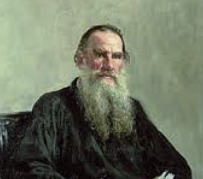
...никогда Христос ... ни одним словом не утверждал личное воскресение и бессмертие личности за гробом...
▼
Source
Never did Christ utter a single word attesting to a personal resurrection and a life beyond the grave. | My Religion (1884), Ch. 8 [http://books.google.com/books?id=D-UOAQAAIAAJ&q=%22%D0%BD%D0%B8%D0%BA%D0%BE%D0%B3%D0%B4%D0%B0+%D0%A5%D1%80%D0%B8%D1%81%D1%8
4 months 3 weeks ago
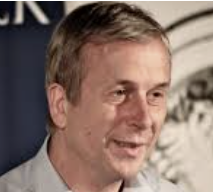
There can be no absolute reality, there can be no absolute truth.
▼
Source
in Kevin Warwick "The Matrix - Our Future?", Chapter in "Philosophers Explore the Matrix", edited by C.Grau, Oxford University Press, 2005.

4 months 3 weeks ago
It was assumed within birth control circles that poor women, Black and immigrant alike, had a 'moral obligation to restrict the size of their families.' What was demanded as a 'right' for the privileged came to be interpreted as a 'duty' for the poor.
▼
Source
Page 210 of 2011 edition of the book.
4 months 3 weeks ago
There are two things which make it impossible to believe that this world is the successful work of an all-wise, all-good, and, at the same time, all-powerful Being; firstly, the misery which abounds in it everywhere; and secondly, the obvious imperfection of its highest product, man, who is a burlesque of what he should be.
▼
Source
"On the Sufferings of the World"
4 months 3 weeks ago
In the hours without sleep, each moment is so full and so vacant that it suggests itself as a rival of Time.
4 months 3 weeks ago
A very poor man may be said in some sense to have a demand for a coach and six; he might like to have it; but his demand is not an effectual demand, as the commodity can never be brought to market in order to satisfy it.
▼
Source
Chapter VII, p. 67.
4 months 3 weeks ago
If ever there was a book calculated to make a man in love with its author, this appears to me to be the book. She speaks of her sorrows, in a way that fills us with melancholy, and dissolves us in tenderness, at the same time that she displays a genius which commands all our admiration. Affliction had tempered her heart to a softness, almost more than human; and the gentleness of her spirit seems precisely to accord with all the romance of unbounded attachment.
▼
Source
William Godwin, on her book, Letters Written during a Short Residence in Sweden, Norway and Denmark (1796), in his own Memoirs of the Author of a Vindication of the Rights of Woman (1798), p. 95

4 months 3 weeks ago
The texts about the future life fall into, since demonstrative scholars do not agree whether to take them in their apparent meaning or interpret them allegorically. Either is permissible. But it is inexcusable to deny the fact of a future life altogether.
▼
Source
Ch 2. 44
4 months 3 weeks ago
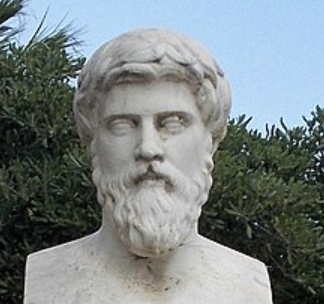
He made one of Antipater's recommendation a judge; and perceiving afterwards that his hair and beard were coloured, he removed him, saying, "I could not think one that was faithless in his hair could be trusty in his deeds."
▼
Source
40 Philip
4 months 3 weeks ago
There is no more consensus on what justice means than there is on the character of the good. If anything, there is less. Among the virtues, justice is one of the most shaped by convention. For that reason it is among the most changeable.
▼
Source
'Modus Vivendi' (p.34)
4 months 3 weeks ago
It is well said, then, that it is by doing just acts that the just man is produced, and by doing temperate acts the temperate man; without doing these no one would have even a prospect of becoming good. But most people do not do these, but take refuge in theory and think they are being philosophers and will become good in this way, behaving somewhat like patients who listen attentively to their doctors, but do none of the things they are ordered to do.
▼
Source
Book II, 1105b.9
4 months 3 weeks ago
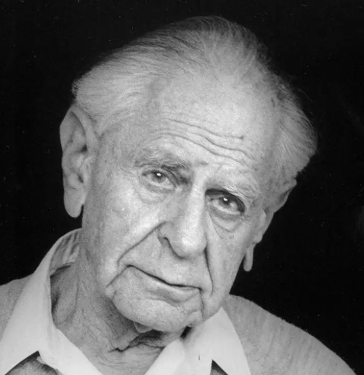
The game of science is, in principle, without end. He who decides one day that scientific statements do not call for any further test, and that they can be regarded as finally verified, retires from the game.
▼
Source
Ch. 2 "On the Problem of a Theory of Scientific Method", Section 11: Methodological Rules as Conventions, p. 32.
4 months 3 weeks ago
There is only one enduring happiness in life—to live for others.
▼
Source
[http://books.google.com/books?id=eWU4AAAAYAAJ&q=%22there+is+only+one+enduring+happiness+in+life+to+live+for+others%22&pg=PA22#v=onepage Part 1, chapter 2]
4 months 3 weeks ago
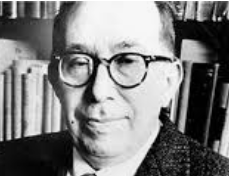
The sophist, in contradistinction to the philosopher, is not set in motion and kept in motion by the sting of the awareness of the fundamental difference between conviction or belief and genuine insight.
▼
Source
p. 116
4 months 3 weeks ago
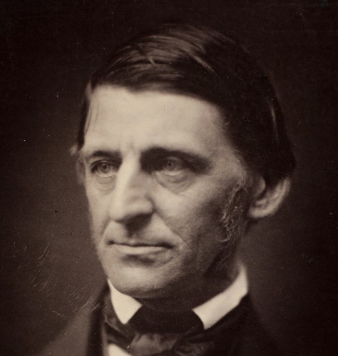
Self-reliance, the height and perfection of man, is reliance on God.
▼
Source
The Fugitive Slave Law, a lecture in NYC (March 7, 1854)
4 months 3 weeks ago
Both [the military industrial complex and the prison industrial complex] generate huge profits from processes of social destruction. Precisely that which is advantageous to those corporations, elected officials, and government agents who have obvious stakes in the expansion of these systems begets grief and devastation for poor and racially dominated communities in the United States and throughout the world.
▼
Source
Chapter Five
4 months 3 weeks ago
Who knew that if you merely represent the thought of Nietzsche or Schopenhauer in a fun way it would find such an audience? Some things, it seems, are always green.
▼
Source
BAP, [https://americanmind.org/salvo/americas-delusional-elite-is-done/ America’s Delusional Elite Is Done], The American Mind, 22 October 2019
4 months 3 weeks ago
What a judgment upon the living, if it is true, as has been maintained, that what dies has never existed!
4 months 3 weeks ago
No fixed capital can yield any revenue but by means of a circulating capital.
▼
Source
Chapter I, p. 311.
4 months 3 weeks ago
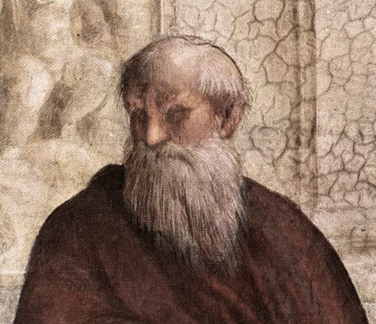
All teems with symbol; the wise man is the man who in any one thing can read another.
▼
Source
II.3.7
4 months 3 weeks ago
Diogenes the Cynic, when a little before his death he fell into a slumber, and his physician rousing him out of it asked him whether anything ailed him, wisely answered, "Nothing, sir; only one brother anticipates another,—Sleep before Death."
4 months 3 weeks ago
Ichthyophils imagine that human beings want a life in which they can make their own choices. But what if they can be fulfilled only by a life in which they follow each other? The majority who obey the fashion of the day may be acting on a secret awareness that they lack the potential for a truly individual existence. Liberalism – the ichthyophil variety, at any rate – teaches that everyone yearns to be free. Herzen’s experience of the abortive European revolutions of 1848 led him to doubt that this was so. It was because of his disillusionment that he criticized Mill so sharply. But if it is true that Mill was deluded in thinking that everyone loves freedom, it may also be true that without this illusion there would be still less freedom in the world. The charm of a liberal way of life is that it enables most people to renounce their freedom unknowingly.
▼
Source
An Old Chaos: Ichthyophils and Liberals (p. 62)
4 months 3 weeks ago
It is the mark of an educated mind to be able to entertain a thought without accepting it.
▼
Source
Attributed to Aristotle in Lowell L. Bennion, [http://books.google.gr/books?id=2HPUAAAAMAAJ&q= Religion and the Pursuit of Truth], Deseret Book Company, 1959, p. 52, and in [http://books.google.gr/books?id=irofAQAAMAAJ&q= American Opinion, Volume 24], Rob
4 months 3 weeks ago
Science must begin with myths, and with the criticism of myths.
▼
Source
Ch. 1 "Science : Conjectures and Refutations", Section VII
4 months 3 weeks ago
Despite the fact that the doctors treated him, bled him, and gave him medicines to drink, he recovered.
▼
Source
Bk. XV, ch. 12
4 months 3 weeks ago
Liberal education, which consists in the constant intercourse with the greatest minds, is a training in the highest form of modesty. … It is at the same time a training in boldness. … It demands from us the boldness implied in the resolve to regard the accepted views as mere opinions, or to regard the average opinions as extreme opinions which are at least as likely to be wrong as the most strange or least popular opinions
▼
Source
“What is liberal education,” p. 8
4 months 3 weeks ago
People say law but they mean wealth.
▼
Source
1841
4 months 3 weeks ago
The call to defund the police is, I think, an abolitionist demand, but it reflects only one aspect of the process represented by the demand. Defunding the police is not simply about withdrawing funding for law enforcement and doing nothing else. And it appears as if this is the rather superficial understanding that has caused Biden to move in the direction he’s moving in. It’s about shifting public funds to new services and new institutions — mental health counselors, who can respond to people who are in crisis without arms. It’s about shifting funding to education, to housing, to recreation. All of these things help to create security and safety. It’s about learning that safety, safeguarded by violence, is not really safetyAnd I would say that abolition is not primarily a negative strategy. It’s not primarily about dismantling, getting rid of, but it’s about reenvisioning. It’s about building anew... And one sees in these abolitionist demands that are emerging the pivotal influence of feminist theories and practices... Abolition is really about rethinking the kind of future we want, the social future, the economic future, the political future. It’s about revolution, I would argue.
4 months 3 weeks ago
Since the only things we remember are humiliations and defeats, what is the use of all the rest?
4 months 3 weeks ago
When the act of navigation was made, though England and Holland were not actually at war, the most violent animosity subsisted between the two nations. ... It is not impossible, therefore, that some of the regulations of this famous act may have proceeded from national animosity. They are as wise, however, as if they had all been dictated by the most deliberate wisdom. National animosity at that particular time aimed at the very same object which the most deliberate wisdom would have recommended, the diminution of the naval power of Holland, the only naval power which could endanger the security of England.
▼
Source
Chapter II
4 months 3 weeks ago
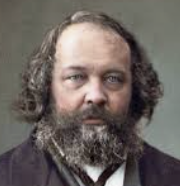
Every state, like every theology, assumes man to be fundamentally bad and wicked.
▼
Source
As quoted in Michael Bakunin (1937), E.H. Carr, p. 453
4 months 3 weeks ago
India will teach us the tolerance and gentleness of mature mind, understanding spirit and a unifying, pacifying love for all human beings.
4 months 3 weeks ago
The first survey of my work which not only fully understands but is able to carry on my ideas beyond the point at which I left off.
▼
Source
Friedrich Hayek, on first edition (1984) of Gray's Hayek on Liberty, on back cover of Hayek on Liberty
4 months 3 weeks ago
I disbelieve in specialization and... experts. ...[P]aying too much respect to the specialist ...[is] destroying the commonwealth of learning, the rationalist tradition, and science ...
CivilSimian.com created by AxiomaticPanic, CivilSimian, Kalokagathia