

4 months 3 weeks ago
We believe that the most pressing political necessity is the consolidation of a United Front joining together all sections of the revolutionary, radical and democratic movements. Only a united front—led in the first place by the national liberation movements and the working people—can decisively counter, theoretically, ideologically and practically, the increasingly fascistic and genocidal posture of the present ruling clique
4 months 3 weeks ago
The animals are much more content with mere existence than we are; the plants are wholly so; and man is so according to how dull and insensitive he is. The animal’s life consequently contains less suffering but also less pleasure than the human’s, the direct reason being that on the one hand it is free from care and anxiety and the torments that attend them, but on the other is without hope and therefore has no share in that anticipation of a happy future which, together with the enchanting products of the imagination which accompany it, is the source of most of our greatest joys and pleasures. The animal lacks both anxiety and hope because its consciousness is restricted to what is clearly evident and thus to the present moment: the animal is the present incarnate.
▼
Source
Vol. 2 "On the Suffering of the World" as translated in Essays and Aphorisms (1970), as translated by R. J. Hollingdale

4 months 3 weeks ago
"Neither this world, nor the next, nor happiness are for the being abandoned to doubt." — This point in the Gita is my death sentence.
4 months 3 weeks ago
To take an example, therefore, from a very trifling manufacture, but one in which the division of labour has been very often taken notice of, the trade of a pin-maker: a workman not educated to this business (which the division of labour has rendered a distinct trade, nor acquainted with the use of the machinery employed in it (to the invention of which the same division of labour has probably given occasion), could scarce, perhaps, with his utmost industry, make one pin in a day, and certainly could not make twenty. But in the way in which this business is now carried on, not only the whole work is a peculiar trade, but it is divided into a number of branches, of which the greater part are likewise peculiar trades. One man draws out the wire; another straights it; a third cuts it; a fourth points it; a fifth grinds it at the top for receiving the head; to make the head requires two or three distinct operations; to put it on is a peculiar business; to whiten the pins is another; it is even a trade by itself to put them into the paper; and the important business of making a pin is, in this manner, divided into about eighteen distinct operations, which, in some manufactories, are all performed by distinct hands, though in others the same man will sometimes perform two or three of them. I have seen a small manufactory of this kind, where ten men only were employed, and where some of them consequently performed two or three distinct operations. But though they were very poor, and therefore but indifferently accommodated with the necessary machinery, they could, when they exerted themselves, make among them about twelve pounds of pins in a day. There are in a pound upwards of four thousand pins of a middling size. Those ten persons, therefore, could make among them upwards of forty-eight thousand pins in a day. Each person, therefore, making a tenth part of forty-eight thousand pins, might be considered as making four thousand eight hundred pins in a day. But if they had all wrought separately and independently, and without any of them having been educated to this peculiar business, they certainly could not each of them have made twenty, perhaps not one pin in a day; that is, certainly, not the two hundred and fortieth, perhaps not the four thousand eight hundredth, part of what they are at present capable of performing, in consequence of a proper division and combination of their different operations.
▼
Source
Chapter I, p. 8-9.

4 months 3 weeks ago
Till society is very differently constituted, parents, I fear, will still insist on being obeyed, because they will be obeyed, and constantly endeavour to settle that power on a Divine right, which will not bear the investigation of reason.
▼
Source
Ch. 11
4 months 3 weeks ago
Philosophers do not claim that God does not know particulars; they rather claim that He does not know them the way humans do. God knows particulars as their Creator whereas humans know them as a privileged creations of God might know them.
▼
Source
Attributed to Averroes in Voices of Islam: Voices of change (2007) by Vincent J. Cornell, p. 35
4 months 3 weeks ago
Perseverance is more prevailing than violence; and many things which cannot be overcome when they are together, yield themselves up when taken little by little.
▼
Source
Sertorius 16 (Tr. Dryden and Clough)

4 months 3 weeks ago
While it is much preferable to anarchy, government cannot abolish the evils of the human condition. At any time the state is only one of the forces that shape human behaviour, and its power is never absolute. At present, fundamentalist religion and organized crime, ethnic-national allegiances and market forces all have the ability to elude the control of government, sometimes to overthrow or capture it. States are at the mercy of events as much as any other human institution, and over the longer course of history all of them fail. As Spinoza recognized, there is no reason to think the cycle of order and anarchy will ever end. Secular thinkers find this view of human affairs dispiriting, and most have retreated to some version of the Christian view in which history is a narrative of redemption. The most common of these narratives are theories of progress, in which the growth of knowledge enables humanity to advance and improve its condition. Actually, humanity cannot advance or retreat, for humanity cannot act: there is no collective entity with intentions or purposes, only ephemeral struggling animals each with its own passions and illusions. The growth of scientific knowledge cannot alter this fact. Believers in progress – whether social democrats or neo-conservatives, Marxists, anarchists or technocratic Positivists – think of ethics and politics as being like science, with each step forward enabling further advances in future. Improvement in society is cumulative, they believe, so that the elimination of one evil can be followed by the removal of others in an open-ended process. But human affairs show no sign of being additive in this way: what is gained can always be lost, sometimes –as with the return of torture as an accepted technique in war and government – in the blink of an eye. Human knowledge tends to increase, but humans do not become any more civilized as a result. They remain prone to every kind of barbarism, and while the growth of knowledge allows them to improve their material conditions, it also increases the savagery of their conflicts.
▼
Source
Post-Apocalypse: After Secularism (pp. 264-5)
4 months 3 weeks ago
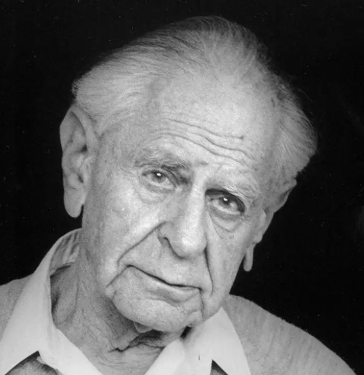
Appealing to his [Einstein's] way of expressing himself in theological terms, I said: If God had wanted to put everything into the universe from the beginning, He would have created a universe without change, without organisms and evolution, and without man and man's experience of change. But he seems to have thought that a live universe with events unexpected even by Himself would be more interesting than a dead one.
▼
Source
As quoted in Omnipotence and Other Theological Mistakes by Charles Hartshorne (1984)
4 months 3 weeks ago
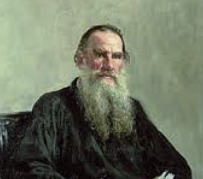
There can be only one permanent revolution — a moral one; the regeneration of the inner man. How is this revolution to take place? Nobody knows how it will take place in humanity, but every man feels it clearly in himself. And yet in our world everybody thinks of changing humanity, and nobody thinks of changing himself.
▼
Source
"Three Methods Of Reform" in Pamphlets : Translated from the Russian (1900) as translated by Aylmer Maude, p. 29 | Variant: Everyone thinks of changing the world, but no one thinks of changing himself. | As quoted in The Artist's Way at Work : Riding the
4 months 3 weeks ago
Liberal relativism has its roots in the natural right tradition of tolerance or in the notion that everyone has a natural right to the pursuit of happiness as he understands happiness; but in itself it is a seminary of intolerance.
▼
Source
p. 6
4 months 3 weeks ago
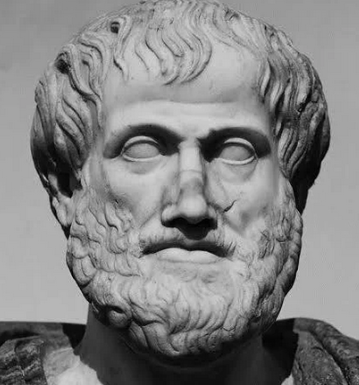
If there is some end of the things we do, which we desire for its own sake, clearly this must be the good. Will not knowledge of it, then, have a great influence on life? Shall we not, like archers who have a mark to aim at, be more likely to hit upon what we should? If so, we must try, in outline at least, to determine what it is.
▼
Source
Book I§2 1094a.18
4 months 3 weeks ago
The prison has become a black hole inti which the detritus of contemporary capitalism is deposited. Mass imprisonment generates profits as it devours social wealth, and thus it tends to reproduce the very conditions that lead people to prison
▼
Source
Chapter One
4 months 3 weeks ago
Men of learning are those who have read the contents of books. Thinkers, geniuses, and those who have enlightened the world and furthered the race of men, are those who have made direct use of the book of the world.
▼
Source
[http://ebooks.adelaide.edu.au/s/schopenhauer/arthur/essays/chapter8.html "Thinking for Oneself"]
4 months 3 weeks ago
We live in the false as long as we have not suffered. But when we begin to suffer, we enter the truth only to regret the false.
4 months 3 weeks ago
People of the same trade seldom meet together, even for merriment and diversion, but the conversation ends in a conspiracy against the public, or in some contrivance to raise prices. It is impossible indeed to prevent such meetings, by any law which either could be executed, or would be consistent with liberty or justice. But though the law cannot hinder people of the same trade from sometimes assembling together, it ought to do nothing to facilitate such assemblies; much less to render them necessary.
▼
Source
Chapter X, Part II, p. 152.
4 months 3 weeks ago
To one that promised to give him hardy cocks that would die fighting, "Prithee," said Cleomenes, "give me cocks that will kill fighting."
▼
Source
61 Cleomenes
4 months 3 weeks ago
For a consistent naturalist science can only be a refinement of animal exploration, a practice humans have devised for finding their way in the bit of the universe in which they have so far survived. Instead of thinking of science as a law-seeking activity, we can think of it as a tool humans use to cope with a world they will never understand.
▼
Source
Sweet Morality (p. 224)
4 months 3 weeks ago
... the attempt to make heaven on earth invariably produces hell. It leads to intolerance. It leads to religious wars, and to the saving of souls through the inquisition. And it is, I believe, based on a complete misunderstanding of our moral duties. It is our duty to help those who need help; but it cannot be our duty to make others happy, since this does not depend on us, and since it would only too often mean intruding on the privacy of those towards whom we have such amiable intentions.
▼
Source
Vol. 2, Ch. 24 "Oracular Philosophy and the Revolt against Reason"
4 months 3 weeks ago
A king is history's slave.
▼
Source
Bk. IX, ch. 1
4 months 3 weeks ago
In our time scholars generally study the Bible in the manner in which they study any other book. As is generally admitted, Spinoza more than any other man laid the foundation for this kind of Biblical study.
▼
Source
Introduction
4 months 3 weeks ago
It is simplicity that makes the uneducated more effective than the educated when addressing popular audiences.
▼
Source
Book II, 1395b.27
4 months 3 weeks ago
Everything intercepts us from ourselves.
▼
Source
1833
4 months 3 weeks ago
There is something for which Lincoln should be applauded, I believe. And it is that he was shrewd enough to know that the only hope of winning the Civil War resided in creating the opportunity to fight for their own freedom, and that was the significance of the Emancipation Proclamation.
4 months 3 weeks ago
Melancholy redeems this universe, and yet it is melancholy that separates us from it.
4 months 3 weeks ago
We do not, however, reckon that trade disadvantageous which consists in the exchange of the hard-ware of England for the wines of France;and yet hard-ware is a very durable commodity, and were it not for this continual exportation, might too be accumulated for ages together, to the incredible augmentation of the pots and pans of the country. But it readily occurs that the number of such utensils is in every country necessarily limited by the use which there is for them;that it would be absurd to have more pots and pans than were necessary for cooking the victuals usually consumed there;and that if the quantity of victuals were to increase, the number of pots and pans would readily increase along with it, apart of the increased quantity of victuals being employed in purchasing them, or in maintaining an additional number of workman whose business it was to make them.
▼
Source
Chapter I, p. 471.
4 months 3 weeks ago
Freemasonry, in its development, in its growing power at first and later in its decadence, represented in a way the development, power, and moral and intellectual decadence of the bourgeoisie. Today, fallen to the sad position of a senile old intriguer, it is a useless, sometimes malevolent and always ridiculous nullity, whereas, before 1830 and especially before 1793, having gathered together at its core, with very few exceptions, all the minds of the elite, the most ardent hearts, the proudest spirits, the most audacious personalities, it had constituted an active powerful, and truly beneficial institution. It was the energetic incarnation and implementation of the humanitarian ideal of the eighteenth century. All those great principles of liberty, equality, and fraternity, of reason and human justice, elaborated theoretically at first by the philosophy of that century, became in the hands of the Freemasons practical dogmas and the foundations of a new moral and political program, the soul of a gigantic enterprise of demolition and reconstruction. In that epoch, Freemasonry was nothing less than the universal conspiracy of the revolutionary bourgeoisie against the feudal monarchical and divine tyranny. It was the International of the bourgeoisie.
▼
Source
"Letter to the Comrades of the International Workingmen's Association of Locle and Cheau-de-Fonds", (1869)
4 months 3 weeks ago
Science tells us how to heal and how to kill; it reduces the death rate in retail and then kills us wholesale in war; but only wisdom — desire coordinated in the light of all experience — can tell us when to heal and when to kill. To observe processes and to construct means is science; to criticize and coordinate ends is philosophy: and because in these days our means and instruments have multiplied beyond our interpretation and synthesis of ideals and ends, our life is full of sound and fury, signifying nothing. For a fact is nothing except in relation to desire; it is not complete except in relation to a purpose and a whole. Science without philosophy, facts without perspective and valuation, cannot save us from havoc and despair. Science gives us knowledge, but only philosophy can give us wisdom.
▼
Source
Introduction : On the Uses of Philosophy
4 months 3 weeks ago
There is another accusation which irritates me on Plutarch's behalf: it is where Bodin says that Plutarch showed good faith in his parallels between Roman and Roman or Greek and Greek but not between Roman and Greek. Witness, he says, Demosthenes and Cicero; Cato and Aristides; Sylla and Lysander; Marcellus and Pelopidas; Pompey and Agesilaus, reckoning as he does that he favoured the Greeks by matching them so unfairly. That is precisely to attack what is most excellent and commendable in Plutarch: for in those parallel lives (which are the most admirable part of his works and to my mind the one he took most pleasure in) the faithfulness and purity of his judgements equals their weight and profundity. He is a philosopher who teaches us what virtue is.
▼
Source
Michel de Montaigne, 'In defence of Seneca and Plutarch', The Complete Essays, translated by M. A. Screech (1991; 2003), p. 822
4 months 3 weeks ago
Humans kill one another – and in some cases themselves – for many reasons, but none is more human than the attempt to make sense of their lives. More than the loss of life, they fear loss of meaning.
▼
Source
In the Puppet Theatre: Roof Gardens, Feathers and Human Sacrifice (p. 87)
4 months 3 weeks ago
I assert(1) There is no method of discovering a scientific theory.(2) There is no method of ascertaining the truth [i.e., verification] of a scientific hypothesis...(3) There is no method of ascertaining whether a hypothesis is 'probable', in the sense of the probability calculus.
4 months 3 weeks ago
I thought: "I am perishing of cold and hunger, and here is a man thinking only of how to clothe himself and his wife, and how to get bread for themselves. He cannot help me. When the man saw me he frowned and became still more terrible, and passed me by on the other side. I despaired, but suddenly I heard him coming back. I looked up, and did not recognize the same man: before, I had seen death in his face; but now he was alive, and I recognized in him the presence of God.
4 months 3 weeks ago
To understand nature, human nature, and the imperatives of social life, it was essential to throw out this meaningless rubbish and begin on scientific foundations. No account that sees Hobbes as other than a secular, materialistic utilitarian is an account of Hobbes at all, which is why Leo Strauss’s attempt to present Hobbes’s science as a mere tarting-up of old-fashioned conceptions of the state as a remedy for sin just misses the point.
▼
Source
Alan Ryan, The Making of Modern Liberalism (2012) Chapter 11. The Nature of Human Nature in Hobbes and Rousseau
4 months 3 weeks ago
Justice is of two kinds, justice in distribution and justice in rectification. ... Aristotle thinks primarily of setting things straight, and denies that rectificatory justice contains an element of 'tit for tat'.
▼
Source
Alan Ryan, Introduction in Justice (1993) edited by Alan Ryan
4 months 3 weeks ago
You can take better care of your secret than another can.
▼
Source
1863
4 months 3 weeks ago
Davis helps us to understand that the PIC itself is a product of various reforms over time, that even the prison itself was a reform. I reiterate to people all the time: We cannot reform police. We cannot reform prisons. We cannot.
▼
Source
Mariame Kaba, We Do This Til We Free Us (2021)
4 months 3 weeks ago
Boredom is connected naturally with time, with the horror of time, with the experience and the consciousness of time. Those who are not aware of time do not become bored. Basically life is only possible if one is not aware of time. If one should happen to want to experience consciously one of those moments that pass, one would be lost; life would become unbearable.
4 months 3 weeks ago
To be sure, Protestant theology presents a different, supposedly unpolitical doctrine, conceiving of God as the "wholly other," just as in political liberalism the state and politics are conceived of as the "wholly other." We have come to recognize that the political is the total, and as a result we know that any decision about whether something is unpolitical is always a political decision, irrespective of who decides and what reasons are advanced. This also holds for the question whether a particular theology is a political or an unpolitical theology.
4 months 3 weeks ago
Every system which endeavours, either, by extraordinary encouragements, to draw towards a particular species of industry a greater share of the capital of the society than what would naturally go to it; or, by extraordinary restraints, to force from a particular species of industry some share of the capital which would otherwise be employed in it; is in reality subversive of the great purpose which it means to promote. It retards, instead of accelerating, the progress of the society towards real wealth and greatness; and diminishes, instead of increasing, the real value of the annual produce of its land and labour. All systems either of preference or of restraint, therefore, being thus completely taken away, the obvious and simple system of natural liberty establishes itself of its own accord. Every man, as long as he does not violate the laws of justice, is left perfectly free to pursue his own interest his own way, and to bring both his industry and capital into competition with those of any other man, or order of men. The sovereign is completely discharged from a duty, in the attempting to perform which he must always be exposed to innumerable delusions, and for the proper performance of which no human wisdom or knowledge could ever be sufficient; the duty of superintending the industry of private people, and of directing it towards the employments most suitable to the interest of the society. According to the system of natural liberty, the sovereign has only three duties to attend to; three duties of great importance, indeed, but plain and intelligible to common understandings: first, the duty of protecting the society from the violence and invasion of other independent societies; secondly, the duty of protecting, as far as possible, every member of the society from the injustice or oppression of every other member of it, or the duty of establishing an exact administration of justice; and, thirdly, the duty of erecting and maintaining certain public works and certain public institutions, which it can never be for the interest of any individual, or small number of individuals, to erect and maintain; because the profit could never repay the expence to any individual, or small number of individuals, though it may frequently do much more than repay it to a great society. The proper performance of those several duties of the sovereign necessarily supposes a certain expence; and this expence again necessarily requires a certain revenue to support it.
▼
Source
Chapter IX, p. 749.
4 months 3 weeks ago
We … have humanity divided into an indefinite number of foreign states, all hostile and threatened by each other. There is no common right, no social contract of any kind between them; otherwise they would cease to be independent states and become the federated members of one great state. But unless this great state were to embrace all of humanity, it would be confronted with other great states, each federated within, each maintaining the same posture of inevitable hostility. War would still remain the supreme law, an unavoidable condition of human survival. Every state, federated or not, would therefore seek to become the most powerful. It must devour lest it be devoured, conquer lest it be conquered, enslave lest it be enslaved, since two powers, similar and yet alien to each other, could not coexist without mutual destruction. The State, therefore, is the most flagrant, the most cynical, and the most complete negation of humanity. It shatters the universal solidarity of all men on the earth, and brings some of them into association only for the purpose of destroying, conquering, and enslaving all the rest. It protects its own citizens only; it recognises human rights, humanity, civilisation within its own confines alone. Since it recognises no rights outside itself, it logically arrogates to itself the right to exercise the most ferocious inhumanity toward all foreign populations, which it can plunder, exterminate, or enslave at will. If it does show itself generous and humane toward them, it is never through a sense of duty, for it has no duties except to itself in the first place, and then to those of its members who have freely formed it, who freely continue to constitute it or even, as always happens in the long run, those who have become its subjects. As there is no international law in existence, and as it could never exist in a meaningful and realistic way without undermining to its foundations the very principle of the absolute sovereignty of the State, the State can have no duties toward foreign populations. Hence, if it treats a conquered people in a humane fashion, if it plunders or exterminates it halfway only, if it does not reduce it to the lowest degree of slavery, this may be a political act inspired by prudence, or even by pure magnanimity, but it is never done from a sense of duty, for the State has an absolute right to dispose of a conquered people at will. This flagrant negation of humanity which constitutes the very essence of the State is, from the standpoint of the State, its supreme duty and its greatest virtue. It bears the name patriotism, and it constitutes the entire transcendent morality of the State. We call it transcendent morality because it usually goes beyond the level of human morality and justice, either of the community or of the private individual, and by that same token often finds itself in contradiction with these. Thus, to offend, to oppress, to despoil, to plunder, to assassinate or enslave one's fellowman is ordinarily regarded as a crime. In public life, on the other hand, from the standpoint of patriotism, when these things are done for the greater glory of the State, for the preservation or the extension of its power, it is all transformed into duty and virtue. And this virtue, this duty, are obligatory for each patriotic citizen; everyone is supposed to exercise them not against foreigners only but against one's own fellow citizens, members or subjects of the State like himself, whenever the welfare of the State demands it.This explains why, since the birth of the State, the world of politics has always been and continues to be the stage for unlimited rascality and brigandage, brigandage and rascality which, by the way, are held in high esteem, since they are sanctified by patriotism, by the transcendent morality and the supreme interest of the State. This explains why the entire history of ancient and modern states is merely a series of revolting crimes; why kings and ministers, past and present, of all times and all countries — statesmen, diplomats, bureaucrats, and warriors — if judged from the standpoint of simple morality and human justice, have a hundred, a thousand times over earned their sentence to hard labour or to the gallows. There is no horror, no cruelty, sacrilege, or perjury, no imposture, no infamous transaction, no cynical robbery, no bold plunder or shabby betrayal that has not been or is not daily being perpetrated by the representatives of the states, under no other pretext than those elastic words, so convenient and yet so terrible: "for reasons of state."
4 months 3 weeks ago
Man is as young as the risks he takes.
▼
Source
Ch. 2 : On Youth
4 months 3 weeks ago
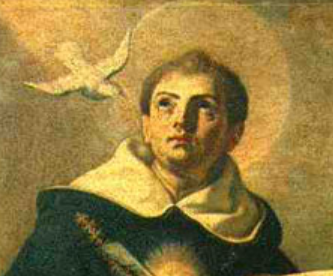
We can open our hearts to God, but only with Divine help.
▼
Source
q. 24, art. 15, ad 2
4 months 3 weeks ago
The leading critic of the positivists in their heyday was of course Popper. There has been a tendency for philosophers of science to regard Popper as something of an embarrassment. However, naturalistic philosophers should take it as an interesting fact about science that Popper has long been the favourite philosopher of science among scientists; and it would be condescending to attribute this entirely to the fact that Popper's philosophy is relatively non-complex, self-contained, and flattering to scientists.
▼
Source
James Ladyman and Don Ross, "The World in the Data" in Scientific Metaphysics (2013) edited by Don Ross, James Ladyman, and Harold Kincaid
4 months 3 weeks ago
There is a scale of virtues, and it is necessary, if one would mount the higher steps, to begin with the lowest; and the first virtue a man must acquire if he wishes to acquire the others, is that which the ancients called ἐγκράτεια or σωφροσύνη — i.e., self-control or moderation.
▼
Source
Ch. VIII
4 months 3 weeks ago
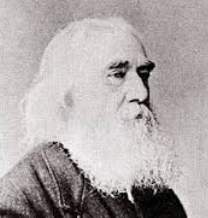
Majorities, as such, afford no guarantees for justice. They are men of the same nature as minorities. They have the same passions for fame, power, and money, as minorities; and are liable and likely to be equally — perhaps more than equally, because more boldly — rapacious, tyrannical and unprincipled, if intrusted with power. There is no more reason, then, why a man should either sustain, or submit to, the rule of the majority, than of a minority.
4 months 3 weeks ago
Wherever a man comes, there comes revolution. The old is for slaves.
▼
Source
p. 25
4 months 3 weeks ago
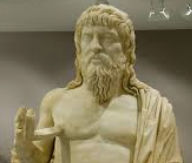
Pythagoras said that medicine is the most godlike of arts. But if the most godlike, it should tend to the soul as well as the body, or else a living thing must be unhealthy, being diseased in its higher part.
▼
Source
to Crito, Epp. Apoll. 23
4 months 3 weeks ago
The various philosophies of life presented themselves as a conquest of materialism, or in any case, they readily claimed it. That does not change anything: their valuations, revaluations, and explanations of disvalue have been emptied into the over-all secularization stream, where they have only hastened the tendency to unlearn, which is a neutralizing process, after all.
4 months 3 weeks ago
But bounty and hospitality very seldom lead to extravagance; though vanity almost always does.
▼
Source
Chapter III, Part V, p. 987.
4 months 3 weeks ago
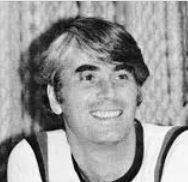
Robert Nozick, the Arthur Kingsley Porter Professor of Philosophy at Harvard University, always attacks his problems in a disconcertingly original way. … in The Examined Life, he took on nothing less than the meaning of life, a subject that academic philosophers tended to steer clear of — and still do, despite his best efforts. From Mr. Nozick you always expect fireworks, even if some of them go off in their box. His questions, hints, counterarguments and suggestions come so thick and fast that it is next to impossible to appreciate all of them. Start pondering a sentence and you will find yourself led away prematurely by a parenthetical question; think about the question and you will be dragged into a discursive footnote; from the bowels of the footnote, another parenthetical query will leap out at you. If you escape back to the main argument with your concentration intact (unlikely, after a while), the whole wearing business just starts over again. Yet it is worth the effort — certainly for regular readers of philosophy, and often for others.
▼
Source
Anthony Gottlieb, in a review of The Nature of Rationality, [http://www.nytimes.com/1993/08/22/books/why-do-you-do-the-things-you-do.html "Why Do You Do the Things You Do?" in The New York Times (22 August 1993)]
CivilSimian.com created by AxiomaticPanic, CivilSimian, Kalokagathia